Mesa restaurant refrigeration maintenance is the fastest, most reliable way to prevent warm-box emergencies, protect food inventory, and reduce expensive after-hours repairs—because most “sudden failures” start as small airflow, coil, or electrical issues you can catch early.
Mesa heat, rooftop exposure, dust, and kitchen grease create perfect conditions for refrigeration stress. When condenser airflow drops or defrost performance slips, your system runs hotter, longer, and closer to failure—usually during the busiest shift.
If you want a preventive plan built for Arizona kitchens, start with our main hub pages: Discount AC & Refrigeration (Home), About Us, and Contact Us. For service navigation, use Commercial Services (Services), our coverage footprint on Service Areas, and the core hub for this topic: Commercial Refrigeration. For Mesa-specific coverage, reference: AC Repair Near Me in Mesa (we service businesses across the Mesa area, including commercial refrigeration support).
Context: Why Maintenance Matters More for Mesa Restaurants
What “breakdowns” really cost
When a walk-in or reach-in goes down, the repair bill is only one piece. The bigger costs are food loss, menu disruption, staff time, customer experience damage, and the scramble to relocate product.
Mesa conditions accelerate failure drivers
High ambient temperatures raise condensing pressures, grease sticks to coils, and dust blocks airflow. That combination increases compressor load, fan motor wear, and the chance of nuisance shutdowns.
Most failures show warning signs first
Longer run times, temperature drift, icing, noisy fans, sweating lines, and intermittent alarms are usually early indicators. A structured maintenance routine turns those “surprises” into scheduled fixes.
What you’ll get in this guide
A simple schedule your team can follow, a tech-level checklist (coils, airflow, electrical, controls), a quick diagnosis section, and FAQs tailored to restaurant operations.
Equipment This Applies To (Most Common Restaurant Setups)
This preventive plan fits:
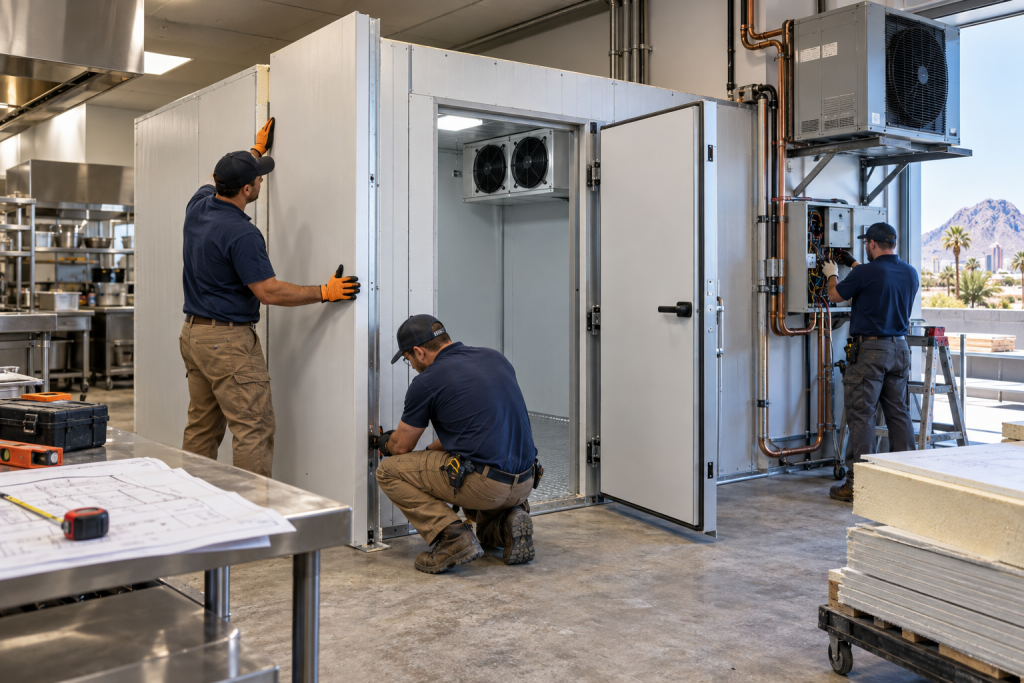
- Walk-in coolers and freezers: Walk-In Coolers & Freezers
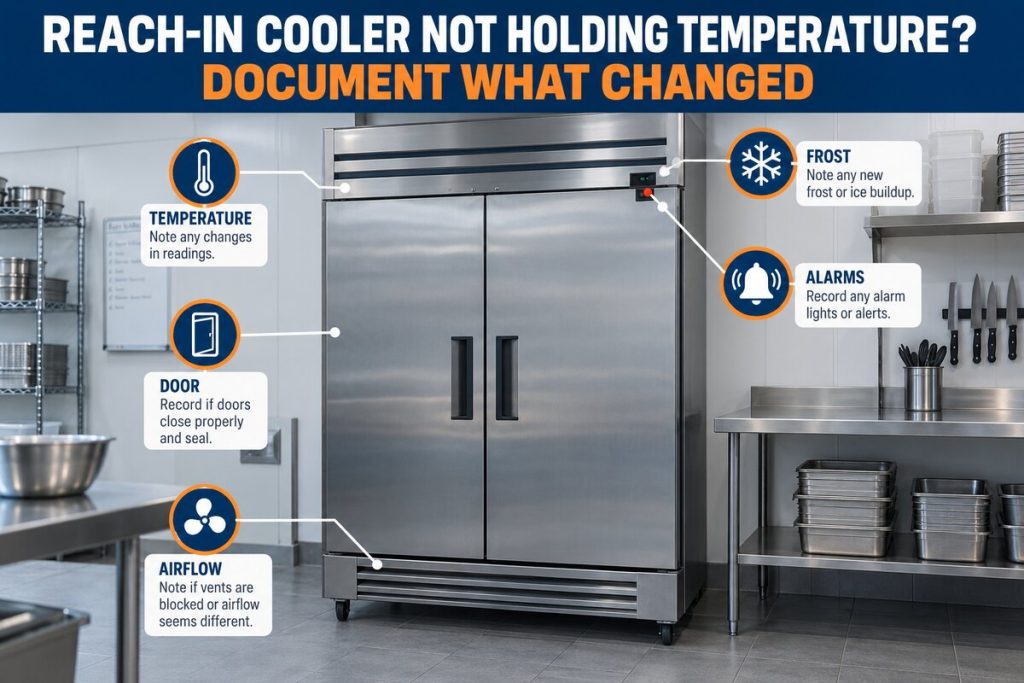
- Reach-in refrigerators and freezers
- Prep tables and undercounter refrigeration
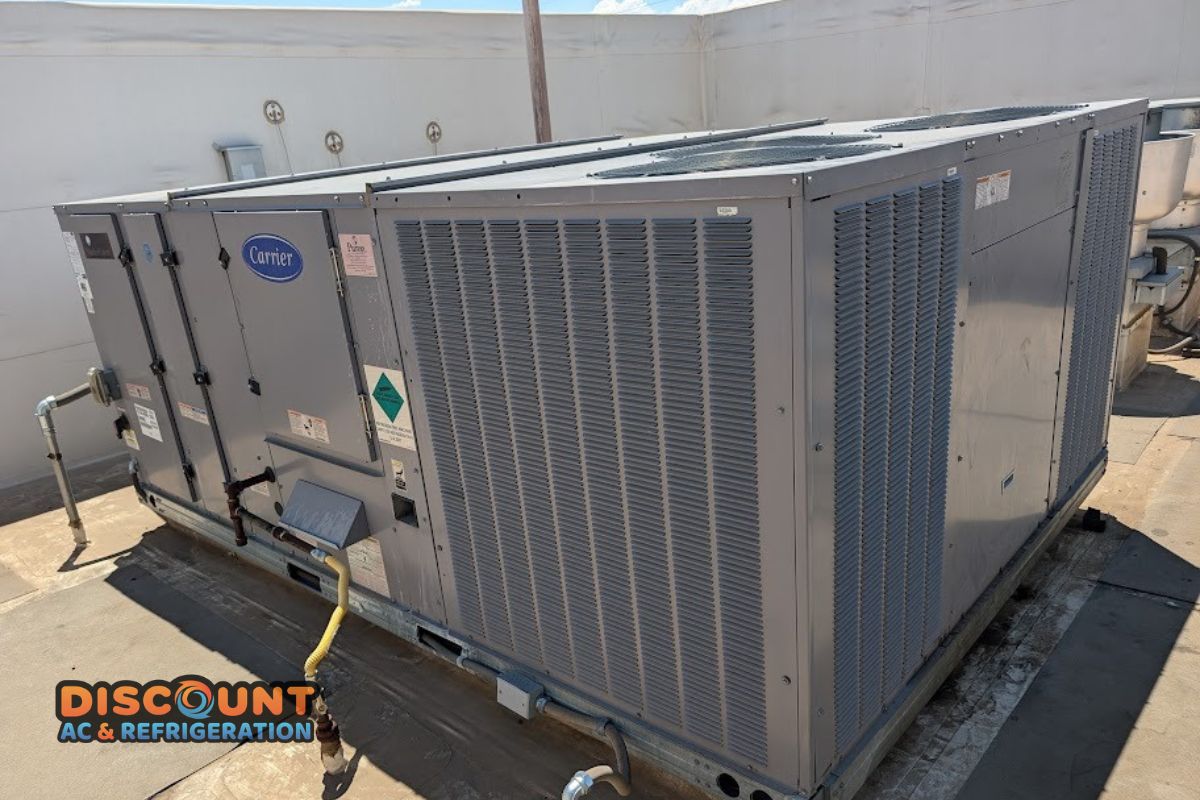
- Remote condensing units (often rooftop or rear-of-building)
- Restaurants already dealing with “warm box” issues: Restaurant Refrigeration Repair Near Me
If you’re already seeing recurring shutdowns or temperature swings, you may need repair first, then maintenance. Start here: Commercial Refrigeration Repair AZ and this practical troubleshooting guide: Walk-In Refrigerator Repair: Troubleshooting.
The 5 Biggest Breakdown Triggers (And How Maintenance Stops Them)
1) Dirty condenser coils (the #1 preventable failure driver)
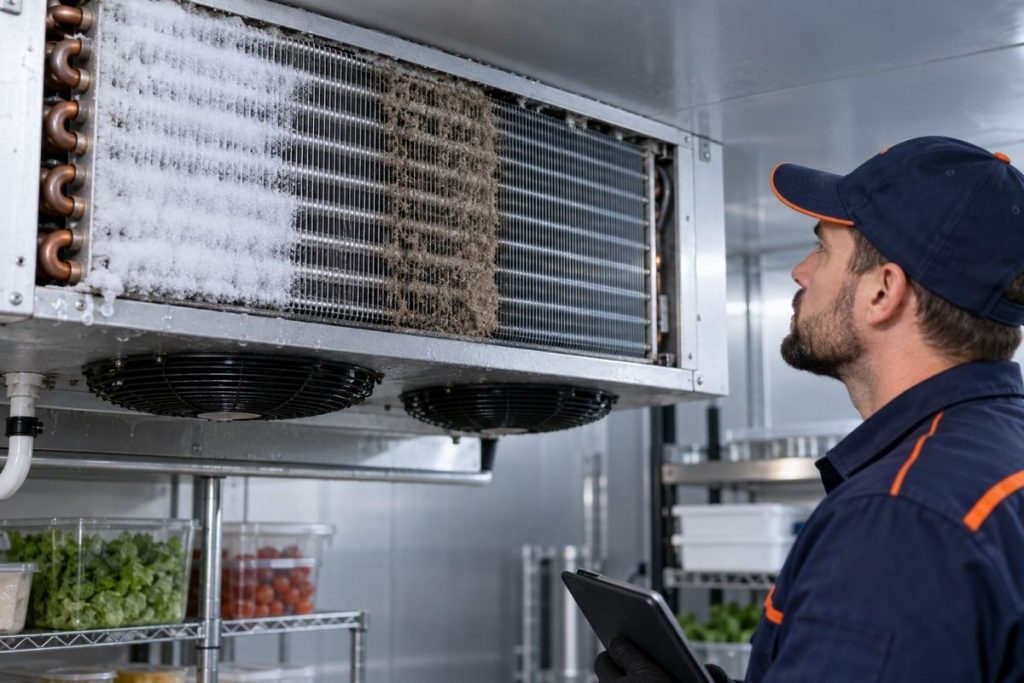
A clogged condenser coil reduces heat rejection. That raises head pressure, increases compressor amperage, and pushes the system into heat stress. In restaurant environments, grease and dust can form a “blanket” that looks minor but performs like insulation.
Maintenance focus
- Visual coil inspection + airflow restriction check
- Proper coil cleaning for grease-laden environments
- Confirming unit clearance and hot-air discharge path
Common warning signs
- Longer run times during normal load
- Hotter-than-usual discharge air
- Random high-pressure faults or overload trips
If a unit is trending toward failure and you need urgent help, keep this page bookmarked: Emergency Refrigeration.
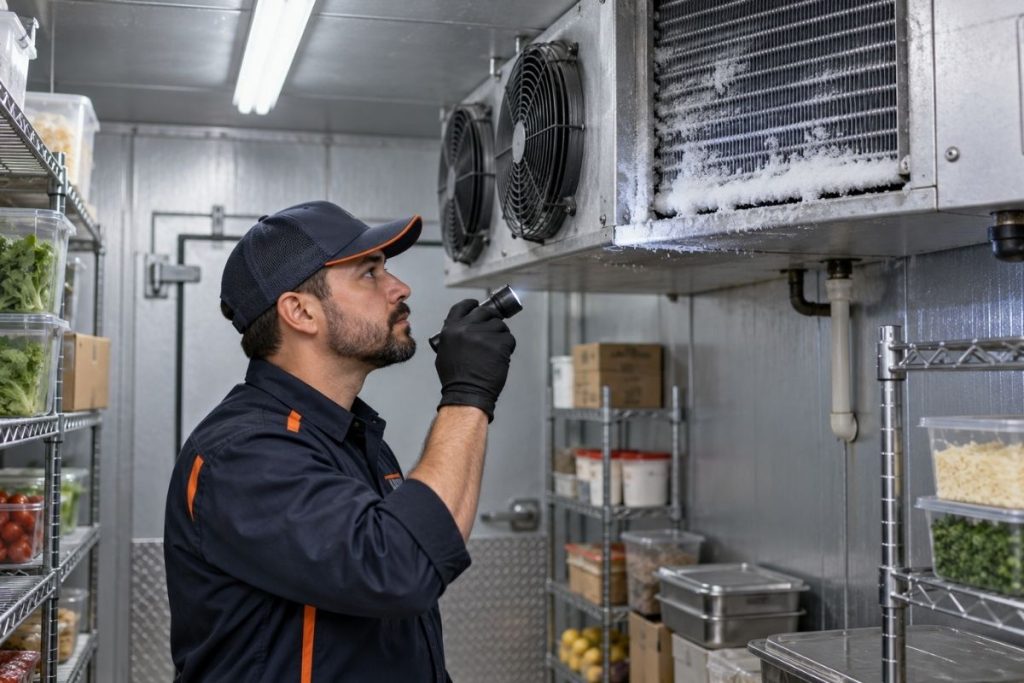
2) Evaporator airflow issues (weak cooling even when the system “runs”)
Evaporator airflow problems often present as “the box is warm,” but the root cause can be fan performance, icing, product placement, or defrost issues.
Maintenance focus
- Evaporator fan health (noise, vibration, airflow strength)
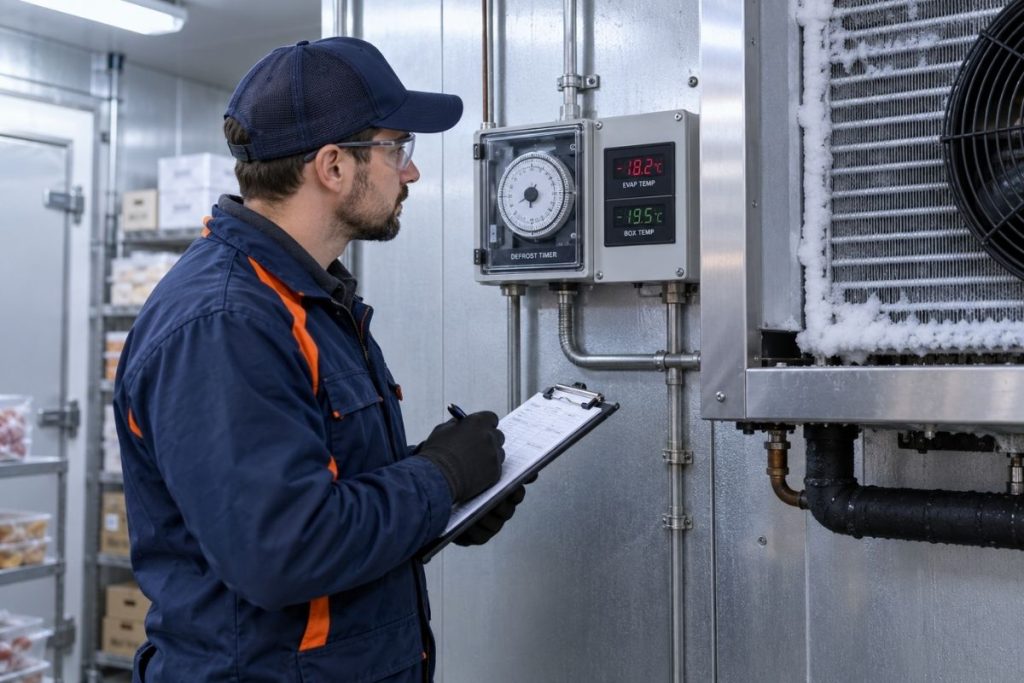
- Ice pattern review (light frost vs. heavy ice buildup)
- Drain condition (clogs lead to water overflow and icing)
- Defrost performance checks (especially for freezers)
3) Door gaskets and door hardware (small parts, huge impact)
A leaking gasket pulls warm, humid air into the box all day. That increases run time, increases frost load, and reduces temperature stability.
Maintenance focus
- Cleaning gaskets (grease and grime reduce sealing)
- Inspecting tears, corner gaps, and compression
- Verifying hinges/closers so doors fully shut every time
4) Electrical heat stress (rooftop environments punish components)
Many intermittent shutdowns in Mesa are electrical: contactors, relays, capacitors, loose terminals, and overheated wiring points. Heat cycles can loosen connections and increase resistance.
Maintenance focus
- Checking/tightening electrical connections
- Inspecting contactor/relay condition
- Verifying stable voltage under load
- Looking for heat discoloration and repeated nuisance trips
5) Refrigerant charge and leak progression (performance degrades before it fails)
A small leak can slowly reduce capacity, increase run time, and trigger icing. Leaks don’t “heal,” and topping off without correcting the source usually leads to repeat failures.
Maintenance focus
- Inspecting for oil staining at joints/fittings
- Identifying performance patterns consistent with low charge
- Proper leak detection and repair when needed: Refrigerant Leak Detection
Maintenance Schedule for Mesa Restaurant Refrigeration
Use this as a baseline. If your condensers are on the roof or you have heavy grease output, increase frequency.
| Frequency | Task | Goal |
|---|---|---|
| Daily | Log box temps (open + mid-shift) | Catch drift early |
| Weekly | Clean door gaskets, keep vents clear | Protect airflow |
| Monthly | Inspect condenser area + fan operation | Reduce heat stress |
| Quarterly | Deep-clean condenser coils, inspect electrical | Prevent shutdowns |
| 2x/year | Full preventive service + performance check | Stabilize the system |
If your restaurant also relies on rooftop units for dining comfort, align both schedules to reduce downtime across the whole building: Commercial HVAC and Commercial HVAC Maintenance Checklist.
Steps: A Simple Routine Restaurant Managers Can Actually Run
- Log temperatures twice daily (opening + rush)
- Listen for new sounds (fan noise, clicking relays, compressor strain)
- Check doors every shift (seal, hinges, closers)
- Keep airflow paths open (never block evaporator intake/outlet)
- Do a monthly condenser scan (dust/grease buildup = rising risk)
- Schedule quarterly coil service in high-grease or rooftop setups
- Call early when symptoms show (warm-box today becomes an emergency tomorrow)
To set up a preventive plan for your Mesa location, call (480) 478-2616 or use our Contact Us page.
Technician Checklist by Equipment Type
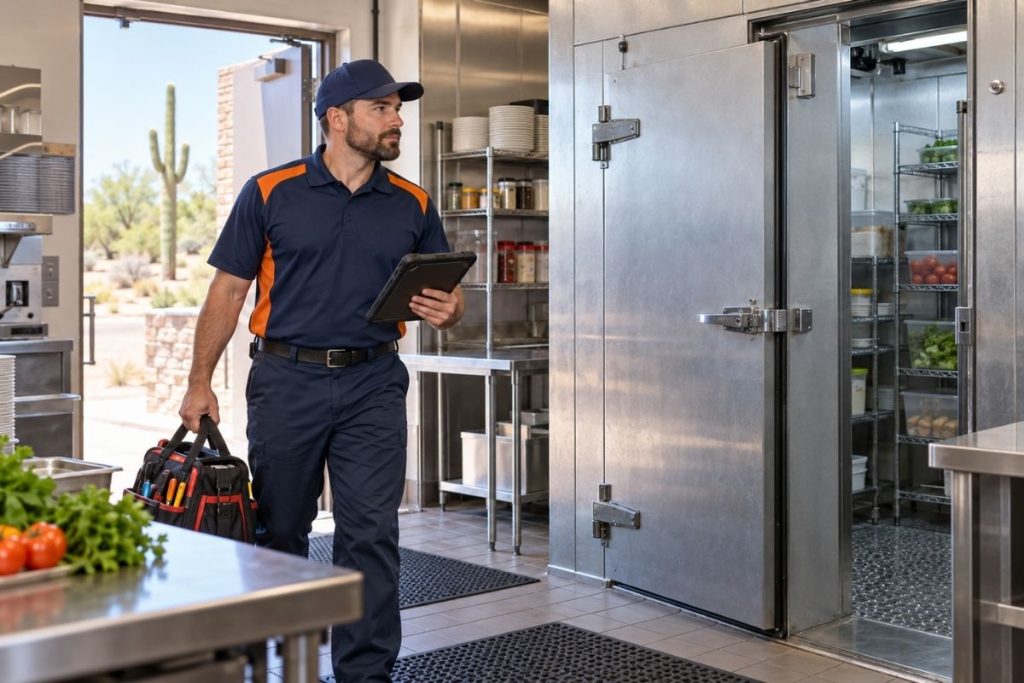
Walk-in coolers
- Condenser coil condition + airflow verification
- Evaporator fans and airflow distribution
- Drain line/pan condition to prevent overflow/icing
- Door gasket integrity and door closing behavior
- Controls/sensors for stable cycling and temperature accuracy
Service details: Walk-In Coolers & Freezers
Walk-in freezers
- Defrost schedule and termination behavior
- Ice pattern and airflow restriction checks
- Door sealing (humidity ingress is a major ice driver)
If you’re already icing up repeatedly, use: Walk-In Refrigerator Repair: Troubleshooting
Reach-ins and prep tables
- Condenser coil cleaning (often overlooked under/behind units)
- Fan noise and airflow strength
- Door gasket and hinge alignment
- Product loading practices that block air circulation
Quick Diagnosis: Preventing “Rush Hour Failures”
Symptom: “The box is warm, but the unit is running”
Likely causes: dirty condenser coil, weak condenser fan, blocked evaporator airflow, early refrigerant issues.
Action: clear airflow issues immediately and schedule service before the unit hits a high-pressure shutdown. If temps keep climbing, use: Emergency Refrigeration
Symptom: “Freezer is icing heavily”
Likely causes: door sealing/humidity ingress, defrost problems, airflow blockage.
Action: address door sealing first, confirm defrost behavior, and don’t keep chipping ice without fixing the cause. Troubleshooting help: Walk-In Refrigerator Repair: Troubleshooting
Symptom: “Breaker trips or the unit shuts off randomly”
Likely causes: heat-stressed electrical components, dirty coils causing high head pressure, failing fan motor.
Action: avoid repeated resets—intermittent shutdowns often escalate fast in Mesa heat.
Symptom: “Water on the floor near the walk-in”
Likely causes: drain line/pan issues, defrost drainage problems, ice melt overflow.
Action: treat it as urgent (slip hazard + icing risk).
Symptom: “Food temp is okay in the morning, but drifts during rush”
Likely causes: condenser airflow restriction, high load + door traffic, sensor/controls issues, airflow imbalance.
Action: this is the classic “maintenance saves you” scenario—don’t wait until it becomes a weekend emergency.
When Maintenance Isn’t Enough (You Need Repair Now)
If you’re seeing repeat callbacks or unstable temps, resolve the root cause first:
- Repair overview: Commercial Refrigeration Repair AZ
- Restaurant-specific support: Restaurant Refrigeration Repair Near Me
- Walk-in systems: Walk-In Coolers & Freezers
- Suspected leaks: Refrigerant Leak Detection
FAQs
1) How often should Mesa restaurants schedule refrigeration maintenance?
Most Mesa kitchens benefit from quarterly coil service and two full preventive visits per year. Rooftop condensers and high-grease operations often need more frequent coil cleaning.
2) What’s the most common cause of sudden restaurant refrigeration breakdowns?
Restricted condenser airflow from grease/dust buildup is one of the most common preventable causes. It raises head pressure and heat stress until the compressor or safety controls shut the system down.
3) If my walk-in is warm, what should I check first?
Start with condenser coil condition and condenser fan operation, then check for blocked evaporator airflow and door sealing issues. If temps keep rising, use: Emergency Refrigeration
4) Do door gaskets really make that much difference?
Yes. A leaking gasket pulls in warm humid air, increases run time, accelerates icing, and makes temperature control unstable—especially in high-traffic kitchens.
5) How do I know if I have a refrigerant leak?
Common signs include longer run times, weak pull-down, repeat icing patterns, and performance that improves briefly then worsens again. If you suspect a leak, use proper detection: Refrigerant Leak Detection
6) Why does my freezer keep icing up even after cleaning?
Recurring ice usually points to door sealing/humidity ingress, airflow restriction, or defrost control problems. Cleaning helps, but the moisture source and defrost behavior must be corrected.
7) Should I bundle HVAC and refrigeration maintenance for my restaurant?
Often yes. Coordinating schedules reduces downtime and helps your facility stay stable in peak heat. See: Commercial HVAC and the Commercial HVAC Maintenance Checklist
8) Do you service beyond Mesa?
Yes. We cover Metro Phoenix and statewide Arizona support. Start here: Service Areas
Final Thoughts
Mesa restaurant refrigeration maintenance works best when it’s proactive and focused on the real breakdown drivers: condenser coil restriction, airflow and icing issues, door sealing, electrical heat stress, and control accuracy. If you turn those into scheduled checks, you’ll reduce emergencies, extend equipment life, and keep temps stable through the hardest months.
Discount AC & Refrigeration is family-owned, backed by 20+ years of Arizona experience, licensed under ROC #361623, serving businesses across Arizona 6am–Midnight. Call (480) 478-2616 or schedule service via Contact Us.
Address: 17426 E Hunt HWY, Queen Creek, AZ 85142
Directions and reviews: Google Maps
Updates and tips on our social channels: {SOCIAL_LINKS}
Optional helpful links:
- Learn about our referral program: Refer & Earn
- See how we train techs: Training Program
- Watch field examples: Video Gallery
- More articles: Blog