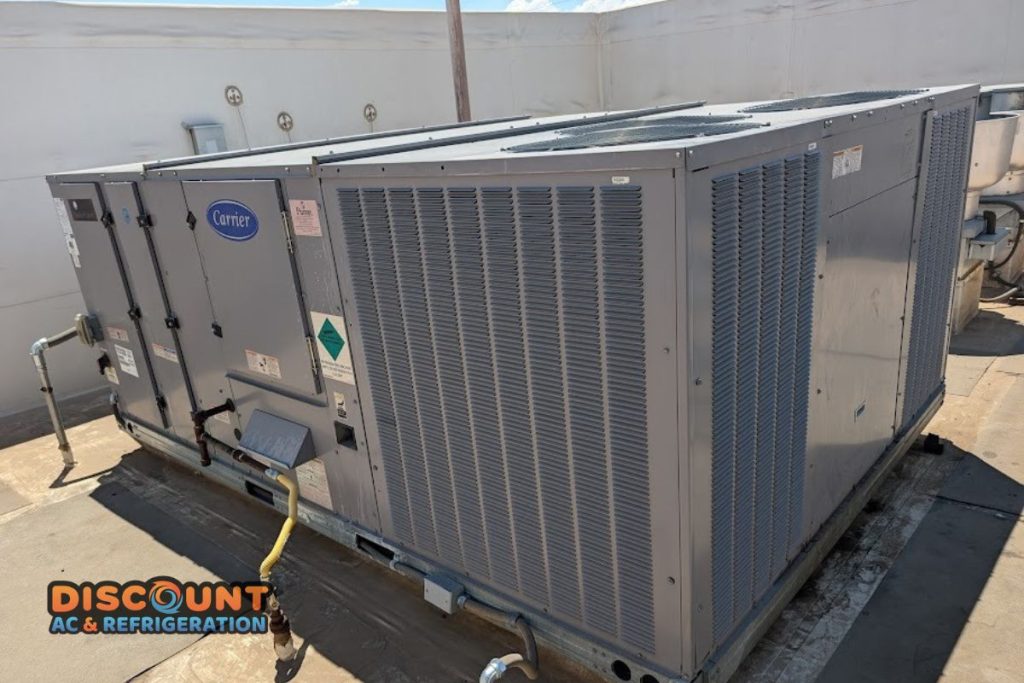
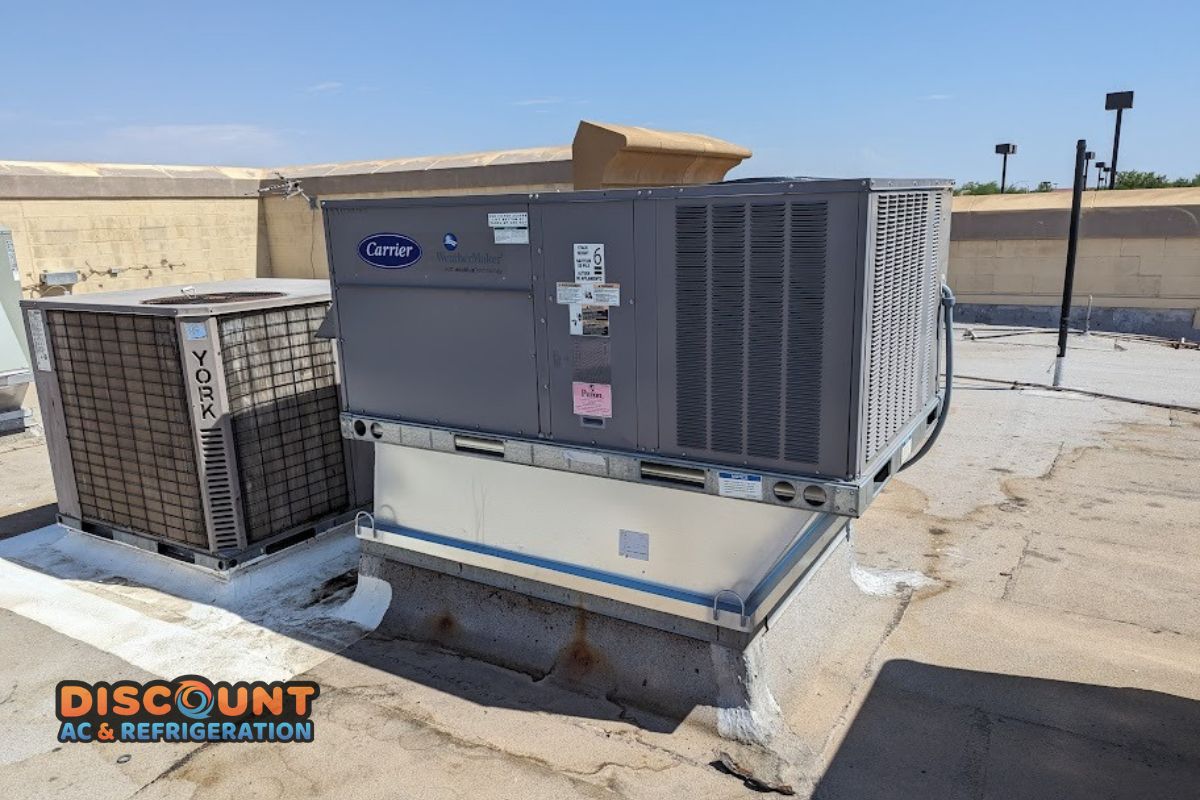
Commercial refrigeration installation in Phoenix is about building a system that can handle Arizona heat: correct capacity, strong airflow, proper electrical, tight box sealing, and commissioning that confirms performance before you stock product.
Phoenix kitchens and commercial facilities push refrigeration equipment harder than many markets. High ambient temperatures, rooftop exposure, dust, grease, and heavy door traffic increase run time and head pressure. When an installation is even slightly off—poor condenser placement, restricted airflow, undersized electrical, or a box that leaks air—you’ll feel it quickly: warm temps, icing issues, nuisance shutdowns, and expensive emergency calls.
If you’re planning commercial refrigeration installation in Phoenix, start with these pages so you’re not guessing: Home, About Us, Contact, Commercial Services, and Service Areas. For this exact topic, use the main hub: Commercial Refrigeration. For Phoenix coverage, see: AC Repair Near Me in Phoenix (we support businesses across the metro, including refrigeration service).
Context
Why installation quality matters more in Phoenix than most cities
- Downtime costs more than the repair. Food loss, spoilage, lost sales, and staff disruption can exceed the service invoice.
- Heat magnifies small problems. Minor airflow restrictions or placement issues can trigger high head pressure, short cycling, and early compressor wear.
- Most “random failures” are predictable. Coil restriction, door sealing problems, defrost issues, and loose electrical connections usually show warning signs before a shutdown.
What you’ll learn in this guide
- What counts as “installation” (not all installs are the same)
- The key decisions that prevent breakdowns in Phoenix heat
- A quote comparison table (so you can vet proposals fast)
- A step-by-step installation workflow (what a good job looks like)
- Quick Diagnosis + FAQs for restaurant and commercial scenarios
What Counts as Commercial Refrigeration Installation?
Commercial refrigeration installation in Phoenix typically includes one (or more) of the following:
- Walk-in cooler and walk-in freezer installation (box + refrigeration system): Walk-In Coolers & Freezers
- Restaurant refrigeration installation (reach-ins, prep tables, undercounter units, remote condensing units): Restaurant Refrigeration Repair Near Me (useful if you’re replacing a failing setup)
- Emergency replacement installs when product is at risk: Emergency Refrigeration
- Leak-driven replacements or redesigns when low charge keeps returning: Refrigerant Leak Detection
- Repair vs. install decisions when equipment is failing but the box may still be usable: Commercial Refrigeration Repair AZ
- Troubleshooting walk-in performance before investing in replacement: Walk-In Refrigerator Repair: Troubleshooting
The 7 Make-or-Break Considerations for Commercial Refrigeration Installation in Phoenix
1) Load Planning: Capacity Based on Real Use (Not Just Box Size)
A walk-in isn’t sized by square footage alone. Real load includes:
- Door openings during peak periods
- Product load (hot deliveries vs. pre-chilled product)
- Kitchen ambient temperature and nearby heat sources
- Lighting load and equipment heat around the box
- Infiltration from door leaks and traffic patterns
What you want from a strong proposal
- Target temperature ranges (cooler vs. freezer)
- Use-case assumptions (rush windows, deliveries, production schedule)
- Recovery goals (how quickly temps must rebound after door activity)
If your current system “holds temp overnight but struggles during rush,” that often means the real load wasn’t designed correctly—especially common in Phoenix.
2) Condenser Airflow + Placement: Heat Rejection Is the Game in Phoenix
Phoenix installs succeed when the condenser can breathe and reject heat efficiently. When it can’t, head pressure rises and the system runs hotter and harder than it should.
What to verify
- Proper clearance around the condenser (no airflow-starved enclosures)
- No hot-air recirculation traps (especially on rooftops and tight service corridors)
- Service access for cleaning (dust and grease build-up is inevitable here)
If the site is grease-heavy (restaurants), your plan should include a coil-cleaning cadence from day one. Without it, even a “new install” can behave like an old failing system within one season.
3) System Type Selection: Self-Contained vs. Remote (And Why It Matters)
Different sites call for different designs:
- Self-contained systems can be simpler, but heat rejection happens near the unit—bad placement can create immediate performance issues.
- Remote systems can move heat rejection away from interior spaces, but require correct design, line routing, electrical planning, and commissioning.
A site survey should determine the best fit—not a one-size-fits-all approach.
4) Box Quality: Insulation, Sealing, and Door Hardware
In Phoenix, weak insulation and air leaks turn into nonstop runtime and temperature drift.
What to confirm
- Correct insulation ratings and integrity (cooler vs. freezer application)
- Tight seams and vapor barrier integrity
- Door hardware that closes consistently (hinges/closers stay aligned)
- Gaskets, sweeps, thresholds, and traffic solutions (strip curtains where needed)
If a freezer ices repeatedly or you’re battling moisture issues, door sealing and infiltration are usually part of the cause. Use: Walk-In Refrigerator Repair: Troubleshooting.
5) Evaporator Airflow + Defrost Strategy (Especially for Freezers)
A system can have great equipment and still fail if airflow is restricted or defrost control is wrong for the application.
You want clear answers on
- Air distribution inside the box (and how product layout affects airflow)
- Defrost scheduling and termination strategy (freezers)
- Drain management that prevents icing and overflow issues
These details prevent “it worked for a few weeks, then froze up” problems.
6) Electrical Readiness + Controls: Reliability Under Heat Stress
Phoenix heat punishes electrical components. Loose connections, weak controls, undersized circuits, and poor sensor placement cause nuisance trips and unstable performance.
A Phoenix-ready installation should include
- Electrical sizing that matches equipment load
- Verified voltage under load (not just at idle)
- Correct sensor/probe placement, thermostat strategy, and alarm/monitor readiness
- Safe disconnect placement and service access
If your building also relies heavily on rooftop comfort cooling, align reliability standards across systems: Commercial HVAC and Commercial HVAC Maintenance Checklist.
7) Commissioning: Proving Performance Before You Stock Product
Commissioning is what separates “installed” from “reliable.” For commercial refrigeration installation in Phoenix, commissioning should confirm:
- Stable temperature control and correct cycling behavior
- Condenser airflow and heat rejection under real conditions
- Defrost behavior for freezers
- Drain performance to prevent water and icing problems
- Baseline operational readings so drift is easy to spot later
If you suspect chronic refrigerant issues (repeat low charge), solve it correctly instead of repeating top-offs: Refrigerant Leak Detection.
Quote Comparison Table (Use This to Vet Any Proposal)
| Quote Item | What You Want to See | Why It Matters in Phoenix |
|---|---|---|
| Load assumptions | Door traffic + product load included | Prevents “warm during rush” issues |
| Condenser placement | Airflow clearance + no recirculation | Avoids high head pressure shutdowns |
| Box/door scope | Insulation + seals + closers/gaskets | Reduces runtime, icing, and drift |
| Electrical scope | Proper sizing + load verification | Reduces nuisance trips and failures |
| Commissioning plan | Documented verification steps | Prevents early callbacks and downtime |
Steps: What a Good Installation Process Looks Like
Step 1: Site survey (real conditions, not just measurements)
A proper survey checks:
- Heat exposure and airflow realities (especially rooftop)
- Access for service and cleaning
- Electrical readiness and control placement
- Operational patterns (deliveries, rush periods, door traffic)
Step 2: Design the system around how you operate
Capacity, system type, controls, and box details should match your workflow—not a generic template.
Step 3: Installation + build-out
This includes the mechanical install, controls setup, electrical work, and box integrity/door alignment (for walk-ins).
Step 4: Commissioning + performance verification
Stable temps, correct cycling, verified airflow, defrost behavior (freezers), and baseline readings.
Step 5: Handoff + maintenance plan
Your team should leave with:
- Temperature logging expectations
- Early warning signs to watch for
- Coil-cleaning cadence appropriate for Phoenix dust/grease
- Clear next steps if performance drifts
Helpful hubs to keep bookmarked:
- Commercial Refrigeration
- Walk-In Coolers & Freezers
- Emergency Refrigeration
- Commercial Refrigeration Repair AZ
Maintenance Planning (Built Into the Install From Day One)
A Phoenix-ready installation includes a preventive plan.
| Frequency | What to Check | Why It Prevents Breakdowns |
|---|---|---|
| Daily | Log box temps + quick door check | Catches drift before product loss |
| Weekly | Clean gaskets + keep vents clear | Protects airflow and sealing |
| Monthly | Visual condenser scan + fan check | Prevents heat-stress escalation |
| Quarterly | Deep-clean coils + electrical inspection | Reduces shutdown risk in peak heat |
| 2x/year | Full preventive service + performance review | Stabilizes operation long-term |
If you’re already stuck in a failure cycle, start with repair diagnostics: Commercial Refrigeration Repair AZ or restaurant-specific support: Restaurant Refrigeration Repair Near Me.
Quick Diagnosis
“Box is warm but the unit is running”
Common causes: condenser airflow restriction, weak condenser fan performance, blocked evaporator airflow, or early refrigerant issues.
If temps keep rising and inventory is at risk: Emergency Refrigeration
“Freezer keeps icing up”
Common causes: door sealing and humidity infiltration, defrost problems, airflow blockage.
Use: Walk-In Refrigerator Repair: Troubleshooting
“Unit trips or shuts down randomly”
Common causes: heat-stressed electrical components, dirty coils driving high head pressure, failing fan motors, or loose connections.
Avoid repeated resets—intermittent faults often escalate quickly in Phoenix heat.
“Water on the floor near the walk-in”
Common causes: drain or defrost drainage issues, overflow, or ice melt mismanagement.
Treat this as urgent (slip hazard + icing risk).
FAQs
1) How long does commercial refrigeration installation in Phoenix usually take?
It depends on scope. A basic equipment replacement can be faster, while a full walk-in build (box + refrigeration + controls + electrical readiness) takes longer due to construction, commissioning, and operational testing.
2) What’s the biggest mistake businesses make with commercial refrigeration installation in Phoenix?
Underestimating heat rejection and airflow. Poor condenser placement and no plan for dust/grease coil restriction are among the fastest ways to create shutdowns and repeat service calls.
3) Should I choose a remote condensing unit or a self-contained system?
It depends on heat exposure, layout, access, and how your operation runs. A site survey should determine the best fit for performance and serviceability.
4) Why does my walk-in struggle during rush hours even if it cools overnight?
Door traffic and hot product loads can exceed real capacity, especially if airflow or sealing is compromised. Start with: Walk-In Refrigerator Repair: Troubleshooting
5) Do you install walk-in coolers and freezers?
Yes. Walk-ins are a common part of commercial refrigeration installation. See: Walk-In Coolers & Freezers
6) What should commissioning include before I stock product?
Stable cycling, verified airflow, correct defrost behavior (freezers), temperature stability checks, drain performance verification, and a clear maintenance plan for Phoenix conditions.
7) What if I suspect a refrigerant leak on an existing system I’m replacing?
Don’t repeat top-offs. Proper testing and repair prevents repeat issues and protects the new setup. Use: Refrigerant Leak Detection
8) Do you cover Phoenix only or statewide Arizona?
We cover Phoenix metro and broader Arizona support. Start with: Service Areas and Phoenix details here: AC Repair Near Me in Phoenix
Final Thoughts
Commercial refrigeration installation in Phoenix works best when you buy a process, not just equipment. When load planning is accurate, condenser airflow is protected, the box is sealed correctly, electrical is built for heat stress, and commissioning verifies performance, you reduce breakdown risk dramatically.
Discount AC & Refrigeration is family-owned, backed by 20+ years of Arizona experience, licensed under ROC #361623, serving businesses across Arizona 6am–Midnight.
Call (480) 478-2616 or request a quote through Contact. Explore the service hub at Commercial Refrigeration and browse all options at Commercial Services.
Address: 17426 E Hunt HWY, Queen Creek, AZ 85142
Directions and reviews: Google Maps
Updates and tips on our social channels