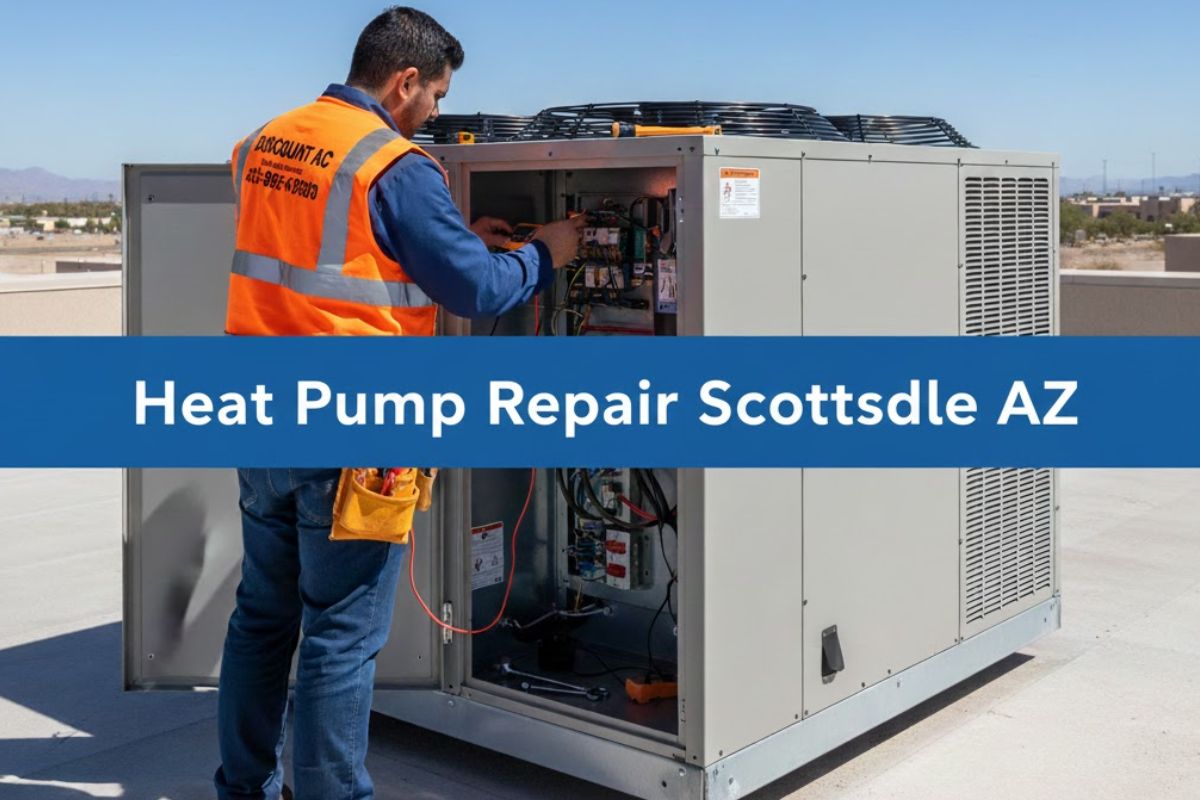
Living in the Sonoran Desert means your home’s climate control system is more than just a luxury—it is a survival tool. In Scottsdale, where summer temperatures regularly soar above 110°F and winter nights can dip near freezing, the heat pump is the unsung hero of residential comfort. Unlike a standard air conditioner that only cools, a heat pump works overtime, providing efficient cooling in the summer and reliable heating in the winter.
However, this year-round workload takes a toll. If your system is making strange noises, failing to switch modes, or driving up your energy bills, you likely need professional heat pump repair Scottsdale AZ.
At Discount AC & Refrigeration, we understand the urgency of a broken system. Whether you are a homeowner trying to keep your family cool or a business owner protecting your inventory, we are here to help. This guide will walk you through the most common heat pump issues we see in the Valley, how to troubleshoot them, and when it is time to call in the experts.
Call now for emergency heat pump repair
How Does a Heat Pump Work?
To understand what can go wrong, it helps to understand how your system operates. A heat pump is essentially an air conditioner that can reverse itself.
- Cooling Mode: It absorbs heat from inside your home and releases it outdoors, just like a standard AC.
- Heating Mode: It absorbs ambient heat from the outdoor air (even when it’s cold) and transfers it inside.
This dual functionality relies on a few critical components that standard ACs don’t have, specifically the reversing valve. Because these systems run virtually non-stop in Arizona, wear and tear happen faster here than almost anywhere else in the country.
Schedule a system inspection today
1. The System Won’t Switch Modes (Heating to Cooling)
This is perhaps the most distinctive issue with heat pumps. You turn your thermostat to “Heat” on a chilly January morning, but cold air blows out. Or, you switch to “Cool” in April, and the system continues to blast hot air.
The Culprit: The Reversing Valve
The reversing valve is a mechanism that changes the direction of the refrigerant flow. If this valve gets stuck, the system cannot switch modes.
How to Fix It:
- DIY Check: Sometimes, the solenoid (the electrical magnet that moves the valve) is just loose or has a bad wire. Visually inspect the outdoor unit for loose wires—but only after turning off the power.
- Professional Repair: If the valve is physically stuck or the solenoid is burnt out, this is not a DIY job. It requires opening the sealed refrigerant system.
If your system is stuck in one mode, do not force it. Request a free estimate for valve replacement
2. The Outdoor Unit is Frozen Over
Seeing a block of ice on your outdoor unit in the middle of a Scottsdale summer is shocking, but it happens more often than you think. In the winter, a light frost is normal, but a thick layer of ice indicates a problem.
Common Causes:
- Low Refrigerant: If the refrigerant level drops due to a leak, the pressure drops, causing the coil temperature to plummet below freezing. humidity in the air then freezes instantly on the coils.
- Restricted Airflow: If air cannot move over the coils to warm them up, they will freeze.
How to Fix It:
- Check the Filter: A dirty air filter is the #1 cause of airflow restriction. Replace it immediately.
- Turn it Off: Turn the thermostat to “Fan Only” to let the ice melt. Never pick at the ice with a sharp object; you will puncture the coils.
- Call a Pro: If the filter was clean, you likely have a refrigerant leak.
Do not let a frozen unit destroy your compressor. Schedule emergency repair service
3. Blowing Cold Air in Winter (Auxiliary Heat Issues)
Heat pumps naturally blow air that feels cooler than a gas furnace (around 90-95°F vs 120°F). However, if the air feels undeniably cold (room temperature or lower), something is wrong.
The Defrost Cycle
In winter, your outdoor unit may freeze up naturally. The system enters “Defrost Mode,” temporarily switching to air conditioning mode to heat up the outdoor coils and melt the ice. To prevent freezing you inside, the “Auxiliary Heat” (electric heat strips) should turn on.
If you feel cold air:
- The unit might be in defrost mode, but the heat strips are broken.
- The reversing valve might be stuck in cooling mode.
Troubleshooting: Wait 10-15 minutes. If the system doesn’t return to blowing warm air, the defrost board or heat strips are likely faulty.
Contact us to fix your heating issues
4. Short Cycling (Turning On and Off Frequently)
Does your heat pump turn on for 5 minutes, shut off, and then turn back on 5 minutes later? This is called short cycling, and it is a death sentence for your energy bill and your compressor.
Why It Happens:
- Oversized Unit: The system cools/heats the house too fast and shuts down before removing humidity.
- Thermostat Location: If the thermostat is directly under a vent or near a sunny window, it gets “confused” about the true room temperature.
- Clogged Filter: The system overheats due to lack of airflow and triggers a safety shut-off.
How to Fix It: Check your filter first. If it is clean, check your thermostat placement. If the problem persists, you may have a failing “run capacitor” or a refrigerant issue.
Get a professional diagnostic check
5. Electrical Failures: The Arizona Heat Factor
Electronics hate heat. In Scottsdale, the components inside your outdoor unit are baking in 115°F+ weather all summer.
The Capacitor
The capacitor is like a battery that gives your compressor and fan the jolt of energy they need to start. When capacitors fail (often bulging or leaking oil), the unit will hum but the fan won’t spin.
Symptoms:
- Humming noise from the outdoor unit.
- Fan not spinning.
- Circuit breaker tripping repeatedly.
The Fix: Capacitor replacement is a quick, affordable repair for a licensed technician. However, attempting to change it yourself without discharging the stored energy can result in a dangerous electric shock.
Call now for safe electrical repairs
6. Strange Noises: What Do They Mean?
Your heat pump should be relatively quiet. If it starts making new sounds, it is trying to tell you something.
- Grinding/Metal-on-Metal: Usually a worn-out fan motor bearing. If you catch it early, you can replace the motor. If you wait, the wobbling fan can destroy your unit’s casing.
- Hissing: A loud hiss usually indicates a major refrigerant leak or a valve issue.
- Rattling: Often just loose panels or debris (leaves/twigs) in the outdoor unit.
- Screeching: A slipping belt or a compressor under dangerously high pressure.
If you hear grinding or screeching, turn the system off immediately. Book a noise inspection
7. Airflow Issues and the “Dust Storm Effect”
Scottsdale is prone to haboobs (dust storms). This dust coats the outdoor condenser coils, acting as an insulating blanket. This prevents the heat pump from releasing heat in the summer or absorbing it in the winter.
The Impact:
- Higher electric bills.
- The system runs constantly but never reaches the set temperature.
- Compressor overheating.
Maintenance Tip: Rinse your outdoor unit with a gentle stream from a garden hose (do not use a pressure washer!) after major dust storms. Ensure you change your indoor filters monthly during the summer.
Sign up for our maintenance plan to keep your coils clean year-round.
8. Thermostat Malfunctions
Sometimes the heat pump is fine, but the “brain” controlling it is broken.
- Dead Batteries: If the screen is blank, try new batteries.
- Bad Connection: If the thermostat clicks but the unit doesn’t turn on, the wiring signal might be interrupted.
- Incompatibility: If you recently installed a DIY smart thermostat (like a Nest or Ecobee), you may have wired it incorrectly for a heat pump system. Heat pumps require a specific “O/B” wire setup to control the reversing valve.
Get expert thermostat installation
DIY vs. Professional Repair: Where to Draw the Line
We love empowered homeowners, but heat pumps involve high-voltage electricity and high-pressure refrigerant gases.
Safe DIY Tasks:
- Replacing air filters.
- Cleaning debris around the outdoor unit.
- Replacing thermostat batteries.
- Checking circuit breakers.
Call a Professional When:
- The unit is making loud noises.
- There is ice on the coils.
- The breaker keeps tripping (this is a fire hazard).
- You smell burning or “dirty socks” (mold/mildew in the coils).
- The system won’t switch from heat to cool.
Attempting to fix refrigerant leaks or electrical components yourself can void your warranty and puts your safety at risk.
Trust the local experts – Call Discount AC & Refrigeration
Why Maintenance is Critical in Scottsdale
The best way to avoid a breakdown in the middle of a July heatwave or a December freeze is preventative maintenance. Because heat pumps work year-round, they require two tune-ups a year:
- Spring Tune-Up: To prepare for the cooling season.
- Fall Tune-Up: To check the reversing valve and heating strips for winter.
Regular maintenance ensures your manufacturer warranty stays valid and can extend the life of your unit by 5–10 years.
Conclusion: Don’t Let a Broken Heat Pump Ruin Your Day
A malfunctioning heat pump in Arizona is an emergency. Whether it’s a simple capacitor failure or a complex refrigerant leak, diagnosing the issue correctly the first time saves you money and frustration.
At Discount AC & Refrigeration, we have been serving the Scottsdale area with honesty, integrity, and technical expertise. We don’t just fix parts; we solve problems to ensure your home remains a sanctuary of comfort.
Ready to get your system running like new?
- Call Us Now for immediate service.
- Request a Free Quote online.
- Schedule a Repair with our certified technicians.
Do not wait until the temperature becomes unbearable. Let us handle your heat pump repair Scottsdale AZ needs today!
More Resources for Scottsdale Homeowners
- Looking for a new system? Read our guide on New AC Installation.
- Business owner? Check out our Commercial HVAC Services.
- Need specialized cooling? Explore Ductless Mini-Splits.
- Want to save money? Learn about our Referral Program.
- Have a question? Contact Us directly.