Dirty AC coils are the #1 efficiency killer and a top-3 cause of early compressor failure in Phoenix. Here’s what happens when coils get fouled, how to spot the signs, and what proper cleaning involves.
Two Coils, Two Very Different Problems
Your AC system has two coil sets. The condenser coil sits in the outdoor unit and releases heat outside. The evaporator coil sits in the indoor air handler and absorbs heat from your home’s air. Both accumulate deposits — but from different sources and with different consequences.
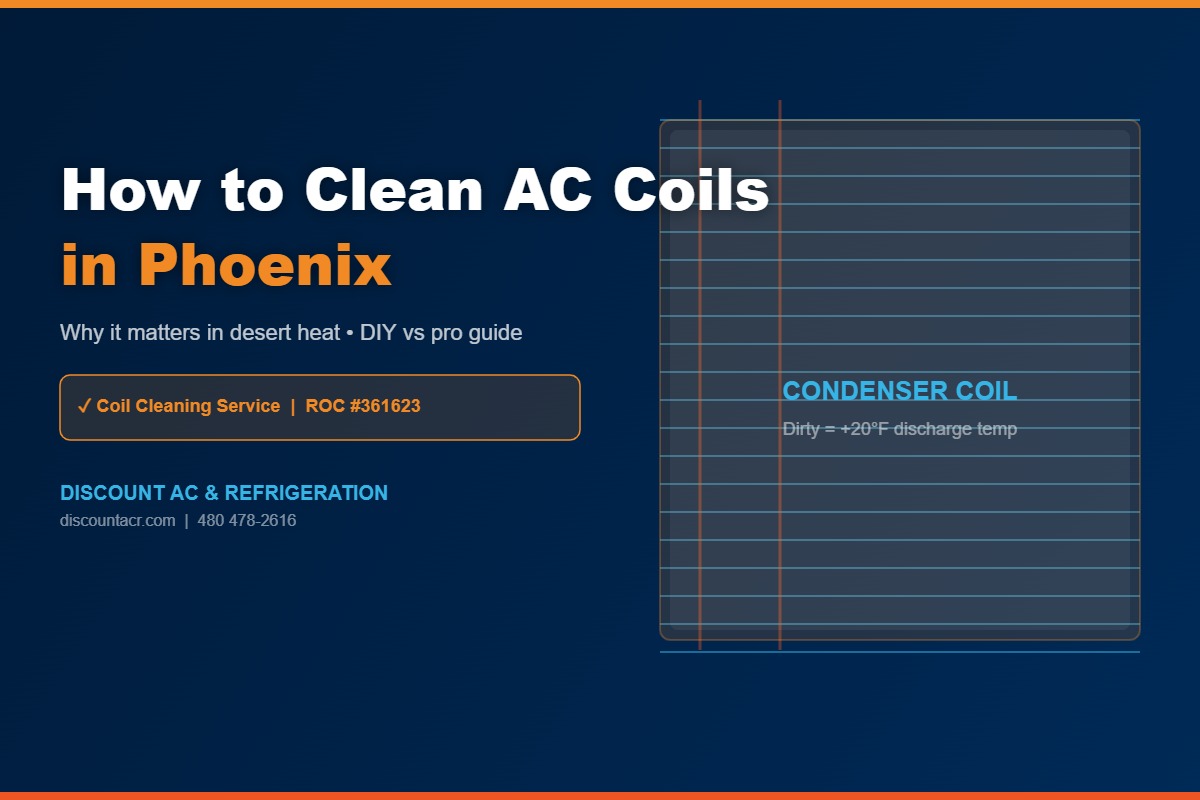
Condenser coil fouling in Phoenix is accelerated by dust storms, cottonwood seeds (April–May), and desert dust that packs tightly between fins. When the condenser coil is dirty, the system can’t release heat efficiently — head pressure climbs, discharge temperatures spike, and the compressor overheats. In Phoenix’s already extreme ambient temperatures, this is a fast path to compressor failure.
Evaporator coil fouling happens more slowly but degrades air quality and dehumidification. A dirty evaporator restricts airflow, can cause the coil to freeze, and creates a breeding environment for mold and bacteria — a real concern during monsoon season when humidity spikes.
How to Clean Condenser Coils (What a Pro Does)
| Step | Method | DIY Safe? |
|---|---|---|
| Rinse exterior debris | Garden hose, low pressure, inside-out | Yes — monthly in summer |
| Apply coil cleaner | No-rinse foam cleaner or alkaline solution | Yes with care |
| Straighten bent fins | Fin comb tool | Yes (careful) |
| Deep chemical clean | Commercial coil cleaner with flushing | Pro recommended |
| Evaporator coil clean | Requires air handler access, spray cleaner | Pro only |
Signs Your Coils Need Cleaning Now
Your AC is running but can’t reach the set temperature. Electric bills are suddenly higher without a change in habits. The unit is blowing air that isn’t as cold as it used to be. The condenser fan is running but the discharge air (from the top of the outdoor unit) doesn’t feel hot — it should feel very warm. Visible matted debris on the condenser fin surface. Any of these in a Phoenix summer is a call to action.
A dirty condenser coil can increase energy consumption by 10–15% and raise discharge temperatures by 10–20°F — enough to take a marginal compressor over the edge on a 115°F day. Regular cleaning is the single highest-ROI maintenance action for Phoenix homeowners. See our Phoenix AC service to schedule coil cleaning or call 480 478-2616.
Frequently Asked Questions
Answered by Discount AC & Refrigeration — EPA Certified · ROC #361623 · Phoenix, AZ