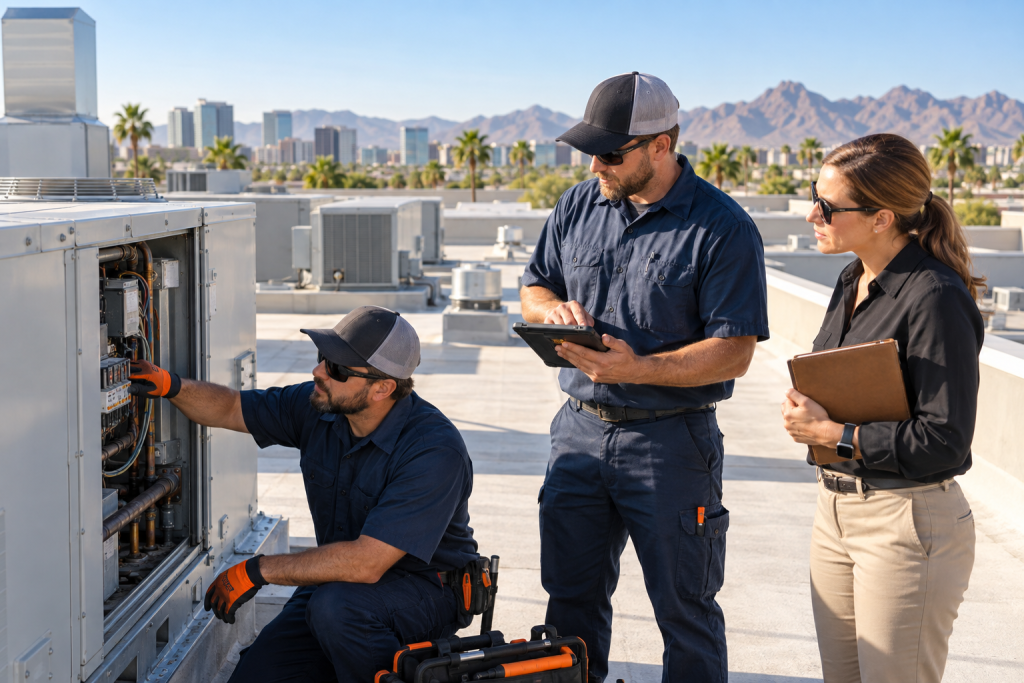
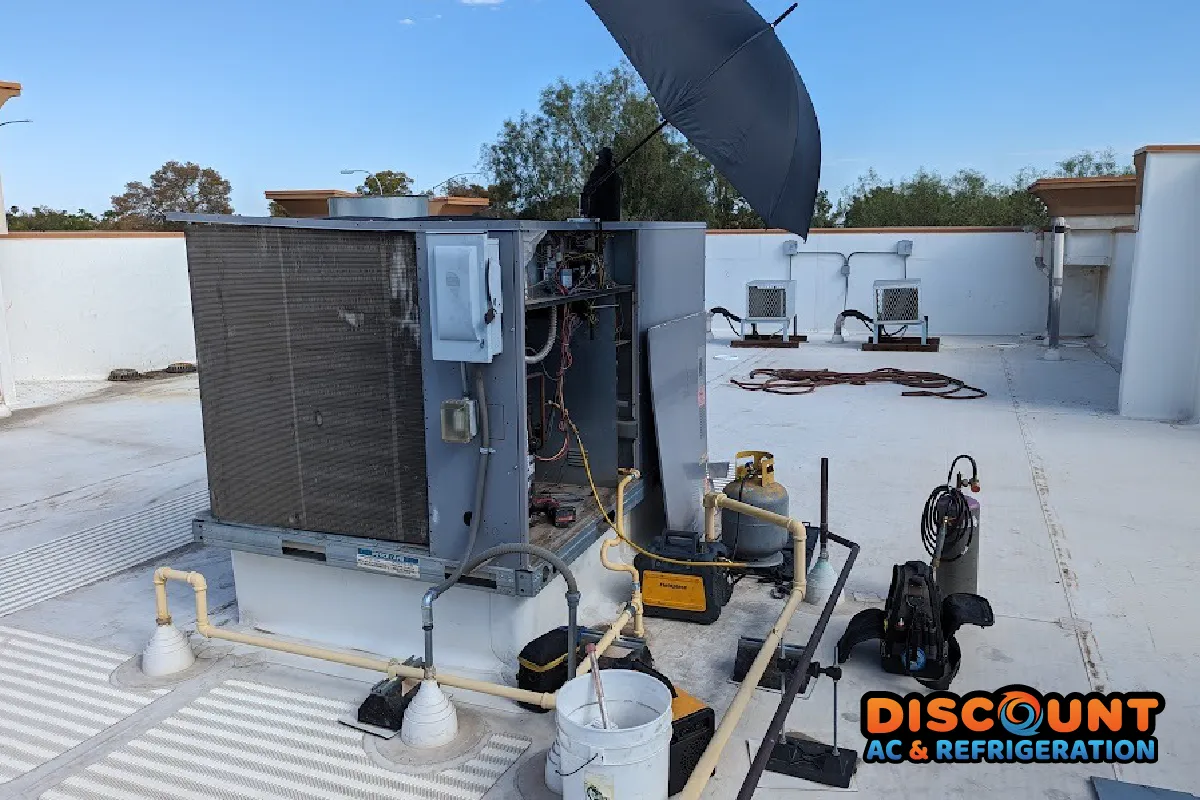
Commercial AC installation cost in Arizona depends on whether you are replacing existing equipment or building a new cooling system. Published rooftop-replacement examples start in the several-thousand-dollar range and reach tens of thousands for larger units. A new installation with ductwork, electrical changes or multiple zones needs a separate project estimate.
This guide gives price references, explains their limits and provides a checklist for comparing complete installation proposals. For an existing roof-mounted unit, our Phoenix rooftop unit replacement cost guide covers that specific project in more detail.
Commercial AC Cost Ranges: What the Published Prices Cover
| Project reference | Published range | Important limitation |
|---|---|---|
| Phoenix rooftop-unit replacement | About $6,500–$16,000+ per unit | Capacity is not specified in the local contractor’s headline range. Larger projects may cost more. |
| 5-ton rooftop replacement, Southern California example | $9,500–$16,000 | Different market; source includes crane, curb adapter and electrical. |
| 10-ton rooftop replacement, Southern California example | $18,000–$32,000 | Comparison reference, not an Arizona installation quote. |
| 20-ton rooftop replacement, Southern California example | $38,000–$65,000 | Large-unit reference; cannot be applied to a different system design. |
| New commercial system, multiple units, VRF or chiller project | Site-specific design and quote required | The rooftop replacement figures above do not price a complete building installation. |
Pricing disclaimer: These third-party advertised ranges were reviewed October 11, 2026. They are planning references, not Discount AC & Refrigeration prices, a verified Arizona market average or a binding offer. Actual pricing depends on the building, equipment, scope and current availability. Confirm permits, taxes, roof work, ductwork, electrical work and other inclusions in a written proposal.
Price sources: Phoenix Commercial HVAC for the Phoenix reference, and DC Air and Heating for the clearly labeled Southern California examples.
Replacement vs. New Commercial AC Installation
Equipment replacement: An existing system may offer usable ducts, electrical supply and mounting infrastructure. Those items still need to be assessed for condition and compatibility; their presence does not mean they can all be reused.
New installation or tenant improvement: The project may need new distribution, controls, connections and coordination with other building work. Request the entire scope rather than comparing it with a replacement-only price.
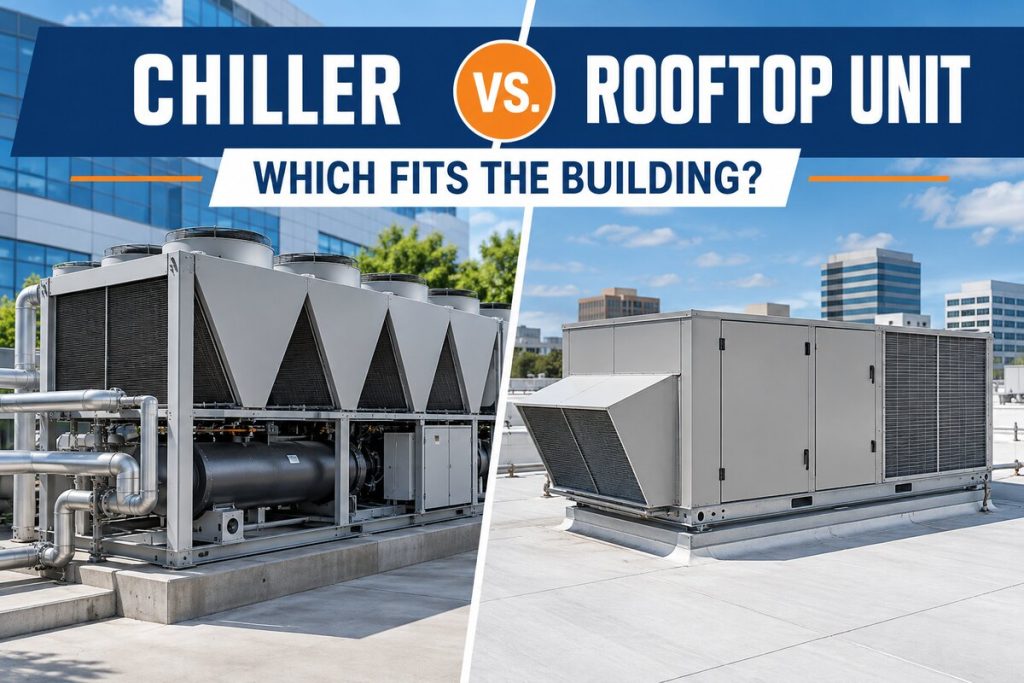
Multiple zones or equipment types: A VRF/VRV system, a chiller project and a rooftop-unit replacement are different proposals. The number of indoor zones, connected equipment and distribution work must be identified before their prices can be compared.
What Should a Commercial HVAC Installation Quote Include?
| Quote item | Question to ask |
|---|---|
| Equipment and design | Which models, capacities, accessories and controls are specified, and what sizing basis supports them? |
| Installation labor | What work is included, and are access restrictions or after-hours work priced? |
| Ductwork and distribution | What will be reused, modified or replaced, and who is responsible for that work? |
| Electrical and other connections | Does the proposal include required connection changes or quote them separately? |
| Roof access and lifting | Are crane service, curb work, roof protection and related responsibilities identified? |
| Approvals and inspections | Who confirms applicable requirements, obtains approvals and pays the associated fees? |
| Removal and disposal | Is removal of old equipment included, and what site cleanup is provided? |
| Startup and handover | What operating checks, settings, equipment records and training are included? |
| Warranty and exclusions | What are the equipment and labor terms, registration requirements and exclusions? |
Ask the contractor to identify fixed-price items, allowances and potential change orders. If two proposals differ materially, resolve the scope difference before deciding that one is cheaper.
Capacity, Efficiency and Operating Costs
Do not select capacity from floor area alone or assume that the old unit was correctly sized. Building use, occupancy and improvements can change the load. The Department of Energy’s RTU sizing guidance explains why replacement should include a review of current requirements.
For an efficiency upgrade, ask for the assumptions behind any projected savings: operating schedule, existing equipment performance, proposed equipment and utility rates. Compare the equipment ratings appropriate to the system being proposed. A higher purchase price does not by itself establish the payback period, and no fixed savings percentage applies to every building.
Also ask how the completed installation will be verified. The DOE describes commissioning as checking that systems are installed and operating according to the design requirements.
Budget for the Schedule as Well as the Equipment
Request the equipment lead time, expected on-site work duration and cooling shutdown window separately. Confirm what must happen before the installation date can be committed, including delivery, access and applicable approvals.
For an occupied business, discuss tenant access, sensitive inventory and operating hours before accepting the schedule. If temporary cooling or phased work is needed, have its availability, responsibility and cost included in the proposal. Do not assume an off-season date automatically guarantees a particular discount.
Request a Commercial AC Installation Estimate
Discount AC & Refrigeration provides commercial AC installation in the Phoenix metro. Call (480) 478-2616, 6 AM–midnight, seven days a week, to discuss your project and confirm assessment availability.
Have the property address, type of business, approximate area served, known equipment details, current symptoms and preferred work window ready. Photos or equipment records already available can help start the conversation; do not access an unsafe roof or equipment area to collect them.
Frequently Asked Questions
What is the average commercial AC installation cost in Arizona?
There is no single average established by the references on this page. The table contains identified contractor ranges for rooftop replacement, with different capacities and markets. A complete new installation needs its own scope and quote.
Does the advertised unit price include installation?
Confirm the exact inclusions. Equipment-only prices and complete installed proposals are not directly comparable. Ask specifically about labor, lifting, connections, approvals and startup.
Can existing ductwork lower the cost?
Reusing suitable infrastructure may reduce the required work, but its condition and compatibility need assessment. Ask the proposal to state what can be reused.
How do I compare commercial HVAC quotes?
Compare the same equipment requirements and included work, then review exclusions, schedule assumptions and warranty terms. Use the checklist above to resolve missing items.
Does this price guide apply to home AC installation?
Residential projects have a different scope. Use our home AC installation cost guide for residential planning and request a quote for your property.