Root cause: gas station equipment installation Maricopa County outcomes vary widely based on system sizing, Arizona’s extreme heat loads, permit complexity, and whether your contractor holds an active ROC license — factors that determine whether your systems run reliably all summer or fail on the hottest weekend of the year.
Every summer, gas station and convenience store operators across Maricopa County face the same costly reality: a refrigerated display case that can’t hold temperature in 115°F heat, a rooftop HVAC unit struggling under maximum load, or an ice merchandiser that goes down on a Saturday afternoon with a line out the door. When equipment fails during peak season, you lose product, you lose revenue, and — in a market this competitive — you lose customers.
The good news: a well-planned commercial refrigeration and HVAC installation, executed by licensed professionals who know Arizona’s desert conditions, sets your operation up for years of dependable performance. This guide covers every phase of large-scale gas station equipment installation in Maricopa County — from system selection and heat load analysis to permitting, code compliance, and post-installation maintenance.
The team at Discount AC & Refrigeration has over 20 years of experience in AC and refrigeration for homes and businesses across Arizona. We understand what commercial systems need to withstand 110–115°F summers, monsoon humidity swings, and the relentless dust that infiltrates every mechanical component in the Phoenix East Valley.
The Role of HVAC and Refrigeration in Gas Station Equipment Installation Maricopa County
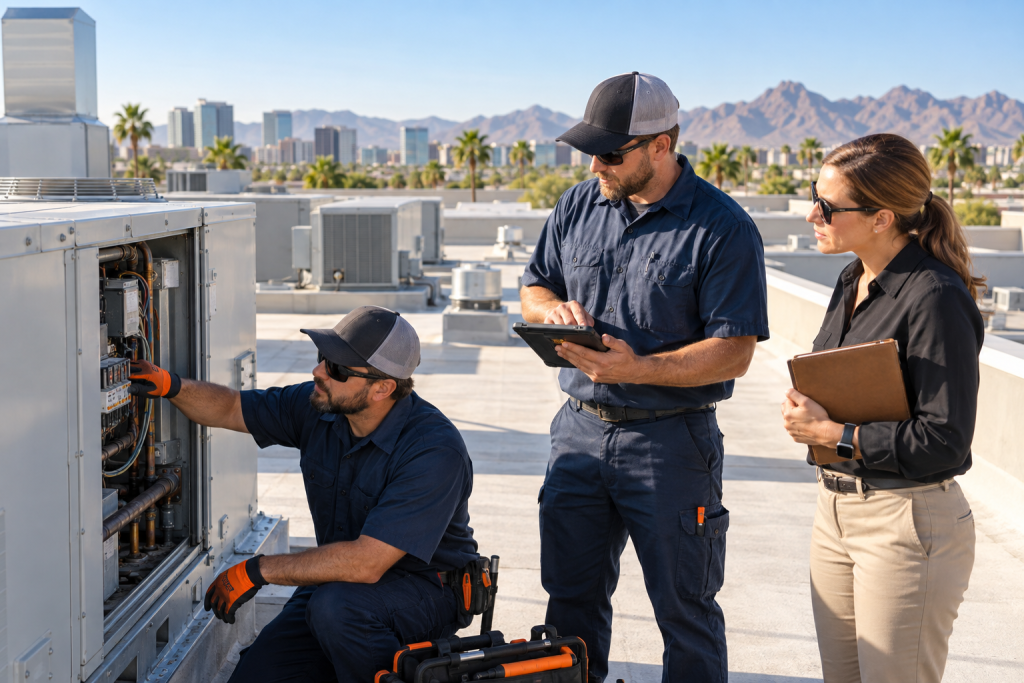
A gas station convenience store is one of the most demanding commercial environments for mechanical systems. Our licensed HVAC technicians at Discount AC & Refrigeration regularly see systems fail prematurely at these locations because the original installation didn’t account for:
- High customer traffic — constant door openings elevate the interior heat and humidity load throughout the day
- Dense refrigerated case load — an average c-store has 15–25 linear feet of reach-in cooler doors, each contributing heat rejection to the interior
- Outdoor ambient temperatures regularly reaching 110–115°F in Maricopa County from May through September
- 24/7 operating hours — no overnight recovery window for HVAC or refrigeration systems
- Monsoon season latent loads — July through September brings humidity spikes that overwhelm systems not sized for dehumidification duty
Properly designed commercial HVAC and refrigeration systems account for all of these variables before a single piece of equipment is specified. A correct heat load calculation — not a rule-of-thumb estimate — is the foundation of every successful installation we complete.
Key Equipment Categories for Gas Station Installations
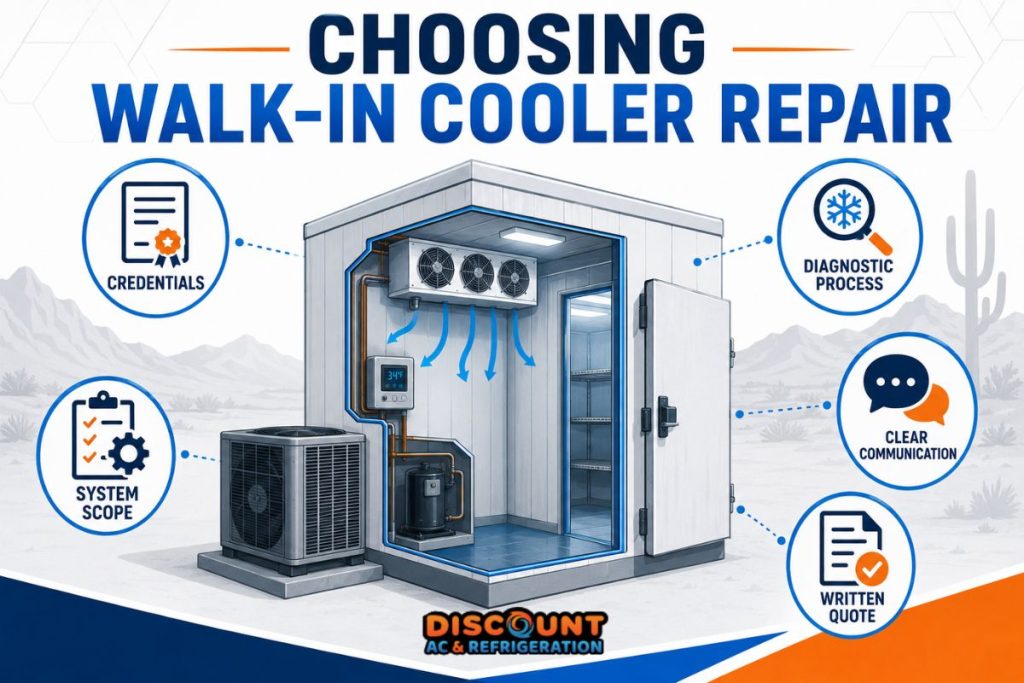
Refrigerated Display Cases and Walk-In Coolers
The beverage cooler is the revenue centerpiece of your convenience store. For Arizona installations, display case specification must address the following:
- Glass-door reach-in display cases should be sized for the elevated ambient load created when outdoor heat infiltrates through the building envelope — standard mainland specs consistently underperform in Maricopa County
- Walk-in coolers for back stock require reinforced panel insulation (minimum R-32) to maintain temperature against a 115°F exterior differential
- Remote condensing units mounted on rooftops must carry high-ambient ratings and be positioned or shaded to reduce head pressure and prevent high-pressure lockouts
- All refrigeration equipment should meet ENERGY STAR certification standards for commercial food service equipment — critical for long-term operating cost management
Our commercial refrigeration installation team sizes every system with full heat load calculations per ASHRAE 15 Safety Standard. We don’t guess — we calculate.
Commercial HVAC Systems for the Store Interior
Gas station convenience stores in Maricopa County require robust rooftop HVAC systems that handle:
- Ventilation per ASHRAE 62.1 minimum outdoor air requirements
- Makeup air compensation for kitchen hood exhaust (if the store includes a deli or roller grill setup)
- SEER2-compliant equipment per current Arizona and Maricopa County code
- Variable-speed or two-stage compressor technology to avoid energy waste during cooler morning hours
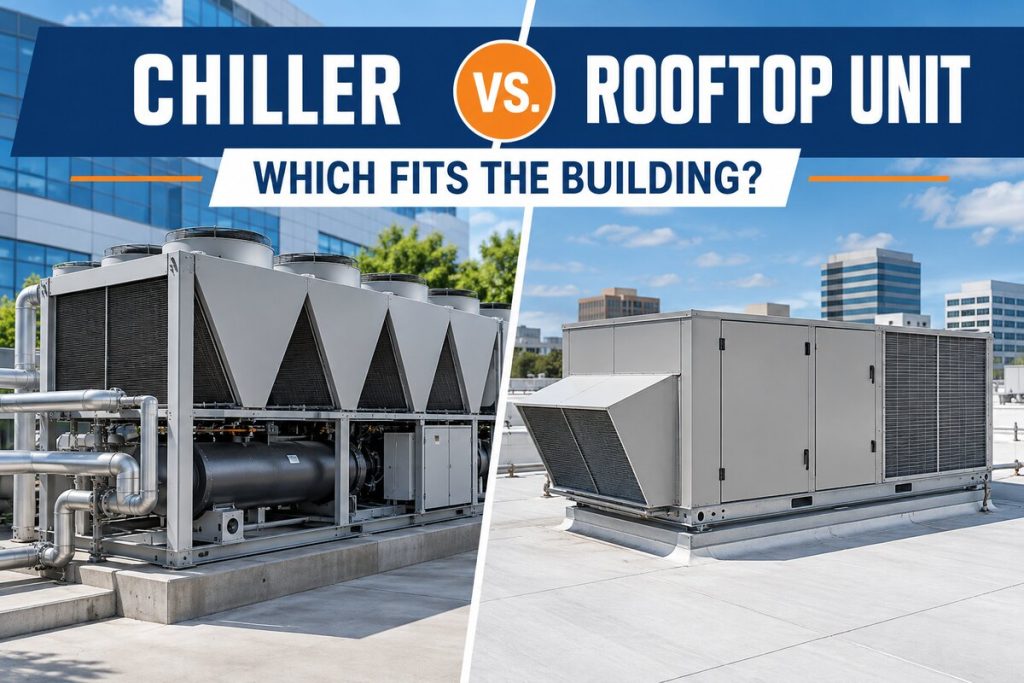
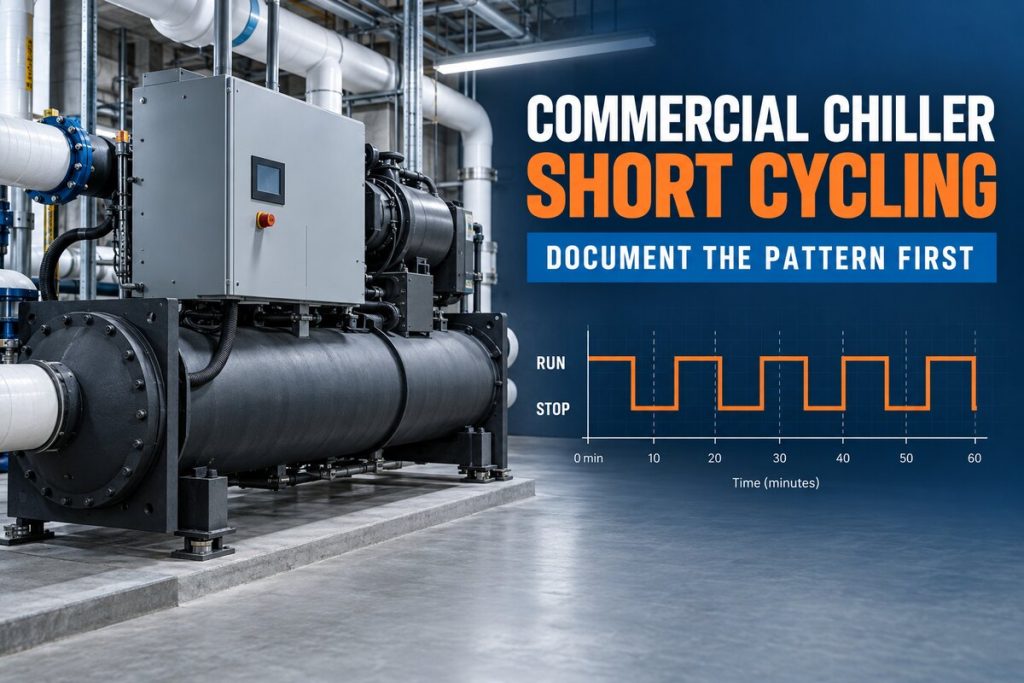
Modern variable-capacity rooftop units (RTUs) are the preferred solution for most convenience store installations. They modulate capacity precisely — avoiding the short-cycling and premature wear caused by single-stage units running at full output in a partially-loaded store. Call (480) 478-2616 to discuss RTU options sized for your specific square footage and occupancy load.
Ice Merchandisers and Outdoor Coolers
Outdoor ice merchandisers are a high-revenue, high-failure-risk piece of equipment in Arizona. Correct installation requires:
- Units rated for full-sun outdoor operation up to 120°F ambient (verify manufacturer’s nameplate rating, not just listing specs)
- Level concrete pad installation with a minimum 18-inch clearance on all sides for condenser airflow
- Dedicated electrical circuits with GFCI protection and ampacity sized to the nameplate plus a 25% safety margin
Gas Station Equipment Installation Maricopa County: Common Challenges and Solutions
The table below captures the most frequent failures our team diagnoses during and after gas station equipment installation projects across Maricopa County. Each issue has a preventable root cause — and a proven field solution.
| Problem | Root Cause | Best Practice Solution |
|---|---|---|
| High head pressure / lockout | Ambient temp exceeding condensing unit rating; inadequate rooftop clearance | Specify high-ambient units (rated to 120°F+); install shade screens; maintain 24" clearance on all sides |
| HVAC insufficient cooling | Undersized system; no heat load calculation; refrigeration case heat rejection not factored | Full Manual J/N calculation before selection; account for all internal heat sources including display case condenser rejection |
| Compressor failure within 2 seasons | Dirty condenser coils from Arizona dust; inadequate airflow; incorrect refrigerant charge at startup | Monthly coil cleaning May–September; verify charge with sub-cooling/superheat at startup; document startup readings |
| Refrigerant leaks in first season | Substandard copper line sets; improper brazing; vibration from rooftop equipment not isolated | Use Type L hard-drawn copper; nitrogen-purge and pressure-test to 450 PSI before charging; install vibration isolation |
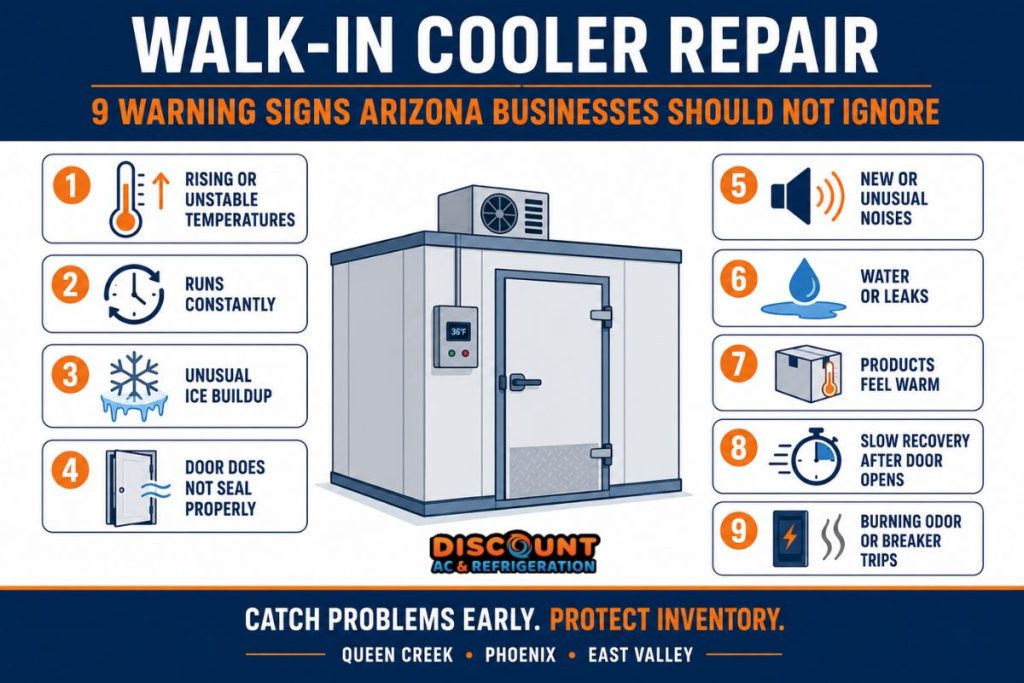
| Walk-in cooler temperature instability | Panel joint air infiltration; door gasket failure; incorrect evaporator fan arrangement | Pressure-test enclosure before refrigerant charge; verify door hardware alignment and gasket compression |
Understanding these failure modes before the installation begins is the difference between a system that runs five years without a major repair and one that’s generating emergency service calls every summer.
Permits, Code Compliance, and ROC Licensing for Maricopa County Installations
One of the most costly mistakes in large-scale gas station equipment installation is beginning work before securing the correct permits. In Maricopa County, commercial HVAC and refrigeration installations typically require:
- Mechanical permits from Maricopa County Development Services — or the relevant city building department if the site falls within incorporated city limits
- Electrical permits for any new or modified circuits serving HVAC condensing units, refrigeration systems, or ice merchandisers
- A licensed contractor — verifiable through the Arizona Registrar of Contractors (ROC)
Discount AC & Refrigeration holds ROC License 361623 — fully licensed and bonded for commercial mechanical and refrigeration work throughout Arizona. Our team manages all permit applications, inspection coordination, and final sign-off on your behalf.
We also maintain full compliance with EPA Section 608 refrigerant handling regulations across all system types, including R-410A, R-448A, R-449A, and R-32 refrigerants now common in new high-efficiency equipment.
If your convenience store operates a deli, roller grill, or prepared food program, all food-zone refrigeration equipment must meet NSF/ANSI 7 standards — a compliance point that Maricopa County Environmental Health checks during food service inspections.
Planning Your Installation: Timeline and Sequencing
A large-scale gas station equipment installation in Maricopa County follows a critical sequence. Compressing any phase creates downstream problems — especially permit timing.
- Phase 1 — Site survey and heat load calculation: 1–2 business days on-site
- Phase 2 — Equipment specification and procurement: 1–3 weeks (longer for custom walk-in panels or specialty condensing units)
- Phase 3 — Permit application and approval: 2–4 weeks depending on the municipality
- Phase 4 — Rough-in work: Refrigerant line sets, drain lines, electrical rough-in, structural supports
- Phase 5 — Equipment installation and startup: Refrigerant charge, electrical terminations, control wiring, temperature setpoint verification
- Phase 6 — Inspection, commissioning, and sign-off: Final walkthrough with inspection agency and facility manager
For projects where you need accurate budget planning alongside scheduling, our team also provides detailed estimates comparable to what we publish for AC replacement cost estimates in Gilbert — same transparency, same process, scaled to commercial project scope.
Post-Installation Preventive Maintenance: Protecting Your Investment
The best gas station equipment installation is only as strong as the maintenance program that follows it. In Maricopa County’s climate, commercial refrigeration and HVAC systems require more frequent service intervals than national standards suggest.
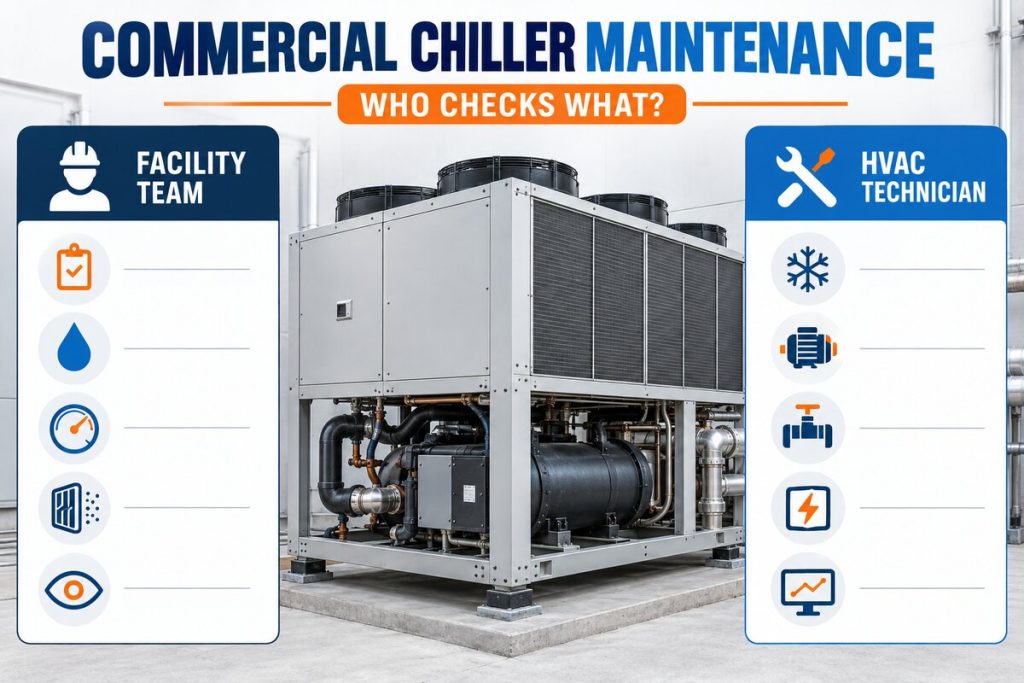
Our commercial HVAC preventive maintenance plans for gas station and convenience store operators include:
- Condenser coil cleaning — minimum twice per year, before summer peak load season and after monsoon season ends
- Refrigerant charge verification and electronic leak checks across all refrigeration circuits
- Electrical connection inspection and retorquing — Arizona’s thermal cycling loosens connections faster than temperate climates
- Display case door gasket inspection and replacement as needed
- Defrost cycle calibration and drain pan inspection on all refrigerated cases
- Rooftop RTU filter replacement and belt inspection (where applicable)
Many well-known local businesses — including restaurants, breweries, and convenience store operators — rely on Discount AC & Refrigeration for ongoing commercial service because our technicians respond fast and diagnose accurately. You can see our verified Google reviews to understand why our clients stay with us long-term.
We also offer a Refer & Earn program for facility managers and contractors who recommend our services to neighboring business operators.
Schedule Your Gas Station Equipment Installation Consultation Today
If you’re planning a large-scale installation project — new construction, a major retrofit, or emergency equipment replacement — the right time to contact us is before you finalize your equipment list, not after a system fails in July.
Our licensed HVAC technicians at Discount AC & Refrigeration are available 6 AM to Midnight, 7 days a week. Call (480) 478-2616 to schedule a site survey and heat load analysis. We’ll give you an honest evaluation of your project scope, a realistic timeline, and transparent pricing — no upsells, no pressure.
For non-urgent requests or written estimates, visit our contact page or reach out directly to our commercial HVAC team. We serve gas stations, convenience stores, restaurants, and facilities throughout Gilbert, Mesa, Chandler, Tempe, Queen Creek, and all of Maricopa County.
If your situation is urgent — equipment down during peak operating hours — our 24/7 emergency AC and refrigeration repair team responds fast. Call (480) 478-2616 right now.
With ROC License 361623 and over 20 years of experience in HVAC and refrigeration across Arizona, Discount AC & Refrigeration is the team you want on a project of this scale and complexity.
What types of equipment does a gas station HVAC and refrigeration installation include?
A large-scale installation typically covers walk-in coolers, reach-in refrigerated display cases, ice merchandisers, rooftop HVAC units for the store interior, and associated electrical and refrigerant line infrastructure. Our commercial refrigeration team handles all system types under one licensed contractor — ROC 361623.
Do I need permits for gas station HVAC and refrigeration installation in Maricopa County?
Yes. Commercial mechanical and electrical installations require permits from Maricopa County Development Services or the relevant city building department. Discount AC & Refrigeration manages all permit applications and inspection coordination on your behalf. Call (480) 478-2616 to get started.
How long does a large-scale gas station equipment installation take in Arizona?
From first site survey to final sign-off, most projects take 6–10 weeks. The permit approval phase (2–4 weeks) is the most variable factor. Equipment procurement lead times for specialty high-ambient condensing units can add 1–3 weeks. Early planning is critical — especially if your target completion falls near the summer peak season.
Why do refrigeration systems installed in Arizona fail faster than in other states?
Arizona’s 110–115°F ambient temperatures push condensing unit head pressure to the upper limit of equipment ratings. Combined with heavy dust accumulation on condenser coils and monsoon-season humidity spikes, systems that aren’t sized and maintained for Arizona conditions typically fail within 2–3 seasons. Our commercial preventive maintenance plans are designed for this specific climate.
What refrigerants are being installed in new commercial systems?
New commercial refrigeration systems are transitioning to lower-GWP refrigerants including R-448A, R-449A, and R-32. New HVAC rooftop units now use R-454B as an R-410A replacement. All our installations comply with EPA Section 608 handling requirements, and our technicians are certified for all current refrigerant types.
What SEER2 rating should I specify for a new gas station HVAC unit?
Arizona requires a minimum SEER2 of 14.3 for packaged rooftop units as of January 2023. For a high-runtime 24/7 convenience store in Maricopa County, we typically recommend SEER2 15–16+ to reduce peak-hour electricity costs. Higher efficiency equipment also qualifies for utility rebates through APS and SRP programs.
What happens if my refrigeration equipment fails during peak summer hours?
Don’t wait. Product spoilage begins within 2–4 hours in Arizona summer heat. Our emergency AC and refrigeration repair team responds fast — available 6 AM to Midnight every day. Call (480) 478-2616 immediately.
Does Discount AC & Refrigeration serve gas stations outside of Gilbert?
Yes. We serve commercial operators throughout all of Maricopa County including Mesa, Chandler, Tempe, Queen Creek, and Apache Junction. For locations in Gilbert, see our Gilbert AC repair and service page. Call (480) 478-2616 to confirm coverage for your location.
Ready to Plan Your Gas Station Equipment Installation in Maricopa County?
Our licensed HVAC and refrigeration technicians (ROC 361623) will evaluate your site, calculate the correct heat load, and give you a transparent installation plan — no pressure, no guesswork. Available 6 AM to Midnight, 7 days a week.