It’s 112°F outside in the East Valley, your thermostat reads 84°F indoors, and the system is running non-stop without cooling the house. Before you panic and assume the worst, understanding how air conditioning works can help you spot the real problem, talk to a technician with confidence, and avoid paying for repairs you don’t actually need. This guide breaks down the entire process — components, refrigerant cycle, and Arizona-specific factors — so you can save time, money, and a long evening sweating in the dark.
Root cause: How air conditioning works depends on a closed refrigerant loop that absorbs heat indoors and releases it outdoors — when any single component fails, the entire cycle breaks down, especially under Arizona’s 110–115°F summer heat load.
Whether you own a home in Gilbert, run a restaurant in Mesa, or manage a commercial facility in Chandler, the physics are the same. What changes is how hard the system has to work — and in the desert, it works harder than almost anywhere else in the country. Our licensed HVAC technicians at Discount AC & Refrigeration have spent over 20 years diagnosing systems that fail under exactly these conditions, and the patterns are predictable once you understand the basics.
The Role of the Refrigerant Cycle in Your HVAC System
Air conditioning doesn’t actually “create” cold air. It moves heat from inside your home to outside, using a refrigerant that changes between liquid and gas states. The four core components that make this possible are:
- Compressor — pressurizes refrigerant gas, raising its temperature so heat can be released outside
- Condenser coil — located in the outdoor unit, dissipates heat to the outside air with a fan
- Expansion valve — drops refrigerant pressure, causing it to cool dramatically
- Evaporator coil — located indoors, absorbs heat from indoor air as the refrigerant evaporates
The blower fan then pushes the cooled air through your ductwork. In a properly sized system, this cycle keeps repeating until your thermostat hits the setpoint. When your AC isn’t keeping up in Arizona summers, one of these four components is almost always the culprit — along with refrigerant charge, airflow restrictions, or duct losses.
How Heat Actually Leaves Your Home
Here’s where many homeowners get confused. The outdoor unit isn’t blowing cold air anywhere — it’s dumping heat. According to the Carrier’s explanation of the cooling cycle, a central AC system in cooling mode transfers thermal energy from indoor coils to outdoor coils through phase changes of the refrigerant.
In a Gilbert home with 115°F ambient temperatures, that heat transfer becomes much harder. The condenser has to push heat into air that’s already extremely hot, which is why systems struggle most during late-afternoon peak load. A homeowner in Gilbert with a 12-year-old system facing those temperatures often notices the unit running for hours without reaching setpoint — that’s typically a sign of refrigerant loss, dirty condenser coils, or a failing compressor, not undersizing.
If you’re noticing similar symptoms, our team handles AC repair in Gilbert and nearby areas with same-day diagnostics.
Quick Diagnosis: Common AC Problems and What They Mean
| Problem | Cause | Solution |
|---|---|---|
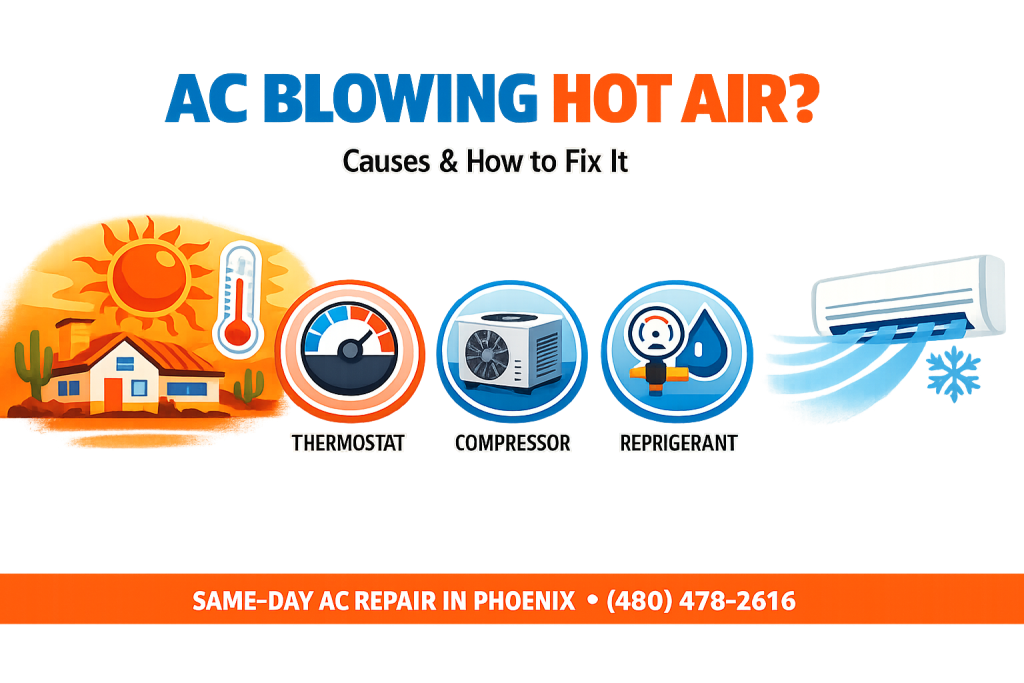
| AC runs but doesn’t cool | Low refrigerant or dirty condenser coil | Leak test, recharge, or coil cleaning |
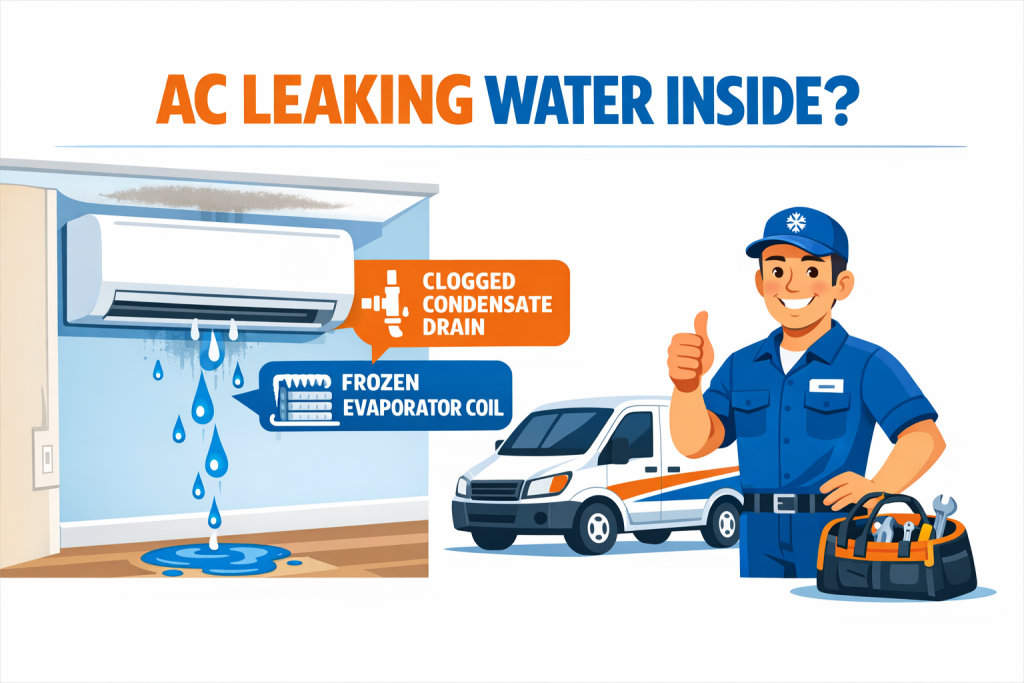
| Warm air from vents | Frozen evaporator coil or blower issue | Thaw system, check airflow, replace filter |
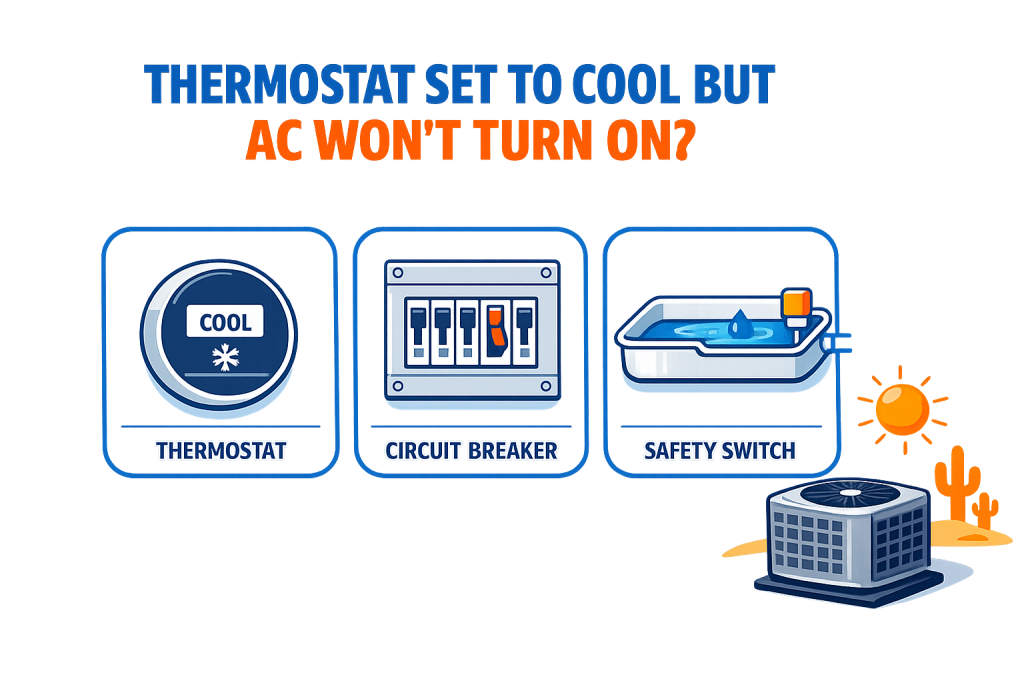
| AC won’t turn on | Tripped breaker, capacitor, or thermostat fault | Licensed electrical inspection |
| Short cycling on/off | Oversized unit, low charge, or thermostat issue | Full diagnostic + load calculation |
Efficiency Standards and SEER2 — Why It Matters in Arizona
SEER2 describes seasonal cooling efficiency under standardized testing. In Arizona, applicable minimum ratings vary with equipment type and capacity; there is no single minimum for every split system. Use our Arizona SEER2 guide and the DOE regional standards guidance to compare the correct category.
What this means in practice:
- A higher seasonal efficiency rating may reduce cooling electricity use, but actual savings depend on the old system, matched equipment, installation and operating conditions.
- Heat load in Phoenix East Valley homes can exceed 4–5 tons for a 2,000 sq ft home
- Refrigerants are transitioning to A2L low-GWP options like R-454B per EPA AIM Act regulations
- A poorly sized system — too big or too small — kills efficiency regardless of SEER2 rating
If you’re weighing repair vs. replacement, our detailed AC replacement pricing in Gilbert breaks down what factors drive cost in our climate.
When to Repair vs. When to Replace
Three or four common scenarios drive this decision:
- System is under 10 years old with a single failed component → repair makes sense
- System is 12+ years old and repair cost exceeds 40% of replacement → replace
- Refrigerant is R-22 (banned for new production) → replace, since recharges are expensive and short-term
- Repeated breakdowns in a single season → replace, the system is signaling end-of-life
A professional diagnosis matters here. We see homeowners pay $1,800 for compressor replacements on systems that need full replacement within 18 months. That’s where honest evaluation pays off — and why working with a verified local HVAC company on Google protects your investment.
Maintenance That Keeps the Cycle Running
The single biggest factor in AC longevity in Arizona isn’t brand or SEER2 — it’s maintenance. Desert dust, monsoon debris, and constant runtime put extreme stress on every component. We recommend:
- Air filter replacement every 30–60 days during cooling season
- Annual coil cleaning before summer (April–May ideal)
- Refrigerant charge verification every 2 years
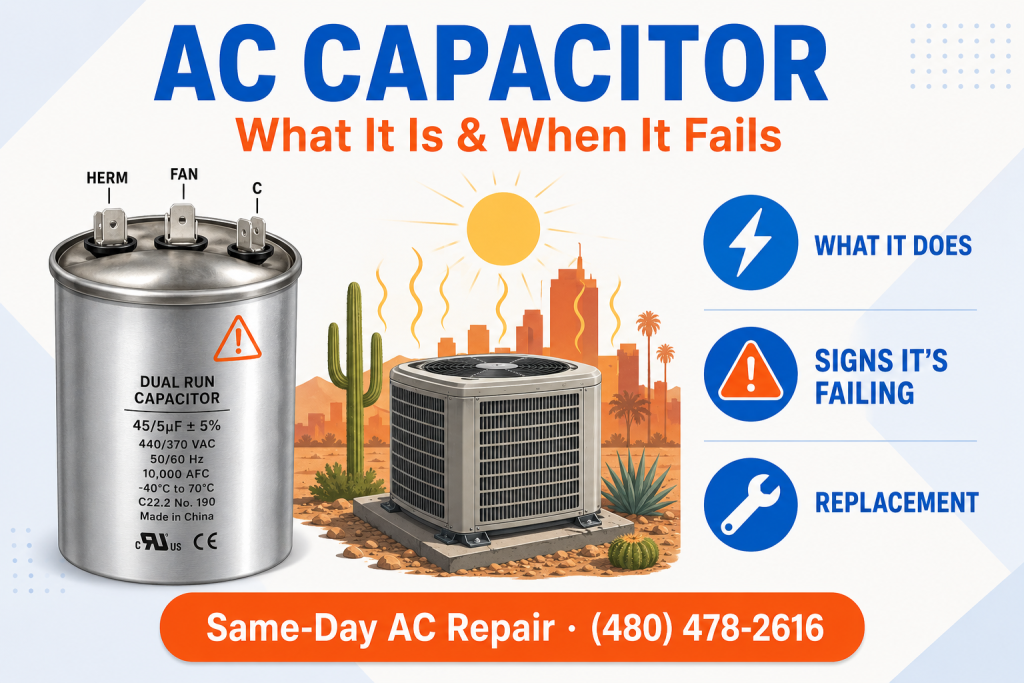
- Capacitor and contactor inspection annually — these are the most common failure points
Our commercial HVAC preventive maintenance program covers all of this on a scheduled basis for restaurants, breweries, and indoor grow facilities across Arizona. For homeowners, we offer the same level of preventive care on flexible plans.
Professional Evaluation and Licensing
Air conditioning work in Arizona requires a licensed HVAC contractor. Discount AC & Refrigeration operates under ROC 361623, and every technician on our team is trained on residential split systems, commercial HVAC, and commercial refrigeration systems. That matters because:
- Refrigerant handling requires EPA Section 608 certification
- Improper installation voids manufacturer warranties
- Electrical work tied to HVAC requires Arizona ROC compliance
- Insurance claims often require licensed-contractor documentation
Our clients across Arizona — including breweries, restaurants, and indoor grow facilities — rely on Discount AC & Refrigeration to keep mission-critical cooling running. Many well-known local businesses trust our team for ongoing AC and refrigeration service, thanks to our fast response times and consistent results. You can read our reputation as Discount AC & Refrigeration in Gilbert directly on Google.
Common Questions Homeowners Ask
How long should an AC system last in Arizona? Typically 10–15 years, but desert heat and dust often shorten that to 8–12 years without consistent maintenance. A well-maintained system with replaced capacitors and clean coils can hit the upper range.
How much does it cost to repair vs. replace? Repairs range $200–$2,500 depending on the component. Full replacement in the East Valley typically runs $7,000–$15,000 installed, depending on tonnage, SEER2 rating, and ductwork condition. Get specifics through our cost estimates for AC replacement in Gilbert.
When should I call for emergency service? Any time indoor temperatures exceed 85°F and the system isn’t responding, especially with elderly residents, infants, or pets in the home. We handle 24/7 emergency AC repair every day from 6 AM to midnight.
If your system is struggling right now, don’t wait for a full breakdown. Contact our team for fast diagnosis, or ask about our Refer & Earn program once we have your home running cool again. Call (480) 478-2616 for same-day service across Gilbert, Mesa, Chandler, Queen Creek, and the entire East Valley.
Frequently Asked Questions
How does central air conditioning actually cool my home?
It moves heat from inside to outside through a refrigerant cycle — the indoor coil absorbs heat, the outdoor coil releases it. Learn more about our HVAC services.
Why is my AC running but not cooling in 110°F weather?
Most often it’s a low refrigerant charge, dirty condenser, or failing compressor. Call us at (480) 478-2616 for same-day diagnostics.
What is SEER2 and why does it matter in Arizona?
SEER2 is the updated efficiency rating for AC systems. In Arizona’s heat, higher SEER2 means lower bills. See AC replacement pricing in Gilbert.
How often should I replace my AC filter in the desert?
Every 30–60 days during cooling season. Desert dust clogs filters faster than humid climates. Ask about our preventive maintenance program.
When should I repair vs. replace my AC?
If repairs exceed 40% of replacement cost or the system is over 12 years old, replacement usually wins. Get a Gilbert AC inspection.
Do you handle commercial refrigeration too?
Yes — restaurants, breweries, and grow facilities across Arizona. Visit our commercial refrigeration page for details.
What is your service area in Arizona?
Gilbert, Mesa, Chandler, Queen Creek, and the East Valley — 6 AM to midnight, 7 days a week. Call (480) 478-2616 for emergency service.
Are you licensed and insured in Arizona?
Yes — ROC 361623, fully licensed and insured with over 20 years of HVAC and refrigeration experience. Contact us for a free quote.
Final Takeaway: Understanding Your AC Pays Off
Knowing how air conditioning works isn’t just useful trivia — in Arizona, it’s the difference between a quick fix and a $10,000 mistake. The refrigerant cycle, the four core components (compressor, condenser, expansion valve, evaporator), and the heat-load reality of 110–115°F summers all work together. When something fails, an informed homeowner can describe the symptoms accurately, ask the right questions, and avoid being upsold on repairs that don’t make sense for the system’s age or condition.
The bottom line: a 12+ year-old system with a major component failure is usually telling you it’s time to replace, not patch. A newer system with a single fault is almost always worth repairing. And in either case, regular maintenance — filters every 30–60 days, annual coil cleaning, capacitor checks — extends life and lowers electric bills more than any single upgrade. Our licensed team at Discount AC & Refrigeration (ROC 361623) is here to give you that honest evaluation, whether your system is in Gilbert, Mesa, Chandler, or anywhere across the East Valley.
Is your AC failing in the Arizona heat?
Our licensed HVAC technicians are available 6 AM to midnight, 7 days a week, to diagnose your system and recommend whether to repair or replace. Honest pricing, no pressure.