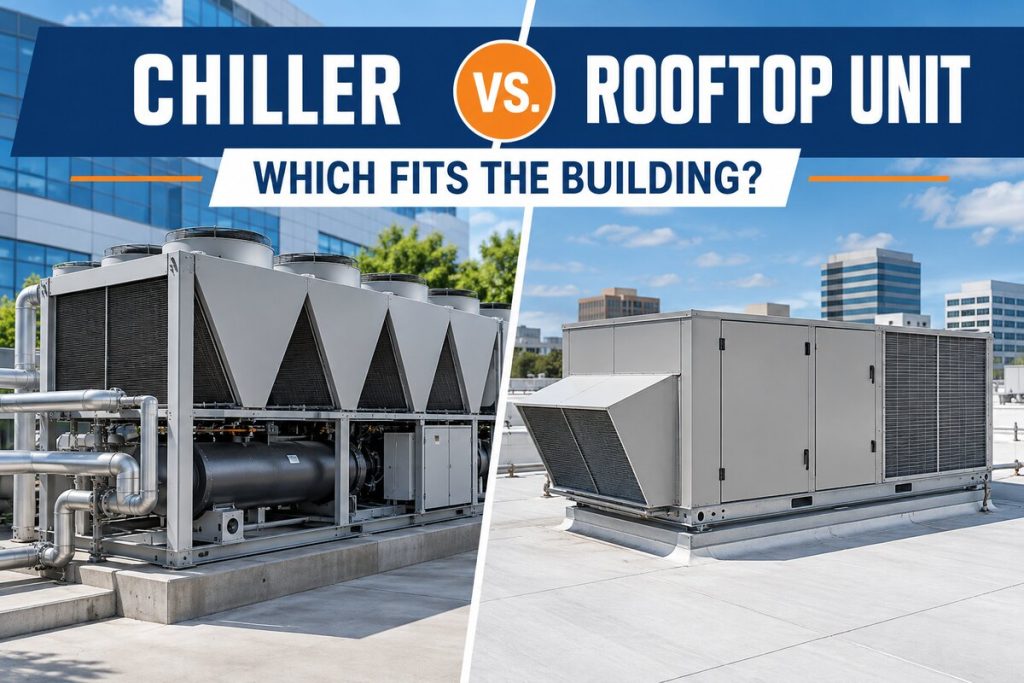
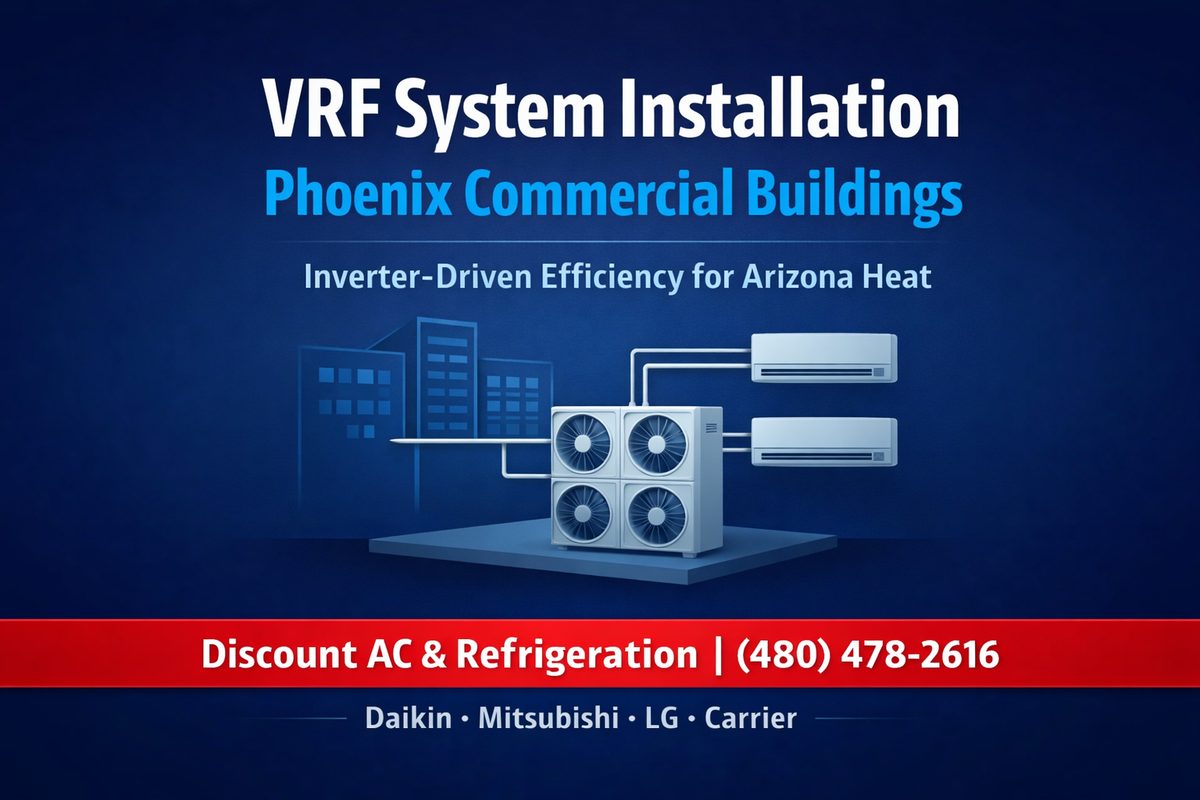
VRF (Variable Refrigerant Flow) systems represent a paradigm shift in commercial HVAC design. Unlike traditional rooftop units that cycle on and off to maintain building temperature, VRF systems use inverter-driven compressors that modulate output continuously, delivering 30-40% energy savings while providing independent temperature control to every zone in your building.
In Phoenix’s extreme heat—where outdoor temperatures spike to 115°F+ and indoor cooling demands are relentless—VRF technology proves its worth. Buildings with diverse thermal zones (offices, data centers, retail floors, stairwells) benefit most. A VRF system cools the busy server room to 68°F while the adjacent conference room set to 74°F uses minimal refrigerant. Traditional systems can’t achieve this efficiency; they blast full-capacity cooling to the entire building regardless of actual demand, wasting energy.
Why VRF Systems Outperform Traditional HVAC in Phoenix
Energy Efficiency Beyond Standard AC
Traditional commercial HVAC relies on fixed-capacity compressors that run at full load or stop entirely. This all-or-nothing operation wastes energy, especially during partial-load conditions (spring, fall, early morning, or late evening). VRF systems deploy inverter technology borrowed from refrigeration and industrial cooling:
- Variable-speed compressors adjust output from 10% to 100% in real-time, matching building demand precisely
- Simultaneous heating and cooling allows one zone to heat while another cools (using heat recovery), redirecting waste heat instead of rejecting it
- No unnecessary cycling eliminates the inrush current spike that consumes 3-7x normal power during startup
- Optimized refrigerant pressure maintains system efficiency even in Phoenix’s 115°F+ summer heat
The result: A well-designed VRF system delivers 8,000-12,000 BTU/ton of cooling in peak Phoenix heat, compared to 7,000-9,000 BTU/ton for traditional RTU systems. That difference translates to 20-30% lower annual energy consumption.
Superior Zone Control
Phoenix’s diverse commercial real estate demands multi-zone comfort. A 20,000 sq ft office building might have:
- South-facing executive offices (high solar heat gain, occupied 8 AM–5 PM)
- North-facing cubicles (minimal solar load, variable occupancy)
- Interior conference rooms (high occupancy at irregular times)
- Lobbies, hallways, mechanical rooms (minimal cooling demand)
- Server rooms requiring 24/7 precise temperature control
Traditional multi-zone systems use VAV (Variable Air Volume) boxes or split units, but they share a single compressor. When one zone demands full cooling, the compressor runs at maximum capacity, over-cooling other zones. VRF systems decouple zones completely: the south-facing offices run at full capacity while the north side modulates down, and the server room holds steady at its setpoint.
Heat Recovery and Winter Efficiency
Phoenix’s winter temperatures (40-65°F) aren’t as severe as northern climates, but buildings still require heating. VRF heat recovery systems capture waste heat from cooling zones and redirect it to heating zones—on the same day. An office building cooling the lobby (afternoon sun) transfers that heat to the north-facing conference room for warming. This reduces heating demand by 20-50% compared to traditional resistance heat or gas furnaces.
VRF System Installation in Phoenix: Design, Size, and Layout
Site Assessment and Load Calculation
Before installation, a Manual J load calculation determines the cooling and heating capacity needed for your building. This accounts for:
- Building orientation, window area, and insulation
- Internal heat loads (equipment, lighting, occupancy density)
- Phoenix’s specific climate data (115°F summer, 40°F winter extremes)
- System diversity (diversity factor: typically 0.6-0.8 accounts for the fact that all zones don’t peak simultaneously)
A 20,000 sq ft office building in Phoenix might have a peak cooling load of 200 tons (240,000 BTU/h) on a 115°F day with all zones occupied. The VRF outdoor unit is sized to this load, but the indoor units can be individually sized for each zone’s actual demand—typically 60% of the peak capacity, thanks to diversity.
Outdoor Unit Selection
VRF outdoor units range from 6 tons (72,000 BTU/h) to 60+ tons for large multi-building campuses. In Phoenix, we commonly install:
- 10-16 ton units for small-to-medium office buildings (5,000-15,000 sq ft)
- 24-36 ton units for mixed-use commercial (retail, offices, hospitality)
- 48+ ton units for large corporate campuses, hospitals, or industrial facilities
Major manufacturers include Daikin, Mitsubishi Electric, Fujitsu, and Trane. Each offers different features:
- Daikin: Renowned for reliability in extreme heat; excellent service network in Phoenix
- Mitsubishi Electric: High efficiency ratings; strong heat recovery for winter
- Fujitsu: Balanced performance and cost; lower noise levels
- Trane: Proprietary controls; integrates with building management systems
The outdoor unit must be positioned for optimal airflow, typically elevated on a curb or roof frame, with clear clearance on three sides. In Phoenix, units should be positioned in shade if possible (on the north side of the building or under a sunscreen) to reduce inlet air temperature by 5-10°F, improving efficiency.
Refrigerant Piping: The Distribution Backbone
VRF systems pipe refrigerant (not air or water) directly to each indoor unit. This eliminates the large ductwork required for traditional systems, freeing up ceiling space and reducing installation costs.
- Main refrigerant lines (liquid and suction) connect the outdoor unit to the branch controller (typically located in a ceiling-mounted box)
- Branch pipes split the refrigerant into multiple circuits, each serving 2-8 indoor units
- Individual risers run to each indoor unit (wall-mounted, ceiling cassette, or floor-standing)
Piping is typically copper tubing with sizes ranging from 3/8″ (for individual indoor units) to 3/4″ (for main supply lines). In Phoenix’s heat, proper insulation of the suction line is critical—uninsulated lines lose efficiency and can sweat and drip.
Installation typically involves:
- Routing refrigerant lines through walls, ceilings, or conduit (following code for accessibility)
- Charge calculations based on line length (longer runs require more refrigerant; typically 0.3-0.5 lbs per foot)
- Evacuation to remove air and moisture (required by EPA; failure here causes compressor failure)
- Leak testing with nitrogen or helium (pressure testing before refrigerant charge)
Installation timeline: 3-6 weeks for a medium-sized commercial building (20,000-30,000 sq ft). Complexity increases with:
- Multi-floor buildings (vertical piping runs require additional support)
- Existing ductwork integration (if converting from traditional systems)
- Building occupancy (night and weekend work to minimize disruption)
- Rooftop access challenges (limited elevator access, weight capacity constraints)
Indoor Unit Options
VRF systems offer flexibility in indoor unit selection, allowing you to match equipment to each zone’s physical constraints:
- Wall-mounted units (3-9 kW): Compact; ideal for offices, small retail, hotel rooms
- Ceiling cassettes (3-14 kW): Blend into drop-ceiling; deliver air on four sides (ideal for open offices)
- Concealed ceiling units (5-16 kW): Hide entirely above suspended ceilings; connect to ductwork for distribution (suits retrofit projects)
- Floor-standing units (7-20 kW): High capacity; excellent for large lobby or retail spaces; occupy floor space
- Slim duct units (9-16 kW): Compact depth; fit between joists or in tight ceiling cavities
A typical 20,000 sq ft office might use:
- 4 ceiling cassettes (one per 5,000 sq ft zone)
- 8 wall-mounted units for individual offices
- 2 floor-standing units for the lobby and server room
- Total indoor units: 14; distributed refrigerant piping serves all
Energy Savings and ROI for Phoenix Commercial Buildings
Comparative Operating Costs
A 20,000 sq ft office building operating 250 days/year, 8 hours/day:
Traditional Rooftop Unit (RTU) System:
- Peak cooling capacity: 240,000 BTU/h (20 tons)
- Average annual cooling hours: 1,500 (part-load and full-load blended)
- EER (Energy Efficiency Ratio): 8-10 BTU/W (typical for RTU)
- Annual cooling energy consumption: 1,500 h × 20 tons × 12,000 BTU/ton ÷ (9.5 EER × 3.41 BTU/W) = 110,000 kWh
- Annual electricity cost (at $0.12/kWh): $13,200/year
VRF System:
- Peak cooling capacity: 240,000 BTU/h (20 tons)
- Average annual cooling hours: 1,500
- EER: 14-16 BTU/W (VRF inverter technology)
- Annual cooling energy consumption: 1,500 h × 20 tons × 12,000 BTU/ton ÷ (15 EER × 3.41 BTU/W) = 68,000 kWh
- Annual electricity cost (at $0.12/kWh): $8,160/year
Annual savings: $5,040 (38% reduction)
Payback Analysis
VRF system cost for a 20,000 sq ft building:
- Outdoor unit (16 tons): $8,000-$10,000
- Indoor units (14 total): $4,000-$6,000
- Refrigerant piping, controls, electrical: $6,000-$8,000
- Installation labor: $8,000-$12,000
- Total installed cost: $26,000-$36,000 (average $31,000)
RTU replacement cost for comparison: $15,000-$20,000 installed
Payback period: ($31,000 − $17,500) ÷ $5,040 = 2.7 years
Over a 20-year system lifespan, the VRF system saves $100,800 in energy costs alone, plus additional savings from:
- Reduced demand charges (lower peak power draw due to inverter modulation)
- Maintenance cost reductions (inverter systems have fewer mechanical failures)
- Increased property value (energy-efficient buildings command lease premiums)
VRF System Maintenance and Service
VRF systems are more complex than traditional units, requiring specialized training:
Preventive Maintenance (Twice annually—before cooling and heating seasons):
- Filter changes (typically washable or 12-month replaceable)
- Refrigerant pressure and superheat verification
- Condensate drain cleaning (critical in Phoenix’s dust)
- Outdoor unit coil cleaning (dust and pollen accumulation)
- Electrical connection inspection
- Control board diagnostics (system log review)
Common Repairs:
- Refrigerant leaks (copper line corrosion from moisture): $400-$1,200
- Compressor failure (rare with proper maintenance): $3,000-$6,000
- Indoor unit fan motor failure: $200-$400
- Control board replacement: $800-$1,500
- Hot gas valve or solenoid failure: $300-$600
Service Contract Pricing:
- Quarterly maintenance: $300-$500/visit (approximately $1,200-$2,000/year)
- Annual contract with parts coverage: $2,000-$4,000/year (recommended)
- Emergency 24/7 service available: $150-$250 diagnostic fee + parts and labor
Why Choose Discount AC & Refrigeration for Your VRF Installation
VRF system design and installation demand expertise that extends beyond standard HVAC. At Discount AC & Refrigeration:
- Licensed designers: Our team performs full Manual J calculations and VRF load modeling for your specific building
- EPA-certified installation: All refrigerant work meets EPA Section 608 certification standards; proper evacuation and charging ensure 15+ year compressor life
- Manufacturer partnerships: We’re trained and authorized installers for Daikin, Mitsubishi Electric, and Fujitsu, giving you warranty coverage and priority support
- Arizona expertise: 20+ years of VRF installations in Phoenix’s extreme climate; we understand heat-related challenges other regions never face
- Transparent pricing: Fixed quotes before installation; no surprises
- 24/7 service available: Emergency support for your mission-critical cooling needs
Contact us at (480) 478-2616 for a free VRF system consultation and energy savings estimate for your building.
VRF vs. Traditional HVAC Comparison
| Feature | VRF System | Traditional RTU |
|---|---|---|
| Zone Control | Independent zones; each unit maintains own setpoint | Single or VAV zones; shared compressor |
| Energy Efficiency | 30-40% annual savings (inverter compressor) | Baseline (fixed-capacity cycling) |
| Initial Cost | $26,000-$36,000 (20,000 sq ft building) | $15,000-$20,000 |
| Installation Time | 3-6 weeks | 1-2 weeks |
| Heat Recovery | Yes; simultaneous heating & cooling | No; requires separate heating system |
| Ductwork Required | Minimal to none; refrigerant piping only | Extensive ductwork throughout building |
| Outdoor Space Needed | Single compact unit | Large rooftop footprint |
| Noise Level | 35-42 dB (quiet inverter compressor) | 48-54 dB (louder cycling) |
| Part-Load Performance | Excellent (modulating output) | Poor (on-off cycling) |
| Annual Maintenance | Twice yearly ($1,200-$2,000) | Once yearly ($500-$1,000) |
| Lifespan | 15-20 years | 12-15 years |
| Retrofit Capability | Excellent; flexible unit placement | Requires full ductwork redesign |
VRF Indoor Unit Options
| Indoor Unit Type | Capacity (BTU/h) | Best For | Installation Notes |
|---|---|---|---|
| Wall-Mounted | 18,000-32,000 (1.5-2.7 tons) | Individual offices, bedrooms, small rooms | Compact; mounts 5-7 ft high; simple refrigerant connections |
| Ceiling Cassette | 24,000-42,000 (2-3.5 tons) | Open offices, conference rooms, retail spaces | Fits drop ceiling grid; 4-way air discharge; aesthetically clean |
| Concealed Duct | 30,000-54,000 (2.5-4.5 tons) | Retrofit projects with existing ductwork | Mounts above ceiling; connects to existing ducts; hidden from view |
| Floor-Standing | 36,000-72,000 (3-6 tons) | Large lobbies, industrial spaces, server rooms | High capacity; occupies floor space; excellent for large zones |
| Slim Duct | 32,000-54,000 (2.7-4.5 tons) | Tight ceiling spaces, residential-style ducts | Shallow depth (6-8″); fits between floor joists; minimal ceiling space needed |
FAQ: VRF System Installation in Phoenix
How much does VRF system installation cost compared to traditional HVAC?
VRF systems typically cost 15-25% more upfront than traditional RTU systems. However, energy savings of 30-40% annually offset the initial investment over 5-7 years, plus you gain superior zone control and heat recovery capabilities.
What percentage of energy can I save with VRF in Phoenix?
VRF systems deliver 30-40% annual energy savings in Phoenix commercial buildings, primarily through variable-speed inverter compressors and simultaneous heating/cooling across zones.
What building size is ideal for VRF installation?
VRF systems work best in multi-zone buildings from 5,000 to 50,000+ square feet where different zones need independent temperature control, such as office buildings, retail centers, and medical facilities.
How long does VRF system installation take?
Typical installation ranges from 3-6 weeks depending on building size, complexity, and refrigerant piping routing. Our team coordinates the full process from design to commissioning.
What VRF brands do you install?
We install leading VRF systems from major manufacturers including Daikin, Mitsubishi Electric, and Fujitsu. Each brand offers different efficiency ratings and features tailored to your building’s needs.
How often does VRF system maintenance need to happen?
VRF systems require preventive maintenance twice annually: before cooling season (March-April) and heating season (October-November). This includes filter changes, refrigerant checks, and performance diagnostics.
Can VRF be retrofitted into an existing building?
Yes. Concealed duct VRF units can integrate with existing ductwork, and refrigerant piping can be routed through walls and ceiling cavities. Retrofit projects take slightly longer but offer the same efficiency gains.
Is VRF suitable for buildings with historical or heritage status?
Absolutely. Wall-mounted and floor-standing units can be installed without visible rooftop equipment, preserving the building’s exterior appearance while upgrading to modern HVAC efficiency.
What is the lifespan of a VRF system?
A properly maintained VRF system typically lasts 15-20 years. The compressor, being the most critical component, can exceed 20 years with regular maintenance. Individual indoor units are field-replaceable if needed.
Does VRF require special building permits in Phoenix?
Yes. VRF installations require mechanical permits from your city (Phoenix, Scottsdale, Mesa, etc.). Our team handles all permitting and inspections as part of the installation service.