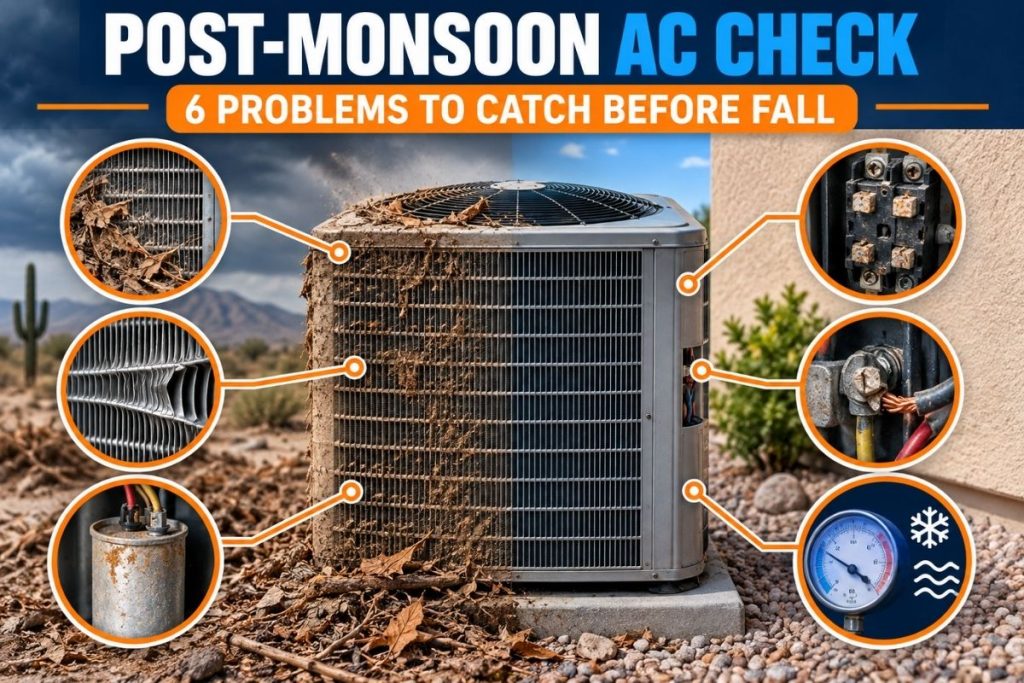
Root cause: Most “sudden” AC breakdowns in Phoenix come from preventable heat stress—dirty coils driving head pressure up, weak capacitors and contactors failing under load, and airflow restrictions crushing Delta T until the system can’t keep up.
I get the call all the time.
“It was working yesterday.”
Phoenix heat doesn’t care about yesterday. When outdoor temps stay high and the unit runs long cycles, small weaknesses turn into shutdowns fast.
Here’s the straight version.
You need consistent cooling in Arizona, not occasional cooling.
Heat, dust, and long runtimes expose weak components and hidden airflow issues.
Real maintenance based on measurements, not a quick look-over.
We work Arizona systems every day—homes and restaurants—so we focus on what actually fails here.
If you want service options across the Valley, start with our service areas in Arizona. If you’re in Phoenix specifically, keep this page saved: AC repair near me in Phoenix.
What “maintenance” actually means in Phoenix
Maintenance is not just changing a filter.
It’s not spraying the outdoor unit for 30 seconds.
In Phoenix, real maintenance has one job: reduce stress on the compressor and keep the heat transfer surfaces doing their work. That means we focus on:
- Coil cleanliness (condenser and evaporator)
- Airflow volume and static pressure
- Electrical health (capacitors, contactors, connections)
- Refrigerant circuit behavior (not just “it’s cold”)
- Drain and humidity handling during monsoon season
- Controls and run logic (thermostat, staging, cycling)
When homeowners ask for a plan, we point them to our maintenance programs because Phoenix systems don’t last on luck.
The measurements we care about
I’ll keep this technical, but readable. These numbers tell you more than any opinion.
Delta T (temperature split)
Delta T is the temperature difference between return air and supply air at the right operating conditions.
Low Delta T can mean:
- Low airflow across the evaporator coil
- Coil fouling or restriction
- Refrigerant metering issues (TXV behavior)
- Heat gain in the duct system
- Compressor wear under load
We verify Delta T during AC repair diagnostics and during maintenance when performance feels “off.”
Head pressure
Phoenix heat drives head pressure up naturally. Dirty condenser coils push it higher.
High head pressure stresses:
- Compressor windings
- Capacitors (hard starts)
- Contactors (arcing and pitting)
- Fan motors (overheating)
If your condenser coil is packed with dust, cottonwood, or grease (restaurants), head pressure rises and parts fail early.
Static pressure and airflow
Airflow is the hidden killer.
High static pressure often comes from:
- Undersized returns
- Restrictive filters
- Dirty indoor coils
- Duct restrictions or crushed flex runs
When airflow drops, the evaporator coil can freeze and the compressor runs hotter. That’s not “a minor issue.” That’s system life getting shorter.
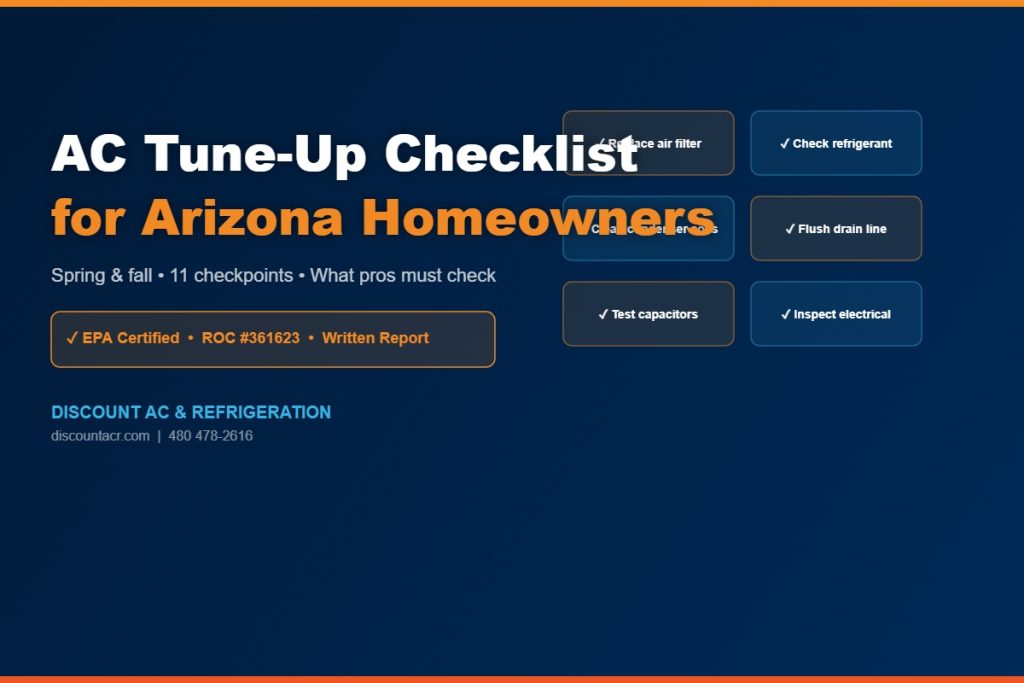
Electrical checks that matter
Phoenix heat and long runtimes punish electrical parts.
We check:
- Capacitor condition (microfarad drift)
- Contactor condition (pitting, carboning)
- Amp draw and startup behavior
- Connection integrity (hot spots, discoloration)
A weak capacitor can look like a “bad compressor.” Then you replace the wrong part and waste money.
Why Arizona systems fail the way they do
This is the stuff I see repeatedly across Phoenix, Gilbert, Mesa, and Scottsdale.
Dirty condenser coils
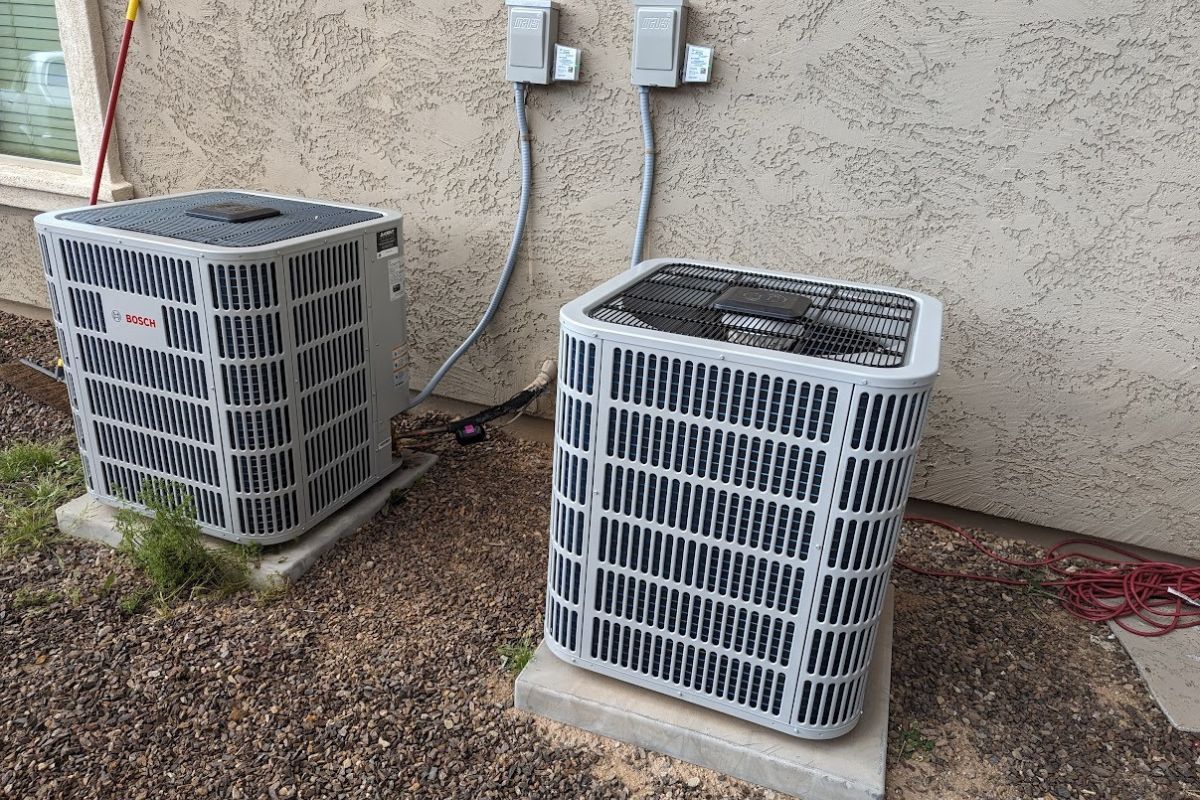
Outdoor coils reject heat. When coils clog, the system can’t dump heat.
Result:
- High head pressure
- Overheated compressor
- Fan motor stress
- Nuisance shutdowns
A clean coil is not optional in Phoenix.
Weak capacitors and contactors
Capacitors weaken gradually. Contactors pit gradually. Then one hot day, the system won’t start.
That’s why proactive inspection matters, especially before peak season.
TXV and metering issues under extreme load
In Phoenix, metering devices face brutal conditions—high load, long cycles, and wide temperature differentials. When airflow is marginal, TXVs behave poorly and the coil doesn’t feed evenly.
That shows up as comfort complaints that never fully go away.
Duct heat gain
Attic ductwork sits in extreme temperatures. Leaks pull hot air into the system. Poor insulation adds heat gain.
You can install a brand-new unit and still lose the battle if ducts leak.
If you suspect duct issues, we fold that into the plan through indoor air quality solutions and airflow corrections.
Restaurant AC maintenance is different
Restaurants run harder.
They run longer.
They fail louder.
Rooftop units (RTUs) face sun load, grease in the air, and constant occupancy heat gain. In Mesa restaurants, we often see failures show up during lunch rush when internal load spikes.
If you operate a restaurant or commercial property, start here: commercial HVAC services and our commercial preventive maintenance.
What we focus on for restaurants
- Condenser coil condition (grease + dust is a brutal mix)
- Economizer function (stuck dampers waste energy and strain cooling)
- Belts and pulleys (if applicable)
- Fan motor bearings and amp draw
- Drain pan and trap integrity (humidity spikes during monsoon)
- Electrical components exposed to rooftop heat
Restaurants also depend on refrigeration. That’s why we coordinate with commercial refrigeration service and handle issues like walk-in coolers and freezers and ice machine service.
If you need a restaurant-specific page, use restaurant refrigeration repair as a starting point.
What we do during a real maintenance visit
I’m not giving DIY instructions. HVAC involves high voltage and high pressure.
I’m explaining what professional maintenance should include.
Outdoor unit
- Clean condenser coil properly
- Verify condenser fan motor operation and airflow
- Check capacitor health and startup behavior
- Inspect contactor wear and connection integrity
- Review pressure behavior under load
Indoor system
- Inspect evaporator coil condition (cleanliness and airflow impact)
- Verify blower operation and airflow stability
- Check drain and overflow protection
- Evaluate filter choice and restriction impact
- Confirm thermostat staging and cycling behavior
System performance check
- Measure Delta T and compare to expected behavior
- Look for signs of abnormal head pressure
- Confirm stable operation without rapid cycling
If we see issues that require deeper diagnosis, we move you into AC repair diagnostics so we solve the cause instead of swapping parts blindly.
How often should you schedule maintenance in Phoenix?
Phoenix is not a once-a-year market for most systems.
Here’s a simple guide.
| Property type | Timing | Frequency |
|---|---|---|
| Home (standard use) | Spring + late summer | 2x/year |
| Home (heavy use) | Spring + mid-summer + fall | 2–3x/year |
| Restaurant / RTU | Pre-heat + mid-summer + fall | 3x/year |
| High-traffic commercial | Quarterly | 4x/year |
If you want a structured plan, start with our maintenance programs and we tailor frequency to runtime and equipment age.
Signs you need maintenance now
You don’t always need a repair.
You often need maintenance that you delayed.
Watch for:
- Longer runtimes to reach setpoint
- New hot spots in the building
- Higher bills without usage changes
- Frequent cycling on hot afternoons
- Weak airflow from vents
- Outdoor unit louder than normal
- Humidity feels higher during monsoon season
If the system is failing to cool properly, jump to AC repair in Phoenix or your nearest city page like AC repair in Gilbert or commercial AC repair in Mesa.
Maintenance vs repair vs replacement in Phoenix heat
Here’s how I explain it on-site.
Maintenance fits when:
- The system cools but runs harder than it used to
- You have no major refrigerant symptoms
- Airflow is mostly stable but trending worse
- You want fewer breakdowns during peak season
Repair fits when:
- A component failed (capacitor, contactor, fan motor)
- The unit shuts down intermittently
- Delta T collapses suddenly
- You see icing or repeated tripping
Replacement fits when:
- The system is aging and repairs repeat each summer
- You face major coil or compressor issues
- Efficiency is gone and runtime is extreme
- The building never feels right even after repairs
If you’re weighing replacement, start with AC installation and replacement. If you need local install options beyond Phoenix, we also serve Mesa AC repair and service and Scottsdale AC service, plus Tucson via AC repair near me in Tucson and AC installation in Tucson.
External resources that actually help
If you want neutral, practical info:
- Installation quality guidance: ENERGY STAR HVAC installation guidance
- ENERGY STAR efficiency basics: ENERGY STAR cooling
- EPA refrigerant handling overview: EPA refrigerants
FAQs: Air Conditioner Maintenance Service in Phoenix
How long does a maintenance visit take?
Most visits take 60–90 minutes for a residential system. Restaurants and RTUs can take longer depending on access and coil condition.
Will maintenance lower my power bill?
Often, yes. Coil cleanliness and airflow corrections reduce runtime and stress. The biggest savings come when your system stops fighting restriction.
Can maintenance prevent compressor failure?
Maintenance reduces compressor stress by controlling head pressure, airflow, and electrical health. Nothing prevents every failure, but neglect makes failure more likely.
Is it worth maintaining an older unit?
If the system still performs and repairs aren’t repeating, maintenance can buy time. If failures repeat each summer, replacement often becomes the smarter financial move.
What’s the biggest maintenance mistake homeowners make?
Using overly restrictive filters that choke airflow, then wondering why the coil freezes or Delta T drops.
Do restaurants need a different maintenance plan?
Yes. RTUs, economizers, grease exposure, and continuous occupancy load require a tighter schedule and more detailed checks.
How We Keep You Running.
Phoenix heat doesn’t break systems by accident.
It breaks them by stress.
You rely on cooling daily in Arizona.
Dust, heat, and airflow restrictions push head pressure up and Delta T down until parts fail.
Maintenance built around measurements and predictable failure points.
We’re local, family-owned, and we service Arizona equipment every day—homes, restaurants, and commercial sites—so we focus on what really fails here.
HVAC work involves high voltage and pressurized refrigerant circuits. Leave it to licensed pros.
Discount AC & Refrigeration is family-owned, operates 6:00 a.m. to Midnight, and holds ROC #361623.
Call (480) 478-2616
Visit Contact Us
Learn more at About Us
Explore Residential Services and Commercial Services
Ask about our cash referral program: Refer & Earn
Find us on Google Maps: Google Maps