Planning a heat pump installation in Phoenix starts with the complete job scope: the outdoor unit, compatible indoor equipment, ducts, electrical supply, controls and final system testing. An equipment price alone does not tell you what it will cost to replace or convert your home’s heating and cooling system.
Use this guide to prepare for an assessment and compare written proposals. If you are still choosing the technology, start with our heat pump vs. central AC comparison. To discuss the work, see AC installation and replacement or call (480) 478-2616.
How Much Does Heat Pump Installation Cost?
Carrier’s 2026 heat-pump cost guide gives a broad installed range of $6,000–$25,000. Equipment efficiency, system size and installation complexity influence the price. Existing ducts and electrical connections may be reusable, but their condition and compatibility must be checked.
Cost disclaimer: This is a manufacturer-published U.S. planning range, not a Phoenix market average, a Discount AC & Refrigeration price list or an offer. Your written quote may differ based on equipment, access, required upgrades and the agreed scope. Do not assume permits, duct replacement, electrical-panel work or other extras are included unless the proposal says so.
Why Two Similar Homes Can Receive Different Quotes
| Project condition | What to clarify in the quote |
|---|---|
| Existing heat-pump replacement | Which indoor components, refrigerant lines, controls and electrical connections can remain? |
| AC and furnace conversion | What heating equipment changes, electrical work and removal work are required? |
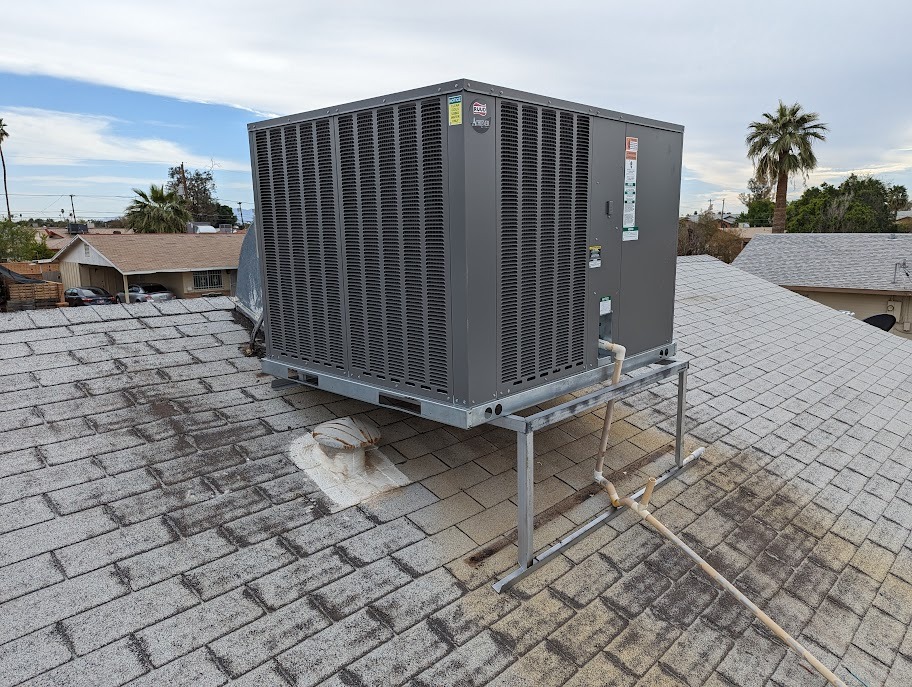
| Attic or rooftop access | Are access, lifting, platform or mounting changes included? |
| Duct or comfort problems | Are return improvements, duct repairs and airflow testing included or separate? |
| Higher-efficiency equipment | What is the price difference for the exact matched system, controls and warranty? |
For broader replacement budgeting, review our Phoenix AC installation cost guide. Compare project totals with the same included work, rather than comparing an outdoor-unit price with a full system installation.
Before Installation: The Home Assessment
Ask the contractor to explain how the home’s cooling and heating needs were evaluated. Discuss floor plan, window exposure, insulation, equipment location and rooms that do not stay comfortable. The old system’s nominal tonnage should be a starting observation, not the only sizing method.
- Equipment match: identify the proposed indoor and outdoor models and the rated system combination.
- Ducts and returns: assess available airflow, leakage, condition and access for repairs.
- Electrical supply: confirm what the proposed equipment and any auxiliary heat require.
- Refrigerant lines: document whether lines will be reused, repaired or replaced and why.
- Controls: confirm thermostat compatibility and how heating, cooling and any backup heat will operate.
- Location: check clearances, drainage, service access and noise considerations.
ENERGY STAR’s installation checklist covers sizing, airflow, charge and ducts. Ask how these checks appear in your installation scope. For an existing airflow concern, see our ductwork service.
What Should a Heat Pump Installation Quote Include?
- Exact equipment: model numbers, capacity and matched-system efficiency ratings. Use our SEER2 guide to understand the cooling ratings.
- Labor and removal: removal of old equipment, equipment placement and disposal arrangements.
- Connections: the planned duct, drain, electrical, refrigerant-line and thermostat work.
- Permits and inspections: who determines requirements, obtains permits when required and coordinates inspections.
- Startup checks: the performance checks and documentation provided at completion.
- Warranty terms: separate parts and labor coverage, registration responsibilities and exclusions.
- Price and exclusions: total installed price, allowances, additional-work approval and payment terms.
- Schedule: equipment availability, expected time without cooling and dependencies that could change completion.
Request clarification in writing if one proposal includes a new air handler or duct repair and another does not. A lower total may reflect a narrower job rather than a better price for the same installation.
Planning for Phoenix Summer Conditions
Ask for the proposed model’s capacity at the outdoor design conditions used for your home, together with the airflow needed to deliver that capacity. Do not assume that every model with the same SEER2 rating performs identically at high outdoor temperatures. Discuss whether the installation can be staged to limit time without cooling, and confirm the actual schedule before removing working equipment.
Startup, Handover and Maintenance
Before signing off, ask the installer to explain the operating checks, thermostat settings, filter location and maintenance requirements. Obtain model and serial numbers, warranty paperwork, registration instructions and service contact information. If a room still performs poorly, describe the location and time of day so the system can be evaluated.
A heat pump serves both seasons. Follow the equipment’s maintenance instructions and discuss a service schedule based on use and conditions. Our heat pump service page covers ongoing diagnosis and maintenance.
Do Not Budget With an Expired Federal Credit
The IRS Energy Efficient Home Improvement Credit does not apply to property placed in service after December 31, 2025. Confirm any separate utility or manufacturer incentive before subtracting it from a new 2026 installation price.
Heat Pump Installation FAQs
Can you replace just the outdoor unit?
The indoor equipment, refrigerant and controls must be compatible with the proposed system. Ask for a documented matched-system proposal before assuming an outdoor-only replacement is suitable.
Can a heat pump use the existing ductwork?
Often that is a possibility, but the ducts need evaluation. The quote should state any repairs or airflow improvements required for the proposed equipment.
How long does installation take?
Timing depends on scope, equipment availability, access, electrical or duct work, and inspections. Ask for the expected outage and completion schedule after the site assessment.
Will I need an electrical-panel upgrade?
That cannot be determined from the heat-pump label alone. The electrical assessment must account for the proposed system, any auxiliary heat and the home’s existing capacity.
Should I keep a working gas furnace?
Ask for both the cost of retaining compatible heating equipment and the cost of conversion. Compare their scope and operating assumptions in our heat pump and central-AC comparison.
What should I send when requesting an estimate?
Provide your address, equipment model photos, equipment location, heating fuel, known comfort problems and any recent repair estimate. Those details help the team prepare for the assessment.
Plan Your Phoenix Heat Pump Installation
Contact Discount AC & Refrigeration at (480) 478-2616, 6 AM–midnight, or request an assessment. Share the equipment and scope you are considering, and confirm availability for your Phoenix metro address.