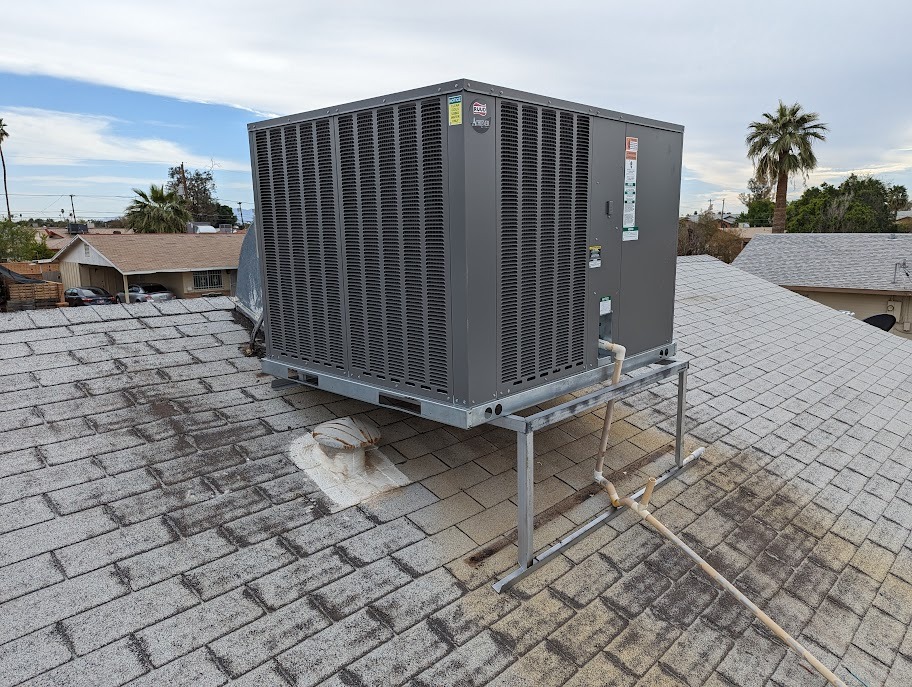
AC installation cost in Phoenix can range from about $5,000 to $14,000 or more for a residential system, according to a published 2026 local pricing guide. That is a budgeting reference, not one price for every home. A straightforward replacement, a rooftop installation and a project needing new ducts can have very different totals. The table below separates the main equipment categories so you can plan around the work you actually need.
Phoenix AC cost: a useful starting budget
Compare installed system prices, not equipment-only listings. Identify the system type first, then confirm ducts, electrical work, access, removal and startup in the written proposal.
AC Installation Cost Ranges by System Type
These published ranges describe different project categories and overlap. A premium AC can also be part of a rooftop or heat-pump configuration; do not add the rows together. They are reference points from local providers, not a statistical Phoenix average.
| System or project | Planning range | How to use the reference |
|---|---|---|
| Central AC replacement | $5,000–$12,000 [1] | A starting reference for a ducted AC replacement. Confirm which indoor and outdoor components are included. |
| Premium, high-efficiency AC | $9,500–$14,000+ [1] | Compare the exact equipment combination and efficiency rating; premium scope can exceed the range. |
| Heat pump system | $5,500–$11,000 [2] | Check both the cooling and heating equipment included, plus any electrical or control changes. |
| Rooftop package replacement | $5,000–$10,000 [2] | Confirm lifting, roof connections and access. Structural or roofing repairs need their own scope. |
| Single-zone ductless mini-split | $3,000–$5,500 [1] | One-zone reference; line routing, electrical supply and drainage still affect the installation. |
| Multi-zone ductless system | $12,000–$18,000 [1] | Verify the number of indoor zones and total scope. This is not comparable to one indoor unit. |
Range limits are not minimum or maximum prices for your property. A low figure from another project does not establish what your installation will include. Source details appear at the end of this guide.
What Determines AC Installation and Replacement Cost in Phoenix?
| Factor | How it affects the scope | What to confirm |
|---|---|---|
| System capacity | A larger capacity changes equipment selection, but choosing extra tonnage without a sizing assessment can create a poor fit. | The home characteristics and load calculation used to select capacity, rather than floor area alone. |
| System type and efficiency | Central AC, heat pumps, package units and ductless systems involve different equipment and connections. | Exact models, configuration and efficiency ratings. |
| Existing ducts | Leaks, damaged runs or unsuitable connections may require additional work. | What will be reused, repaired or replaced. |
| Electrical and controls | The existing supply, disconnect and thermostat may need changes. | Any electrical or control work included in the proposal. |
| Location and access | Attic access, rooftop placement and lifting requirements change the installation plan. | Access arrangements and any lifting equipment. |
| Permits and inspections | Requirements depend on the project and jurisdiction. | Who confirms requirements and arranges any applicable permits or inspections. |
| Warranty and scope | Equipment coverage, labor coverage and included work differ between proposals. | Written terms, exclusions and any optional work. |
Request an itemized AC installation quote or call (480) 478-2616 to discuss your project with Discount AC & Refrigeration.
Equipment Cost vs. the Fully Installed Price
An online equipment listing is not the full cost of a working system in your home. A proposal may need an outdoor unit, indoor coil or air handler, controls, installation materials and professional labor. Replacing only an outdoor condenser is a different scope from replacing a matched indoor and outdoor system.
One local guide places installation labor at approximately $1,500–$3,500 where ducts are in good condition. [1] Labor is normally part of an installed-price reference: do not add it again unless your quote explicitly lists equipment only.
- Equipment: identify the model numbers and every component being replaced or retained.
- Installation: confirm connections, mounting, removal and any project-specific access work.
- Startup and handover: ask which operating checks, documentation and control instructions are included.
- Coverage: distinguish manufacturer parts coverage from the installer’s labor warranty.
ENERGY STAR identifies sizing, airflow, refrigerant charge and duct condition as key installation-quality checks. Ask how the contractor will verify them for your project. See its HVAC quality installation guidance.
Replacing an Existing AC or Installing a New System
A replacement may be able to reuse suitable ducts and other existing components. That does not mean every replacement is a simple equipment swap. Compatibility, condition and the requirements of the selected system still need to be checked.
A new installation, a change in equipment location or a different system configuration can involve additional ductwork, electrical work and connections. Ask for those items to be identified in the written scope. See our AC installation and replacement service for help discussing the project.
System Size, Equipment Type and Efficiency
Square footage is a starting point, not a complete sizing method. Insulation, windows, layout and other characteristics affect cooling needs. Our guide to choosing AC size for a Phoenix home explains the questions to ask before selecting capacity.
Ask for the SEER2 and, where applicable, EER2 ratings of the exact equipment combination being quoted, along with confirmation that it meets applicable regional requirements. The Department of Energy’s regional standards information is a reference for those requirements.
An efficiency upgrade should be evaluated using the extra purchase cost and an energy estimate based on your existing system, utility rate and expected use. A fixed annual saving or payback period should not be assumed for every home. If you are comparing configurations, read our heat pump versus central AC guide.
Three Illustrative Installation Scenarios
These are hypothetical examples to explain differences in installation scope. They are not completed Discount ACR projects, customer stories or price quotes.
Scenario 1: Equipment Replacement in the Same Location
Starting condition: a ducted system already serves the home and the equipment stays in the same place. The ducts, supply and access are assessed as suitable for reuse. This is the kind of project to compare with the central-AC replacement reference above.
What can change the budget: an incompatible indoor coil, a damaged connection or a return-air problem widens the scope. A proposal that retains more existing equipment can have a lower initial total than one replacing the complete system, but the retained components and compatibility should be explicit.
Scenario 2: Replacing a Rooftop Package Unit
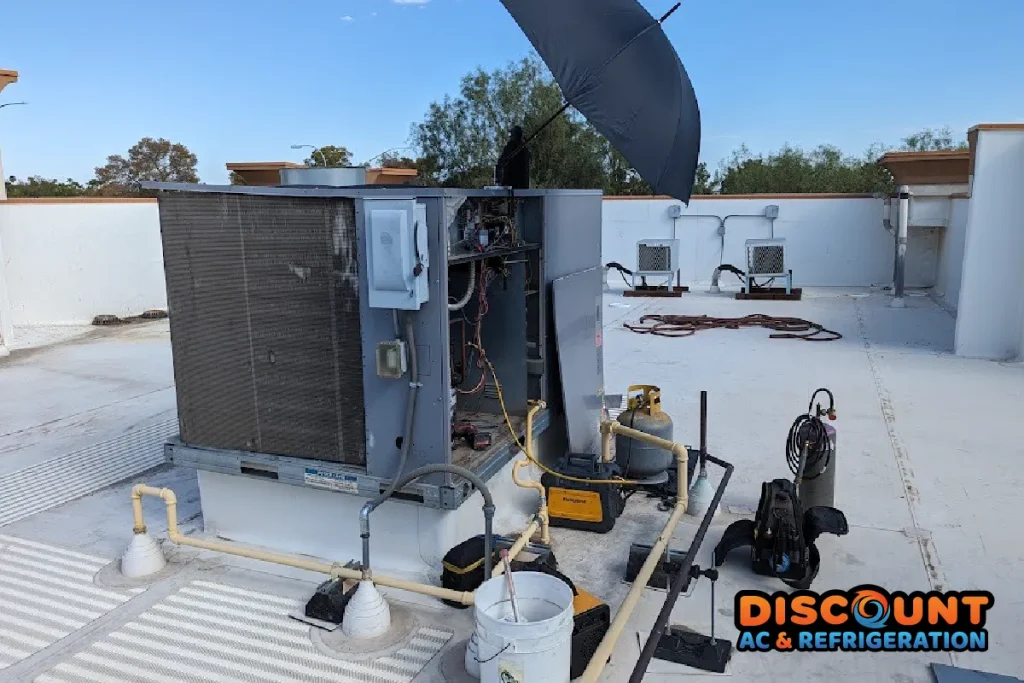
Starting condition: the heating and cooling equipment is in a rooftop cabinet. The installer needs to review the equipment connection to the building, the support and the route for removing and placing the unit.
What can change the budget: a crane or other lifting arrangement, a different connection footprint, restricted access or necessary roof repairs. The rooftop reference is useful only when those project conditions are understood. Ask whether lifting is included and who is responsible for any work on the roof itself.
Scenario 3: Adding AC or Changing the Layout
Starting condition: a casita, addition or previously unconditioned space needs cooling. There may be no suitable duct route or electrical supply at the installation location. This is a new installation decision, not simply replacement of an existing unit.
What can change the budget: extending or redesigning the central system versus installing a separate ductless zone. New lines, drainage, electrical work and the number of rooms served determine the scope. A single-zone mini-split reference cannot be used as the budget for several independently served rooms.
Check What Is Included Before Comparing Prices
Ask whether the proposal covers equipment, installation labor, removal of the old system, connections, startup checks and applicable permits. Confirm any exclusions, allowances and optional work in writing. Do not assume a thermostat, duct repair, crane service or electrical upgrade is included because it appears in another contractor’s proposal.
For a practical comparison checklist, use our guide to comparing AC installation quotes in Phoenix. It explains how to review the same scope across proposals.
Ductwork, Electrical Work and Access
For ductwork specifically, published local estimates span roughly $500–$3,000+ for repair or replacement in one guide, while another describes $2,000–$6,000 for replacing or resealing ducts. [1, 2] The descriptions cover different amounts of work; a connection repair and replacement of multiple runs should not receive the same allowance.
Electrical upgrades, line routing, roof work and lifting need project-specific estimates. They are not automatically required on every job, and they should not be silently added to every total in the table.
Existing components can change the project after an assessment. Ask the contractor to explain any proposed duct repair, connection change or electrical work and why it is needed for the selected equipment. Where a condition cannot be confirmed before work begins, ask how it will be documented and how additional work will be approved.
Our ductwork services page covers another part of the system to discuss. Keep the equipment proposal and any additional work clearly identified in the quote.
Tax Credits, Rebates and Payment Options in 2026
The federal Energy Efficient Home Improvement Credit applies to qualifying improvements made through December 31, 2025, according to the IRS. Do not subtract that credit from the budget for a new 2026 installation.
SRP currently lists its Cool Cash rebate for eligible residential customers and qualifying systems. Verify the equipment, installation date, contractor requirements and application process directly with the provider before relying on an incentive. Availability for one utility’s customer does not establish eligibility for another address.
Ask about any payment options available when you request your quote. Confirm approval requirements, interest, fees and total payment terms in writing. No financing promotion or incentive is included in this guide as a guaranteed offer.
Prepare for Your AC Installation Assessment
Have the current equipment’s model information, its location and a description of your cooling concerns available. Mention any rooms that are difficult to cool, known duct problems or plans to change the property. The assessment can then address the equipment and the work your project requires.
If you are still deciding whether replacement is appropriate, read when to replace an AC in Phoenix and the signs that you may need a new AC.
Get a quote for your Phoenix home
Turn a general planning range into a proposal for your home. Discuss equipment, property conditions and installation scope with Discount AC & Refrigeration.
The amounts above are market references, not a Discount ACR quote. Your written estimate will establish the price and included work.
AC Installation and Replacement Cost FAQs
How much does AC installation cost in Phoenix?
A published 2026 Phoenix guide gives a broad installed-system reference of about $5,000–$14,000 or more. The system-type table above gives more context. These are third-party planning estimates, not Discount ACR prices; your final amount requires a property assessment and written quote.
Does a 3-ton or 5-ton system have one fixed installed price?
No. Capacity alone does not determine the installed price. Equipment configuration, efficiency, existing components and access also matter. Compare exact models and written scope rather than assuming one price applies to every system of that size.
Is replacing an AC cheaper than a new installation?
Reusing suitable existing components can reduce the work required, but it is not guaranteed. A replacement that needs duct, electrical or access changes may involve a wider scope than expected.
Can I get a firm price without a property assessment?
An initial discussion can identify your needs, but a reliable final quote requires enough information about the equipment and installation conditions. Ask what remains to be checked before you approve the proposal.
Are ductwork and electrical changes included?
Only if the written quote includes them. Ask what will be reused and whether repairs or upgrades are included, optional or subject to assessment.
Does a rooftop AC replacement require a crane?
Lifting arrangements depend on the unit and access. Ask the contractor to assess the location and identify the lifting method and any associated service in the quote.
Will higher efficiency always pay for itself quickly?
No fixed payback applies to every home. Compare the upgrade price with an energy estimate that states the existing equipment, rate and usage assumptions.
Are permits and old-equipment removal included?
Confirm both in writing. Ask who determines permit requirements and who is responsible for permits, inspections and removal where applicable.
Can I deduct rebates before comparing quotes?
Compare the full installation scope and price first. Show only confirmed incentives separately, after checking eligibility and the current program requirements.
How do I request a quote from Discount ACR?
Use our contact page or call (480) 478-2616. Describe the current system, location and work you are considering so the team can discuss the assessment.
Pricing References and How to Use Them
Reviewed October 11, 2026. The ranges summarize published provider guides; they are not derived from Discount ACR invoices, a representative market survey or guaranteed offers. Providers describe different equipment and work, so these figures should not be averaged into a precise local price.
- Penguin Air: 2026 Phoenix AC system pricing guide — central AC, premium systems, ductless systems, labor and ductwork references.
- Mountainside Air: 2026 Phoenix AC replacement guide — heat-pump, rooftop and ductwork references.
Technical and incentive information is linked separately to ENERGY STAR, the Department of Energy, the IRS and SRP. Incentives have not been deducted from these price ranges.