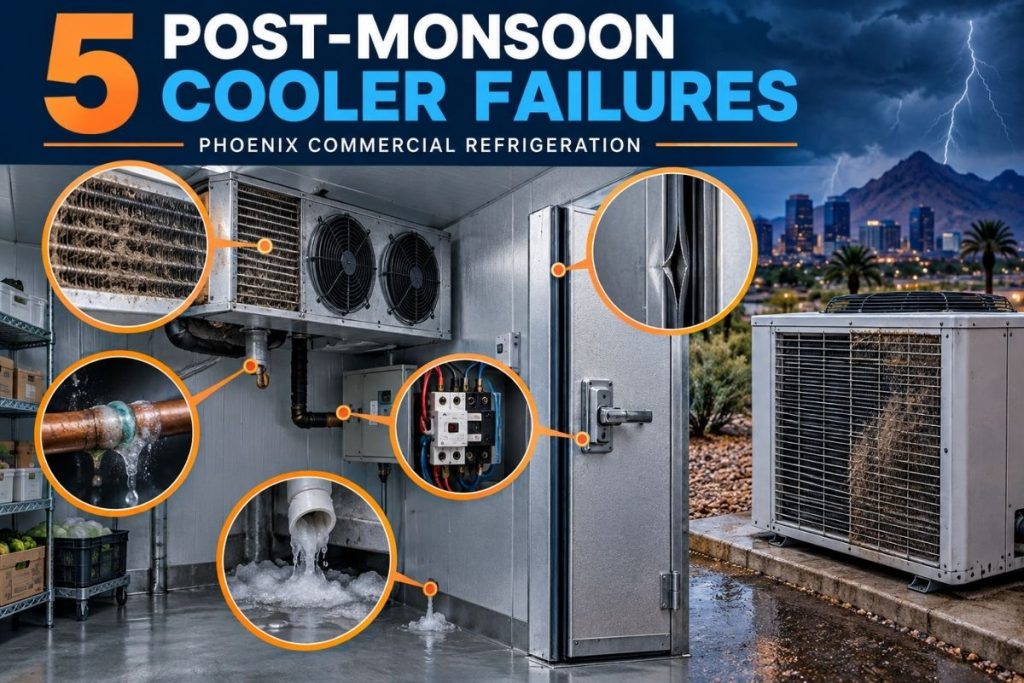
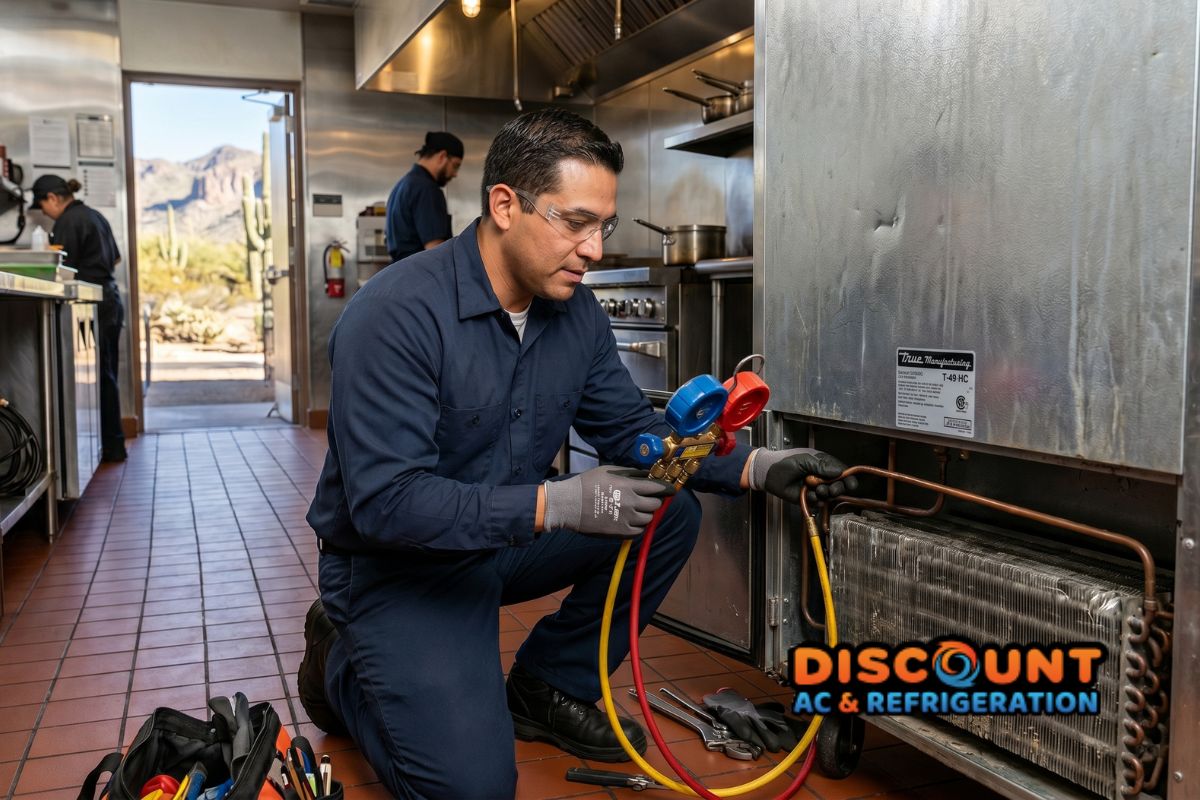
Reach-in cooler repair needs in the Phoenix East Valley spike when temperature differentials between desert ambient air (110–115°F) and required cabinet temps (35–38°F) push compressors, door gaskets, and condenser coils beyond normal design limits — problems compound fast when maintenance is deferred.
Is Your Reach-In Cooler Failing? Here’s What’s Actually Happening
Walk into your kitchen or prep area and find your reach-in running warm — food temps climbing, condensation everywhere, compressor cycling nonstop. For restaurant owners and facility managers across Gilbert, Mesa, and Chandler, this isn’t just an inconvenience. It’s a food-safety violation waiting to happen and a revenue loss by the hour.
Reach-in cooler repair doesn’t always mean a costly full replacement. In most cases, the problem traces back to one of five root causes — each diagnosable on-site by a licensed technician. At Discount AC & Refrigeration (ROC 361623), our team has seen every one of these scenarios across Arizona’s commercial kitchens, breweries, and food-service facilities. This guide walks you through the five most common issues, what causes them, and the smartest fix for each.
| Problem | Likely Cause | Recommended Action |
|---|---|---|
| Not Holding Temperature (45°F+) | Dirty condenser coils, low refrigerant charge, failed condenser fan motor | Clean condenser coils; have a licensed tech check refrigerant charge and fan RPM |
| Evaporator Coil Frozen Over | Defrost heater failure, defrost timer/control board fault, damaged door gasket | Manually initiate defrost cycle; test defrost heater continuity; replace gasket if leaking warm air |
| Compressor Clicks and Won’t Start | Failed start relay or capacitor; overloaded compressor; electrical supply issue | Test start relay first ($25–$60 part); if compressor confirmed failed, evaluate repair vs. replacement by unit age |
| Rattling or Grinding Noise | Loose condenser fan blade, worn evaporator motor bearings, deteriorated compressor isolators | Locate noise source (back vs. interior); replace fan motor or tighten mounts; grinding = shut down immediately and call for service |
1. Reach-In Cooler Not Maintaining Temperature
What you’ll notice: Cabinet temp reads 45°F or higher. Product feels warm. Ice cream softens. Produce wilts prematurely.
Why it happens in Arizona: The Phoenix East Valley’s extreme ambient heat — regularly exceeding 110°F in summer — forces reach-in refrigeration systems to work at the outer edge of their rated capacity. When condenser coils are dirty or the unit is positioned near a heat source (oven, fryer, direct sunlight), the system simply cannot reject heat fast enough.
Most common root causes:
- Dirty condenser coils blocking airflow
- Low refrigerant charge (leak in the sealed system)
- Failing condenser fan motor
- Ambient temp exceeding unit design limits
Fix: Start with a full condenser coil cleaning — compressed air blast, followed by coil cleaner. If the problem persists, have a licensed technician check refrigerant charge and verify the condenser fan is running at rated RPM. Never attempt to add refrigerant yourself; EPA Section 608 regulations require certified technicians to handle refrigerants. Our commercial refrigeration team carries the proper certifications and equipment.
2. Excessive Ice Buildup on Evaporator Coils
What you’ll notice: A thick layer of frost on the back wall of the cooler. Reduced airflow. Unit running constantly without reaching setpoint.
Why it happens: Ice buildup (frosting over) on the evaporator almost always points to one of three things: a defrost cycle that isn’t completing, a door being held open too long, or a malfunctioning defrost heater/thermostat assembly.
Most common root causes:
- Defrost heater burned out
- Defrost timer or control board failure
- Faulty evaporator fan motor (air not circulating across coil)
- Door gasket damage causing warm, moist air infiltration
Fix: Manually initiate a defrost cycle first to confirm the heater actually activates. If it doesn’t, the defrost heater or thermostat needs replacement — a straightforward parts swap for our licensed HVAC technicians at Discount AC & Refrigeration. Don’t ignore this: a fully iced evaporator will eventually stop cooling entirely and may damage the compressor.
3. Door Gasket Failure — The Silent Energy Drain
What you’ll notice: Condensation forming around the door frame. A visible gap when you close the door. Unit runs longer cycles. Energy bill creeps up.
Why gaskets fail faster in Arizona: Extreme temperature swings — from 115°F kitchen ambient to 38°F interior — accelerate gasket elastomer degradation. UV exposure in facilities with exterior-facing walls worsens this. A reach-in cooler’s door gasket typically lasts 3–5 years; in Arizona’s climate, expect the lower end.
The dollar impact: A failed door gasket can increase energy consumption by 10–25% and force the compressor to run 30–40% longer cycles. Over a year, that’s hundreds of dollars in wasted electricity — not counting the increased wear on the compressor.
Fix: Order a manufacturer-spec replacement gasket for your exact model. Installation is a DIY-possible repair if you’re comfortable with the process, but misaligned gaskets create the same problem as the old one. If you’re unsure, our team handles commercial refrigeration repair across the East Valley and can replace gaskets during a routine preventive maintenance visit.
Is Your Reach-In Cooler Failing During Peak Service Hours?
Our licensed technicians at Discount AC & Refrigeration (ROC 361623) will diagnose your reach-in cooler on-site and give you an honest repair vs. replacement assessment — no pressure, no guesswork. Available 6:00 AM to midnight, 7 days a week across Gilbert, Mesa, Chandler, and the East Valley.
📞 CALL (480) 478-26164. Compressor Starting Problems or Failure
What you’ll notice: The unit hums briefly and shuts off. You hear a clicking sound from the compressor relay. No cooling at all.
How much does compressor repair cost? Compressor replacement on a reach-in cooler typically runs $400–$900 in parts alone, plus labor. Before authorizing a compressor replacement, a qualified technician should evaluate:
- Age of the unit (7+ years → replacement often makes more financial sense)
- Whether the problem is the compressor itself vs. the start relay or capacitor (a $25–$60 part)
- Refrigerant type — R-22 units should be evaluated for full replacement given refrigerant availability and cost
Fix: Have a technician test the start relay and capacitor first — these are the most common reason a compressor appears to fail when it actually hasn’t. If the compressor itself is confirmed dead and the unit is under 8 years old with a clean maintenance history, replacement may be warranted. Otherwise, evaluate a full unit replacement. For cost estimates on commercial refrigeration replacement near Gilbert, our team provides honest, no-pressure assessments.
5. Unusual Noises — Rattling, Buzzing, or Grinding
What you’ll notice: Rattling from the compressor compartment. High-pitched buzz from the evaporator section. Grinding when the fan cycles on.
Why this matters: Noise is the system telling you something is loose, worn, or failing. Ignoring it turns a $150 fan motor replacement into a $800+ compressor failure.
Most common sources:
- Loose condenser fan blade or motor mount
- Worn evaporator fan motor bearings
- Refrigerant lines vibrating against the cabinet
- Compressor mounting feet deteriorated (isolators worn)
Fix: Locate the noise first — compressor compartment (back/bottom) vs. evaporator section (interior). If it’s the fan, the motor or blade is the likely culprit. If the compressor itself is making grinding or liquid slugging sounds, shut the unit off immediately and call for 24/7 emergency AC and refrigeration repair — running a damaged compressor causes catastrophic failure.
Reach-In Cooler Preventive Maintenance: How to Avoid These Issues
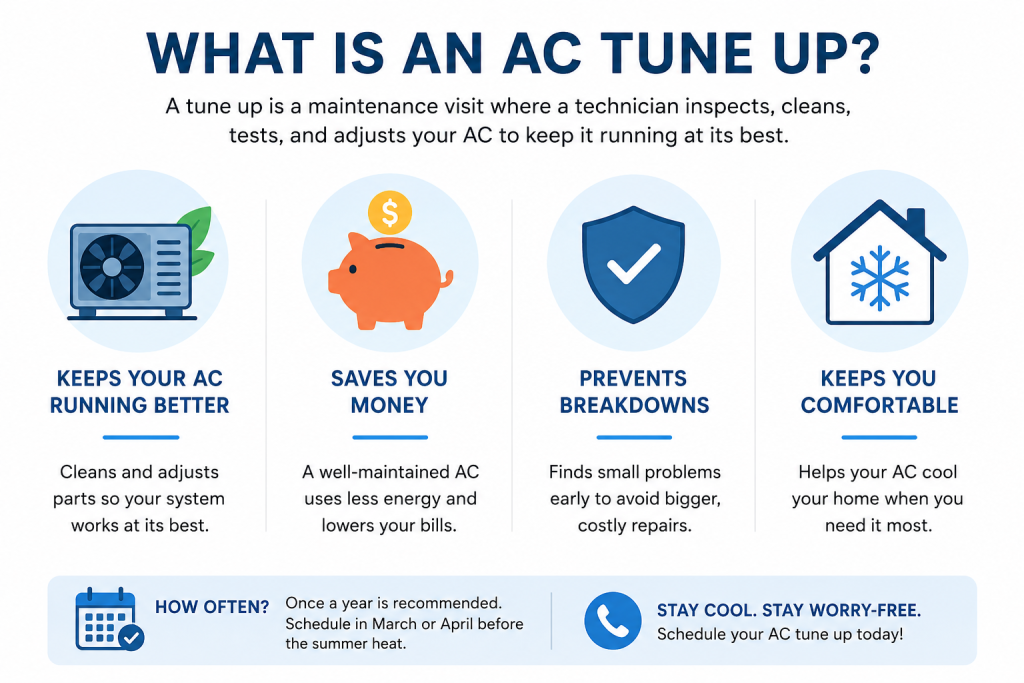
The most cost-effective reach-in cooler repair is the one you never need. Our clients across Arizona — including restaurants, breweries, and food-service facilities — rely on Discount AC & Refrigeration for scheduled commercial preventive maintenance that catches these issues before they become emergencies.
A standard PM visit covers:
- Condenser and evaporator coil cleaning
- Refrigerant charge verification
- Door gasket inspection and seal test
- Defrost cycle function test
- Fan motor amp draw and bearing inspection
- Temperature calibration and log verification
How often? At minimum, quarterly in Arizona. High-volume kitchens and units in hot ambient environments (near cooking equipment) should be serviced every 6–8 weeks.
Energy Star guidelines for commercial refrigeration confirm that clean coils and proper door sealing alone can reduce energy consumption by 10–15%. Energy Star’s commercial refrigeration resources provide additional benchmarks for facility managers evaluating upgrade decisions.
When Repair Doesn’t Make Sense: Evaluating Full Replacement
Not every reach-in cooler repair is worth authorizing. Apply the 50% rule: if the repair cost exceeds 50% of the unit’s current replacement value, evaluate replacement first.
Consider replacement when:
- Unit is 10+ years old and requires a second major repair in 12 months
- Refrigerant type is R-22 (phased out; recharging is expensive and limited)
- Compressor failure on an older unit with no maintenance history
- Unit efficiency is well below current ENERGY STAR standards for commercial refrigerators
For a detailed breakdown of AC and refrigeration replacement cost estimates near Gilbert, our licensed team can evaluate your specific unit and provide a written estimate within the same visit.
How much does reach-in cooler repair cost in Arizona?
Most reach-in cooler repairs range from $150–$900 depending on the component. A start relay swap is $60–$120 including labor; a compressor replacement runs $500–$1,200+. For a straight answer based on your unit, call us at (480) 478-2616 — we diagnose on-site and give you a written estimate before any work begins.
Why is my reach-in cooler not staying cold in the summer?
Arizona’s 110–115°F summers push reach-in systems to their rated limits. The most common causes are dirty condenser coils and low refrigerant. Both are straightforward repairs — but they require a licensed technician for the refrigerant side. Our commercial refrigeration team handles same-day diagnostics across Gilbert, Mesa, and Chandler.
Should I repair or replace my reach-in cooler?
Apply the 50% rule: if the repair cost exceeds 50% of the unit’s replacement value, evaluate a new unit first. Units over 10 years old, running R-22 refrigerant, or requiring a second major repair within 12 months are prime replacement candidates. See our replacement cost estimates near Gilbert for detailed pricing.
Why is there ice building up inside my reach-in cooler?
Ice buildup on the evaporator coil almost always means the defrost cycle is not completing — due to a failed defrost heater, thermostat, or control board. A damaged door gasket leaking warm air also causes rapid frost accumulation. Don’t let it run: a fully iced evaporator will eventually stall the system and can damage the compressor. Call (480) 478-2616 for a same-day diagnosis.
How often should reach-in coolers be serviced in Arizona?
At minimum, quarterly. High-volume kitchens or units positioned near cooking equipment should be serviced every 6–8 weeks. Arizona’s extreme ambient heat degrades coils, gaskets, and fan motors faster than moderate climates. Our commercial preventive maintenance plans are built around East Valley conditions.
Is reach-in cooler repair available on weekends in Gilbert?
Yes. Discount AC & Refrigeration (ROC 361623) operates 6:00 AM to midnight, 7 days a week across Gilbert, Mesa, Chandler, and the broader East Valley. For urgent failures during service hours, call (480) 478-2616 and we’ll dispatch a licensed tech the same day.
What refrigerants are used in reach-in coolers and does it matter?
Most commercial reach-in coolers built after 2010 use R-134a, R-404A, or R-448A. Older units may still run R-22, which is no longer manufactured. Handling any refrigerant requires EPA Section 608 certification — it’s illegal for uncertified individuals to purchase or recharge refrigerants. Our licensed techs are fully certified and carry the correct refrigerants for your unit. Learn more via EPA Section 608 rules.
Can a bad door gasket really cause that many problems?
A failed door gasket is the most underestimated reach-in cooler problem. It increases energy consumption by up to 25%, forces the compressor into longer cycles, and accelerates wear on every component. In Arizona’s climate, gaskets degrade faster due to extreme temperature swings. If you notice condensation around the door frame or a visible gap when closed, schedule a service call before it compounds into a compressor failure. Our Gilbert refrigeration team can inspect and replace gaskets during a standard visit.
Professional Evaluation and Licensing
All reach-in cooler repair work in Arizona that involves the sealed refrigerant system requires a licensed contractor. At Discount AC & Refrigeration, our technicians hold Arizona ROC License 361623 and comply fully with EPA Section 608 refrigerant handling requirements.
We serve restaurants, commercial kitchens, medical facilities, and food-service operations across Gilbert, Mesa, Chandler, Tempe, Queen Creek, and Apache Junction — 6:00 AM to midnight, 7 days a week.
Many local businesses across the East Valley have trusted our team for ongoing refrigeration service, thanks to consistent response times and straightforward diagnostics. You can verify our reputation as a licensed, local HVAC and refrigeration company on Google before scheduling.
For urgent issues, our commercial HVAC and refrigeration team is available for same-day service. Call (480) 478-2616 — available 6 AM to midnight, every day.
Know a fellow restaurateur or facility manager dealing with cooler problems? Our Refer & Earn program rewards you when they schedule service.