Heat pumps and central AC systems both cool your Phoenix home — but they work differently, cost differently, and perform differently in desert heat. The right choice depends on your heating needs, electric rates, and how long you plan to stay in the home. Here’s a direct comparison for the Phoenix climate specifically.
How They Work: Key Difference
A central AC system (split system) uses a separate furnace or air handler for heating and a condenser unit for cooling. They are two separate systems sharing ductwork. A heat pump is a single system that both heats and cools by reversing its refrigerant cycle — it moves heat out of your home in summer and into your home in winter.
In most US climates, heat pumps lose heating efficiency when outdoor temperatures drop below 35–40°F. Phoenix rarely sees temperatures that low — Phoenix’s average January low is 44°F and below-freezing days are rare. This makes Phoenix one of the best climates in the country for heat pump efficiency year-round.
Heat Pump vs. Central AC: Direct Phoenix Comparison
| Factor | Heat Pump | Central AC + Gas Furnace |
|---|---|---|
| Installed cost (3–4 ton) | $6,000–$12,000 | $7,000–$14,000 (both units) |
| Cooling efficiency (SEER) | 14–22 SEER | 14–22 SEER |
| Heating in Phoenix winters | Excellent (COP 2.5–4) | Good (gas furnace) |
| Heating cost | Lower (electric, very efficient) | Depends on gas rates |
| Number of outdoor units | 1 | 1 (AC condenser only) |
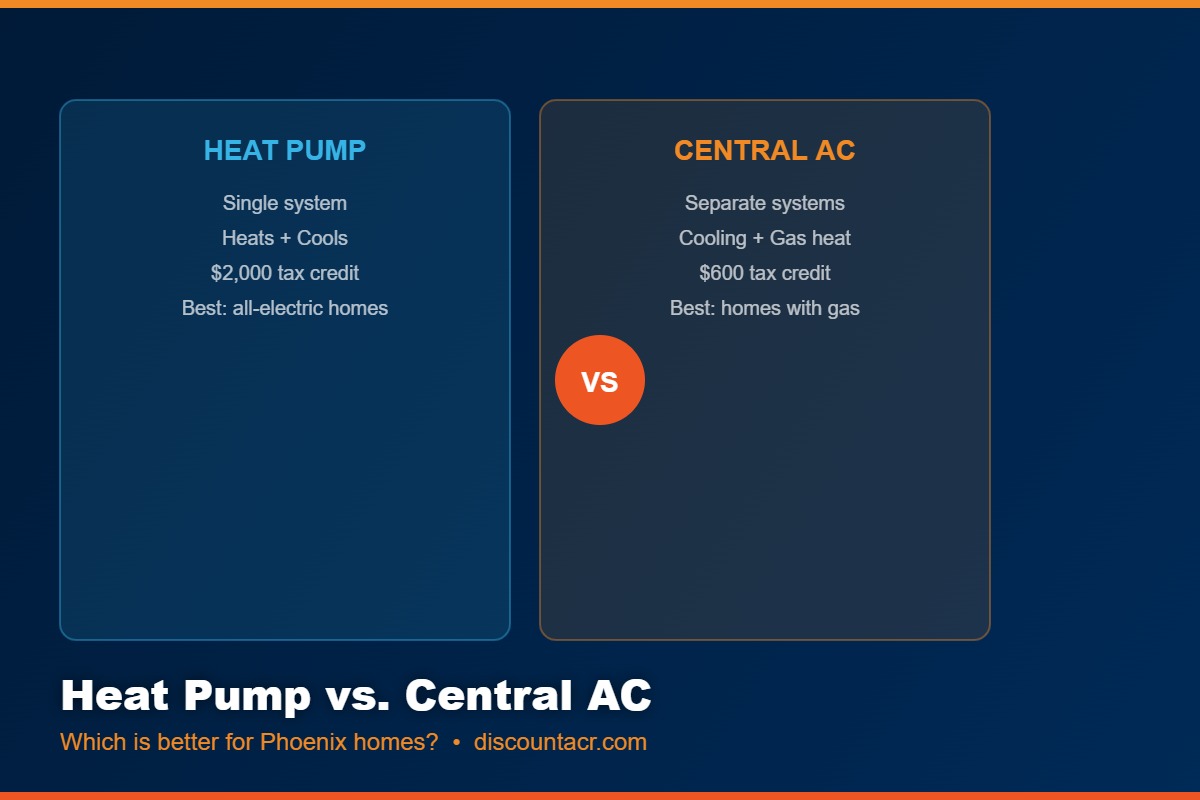
| Federal tax credit (IRA) | Up to $2,000/year | Up to $600/year (AC only) |
| Best for | All-electric homes, new builds | Homes with existing gas lines |
Phoenix Climate Makes Heat Pumps Unusually Effective
Heat pump efficiency degrades in extreme cold — a well-known limitation. But Phoenix’s mild winters mean heat pumps operate at peak efficiency year-round. A heat pump with a COP (Coefficient of Performance) of 3 moves 3 units of heat for every 1 unit of electricity used — far more efficient than a standard electric resistance heater (COP of 1) or even a gas furnace (80–96% AFUE). For a Phoenix home that heats with electricity, a heat pump reduces winter heating costs by 40–70% compared to strip heat.
If you’re currently on an all-electric plan with APS or SRP, replacing your AC-only system with a heat pump at replacement time makes strong financial sense — especially with the $2,000 IRA federal tax credit for qualifying models. See our AC replacement services for details on heat pump installation in the Phoenix metro.
When Central AC + Gas Furnace Still Makes Sense
If your home already has a gas line and a relatively new furnace (under 10 years old), replacing just the AC system and keeping the furnace is often the most cost-effective path. You’re not paying to replace equipment that still has life in it. Gas heating also provides faster warm-up times in rare cold snaps than some heat pumps.
For homes in Gilbert, Scottsdale, and other east Valley communities with existing gas infrastructure, a like-for-like AC replacement remains a solid option. Our team at Discount AC & Refrigeration will show you the 10-year cost comparison for both options specific to your home before you decide.
Make the Right Call for Your Phoenix Home
The best choice depends on your current setup, utility provider, and how long you’ll own the home. Discount AC & Refrigeration installs both heat pumps and traditional split systems throughout the Phoenix metro. We’re EPA-certified, ROC licensed (#361623), and available 6 AM–midnight, 7 days a week. Call 480 478-2616 or visit our contact page to get a same-week quote on either system.
Heat Pump vs AC FAQs — Phoenix
Frequently Asked Questions
Answered by Discount AC & Refrigeration — EPA Certified · ROC #361623 · Phoenix, AZ
Do heat pumps actually work in Phoenix’s extreme summer heat?
What is the main advantage of a heat pump over central AC in Phoenix?
Can a heat pump replace both my AC and furnace in Phoenix?
How long do heat pumps last in Phoenix’s desert climate?
Is a heat pump more expensive than a central AC to install in Phoenix?
What SEER and HSPF ratings should I look for in a Phoenix heat pump?
Which brands make the best heat pumps for Phoenix weather?
Does Discount AC & Refrigeration install heat pumps in Phoenix?
Share this article on social media