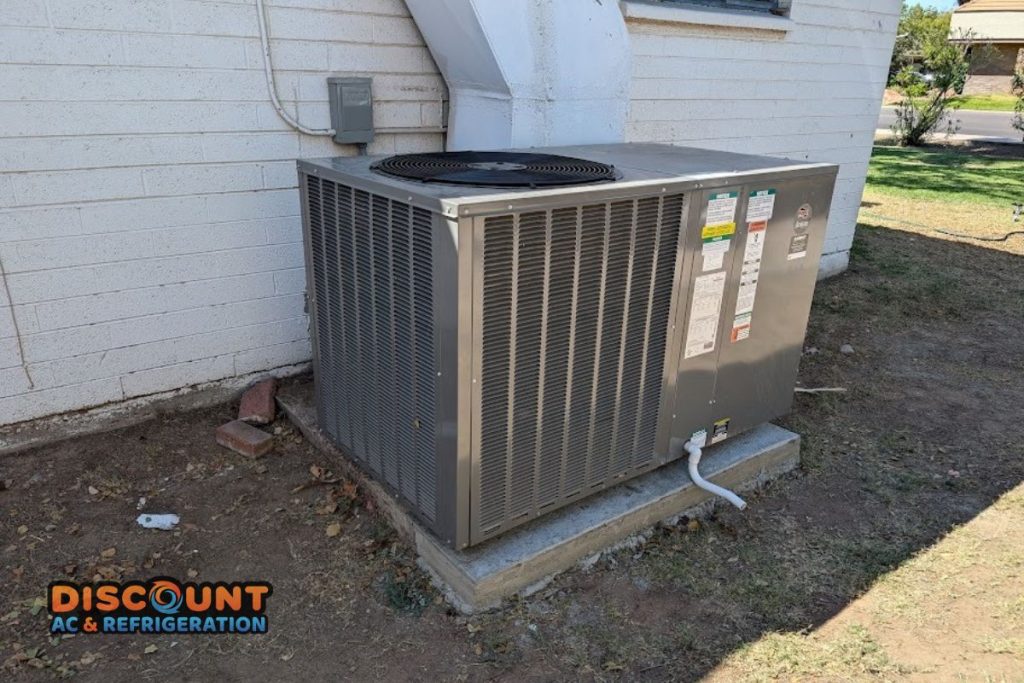
Need mobile home AC repair or installation in Mesa, AZ? Discount AC & Refrigeration can help you evaluate cooling problems, packaged-unit replacement and underfloor ductwork in mobile and manufactured homes. The right solution starts with the equipment, the home’s layout and how air reaches each room.
Whether your AC is blowing warm air, running without reaching the thermostat setting or leaving one end of the home uncomfortable, request a diagnosis before choosing a new unit. Call (480) 478-2616 or request mobile home AC service and ask about availability and diagnostic charges.
| What you need | What the visit should evaluate |
|---|---|
| AC repair | The reported symptoms, controls, electrical components and cooling operation. |
| AC installation or replacement | Equipment compatibility, sizing, connections, access and the complete installation scope. |
| Underfloor ductwork service | Loose connections, damaged ducts, insulation and airflow to rooms. |
Why Mobile Home HVAC Requires Specialized Attention
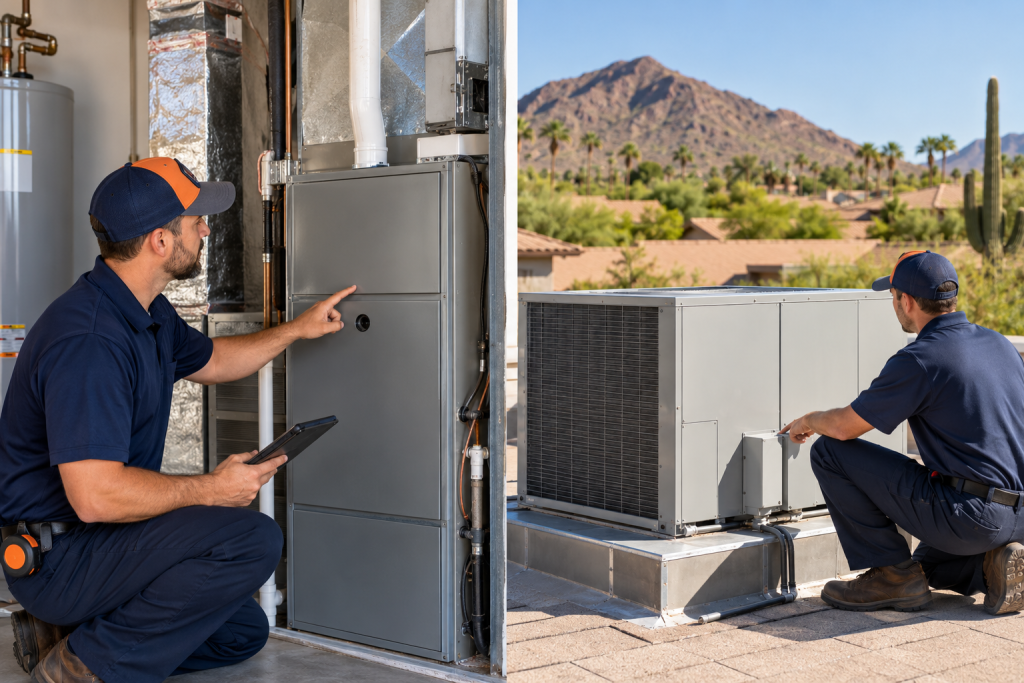
Manufactured homes can have equipment and air-distribution arrangements that differ from site-built homes. A packaged unit may sit outside the home and connect to ducts beneath the floor. Other homes use an indoor furnace or air handler connected to an outdoor unit. Additions and room units can make the setup more complex.
The service approach should account for the home’s construction, insulation, windows, electrical capacity and available access. A problem that looks like insufficient cooling capacity may also involve a restricted return, a disconnected duct or a control issue. Replacing equipment without checking these items can leave the comfort problem unresolved.
Discount AC & Refrigeration provides residential HVAC service in the Phoenix area. When you contact us about a Mesa manufactured home, describe the system location and any park access requirements so the appointment can be planned appropriately.
Common Mobile Home AC Problems in Mesa
The AC Runs but the Home Stays Warm
Warm rooms can result from equipment problems, restricted airflow, damaged ducts or a mismatch between the system and the home’s cooling needs. Tell the technician whether the issue affects the entire home or only certain rooms, and whether the change was sudden or gradual.
For a wider overview of symptoms, see our guide to an AC that runs but does not cool. The guide helps you describe the issue; it does not replace an on-site diagnosis.
Packaged Unit Starting or Electrical Problems
A packaged system places the principal heating and cooling components in one outdoor cabinet. A unit that hums, struggles to start or stops unexpectedly needs a diagnosis of the relevant controls, electrical components and motors. Do not assume every starting problem means a failed compressor.
If testing identifies a capacitor fault, our AC capacitor replacement cost guide explains parts, labor and diagnostic charges. Keep electrical testing and repairs with a qualified professional.
Underfloor Ductwork and Belly-Board Damage
Loose duct connections, torn insulation or damaged duct sections can reduce the amount of conditioned air reaching the rooms. The protective material beneath a manufactured home, often called the belly board, can also deteriorate and expose the area around the ducts.
Ask for an inspection of accessible connections and duct sections before assuming the AC needs to be larger. The proposal should distinguish duct repairs from work on insulation or the home’s underside. Access limitations and the extent of damage affect the scope.
Thermostat and Control Issues
Thermostat compatibility, location and wiring matter. If the system cycles unexpectedly or responds incorrectly, have the controls checked along with the equipment. A thermostat upgrade should match the actual heating and cooling configuration.
Refrigerant Problems in Older Systems
A refrigerant leak requires diagnosis, not repeated top-offs without understanding the cause. For an older R-22 system, compare the condition of the equipment and the cost of a proper repair with replacement.
EPA’s homeowner guidance explains that existing R-22 equipment does not have to be replaced solely because of the phaseout. There is no universal drop-in replacement for R-22. EPA’s HFC guidance also distinguishes servicing existing equipment from requirements affecting new equipment. Have a qualified technician verify the refrigerant and system compatibility.
Mobile Home AC Installation: Compare the System Options
| System option | How it serves the home | What to check |
|---|---|---|
| Packaged AC or heat pump | The main components are in one outdoor cabinet connected to the duct system. | Duct connections, heating needs, pad or platform, clearances and electrical supply. |
| Split system | An outdoor unit connects to an indoor air handler or furnace. | Matched components, indoor space, refrigerant lines and duct compatibility. |
| Ductless mini-split | Indoor units serve selected areas without the existing central duct network. | Room layout, number and placement of indoor units, drainage and electrical supply. |
| Window or through-the-wall unit | A room unit cools a limited area. | The room’s needs, mounting, electrical circuit and whether whole-home cooling is required. |
A ductless system can be worth comparing when existing ducts need extensive work, but the number of indoor units and room layout affect both performance and cost. A packaged replacement may suit an existing ducted setup, provided the ducts and connections are suitable. Compare complete proposals rather than equipment prices alone.
What a Manufactured Home AC Installation Proposal Should Cover
Cooling Load and Equipment Compatibility
Ask how the proposed system size was determined. Floor area alone does not describe the cooling load: insulation, windows, orientation, additions and air leakage also matter. The installer should verify compatibility with the home and the manufacturer’s installation instructions.
Mounting, Clearances and Duct Connections
The outdoor equipment needs suitable support and the clearances specified by its manufacturer. The proposal should explain any pad or platform work, duct transitions, sealing, insulation and drainage changes. Reusing an existing connection is appropriate only if its condition and size suit the new equipment.
Electrical and Permit Requirements
A replacement does not automatically require a larger electrical panel. The proposed equipment’s requirements should be checked against the service, circuit, wiring and disconnect. Ask the installer to identify any electrical changes, applicable permits and inspections in the written scope.
Start-Up, Testing and Warranty
Ask what commissioning and operating checks are included after installation, how warranty registration will be handled and which labor terms apply. Request the model numbers and keep the proposal, warranty documents and service record together.
Mobile Home AC Repair and Replacement Cost References
For early budgeting, published national guides provide ranges for several manufactured-home projects. These are not local fixed prices. The configuration matters: replacing a packaged cooling unit is different from installing both heating and cooling equipment or rebuilding the duct system.
| Project | Published installed reference (USD) | Scope to check |
|---|---|---|
| Mobile-home packaged unit | $3,800–$7,000 | Depends on the heating and cooling configuration; verify every included item. |
| Mobile-home furnace and AC combination | $4,000–$9,000 | A combined heating and cooling project; not interchangeable with an AC-only quote. |
Source: HomeGuide’s mobile-home HVAC price guide, reviewed October 11, 2026. For component repairs, use the capacitor cost breakdown when relevant; other faults require their own diagnosis. Our Phoenix installation cost guide provides broader context for comparing replacement proposals.
Pricing disclaimer: These approximate third-party ranges are for budgeting in U.S. dollars. They are not a quote or price guarantee from Discount AC & Refrigeration. Mesa project costs may be higher or lower. Equipment, ductwork, electrical changes, access, permits, labor and scheduling affect the total. Confirm taxes, fees, exclusions and warranty terms in a written estimate after inspection.
Maintaining Mobile Home HVAC in Mesa
Follow the equipment manufacturer’s maintenance instructions and discuss an appropriate service schedule with your technician. Pay attention to filter condition during dusty weather and periods of heavy use.
- Inspect the filter regularly: use the specified size and type, and replace it when dirty.
- Keep vents accessible: avoid placing furniture or stored items over supply or return openings.
- Keep outdoor airflow clear: remove loose debris around the unit and maintain the manufacturer’s required clearance.
- Report changes early: unusual noises, uneven cooling or repeated shutdowns help guide the diagnosis.
- Include duct connections in the inspection: ask the technician to check accessible underfloor connections and identify any further access needed.
Ask about AC maintenance for an individual home. Community managers can discuss the scope of a maintenance program for multiple systems, including access arrangements and who approves repairs.
What to Have Ready When You Request Service
Provide the Mesa address and space number, a description of the symptoms, the system’s approximate age if known, and any recent service history. Mention whether the equipment is outside at ground level, on the roof or inside a closet. If available without opening equipment, the model information can help with planning.
For a replacement estimate, include any additions or rooms that have persistent cooling problems. Ask the park or property manager about access and approval procedures that apply to your home. Confirm the diagnostic or estimate process with the contractor before the appointment.
Mobile Home AC Service in Mesa: Frequently Asked Questions
What type of HVAC system does my mobile home use?
How much does mobile home AC installation cost?
Can a regular residential AC be installed in a manufactured home?
Why is my mobile home hot even when the AC is running?
How often should I change the AC filter?
What are my options if the system uses R-22?
Can a mini-split cool a mobile home?
Do you service mobile home communities in Mesa?
Does a new AC require an electrical panel upgrade?
Should I repair or replace my mobile home AC?
Get Mobile Home AC Service in Mesa
Request help with a cooling problem, compare replacement options or arrange an assessment of underfloor airflow. Discount AC & Refrigeration can discuss the next step for your mobile or manufactured home.