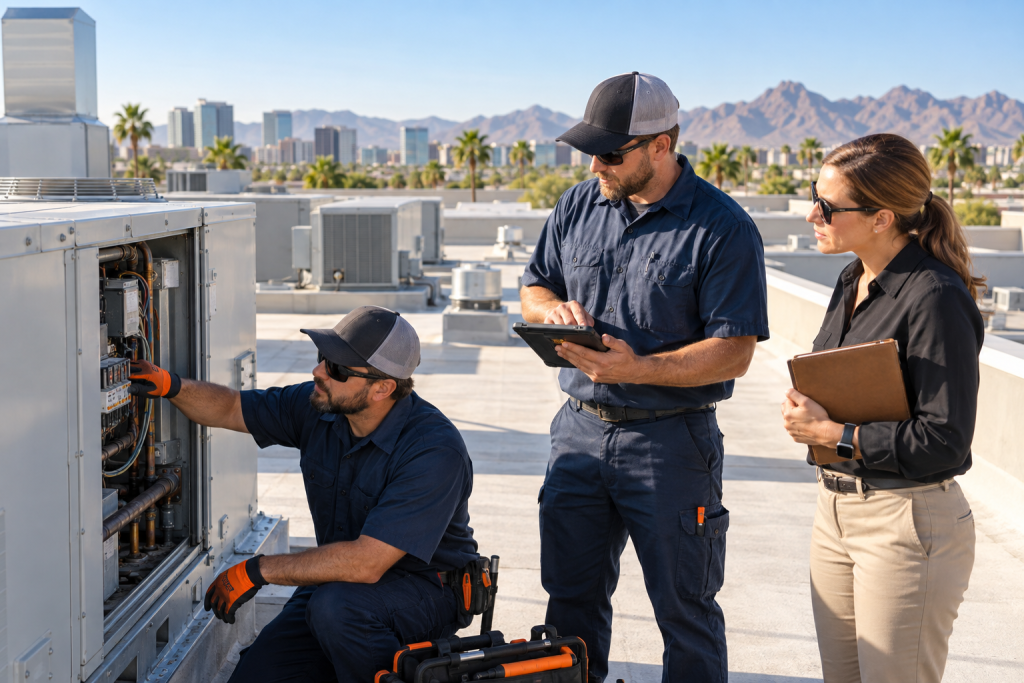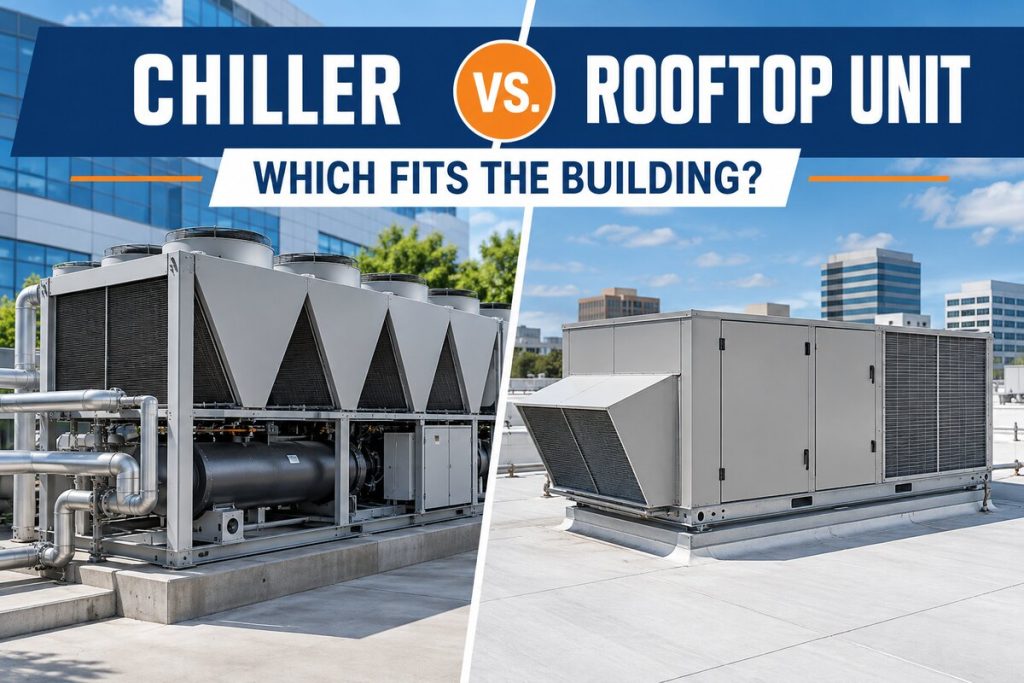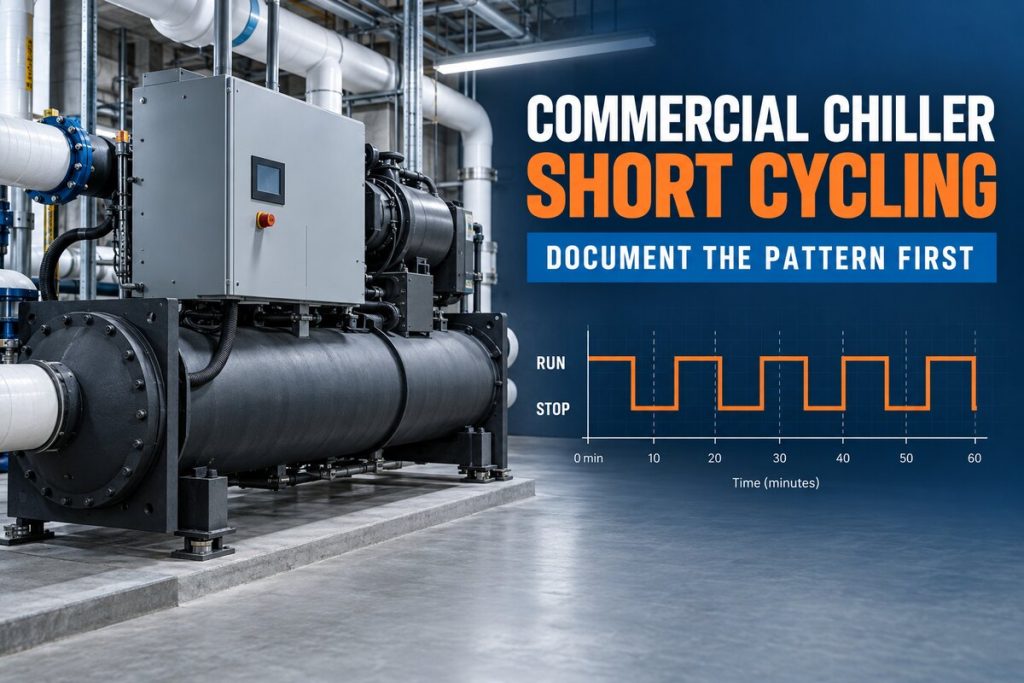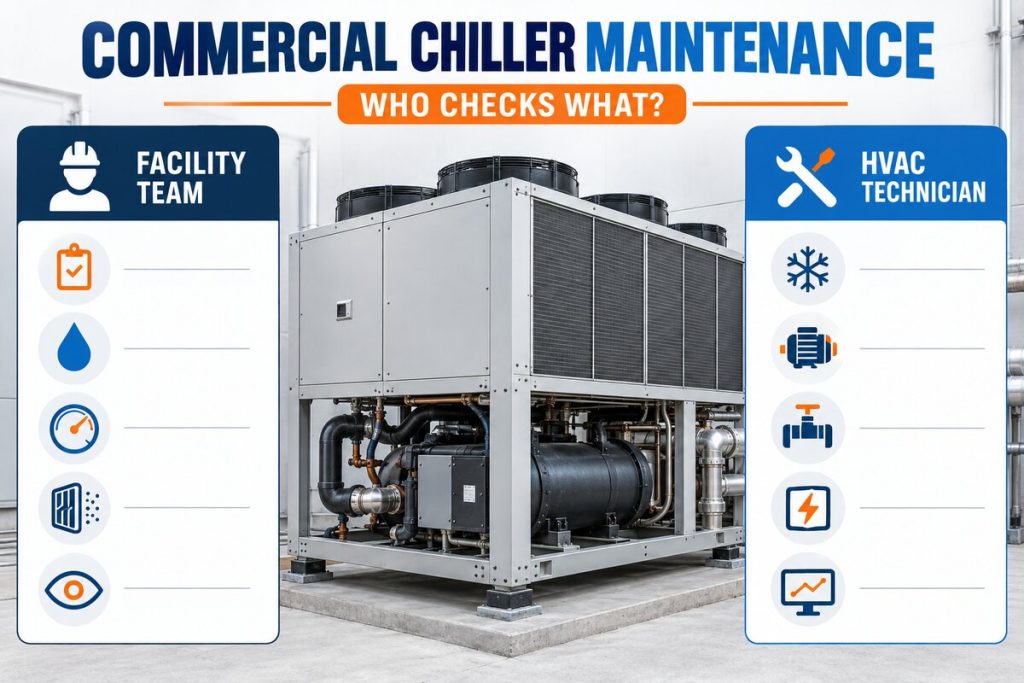
Root cause: water treatment HVAC Phoenix requirements are driven by a combination most facilities never plan for — chlorine and chemical fumes that corrode standard equipment from the inside out, hydrogen sulfide off-gassing in wastewater spaces, and Arizona’s 110–115°F ambient heat stacking thermal load onto rooms full of heat-generating pumps, motors, and electrical gear that must stay within tight temperature and humidity bands to keep the plant running.
If you manage a water or wastewater treatment facility anywhere in the Phoenix metro, you already know the cooling system is not a comfort amenity — it is process-critical infrastructure. When the HVAC serving your chemical feed room, electrical room, or SCADA control room fails in July, you are not dealing with an uncomfortable office. You are looking at corroded controls, tripped variable-frequency drives, chemical fumes with nowhere to vent, and a compliance problem that can shut down treatment.
At Discount AC & Refrigeration, our licensed HVAC technicians bring over 20 years of experience in AC and refrigeration for homes and businesses across Arizona — including the corrosion-heavy, ventilation-intensive environments that industrial water treatment facilities demand. This guide breaks down what makes water treatment HVAC in Phoenix uniquely difficult, the standards that govern it, and how to keep these systems compliant and reliable through the desert summer.
Why Water Treatment HVAC in Phoenix Is a Different Animal
A typical commercial building HVAC system moves conditioned air to keep people comfortable. A water treatment facility asks the same equipment to survive a chemically aggressive, heat-loaded, code-regulated environment while protecting both workers and sensitive process equipment. Three forces compound here in ways they rarely do anywhere else.
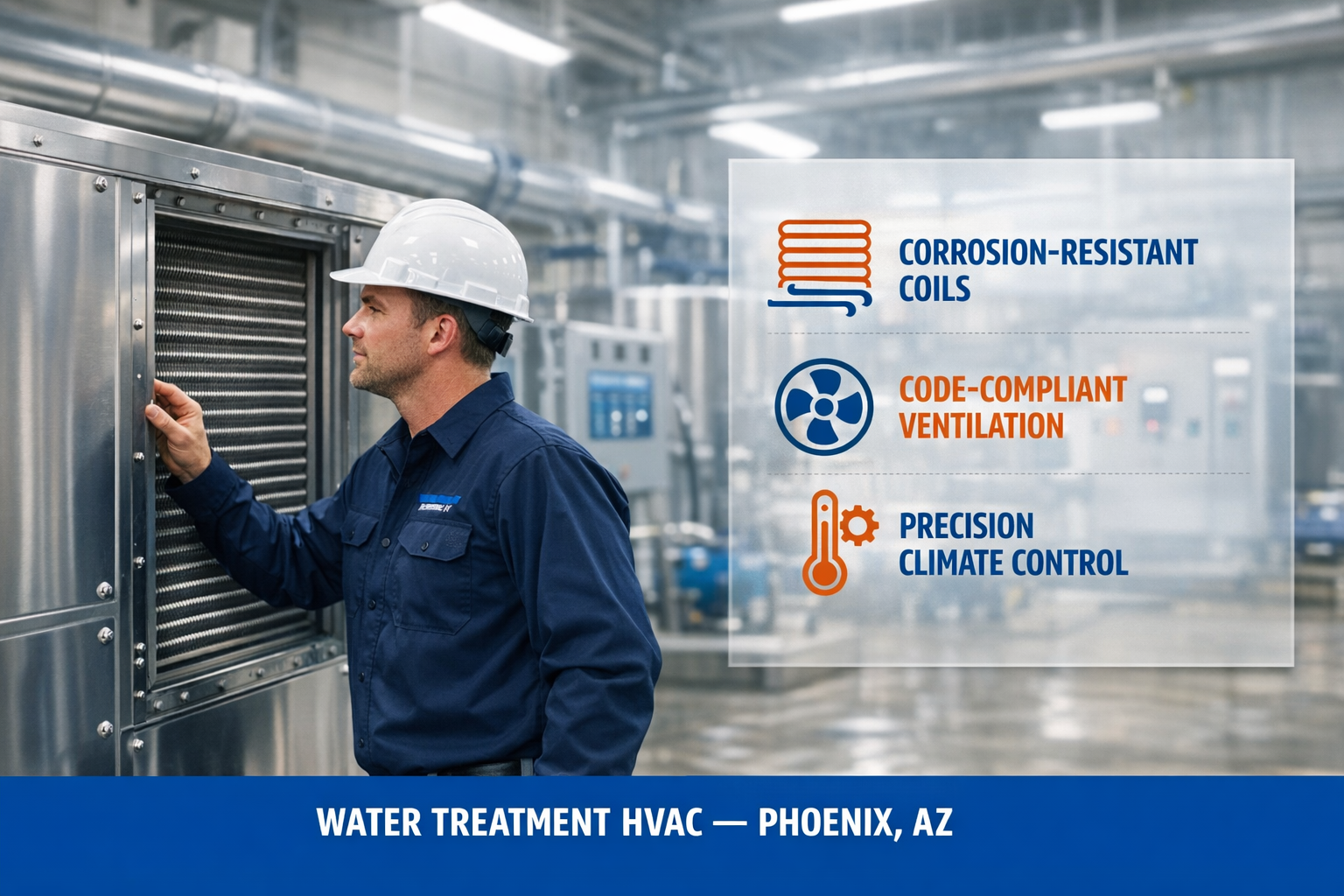
Chemical corrosion. Chlorine gas, sodium hypochlorite vapor, sulfuric acid mist, and the hydrogen sulfide that off-gasses from wastewater are all aggressive toward bare copper, aluminum fins, and galvanized steel. Standard condenser coils and ductwork can degrade in a fraction of their rated life when exposed to this atmosphere.
Extreme ambient heat. Phoenix summers routinely push past 110°F, and mechanical and electrical rooms packed with pumps, blowers, and drives generate their own internal heat load on top of that. Equipment rated for 95°F design conditions struggles badly when outdoor air and internal gains combine.
Regulated ventilation. Unlike an office, large portions of a treatment plant are governed by life-safety ventilation codes. Air change rates, exhaust placement, and electrical area classification are not optional design preferences — they are enforceable requirements.
Our team has serviced complex commercial and industrial cooling across the Phoenix East Valley, and we factor all three of these pressures into every diagnosis. You can see how Arizona facility managers rate our work on our verified Google profile.
Corrosion: The Number One Killer of Treatment Facility Equipment
How long does treatment facility HVAC equipment last in this environment? Far less than the nameplate suggests — unless it is specified correctly from the start. The single most common reason we get called to an industrial water treatment site is corrosion failure that a properly protected system would have resisted.
The fix is matching materials to the chemical exposure. Key protective specifications include:
- Coated condenser and evaporator coils — epoxy or e-coat finishes that seal copper and aluminum against chlorine and acid vapor
- Stainless steel or fiber-reinforced plastic (FRP) ductwork in areas with exposed wastewater or chemical off-gassing, where galvanized steel simply will not survive
- Sealed, corrosion-rated motors and electrical enclosures rated for the specific atmosphere of each room
- Separation of intake air so makeup air units never pull corrosive exhaust back into the building
These choices cost more up front, but in Phoenix they are the difference between a system that lasts and one that needs replacement years early. When we evaluate whether to repair or replace failing equipment, corrosion damage is one of the first things our technicians assess — and it heavily influences the cost estimates for equipment replacement we provide. The EPA’s Safe Drinking Water program underscores why this reliability matters: treatment cannot lapse.
Ventilation and Hazardous Area Requirements
Ventilation is where water treatment HVAC moves from comfort engineering into life safety. Two areas demand particular attention in Phoenix facilities.
Wastewater Spaces and NFPA 820
Wastewater collection and treatment spaces can accumulate flammable and toxic gases — methane and hydrogen sulfide chief among them. The governing standard, NFPA 820, classifies these spaces by hazard and ties electrical area classification directly to ventilation rate. A space that would otherwise be a hazardous (classified) location can often be reduced to unclassified by maintaining continuous mechanical ventilation — commonly on the order of six or twelve air changes per hour, depending on the space. That ventilation must be monitored, and the ductwork must be built from corrosion-resistant materials like coated stainless steel or FRP because hydrogen sulfide destroys ordinary duct.
Chlorine and Chemical Feed Rooms
Chlorine gas is heavier than air, so any room storing or feeding it requires exhaust drawn from floor level, never from the ceiling, so the gas cannot pool undetected. Industry practice and codes such as the Ten States Standards call for high emergency ventilation rates in occupied chlorine rooms, with exhaust discharged safely away from intakes and occupied areas. Worker exposure limits for chlorine and similar chemicals are defined by OSHA, and general indoor ventilation design follows ASHRAE Standard 62.1. Getting this wrong is not a comfort issue — it is a worker-safety and regulatory exposure.
If your facility needs an honest assessment of whether existing ventilation meets these standards, our licensed technicians at Discount AC & Refrigeration can evaluate it. Call (480) 478-2616 — we answer 6 AM to Midnight, 7 days a week.
Humidity and Temperature Control for Electrical and SCADA Rooms
The control room is the brain of a treatment plant, and it is unforgiving about its environment. Programmable logic controllers, SCADA servers, variable-frequency drives, and switchgear all have tight operating windows — typically 65°F to 80°F with controlled humidity. Push past that and you get thermal shutdowns, shortened component life, and condensation-driven corrosion on circuit boards.
In Phoenix, this is harder than it sounds. Summer heat means these rooms need year-round cooling even while the rest of the building fights to stay ahead of outdoor temperatures. During monsoon season, humidity swings can drive condensation risk in spaces that ran bone-dry in May. A correctly designed system for these rooms includes:
- Dedicated, redundant cooling so a single unit failure does not take the controls offline
- Dehumidification capacity sized for monsoon-season dew points, not just average conditions
- Tight temperature setpoints with alarming when the room drifts out of range
- Filtered, sealed air paths that keep desert dust and corrosive vapor away from electronics
This is the same precision-cooling discipline behind our commercial HVAC service and the commercial refrigeration work we do for breweries, restaurants, and indoor grow facilities — environments where equipment uptime is non-negotiable.
Water Treatment HVAC Phoenix: Common Issues and Recommended Action
The table below reflects the problems our technicians encounter most often at Arizona treatment facilities, the usual root cause, and how urgently each should be addressed.
| Symptom / Issue | Most Likely Cause | Urgency | Recommended Action |
|---|---|---|---|
| Premature coil failure / leaks | Chlorine or H₂S corrosion on uncoated coils | HIGH | Replace with epoxy/e-coated coils rated for the atmosphere |
| Control room overheating | Undersized or single-point cooling, 115°F load | CRITICAL | Add redundant precision cooling; check setpoints |
| Chemical room fume buildup | Inadequate or failed exhaust ventilation | CRITICAL | Verify floor-level exhaust + air change rate immediately |
| Condensation on electronics | Lost dehumidification in monsoon season | HIGH | Service or upsize dehumidification capacity |
| VFD or drive shutdowns | High ambient temperature in equipment room | HIGH | Increase room cooling and airflow to drives |
| Rusting ductwork | Galvanized duct in corrosive space | MED-HIGH | Replace with stainless steel or FRP duct |
| Tripping high-pressure cutout | Condenser fouled by desert dust | HIGH | Condenser cleaning + refrigerant pressure check |
| Refrigerant loss | Corrosion-driven leak in coil or lineset | HIGH | EPA Section 608 leak search and repair |
For any of the issues marked Critical, call our team without waiting — (480) 478-2616 connects you to licensed technicians 6 AM to Midnight, every day. If a comfort-cooling emergency hits your offices or attached spaces, our 24/7 emergency AC repair line covers that too.
Preventive Maintenance Schedule for Treatment Facility HVAC
How often should water treatment HVAC in Phoenix be serviced? More frequently than a standard commercial building — the corrosive load and extreme heat compress the maintenance timeline. Our licensed technicians recommend the following for Phoenix-area facilities:
Monthly:
– Inspect chemical and chlorine room exhaust fans and confirm airflow
– Check control room temperature and humidity logs against setpoints
– Visually inspect coils and enclosures for early corrosion
Quarterly:
– Wash condenser coils to clear desert dust (critical before and during summer)
– Test ventilation monitoring and alarms in classified spaces
– Inspect duct integrity in corrosive areas; document any degradation
Annually:
– Full refrigerant pressure and leak verification
– Recoat or replace coils showing corrosion progression
– Verify air change rates still meet NFPA 820 and applicable codes
– Confirm dehumidification capacity ahead of monsoon season
Bundling these into a single commercial HVAC preventive maintenance agreement is the most cost-effective way to manage a facility’s cooling and ventilation — deferred maintenance is, by a wide margin, the leading cause of the emergency calls we run. Facilities that maintain Energy Star-grade efficiency targets also lose those gains fast when coils foul and refrigerant charge drifts.
Repair or Replace? How We Make the Call
When equipment fails at a treatment facility, the repair-versus-replace decision should be driven by evidence, not guesswork. Our technicians weigh several factors before recommending either path:
- Age of the system relative to its expected life in a corrosive Arizona environment
- Repair cost as a percentage of replacement cost — generally, when repair approaches half of replacement, replacement wins
- Extent of corrosion — surface versus structural, and whether it will simply recur
- Efficiency and refrigerant type — older units running phased-down refrigerants may justify replacement on operating cost alone
- Maintenance history — a well-maintained unit earns more repair investment than a neglected one
We give an honest recommendation with written numbers, including detailed replacement cost estimates when replacement is the smarter move — no pressure to buy equipment you do not need. Reach out to our team and we will walk you through the options.
Professional Standards and Licensing
Industrial water treatment HVAC work touches refrigerants, electrical systems, and life-safety ventilation, so it is not a place for unlicensed contractors. Refrigerant handling requires EPA Section 608 certification — it is illegal to purchase or handle refrigerants without it, and a low charge always means a leak that must be found and repaired, not just topped off.
Our technicians at Discount AC & Refrigeration are licensed under Arizona ROC 361623 and carry the required EPA refrigerant certifications. We serve restaurants, breweries, grow facilities, retail centers, office buildings, and industrial operations across the greater Phoenix metro, and our clients across Arizona rely on us to keep mission-critical cooling running. Facility managers can also extend our refer and earn program to peers who need dependable industrial HVAC support.
Keep Your Treatment Facility Running Through the Arizona Summer
In Phoenix, a water treatment facility’s HVAC and ventilation systems are not background infrastructure — they protect your process equipment, your compliance standing, and the safety of everyone working inside. Corrosion, extreme heat, and code-driven ventilation requirements all stack up in ways standard commercial systems were never built to handle, which is exactly why these facilities need technicians who understand the full picture.
Our licensed HVAC technicians at Discount AC & Refrigeration respond fast across Gilbert and the East Valley, Mesa, Chandler, Tempe, Queen Creek, Apache Junction, and the greater Phoenix metro. We diagnose the root cause — not just the symptom — and back every recommendation with honest numbers and licensed, EPA-certified work.
Call (480) 478-2616 — available 6 AM to Midnight, 7 days a week. Contact us online to schedule a facility HVAC and ventilation inspection or emergency repair. Arizona License ROC 361623.
Frequently Asked Questions About Water Treatment HVAC in Phoenix
What makes water treatment HVAC in Phoenix different from standard commercial HVAC?
Treatment facilities combine chemical corrosion, 115°F desert heat, and code-driven ventilation in one building. Equipment must be corrosion-rated and ventilation must meet life-safety standards. See our commercial HVAC services.
Why do coils and ductwork corrode so quickly at treatment plants?
Chlorine, sodium hypochlorite vapor, and hydrogen sulfide attack bare copper, aluminum fins, and galvanized steel. The fix is epoxy/e-coated coils and stainless or FRP ductwork rated for the atmosphere.
What ventilation does a chlorine or chemical feed room require?
Because chlorine is heavier than air, exhaust must be pulled from floor level at a high air change rate, discharged away from intakes. If you are unsure your room complies, call (480) 478-2616 for an evaluation.
How does NFPA 820 affect facility HVAC design?
NFPA 820 ties electrical area classification to ventilation rate. Maintaining continuous mechanical ventilation can reduce a hazardous space to unclassified, but it must be monitored and built with corrosion-resistant duct.
What temperature should a SCADA or electrical room stay at?
Most controls, drives, and switchgear need 65°F–80°F with controlled humidity. In Phoenix that means dedicated, redundant cooling sized for monsoon dew points so a single failure never takes the plant offline.
How often should treatment facility HVAC be serviced in Phoenix?
More often than a standard building — monthly ventilation checks, quarterly coil washes, and annual leak and code verification. A preventive maintenance plan is the most cost-effective approach.
When should we replace facility HVAC equipment instead of repairing it?
When repair cost approaches half of replacement, corrosion is structural, or refrigerant is phased down, replacement usually wins. We provide honest replacement cost estimates in writing.
Are your technicians licensed for industrial HVAC work?
Yes. We are licensed under Arizona ROC 361623 with EPA Section 608 refrigerant certification and over 20 years of experience. Call (480) 478-2616, 6 AM to Midnight, 7 days a week.
Is your facility’s HVAC ready for another 115°F Phoenix summer?
Our licensed, EPA-certified technicians can evaluate corrosion, ventilation compliance, and precision cooling — and tell you honestly whether to repair or replace. Available 6 AM to Midnight, 7 days a week.