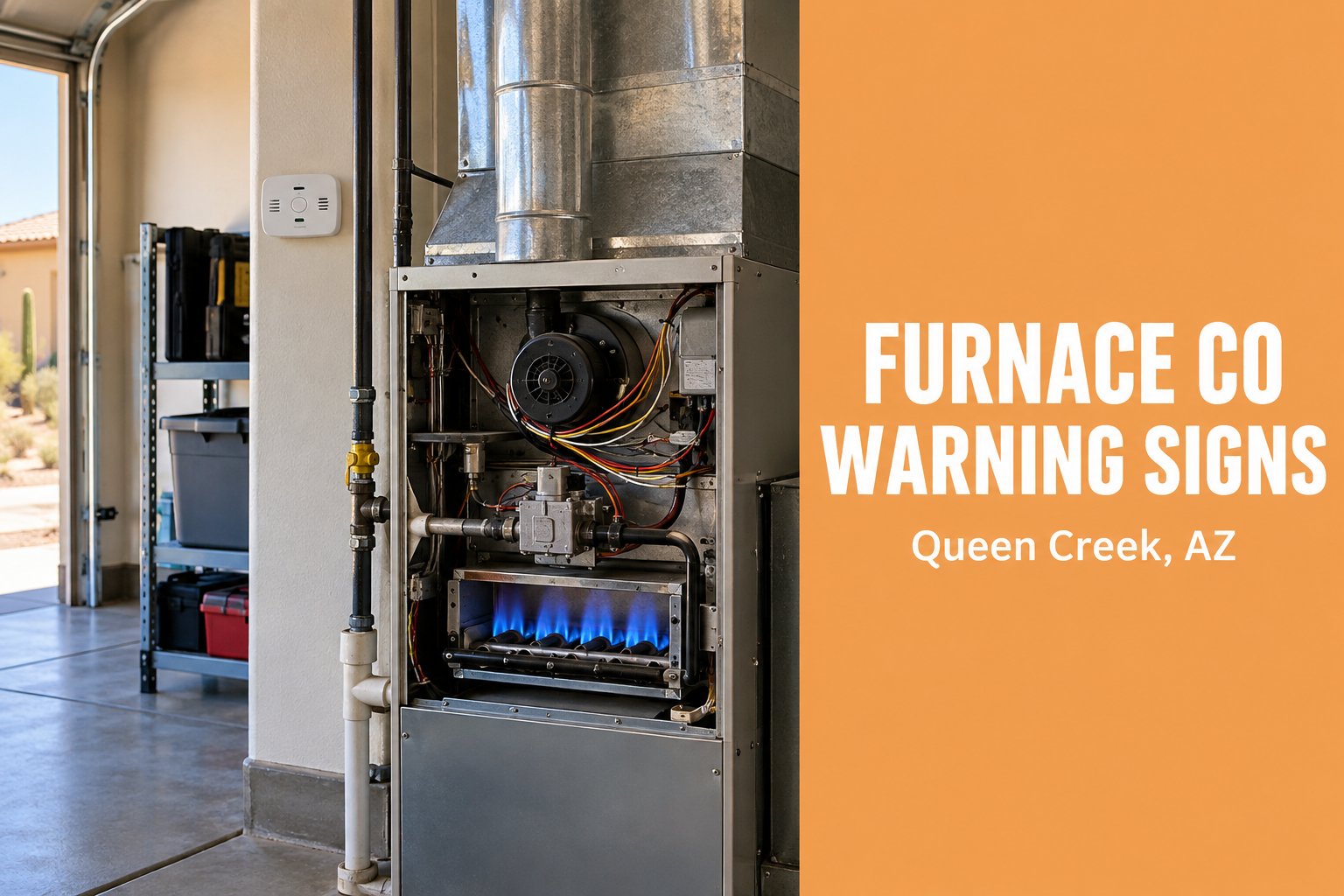
Short answer: The main furnace carbon monoxide signs are a CO alarm going off, a yellow or flickering burner flame, soot or scorch marks around the furnace, and headaches or nausea that ease when you leave the house. If you see any of them, turn the furnace off, get everyone outside, call 911 if anyone feels sick, and have the furnace inspected before you use it again. Call (480) 478-2616.
Knowing the furnace carbon monoxide signs matters most in November, when East Valley homeowners switch the heat on for the first time in months. A gas furnace that burns cleanly and vents properly is safe. A furnace with a cracked heat exchanger, a blocked flue or a loose vent pipe can push carbon monoxide (CO) into the living space, and you can’t see, smell or taste it.
This guide covers the furnace carbon monoxide signs we look for on real service calls in Queen Creek, Chandler, Gilbert, Mesa and Tempe, how to tell them apart from the normal dusty smell of a first start-up, and what to do right away if something seems wrong.
Why Carbon Monoxide Is a Furnace Safety Issue
A gas furnace burns fuel in a sealed chamber. The heat exchanger keeps combustion gases away from your duct air, and the flue pipe carries them outside. When the flame doesn’t get enough air, or when the heat exchanger or venting is damaged, CO can build up and leak into the home.
According to the U.S. Environmental Protection Agency, carbon monoxide is an odorless, colorless gas, and early exposure can feel like the flu: headache, dizziness, nausea and tiredness. That is why the physical furnace carbon monoxide signs around the unit are so useful. They often show up before anyone feels sick.
7 Furnace Carbon Monoxide Signs to Watch For
1. Your CO alarm sounds
A carbon monoxide alarm is the clearest of all furnace carbon monoxide signs. Never assume it is a false alarm just because nobody feels sick. Get everyone out, then call for help from outside.
2. A yellow, orange or flickering burner flame
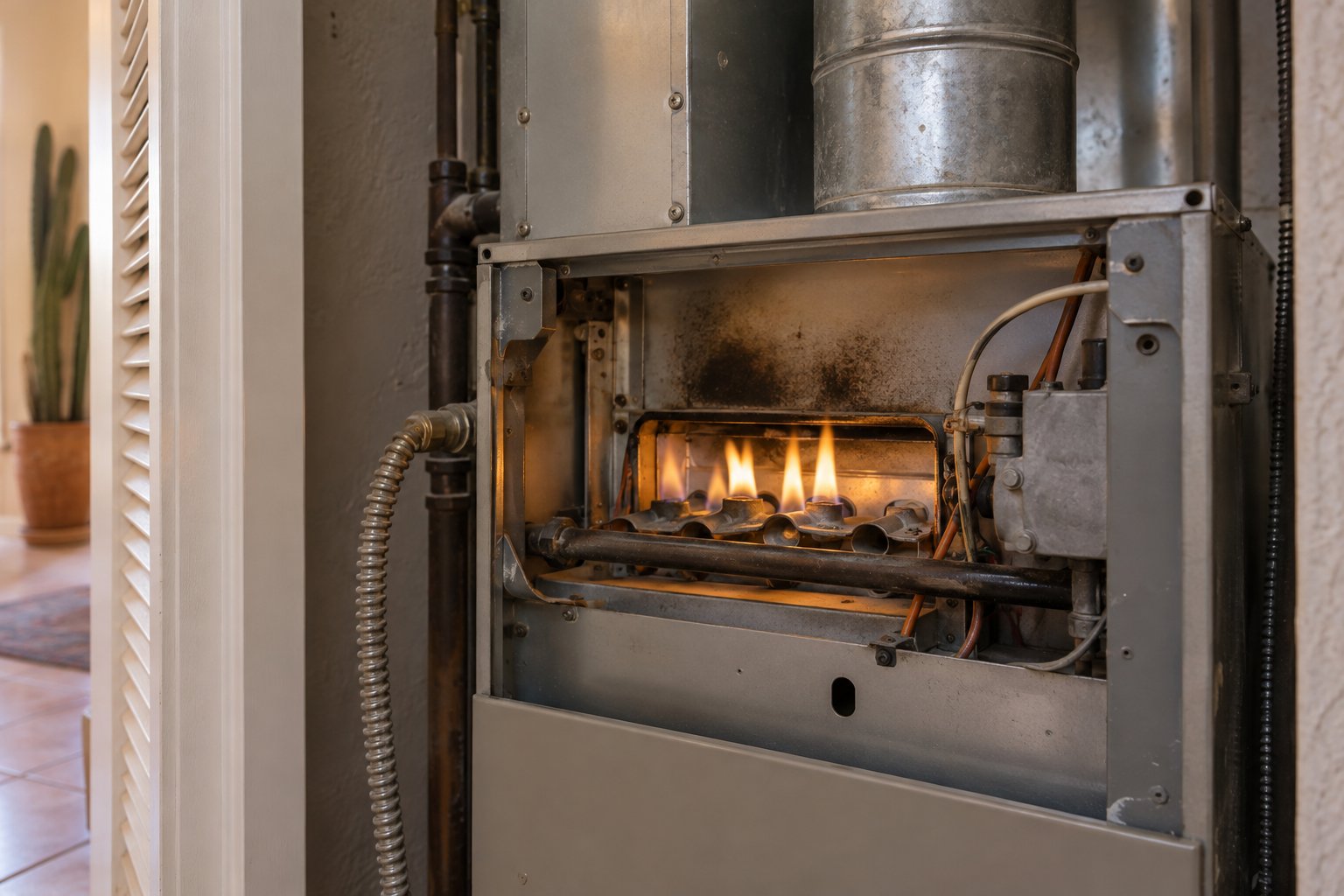
A healthy gas burner flame is mostly blue and steady. A yellow or orange flame, or one that dances and lifts off the burner, can mean incomplete combustion, which produces more CO. Dirty burners, low air supply and cracked parts can all cause it.
3. Soot, scorch marks or rust around the furnace
Among visible furnace carbon monoxide signs, black soot on the burner area, brown scorch marks above the burner opening, or streaks of rust on the vent pipe suggest that combustion gases are not leaving the way they should. Look at the furnace cabinet and the area where the flue pipe meets the top of the unit.
4. Flu-like symptoms that improve when you leave
If people in the house get headaches, feel dizzy or sick to their stomach when the heat runs, and feel better at work or outside, take it seriously.
5. Heavy condensation on windows near the furnace
Arizona homes are dry in winter, so moisture on windows or walls near the furnace closet is unusual. Combustion makes water vapor, and when venting fails that moisture stays inside along with other combustion gases.
6. A loose, disconnected or damaged vent pipe
Vent pipes in attics and garages get bumped during storage, roof work or remodeling. A joint that has slipped apart, a pipe with holes, or a cap blocked by a bird nest can send exhaust back into the home.
7. A pilot light or burners that keep going out
On older furnaces with a standing pilot, a flame that keeps going out can mean a draft or venting problem. On newer furnaces, repeated lockouts and error codes from the flame sensor or pressure switch can point to the same kind of airflow issue. Both are worth a safety check.
Furnace Carbon Monoxide Signs vs Normal Start-Up Smells
The first time a furnace runs each season, burning dust can make a short-lived smell. Here is how to tell normal from not normal:
| What you notice | Usually normal? | What to do |
|---|---|---|
| Dusty or burning smell on first start-up that fades | Yes | Change the filter and open a window for a short time |
| Rotten egg or sulfur smell | No (possible gas leak) | Leave the home and call the gas utility from outside |
| CO alarm sounding | No | Get everyone out and call 911 |
| Yellow or flickering burner flame | No | Turn the furnace off and book an inspection |
| Soot or rust at the vent pipe | No | Stop using the furnace until it is checked |
What to Do If You Notice Furnace Carbon Monoxide Signs
- Get people and pets outside. Fresh air comes first. Don’t stay inside to look for the cause.
- Call 911 if anyone feels sick or if the CO alarm is sounding.
- Turn the furnace off at the thermostat, and at the furnace switch if you can reach it safely on your way out.
- Call the gas utility from outside if you also smell gas.
- Keep the furnace off until a technician inspects the heat exchanger, burners and venting.
What Not to Do
- Don’t silence a CO alarm and go back to sleep.
- Don’t restart a furnace that has shown furnace carbon monoxide signs just to see if it happens again.
- Don’t tape, patch or push together a vent pipe yourself.
- Don’t store paint, boxes or holiday decorations against the furnace or in front of its air openings.
- Don’t ignore furnace carbon monoxide signs because the house feels warm.
Worried about your furnace this winter?
Our licensed, bonded and insured technicians inspect burners, heat exchangers and venting, explain what they find and give you a clear quote before any repair.
How a Technician Checks a Furnace for CO Risks
A safety inspection follows the whole path of the combustion gases and confirms or rules out furnace carbon monoxide signs. A technician typically checks the burner flame, the heat exchanger for cracks or rust-through, the flue and vent connections, the draft, the gas pressure and the flame sensor and safety switches. Many techs also test the air near the furnace with a combustion or CO analyzer.
Ask for these checks by name during any furnace service and repair visit. New to furnace care? Read our guide on whether Phoenix-area homes need furnace service explains what’s involved. A maintenance program keeps the heater on a yearly schedule.
Cost depends on what the inspection finds. Cleaning burners or reconnecting a vent joint is a smaller job; a cracked heat exchanger on an older furnace may make replacement the better value. Furnace age, location and parts availability all matter, and we give you a clear quote before we start.
Arizona Homes: Why the First Cold Night Matters
In the desert, a furnace can sit unused from March to November. Dust collects on burners, pests nest in vent caps and attic work can bump vent pipes loose. Then the first cold night arrives, which is when most furnace carbon monoxide signs first appear.
Many homes in Queen Creek, San Tan Valley and Chandler have the furnace in the attic or garage, where vent joints take a beating from summer heat. Before the season, look for furnace carbon monoxide signs at the flame and vent pipe, put fresh batteries in every CO alarm and change the filter.
All-electric heat pump homes don’t show furnace carbon monoxide signs, but a gas water heater or attached garage can still be a CO source. Comparing systems? See heat pump vs furnace in Arizona.
Where We Serve
Discount AC & Refrigeration services gas furnaces across Queen Creek, San Tan Valley, Chandler, Gilbert, Mesa and Tempe. If you’re in Chandler, visit our Chandler heating and cooling page, and for after-hours problems see our emergency HVAC service.
Written by the Discount AC & Refrigeration team
Our licensed, bonded and insured HVAC technicians work across Queen Creek, Chandler, Gilbert, Mesa and Tempe every day, and this guide comes from what we see on real calls. Questions about your system? Call (480) 478-2616.