If your air conditioner clicks, hums, and then does nothing on a 110°F Phoenix afternoon, there’s a good chance a small part the size of a soda can is the reason. The AC capacitor is one of the most common failure points in a home cooling system—and one of the most misunderstood. It stores an electrical charge and releases it to start and run your system’s motors.
The good news is that a failed capacitor is usually an inexpensive, same-day fix when it’s caught early. The bad news is that ignoring the warning signs can burn out your compressor or fan motor, turning a small repair into a major one. This guide explains what an AC capacitor does, how to recognize a bad one, how long the part should last in Arizona’s heat, and why replacement is a job for a licensed technician. If your system has already quit cooling, our team handles same-day AC repair in Phoenix seven days a week.
What Is an AC Capacitor?
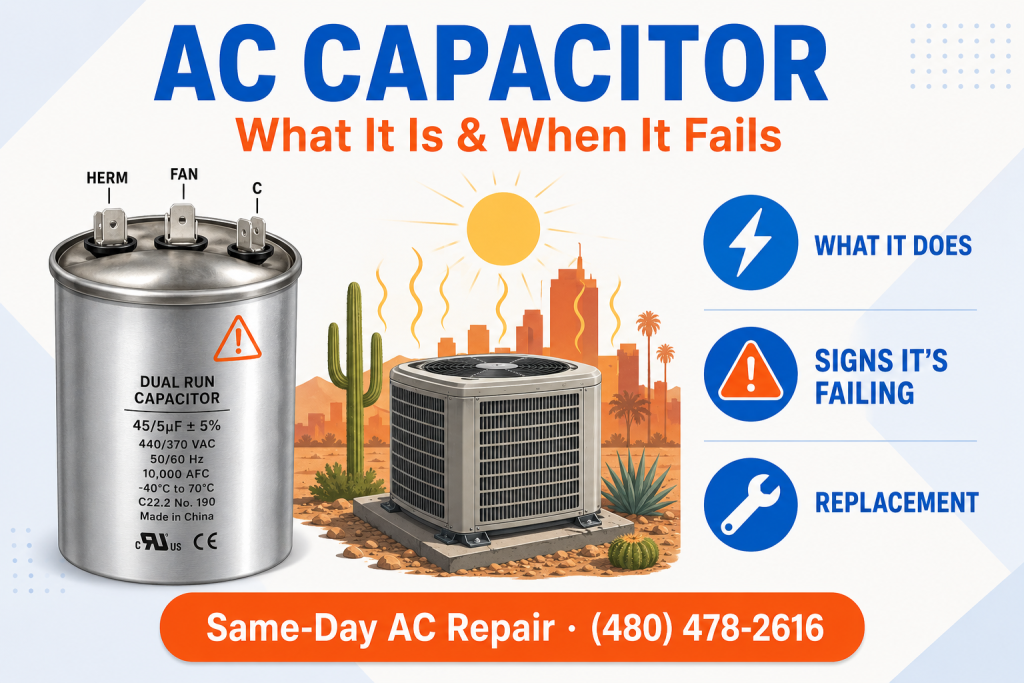
An AC capacitor is a small cylindrical component inside your outdoor condenser unit that stores and releases electrical energy. Think of it as a battery that delivers a short, powerful jolt—not to power the system continuously, but to get the motors moving and keep them running smoothly.
Your air conditioner has motors that need a lot of energy to start turning and a steady push to keep spinning. The AC capacitor supplies that energy. Without it, the motors either won’t start at all or will strain, overheat, and fail early.
Start Capacitors vs. Run Capacitors
Not every capacitor does the same job. Most residential systems use one or two of these types:
- Start capacitor. Delivers a large burst of energy to get the compressor motor spinning from a dead stop. It’s only active for a split second at startup.
- Run capacitor. Provides a continuous, smaller charge that keeps the fan motor and compressor running efficiently once they’re going.
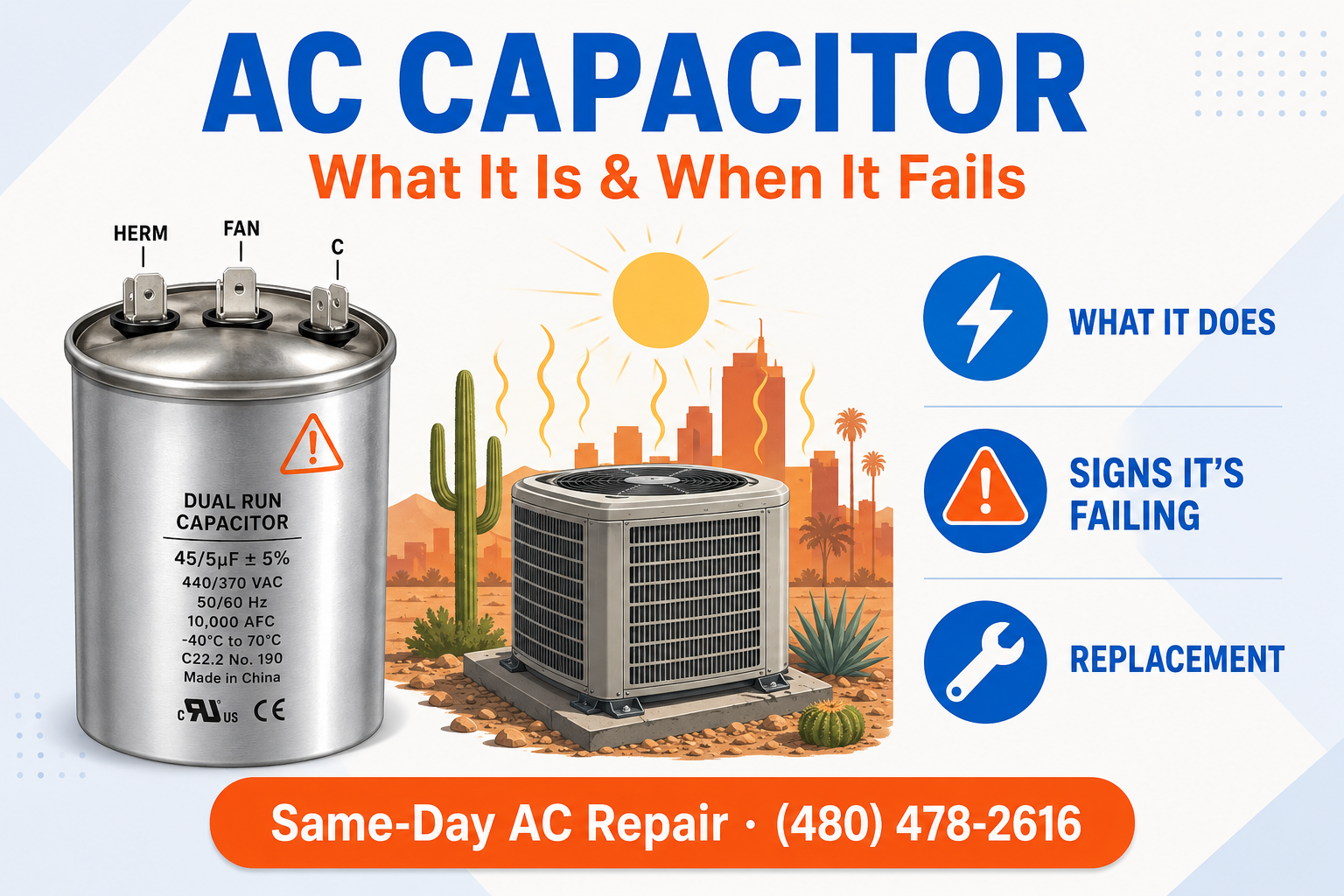
- Dual-run capacitor. A single component that combines the run functions for both the compressor and the condenser fan motor. This is the most common type in Phoenix homes, and it has three terminals usually labeled HERM (compressor), FAN, and C (common).
What the Capacitor Actually Does
When you set your thermostat to cool, a signal tells the outdoor unit to start. The capacitor discharges its stored energy to kick the compressor and fan motor into motion, then—if it’s a run capacitor—keeps feeding them a steady charge so they don’t overwork.
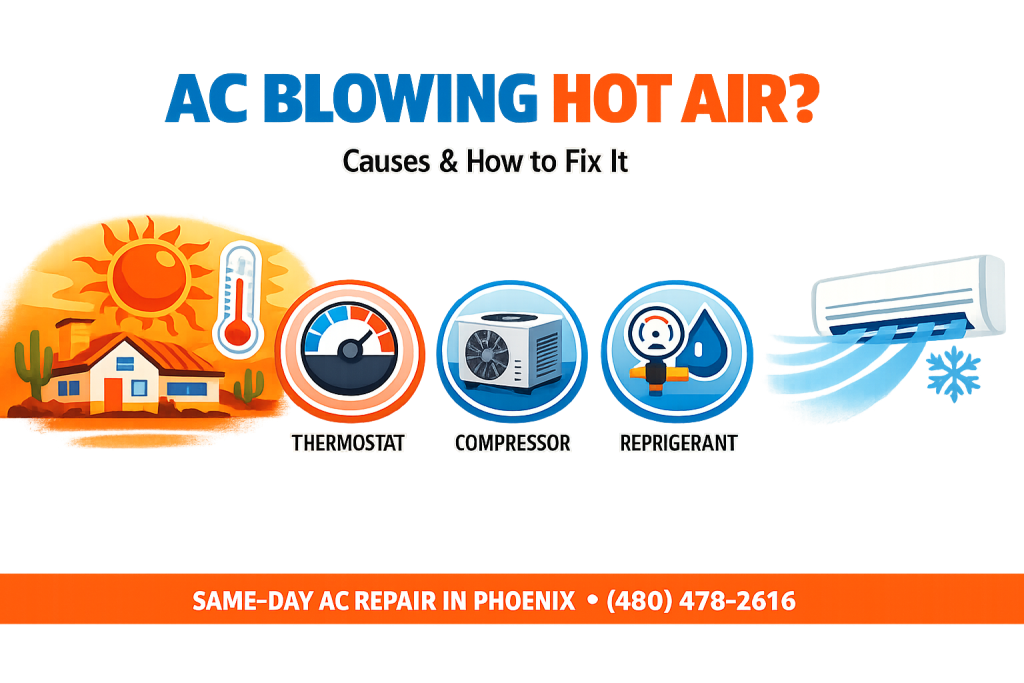
When the capacitor weakens, the motors have to draw more current to do the same job. That extra strain generates heat, and heat is what ultimately kills compressors and fan motors. This is exactly why a cheap capacitor left unaddressed can lead to one of the most expensive repairs in the whole system. If your unit is pushing warm air because the compressor never fully kicks on, our guide on why your AC is blowing hot air shows how a weak capacitor fits into that picture.
Signs of a Bad AC Capacitor
A bad AC capacitor rarely fails silently. It usually gives you several warning signs first—if you know what to listen and look for. Here are the most common symptoms our technicians see across Phoenix and the East Valley.
- A humming sound from the outdoor unit. If you hear a low hum but the fan and compressor won’t start, the capacitor is often too weak to get the motors moving. This is one of the clearest signs of a bad AC capacitor.
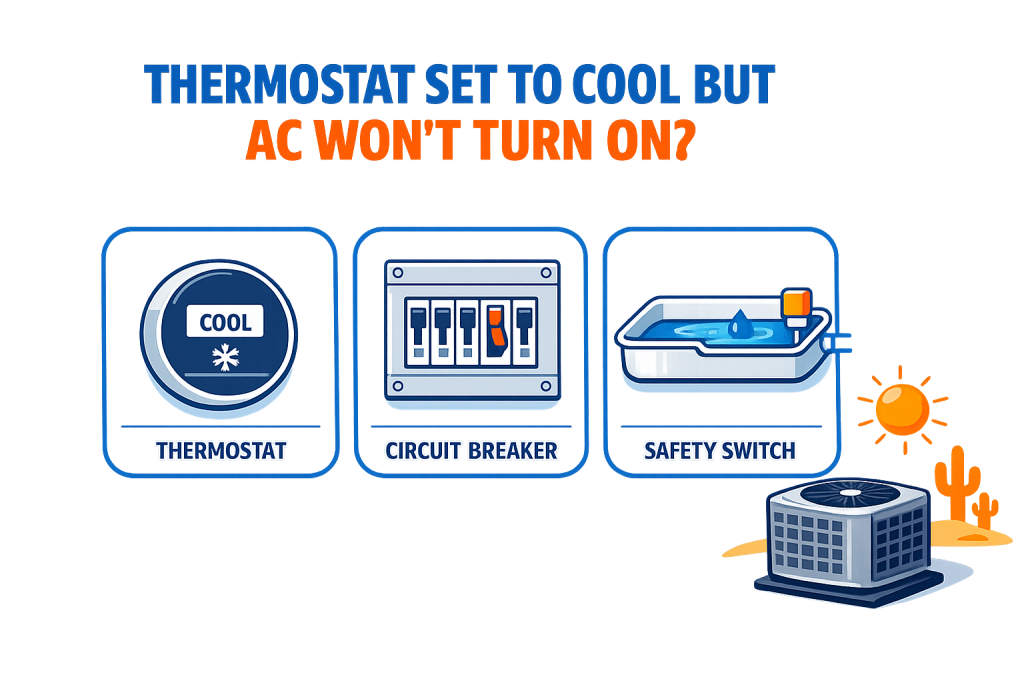
- The AC won’t turn on at all. A dead capacitor can leave the whole outdoor unit unresponsive, even though the thermostat and indoor blower seem fine. If your system won’t start, our AC won’t turn on troubleshooting guide covers the checks worth doing before you call.
- Warm air from the vents. When the compressor can’t start, the system circulates air without actually cooling it. You feel room-temperature or warm air even though the fan is running.
- The AC shuts off on its own. A failing capacitor can cause the system to short-cycle—turning on and off repeatedly—because the motors keep straining and tripping their internal overload protection.
- A slow or hard start. If you hear a click followed by a delay before the unit finally starts, the capacitor may be losing its ability to deliver a strong startup charge.
- A burning or electrical smell. A capacitor that has overheated may give off a faint burning odor. Turn the system off if you notice this.
- A visibly swollen or leaking capacitor. If a technician opens the access panel and sees a capacitor with a bulging, domed top or oily residue, it has failed. A healthy capacitor has a flat top.
Quick Symptom-to-Cause Guide
Here’s a fast way to match what you’re noticing to whether the capacitor is the likely culprit:
| What you notice | Is the capacitor a likely cause? | What to do |
|---|---|---|
| Humming, but fan/compressor won’t spin | Very likely | Turn off, call a pro |
| Outdoor unit completely dead | Possible (also breaker/contactor) | Check breaker, then call |
| Warm air, indoor fan running | Possible | Rule out thermostat, then call |
| System turns on/off repeatedly | Possible | Call before the motors overheat |
| Swollen or leaking capacitor visible | Confirmed failure | Replace immediately |
Safety note: A capacitor stores a high-voltage electrical charge even after the power is off. Do not open the panel and touch it. Diagnosing and replacing a capacitor safely requires discharging it first—something a trained technician does with the right tools.
If you’re seeing any of these symptoms, it’s worth having the system checked promptly. A weak capacitor forces the compressor to run hot, and compressor damage is far more costly than a capacitor swap. Same-day AC repair across Phoenix can confirm the diagnosis before the strain spreads to other parts. You can also see our service area and reviews on our Google Business Profile.
How Long Does an AC Capacitor Last?
A typical AC capacitor lasts about 10 to 20 years under ideal conditions. In Phoenix, though, “ideal” almost never applies—and most homeowners see capacitors fail much sooner, often in the 5-to-8-year range.
The reason is heat. Capacitors are rated to operate within a temperature range, and Arizona summers push outdoor equipment well past what capacitors in milder climates ever face. When your condenser sits in direct sun on a 115°F day, the internal temperature of that capacitor climbs even higher, and sustained heat slowly breaks down the component from the inside.
Several factors shorten an AC capacitor’s lifespan:
- Extreme heat and direct sun exposure on the outdoor unit.
- Frequent cycling, which puts repeated startup strain on start capacitors.
- Power surges and voltage fluctuations, common during summer grid demand and monsoon storms.
- An undersized or low-quality replacement part installed during a previous repair.
- A struggling motor that draws excess current and overworks the capacitor.
Because Phoenix capacitors run so hard, they’re one of the most common parts to fail right at the peak of summer, when the system is running nearly around the clock. That’s also why they’re a standard checkpoint during any professional tune-up. A seasonal AC maintenance visit includes testing the capacitor’s capacitance against its rated value, so a weak one can be caught and replaced before it strands you during a heat wave.
Professional AC Capacitor Replacement
Replacing an AC capacitor looks simple online, but it’s genuinely one of the more dangerous DIY repairs in a home. Even after you shut off the power, the capacitor holds a stored electrical charge that can deliver a serious—potentially fatal—shock. On top of that, using the wrong microfarad (µF) or voltage rating can damage the very motors you’re trying to protect. For these reasons, have a qualified HVAC technician diagnose and replace the capacitor.
What Professional Replacement Involves
When a technician handles an AC capacitor replacement, the visit typically includes:
- Confirming the diagnosis. The tech measures the capacitor’s actual capacitance with a multimeter and compares it to the rating printed on the label. A capacitor reading below tolerance gets replaced.
- Safely discharging the old capacitor before removing it.
- Installing an exact-match replacement—the correct microfarad and voltage rating for your specific compressor and fan motor.
- Testing the full startup sequence to confirm the compressor and fan start cleanly and draw normal current.
- Checking related parts like the contactor, which often wears out alongside the capacitor.
What Does an AC Capacitor Cost?
An AC capacitor replacement is one of the more affordable HVAC repairs. The part itself is inexpensive, and because the job is quick for a trained technician, the total cost is usually modest compared to major repairs—especially when it prevents compressor failure. The exact price depends on the capacitor type (single vs. dual-run), the µF rating, and whether related components like the contactor also need attention. Always ask for an upfront, all-in price before work begins.
Same-Day AC Capacitor Repair in Phoenix
In Arizona’s heat, a no-cool call can’t wait. Discount AC & Refrigeration provides same-day capacitor diagnosis and replacement across Phoenix and the East Valley—Gilbert, Mesa, Chandler, Tempe, Scottsdale, and Queen Creek. When our team arrives, we test the capacitor and confirm it’s the real cause instead of guessing, carry common capacitors and contactors on the truck to fix most no-cool calls on the first visit, and give you an upfront price before any work starts.
We’re a licensed Arizona contractor (ROC 361623) available 6 AM to midnight, seven days a week. If you’re seeing the signs of a bad AC capacitor, call us or request service online and we’ll get your system running again. For after-hours breakdowns, see our emergency AC repair options, and if your unit is older and this isn’t its first breakdown, weigh repair against the signs you need AC replacement in Phoenix.
Bad Capacitor? Get Same-Day AC Repair in Phoenix
Licensed AZ contractor (ROC 361623) · 6 AM–Midnight, 7 days
Frequently Asked Questions About AC Capacitors
What are the signs of a bad AC capacitor?
The most common signs are a humming sound from the outdoor unit with no fan or compressor movement, an AC that won’t turn on, warm air from the vents, short-cycling (turning on and off repeatedly), a hard or delayed start, a burning smell, or a visibly swollen capacitor. If you notice any of these, turn the system off and have it checked before the strain damages the compressor.
Can I replace an AC capacitor myself?
It’s strongly discouraged. A capacitor stores a high-voltage charge even after the power is shut off and can deliver a dangerous shock if it isn’t discharged properly. Installing the wrong microfarad or voltage rating can also damage your compressor or fan motor. A licensed technician can test, discharge, and replace it safely in minutes.
How long does an AC capacitor last in Phoenix?
Capacitors are rated for roughly 10 to 20 years, but Phoenix heat cuts that dramatically—many fail in about 5 to 8 years. Sustained high temperatures, direct sun on the outdoor unit, frequent cycling, and summer power surges all shorten a capacitor’s life in Arizona.
How much does AC capacitor replacement cost?
It’s one of the more affordable AC repairs. The part is inexpensive and the labor is quick for a trained technician, so the total is modest—especially compared to the compressor damage a failed capacitor can cause. The price varies with the capacitor type and rating, so ask for an upfront, all-in quote before the work starts.
Will a bad capacitor damage my air conditioner?
Yes, if it’s ignored. A weak capacitor forces the compressor and fan motor to draw extra current and run hot. Over time, that added heat and strain can burn out those motors, turning an inexpensive capacitor swap into a major compressor repair or full replacement.
How do I know if it’s the capacitor or something else?
Symptoms overlap with other issues like a tripped breaker, a bad contactor, or low refrigerant. The only sure way to confirm a bad capacitor is to measure its capacitance against its rated value with a multimeter, which is part of a standard professional diagnosis.