AC capacitor replacement in Phoenix has a broad published price range of about $150–$450 for professional service. The final cost depends on the capacitor your system needs, what the diagnosis finds, access to the unit and whether the appointment is during regular hours. The replacement part alone is usually a much smaller portion of the bill.
This guide separates the cost to replace a capacitor on an AC from the price of buying the component. You will find local price references, questions to ask about labor and diagnostic charges, and signs that the problem may involve more than a capacitor.
Quick budgeting reference: roughly $150–$450 for professional replacement, compared with a national $15–$80 parts-only reference. Confirm what is included before comparing quotes. See the table and source notes below.
AC Capacitor Replacement Cost in Phoenix: Price Breakdown
The following figures come from published third-party pricing guides. They describe different services and should not be added together automatically. A replacement quote may already include the service call, while a diagnostic-only price may apply when no repair is approved.
| Service or item | Published reference (USD) | What to confirm |
|---|---|---|
| Professional capacitor replacement | $150–$450 | Broad Phoenix-area reference from Yeti Pros; confirm diagnosis and labor are included. |
| Basic run capacitor replacement | $180–$300 | AC Rebel reference including the part, labor and a standard service call. |
| Dual run capacitor replacement | $220–$375 | AC Rebel reference; verify the exact part and service scope. |
| Capacitor part only | $15–$80 | HomeGuide national reference; excludes professional installation. |
| Diagnostic visit only | $75–$150 | AC Rebel reference; ask whether it is separate or credited toward an approved repair. |
| After-hours service premium | +$100–$250 | AC Rebel reference; availability and extra charges vary. |
Sources and scope: Yeti Pros’ Phoenix cost guide, AC Rebel’s Phoenix capacitor guide and HomeGuide’s national parts-cost reference. These are individual published estimates, not a measured average of every Phoenix contractor. Sources reviewed October 11, 2026.
Pricing disclaimer: All amounts are approximate third-party market references in U.S. dollars for budgeting. They are not a quote, advertised rate or price guarantee from Discount AC & Refrigeration. Your total may be higher or lower because of the diagnosis, required component, labor, access, scheduling or additional faults. Confirm taxes, fees, warranty coverage and the complete scope in a written estimate after inspection.
What Does a Professional Capacitor Replacement Include?
A component listed online is not the same product as a completed repair at your home. When comparing estimates, ask the contractor to identify the failed part and explain the work needed to restore normal operation.
- Diagnosis: checking whether the capacitor is actually outside specification and whether another fault is contributing to the symptoms.
- A compatible replacement: selecting the required type and electrical ratings for the equipment.
- Installation and testing: replacing the component safely and checking operation after the repair.
- Service terms: identifying any diagnostic charge, labor coverage and part warranty included in the price.
Not every contractor bundles these items the same way. A low advertised part price may exclude the visit and installation; a higher flat-rate repair may include both. Ask for the total for the approved work, not just the price of the capacitor.
Single Run, Dual Run and Start Capacitors: Why the Type Matters
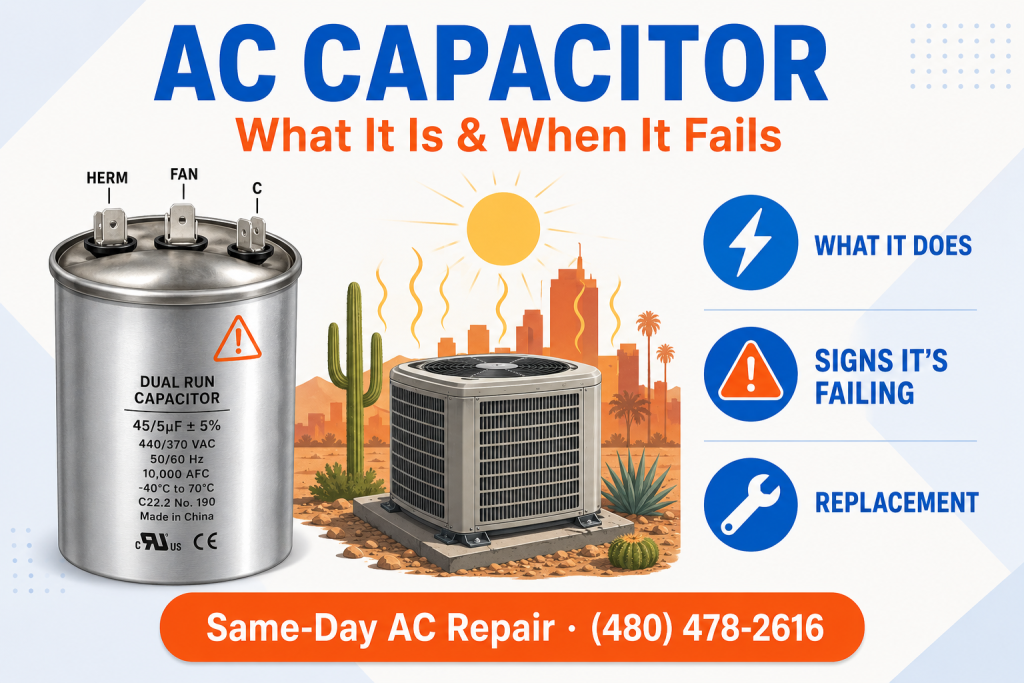
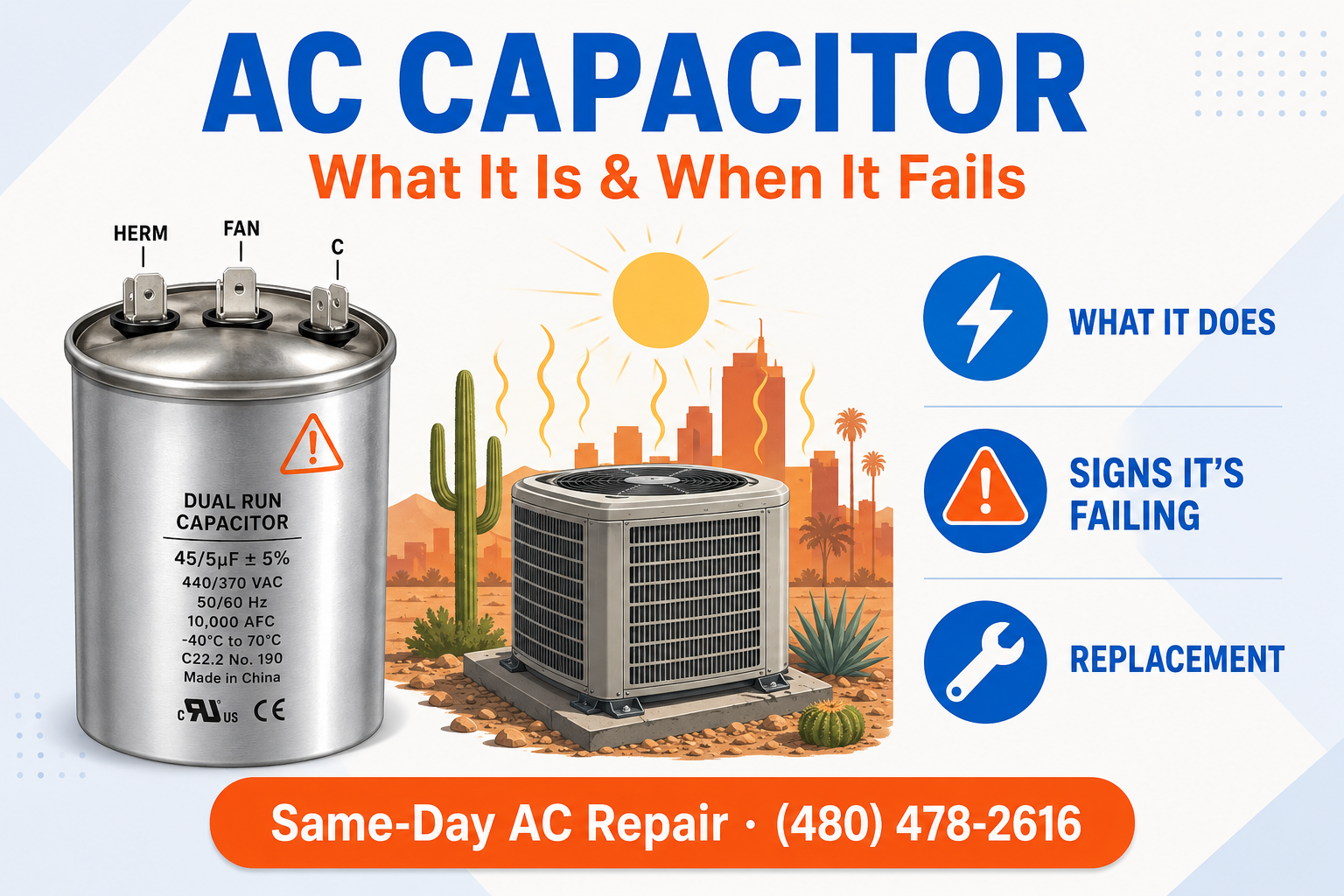
A run capacitor supports a motor while it operates. A dual run capacitor combines two sections in one component, commonly serving the compressor and outdoor fan. A start capacitor serves a different, brief starting role. The correct replacement depends on the equipment rather than its appearance alone.
A hard-start kit is a separate recommendation, not simply another name for a run capacitor. If a quote includes one, ask which starting problem it addresses and whether the equipment manufacturer supports that application. For more background, see our guide to AC capacitors and Carrier’s explanation of capacitor types and replacement.
What Can Raise the Cost of the Repair?
Additional Electrical or Mechanical Problems
A failed capacitor can occur alongside worn contacts, damaged wiring or a motor problem. If the diagnosis identifies more than one fault, request separate line items and an explanation of what is necessary. The capacitor price references above do not cover a compressor or motor replacement.
Access and Appointment Timing
A hard-to-reach installation and an urgent evening or weekend visit can change labor and service charges. Ask about scheduling and any premium before booking. If you need immediate help, check Phoenix emergency AC repair availability and request the applicable service terms.
Part Requirements and Warranty Coverage
The technician needs a replacement that matches the system’s requirements. Availability and the selected component can affect the quote. An equipment warranty may cover a part without covering the visit or labor, so confirm the remaining out-of-pocket amount instead of assuming a warranty makes the repair free.
Signs of a Bad AC Capacitor—and Similar Problems
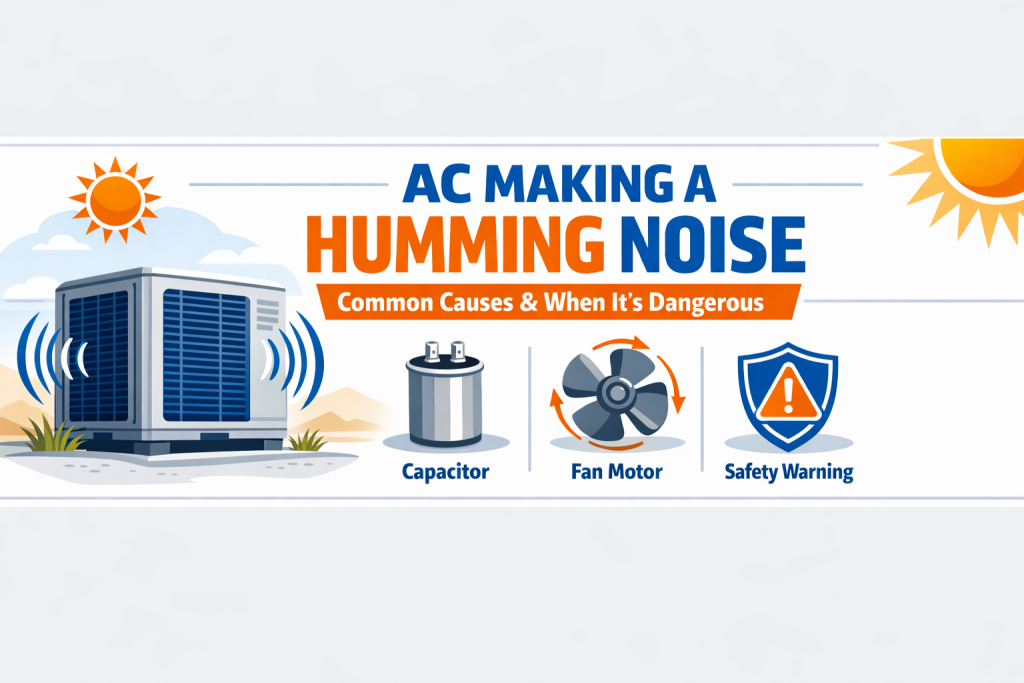
A humming outdoor unit, trouble starting, intermittent operation or warm air can be consistent with a capacitor fault. Those symptoms are not enough to diagnose it: power, controls, motors and other components may produce similar behavior.
- The unit hums but does not start: avoid repeated restart attempts and arrange a diagnosis.
- The fan or compressor struggles to run: have the electrical components and motor condition checked.
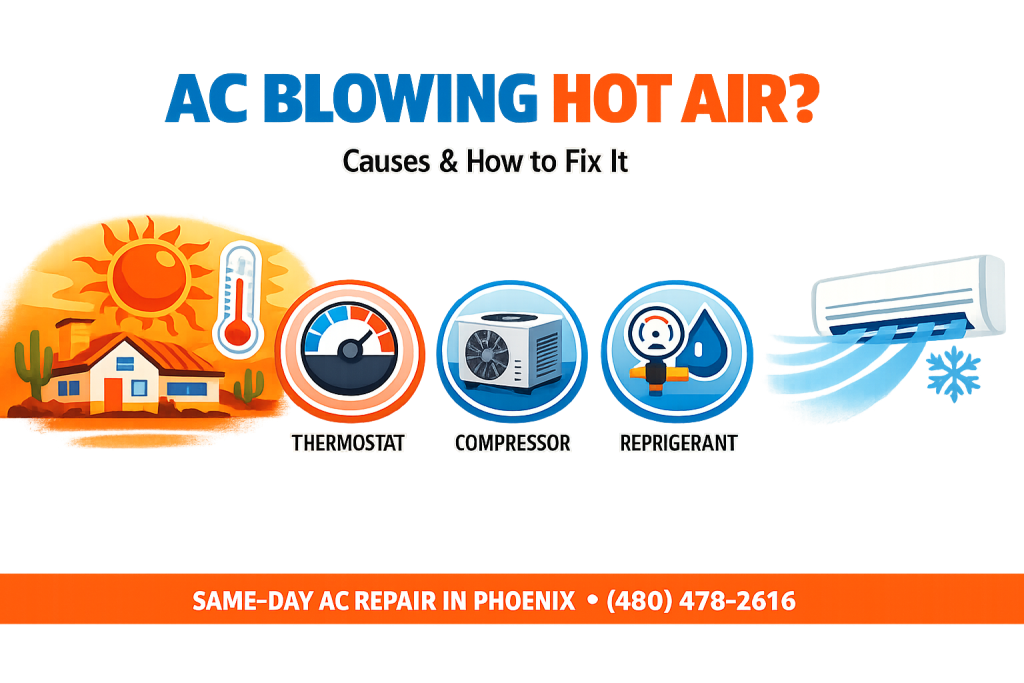
- The AC runs without cooling: a capacitor is one possibility among the common causes of an AC that is not cooling.
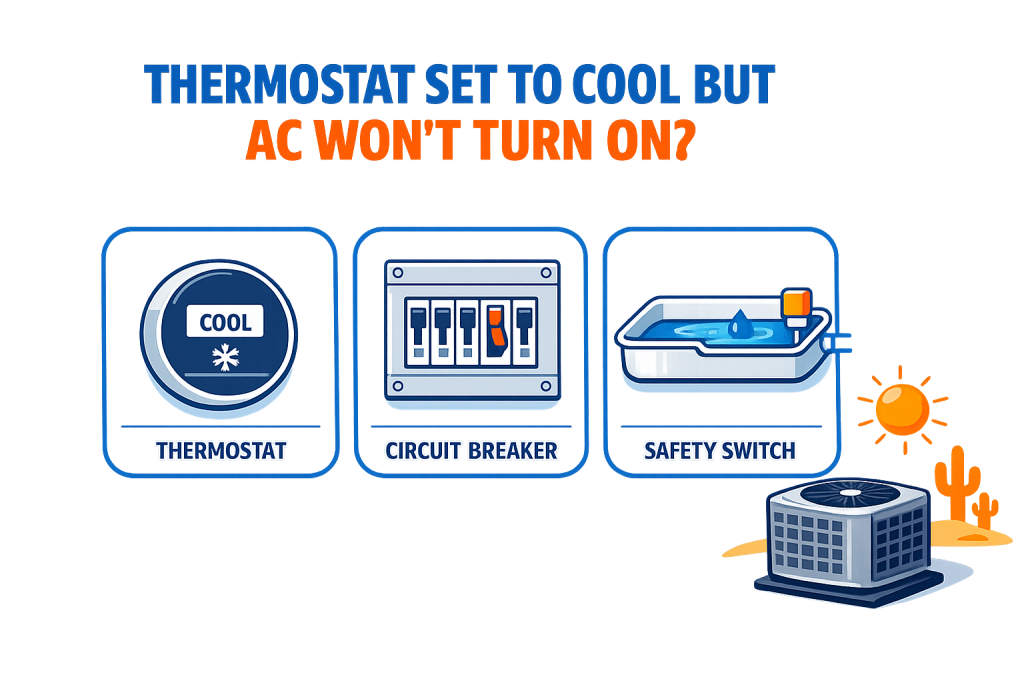
- The thermostat calls for cooling but nothing happens: see our guide to an AC that will not turn on for context before your service appointment.
Leave capacitor testing and replacement to a qualified HVAC professional. The component can retain an electrical charge after power is disconnected. Do not open the electrical compartment or attempt to discharge it yourself.
Repair the Capacitor or Replace the AC System?
An isolated capacitor failure does not automatically mean the entire air conditioner needs replacement. A useful diagnosis separates the immediate fault from the condition of the compressor, coils, motors and other major components.
If the system otherwise works well, ask for the repair option. If it has repeated failures or needs several expensive repairs, compare a written repair estimate with a complete replacement proposal. Age is one consideration, but it should not replace an assessment of the actual equipment.
For broader budgeting, review our Phoenix AC installation cost guide. For ongoing care, ask about AC maintenance in Phoenix and what the inspection covers.
Questions to Ask Before Approving a Capacitor Repair
- What test result supports replacing the capacitor?
- Does the total include the service call, part, labor and post-repair testing?
- Is the diagnostic fee separate, or will it be credited?
- Are any other components being recommended, and why?
- What parts and labor warranty applies to this repair?
- Are there after-hours charges, taxes or other fees?
These questions make competing quotes easier to compare and reduce surprises after the work begins. Save the written estimate and completed service record for future maintenance or warranty questions.
AC Capacitor Replacement Cost: Frequently Asked Questions
How much does AC capacitor replacement cost in Phoenix?
How much is the capacitor part by itself?
Is the diagnostic fee included in the replacement price?
Why does a dual run capacitor cost a different amount?
Does a humming outdoor unit mean the capacitor is bad?
Can I replace an AC capacitor myself?
Should I keep trying to start an AC with a suspected bad capacitor?
Is a hard-start kit the same as a replacement capacitor?
Does the equipment warranty cover a capacitor repair?
Should I replace my AC instead of repairing its capacitor?
Get an AC Repair Assessment in Phoenix
Tell Discount AC & Refrigeration what your system is doing and ask about appointment availability, diagnostic charges and the estimate process. A diagnosis can establish whether the capacitor or another component needs attention.