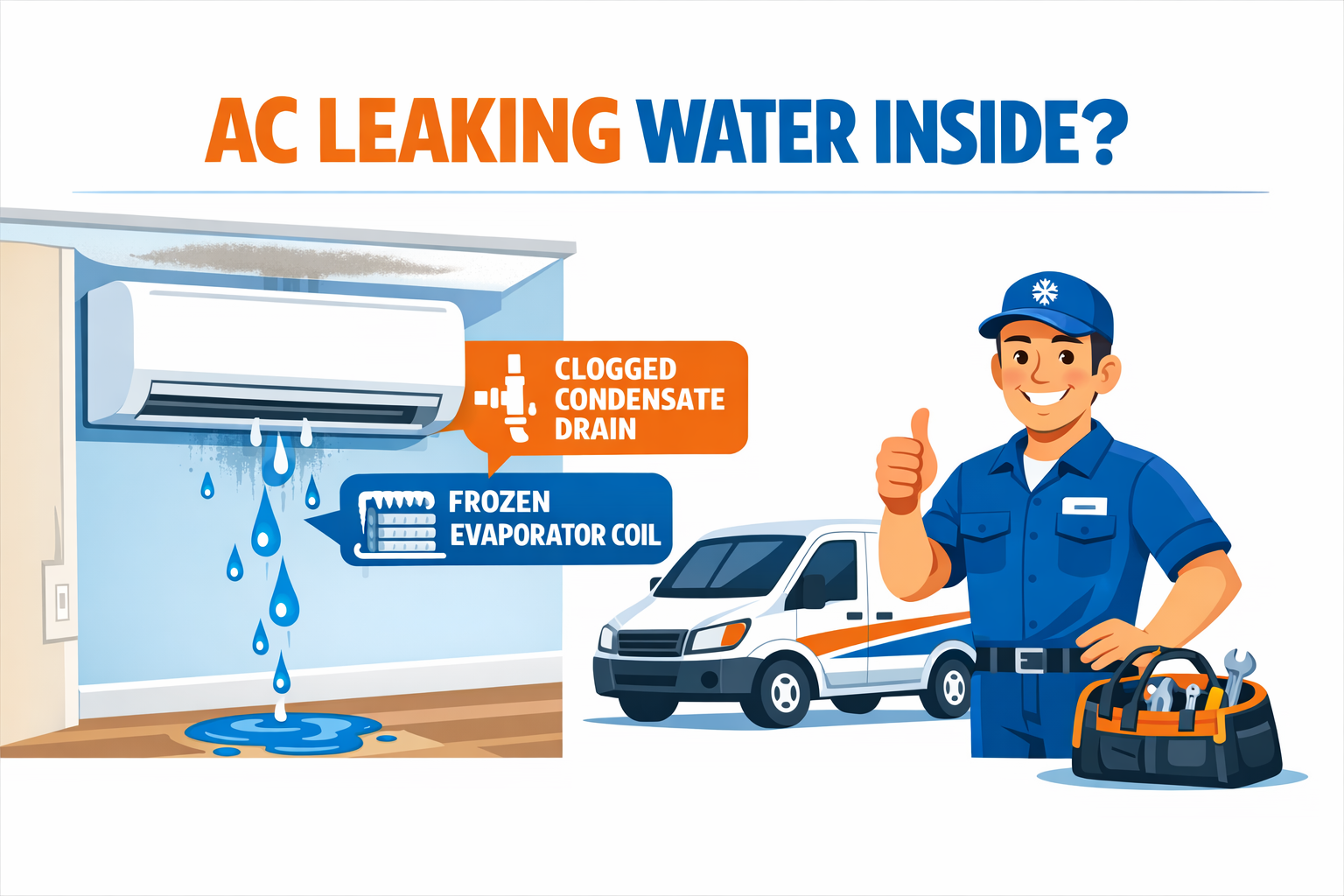
Root cause: an ac leaking water inside your home almost always comes down to condensate that can no longer drain the way it should — a clogged condensate line, a frozen evaporator coil, a cracked drain pan, or a failed condensate pump — and Arizona’s 110–115°F summers push your system hard enough to make every one of those problems more likely.
Finding a puddle under your air handler or a brown stain creeping across the ceiling is unsettling. The good news: most indoor AC leaks come from a short list of causes, and most are fixable the same day once you know what you’re looking at.
This guide from the licensed HVAC technicians at Discount AC & Refrigeration walks through where the water comes from, the damage it can do to your home, and exactly how we diagnose and repair it. If water is actively spreading right now, shut the system off at the thermostat and call (480) 478-2616.
Where the Water Comes From When Your AC Is Leaking Water Inside
Your air conditioner doesn’t just cool air — it pulls humidity out of it. Warm indoor air passes over a cold evaporator coil, moisture condenses on that coil, drips into a drain pan, and flows out of your home through a condensate drain line. When any part of that path fails, the water has nowhere to go but onto your floor, into your ceiling, or down your wall.
Arizona homeowners sometimes assume our dry desert air means no condensation. Not so. Even in the East Valley, a system running nearly around the clock still produces gallons of condensate a day, and blowing desert dust is one of the fastest ways to clog a drain line. Add attics that hit 130°F+ and it’s easy to see why summer is peak season for indoor leaks.
Clogged Condensate Drain
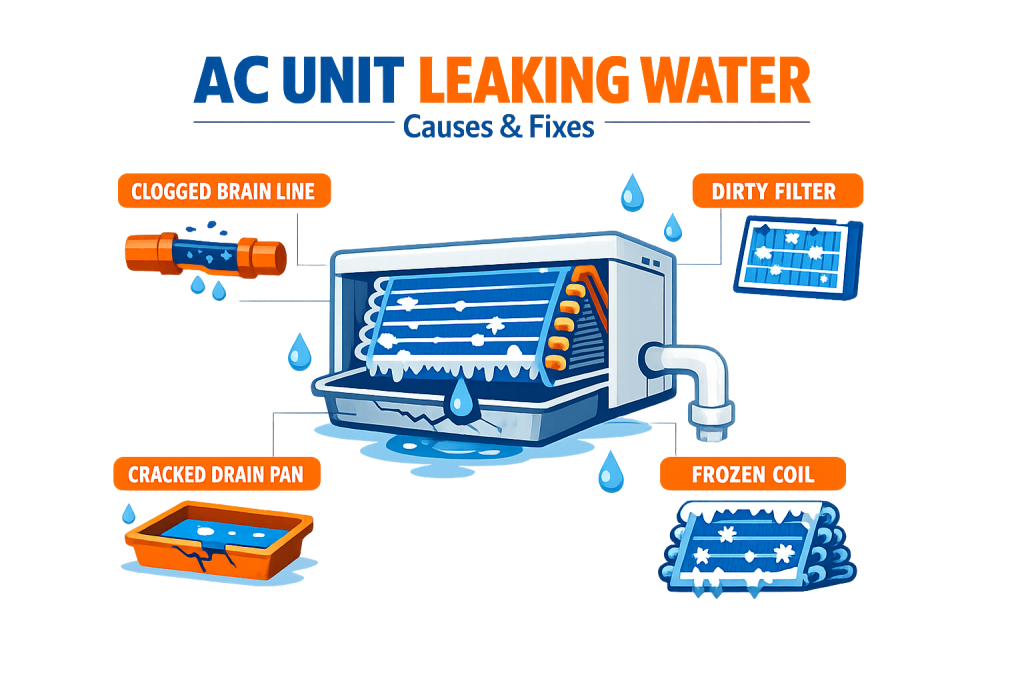
A blocked condensate drain is the single most common reason for an AC leaking water indoors. Over time the line fills with algae, dust, and grime until water backs up into the pan and spills over the edge.
Signs of a clogged drain include:
- Water pooling around the base of the indoor unit or air handler
- A musty smell near the vents or closet where the unit sits
- The system shutting off on its own (a float safety switch tripping)
- A slow drip or stain appearing on a ceiling below an attic unit
Some homeowners can clear a minor clog with a wet/dry vacuum on the outdoor drain outlet. But if the line is fully blocked, water keeps rising, or your unit is in the attic, it’s worth booking AC repair in Gilbert and nearby areas before the overflow reaches drywall. Regular preventive maintenance keeps that drain flushed so it never gets to this point.
Frozen Evaporator Coil
The second big culprit is a frozen evaporator coil. When the coil ices over and then thaws, it dumps far more water than the drain pan can handle — and you see it as a sudden indoor leak.
Coils freeze when airflow or refrigerant is off balance. The usual triggers are:
- A dirty air filter choking airflow across the coil
- Low refrigerant from a leak in the system
- Blocked return vents or a failing blower motor
- Running the AC on an unusually cool desert night
If you spot ice on the copper lines or the coil, turn the system off and switch the fan to “on” to help it thaw, then swap the filter. If it freezes again after that, it usually points to a refrigerant problem that a licensed tech needs to handle. Our team follows EPA Section 608 requirements whenever we recover or recharge refrigerant. For older systems that freeze repeatedly, it’s smart to weigh repair against the cost estimates for AC replacement in Gilbert before you keep pouring money into a failing unit.
Two more causes worth knowing: a rusted or cracked drain pan lets condensate slip through — common on older Arizona systems — and a failed condensate pump (used when the unit sits below the drain line) will overflow the moment it stops moving water. Both are quick diagnoses for a technician. Not sure which one you’re dealing with? Send us a photo through our contact page and we’ll point you in the right direction.
Potential Damage to Your Home
An indoor AC leak is rarely “just a little water.” Left alone, even a slow drip causes real, expensive damage — which is why acting quickly matters so much.
- Ceiling and drywall damage: attic units leak straight through the ceiling, leaving stains, sagging, and eventually collapse.
- Mold and air quality: trapped moisture is a breeding ground for mold. The EPA’s mold guidance notes that indoor mold can start within 24–48 hours of a water problem.
- Warped flooring: water wicks under laminate, hardwood, and baseboards, warping them permanently.
- Electrical hazards: water near the air handler’s wiring or a nearby outlet is a shock and short-circuit risk.
- Higher energy bills: a frozen coil or struggling system runs longer and less efficiently, which shows up on your APS or SRP bill.
A common question we hear is, “How long can I wait?” The honest answer for a spreading leak is: not long. Water damage compounds by the hour, so the cost of a same-day emergency AC repair is almost always smaller than a ceiling repair plus mold remediation later.
How We Fix It
Here’s exactly how our licensed HVAC technicians at Discount AC & Refrigeration diagnose and stop an indoor AC leak, start to finish:
- Confirm the source. We inspect the drain pan, float switch, coil, and condensate line to find where the water is actually coming from before touching anything.
- Clear the drain line. We flush and vacuum the condensate line, remove algae buildup, and verify it drains freely all the way outside.
- Address a frozen coil. We thaw the coil, replace the filter, check airflow, and test refrigerant. If it’s low, we find and repair the leak instead of just topping it off.
- Repair or replace failing parts. Cracked drain pan, tripped safety switch, or dead condensate pump — we replace what’s worn and install a float switch if the system doesn’t have one.
- Prevent the next leak. We recommend a maintenance interval so the drain stays clear through the hottest months.
“How much does it cost?” and “How long does it take?” are the next two questions, and both depend on the cause. A simple drain-line clear is a fast, affordable visit; a refrigerant leak or coil replacement takes longer and costs more. That’s why we give an honest, up-front diagnosis before any work — no pressure, no surprise add-ons.
When a leak keeps coming back on an aging system, we’ll walk you through the repair-vs-replace math using clear criteria:
- System age — most AC units run 12–15 years in Arizona’s harsh climate
- Repair cost vs. replacement — when a repair tops ~40% of a new system, replacement usually wins
- Maintenance history — a neglected unit fails sooner and more often
- Efficiency and SEER2 — compare the replacement’s rating and installed cost using our Arizona SEER2 guide. Savings depend on the existing system, home and installation.
- Refrigerant type — older R-22 systems are costly to service under current EPA refrigerant rules
We keep this same standard of care for homes and businesses across the East Valley. Our clients — from restaurants and breweries to indoor grow facilities — rely on our team for commercial HVAC and commercial refrigeration that can’t afford downtime. Happy with our work? Our Refer & Earn program thanks you for sending neighbors our way.
Professional Evaluation and Licensing
Water damage and refrigerant work are not the place to gamble on an unlicensed handyman. Discount AC & Refrigeration is fully licensed in Arizona under ROC 361623, and our technicians bring over 20 years of experience in AC and refrigeration for homes and businesses. We follow Arizona code and industry standards from bodies like ACCA on every job.
We’re available 6:00 AM to midnight, 7 days a week, so you’re not stuck waiting until Monday when your ceiling is dripping on a Saturday night. You can see why homeowners across Gilbert trust us by reading our Google reviews. When you’re ready for a straight answer, call (480) 478-2616 or request service through our contact page.
| Problem | Cause | Solution |
|---|---|---|
| Water pooling by the indoor unit | Clogged condensate drain line (algae, dust, debris) | Flush & vacuum the drain line; add a float safety switch |
| Sudden heavy leak after ice appears | Frozen evaporator coil (dirty filter or low refrigerant) | Thaw coil, replace filter, find & repair refrigerant leak |
| Ceiling stain below an attic unit | Rusted or cracked drain pan | Replace the drain pan and inspect for water damage |
| Overflow with unit below the drain line | Failed condensate pump | Test and replace the condensate pump |
Frequently Asked Questions
Should I turn off my AC if it’s leaking water inside?
Yes. Shut it off at the thermostat to stop the overflow and prevent water and electrical damage, then book emergency AC repair here.
Why is my AC leaking water inside when it’s so dry in Arizona?
Even in the desert, a hard-running system produces gallons of condensate daily, and blowing dust clogs drain lines fast. Routine preventive maintenance keeps that line clear.
Can I fix a clogged condensate drain myself?
A wet/dry vacuum on the outdoor drain outlet can clear a minor clog. If water keeps backing up or the unit is in the attic, call our licensed techs at (480) 478-2616 before it reaches drywall.
How do I know if my evaporator coil is frozen?
Look for ice or frost on the copper refrigerant lines or the coil, weak airflow, and a big leak after it thaws. Turn the system off, set the fan to “on,” and replace the filter.
How much does it cost to fix an AC water leak?
It depends on the cause — a drain-line clear is quick and affordable, while a coil or refrigerant repair costs more. For aging systems, compare repairs to our AC replacement cost breakdown in Gilbert.
Can a leaking AC cause mold?
Yes — the EPA notes mold can start within 24–48 hours of a moisture problem, so fixing the leak fast protects your indoor air quality.
How long does an AC leak repair take?
Most drain-line and pan repairs are same-day. Refrigerant leaks take longer because we locate and repair the leak rather than just recharging the system. Serving Gilbert and nearby areas.
Do you handle emergency AC leaks at night?
We’re available 6:00 AM to midnight, 7 days a week, licensed under ROC 361623. Call (480) 478-2616 for same-day service.
Is your AC leaking water inside right now?
Our licensed HVAC technicians can find the source and stop the leak fast — honest diagnosis, no pressure. Available 6 AM to midnight, 7 days a week.