Root cause: an ac unit making loud noise almost always means a specific mechanical or electrical part is failing — and the exact sound it makes (buzzing, rattling, squealing, or hissing) tells our technicians which part, how urgent it is, and whether the fix is a quick repair or a warning of deeper wear.
In Arizona’s East Valley, your air conditioner runs harder than almost anywhere in the country. When outdoor temperatures hit 110–115°F, a system that would coast in a milder climate is pushed to its limit for months at a time. Add desert dust, monsoon debris, and 130°F+ attics, and small problems turn into loud ones fast.
The good news: sound is a diagnostic tool. Below, the licensed HVAC technicians at Discount AC & Refrigeration break down the four most common noises, which ones can wait, and which ones mean you should shut the system off and call for help.
AC Unit Making Loud Noise: The Four Sounds to Know
Not every noise is an emergency, but every noise means something. A brand-new system running in a Gilbert backyard should be a low, steady hum — anything sharp, rhythmic, or sudden is worth a closer look. Here is what each sound usually points to.
Buzzing
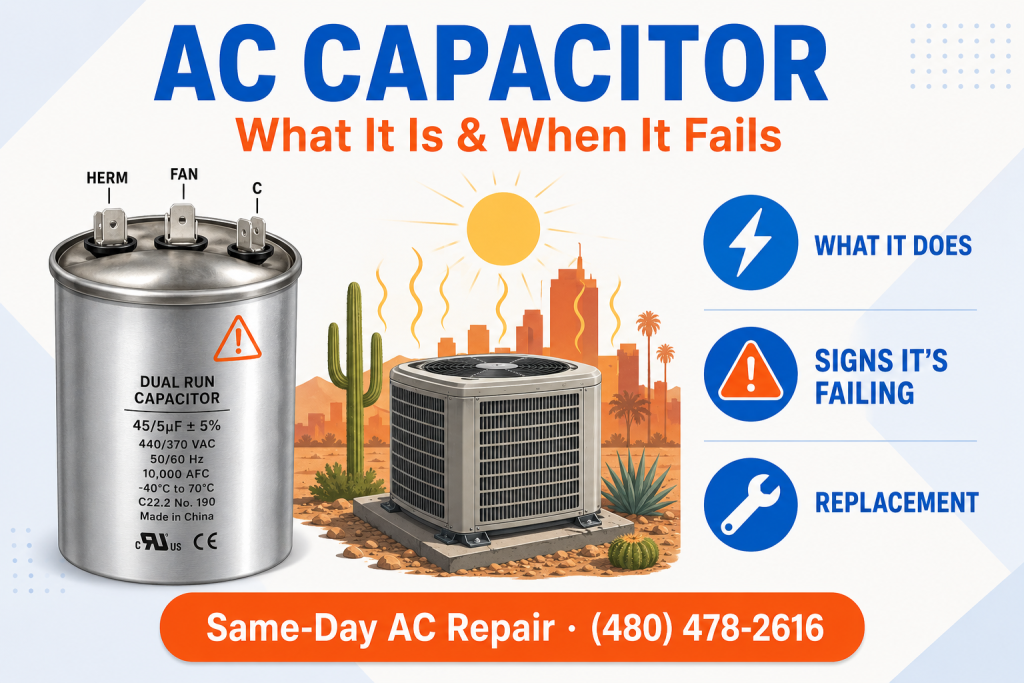
A buzzing or electrical humming almost always traces back to the electrical side of the system. Common culprits include loose wiring, a failing capacitor, a worn contactor or relay, or a condenser fan motor struggling to start. Buzzing can also come from a frozen evaporator coil forcing the system to run against ice.
Because buzzing often involves electrical components, it is not a DIY fix. If the buzzing is paired with a burning smell or the breaker keeps tripping, shut the unit off and treat it as urgent — that combination points to an electrical fault that can damage the compressor or start a fire.
Rattling
Rattling and clanking are usually mechanical. In our experience across the Phoenix valley, the most common causes are loose hardware, twigs and gravel blown into the cabinet during monsoon season, a loose fan blade, or worn motor bearings. A loose access panel that vibrates against the housing is a frequent — and easy — offender.
A light rattle is rarely an emergency, but it should never be ignored. A loose part that keeps vibrating will loosen its neighbors, and a fan blade that clips a coil can turn a $150 repair into a compressor replacement. Clearing debris and tightening hardware early is exactly the kind of thing our preventive maintenance visits catch before they escalate.
Squealing
A high-pitched squeal or screech has two common sources. On older systems with a belt-driven blower, it is often a worn or slipping belt. On any system, it can be dry or failing motor bearings that need lubrication or replacement.
There is one squeal you should never wait on: a loud screaming or shrieking sound from the outdoor unit can signal dangerously high internal pressure in the compressor. If you hear that, turn the system off and call for 24/7 emergency AC repair before running it again. High-pressure faults can rupture components if the unit keeps cycling.
Hissing
Hissing is the sound most homeowners underestimate. A steady hiss or bubbling usually means a refrigerant leak — and a low refrigerant charge makes your system work harder, cool less, and eventually damages the compressor. Hissing can also come from leaky ductwork or a compressor operating under high pressure.
Refrigerant is regulated for a reason. Modern R-410A and older R-22 systems must be handled by EPA-certified technicians under EPA Section 608 rules — you should never try to top off refrigerant yourself. If you hear hissing, shut the system down and schedule service. A leak that is caught early is a repair; one that runs for weeks is often a replacement.
| Noise | Likely Cause | What To Do |
|---|---|---|
| Buzzing / humming | Loose wiring, failing capacitor or contactor, or a frozen coil | Shut off the system and have a licensed tech test the electrical components |
| Rattling / clanking | Loose hardware, debris in the cabinet, or worn fan and motor bearings | Clear debris and tighten loose parts before they damage the coil or fan |
| Squealing / screaming | Worn blower belt, dry motor bearings, or dangerously high pressure | Stop the unit — a loud shriek can signal a compressor pressure fault |
| Hissing / bubbling | Refrigerant leak, leaky ductwork, or a compressor under high pressure | Turn off the AC and call for service — refrigerant needs EPA-certified handling |
Which AC Noises Are Urgent?
A homeowner in Gilbert with a 12-year-old system facing 115°F summers cannot afford to guess wrong. Use this simple rule: sounds tied to electrical faults, pressure, or refrigerant are urgent; sounds tied to loose parts can usually wait a day or two — but not longer.
Treat these as reasons to shut the system off and call for emergency AC service right away:
- Hissing with weak cooling — a likely refrigerant leak that will keep getting worse and can destroy the compressor.
- Loud screaming or shrieking — a possible high-pressure fault in the compressor.
- Electrical buzzing with a burning smell or tripping breaker — a fire and equipment-damage risk.
- Banging or clanking on startup — a loose or broken internal part striking the compressor or fan.
Rattles, mild squeals, and occasional clicks are lower priority, but they still deserve a look before they multiply. Because we answer calls from 6:00 AM to midnight, seven days a week, “urgent” in Phoenix rarely means waiting until morning — you can reach our team the same evening at (480) 478-2616.
AC Noise Repair in Phoenix and the East Valley
Diagnosing a noisy air conditioner correctly takes more than a guess — it takes a technician who knows how Arizona’s heat load, dust, and long cooling season stress a system. That is the everyday work of the licensed HVAC technicians at Discount AC & Refrigeration, with over 20 years of experience in AC and refrigeration for homes and businesses across the valley.
Professional Evaluation and Licensing
Discount AC & Refrigeration is a licensed Arizona contractor operating under ROC 361623, and our diagnostics follow professional HVAC standards rather than sales pressure. When a technician evaluates a noisy unit, they weigh a few key factors before recommending a fix:
- System age — most AC systems last 12–15 years in Arizona’s climate.
- Repair cost vs. replacement — when a repair approaches 40–50% of a new system’s cost, replacement is often the smarter long-term call.
- Maintenance history — a well-serviced unit is usually worth repairing.
- Efficiency and SEER2 — compare the matched system’s ratings, installed cost and expected use with our Arizona SEER2 guide. Higher efficiency can reduce cooling energy use, but savings vary.
- Refrigerant type — older R-22 systems are increasingly costly to service and may push the math toward replacement.
That honest, “here’s why” approach is why so many homeowners and businesses trust us — you can see our reputation reflected in our Google reviews. Our clients across Arizona — including breweries, restaurants, and indoor grow facilities — rely on our team to keep mission-critical commercial refrigeration and commercial HVAC systems running.
How Much Does It Cost — And How Long Does It Take?
Most noise-related repairs — capacitors, contactors, fan motors, tightened hardware, or a belt — are same-visit fixes that take one to two hours. Refrigerant leaks and compressor issues take longer and cost more, which is exactly why catching the sound early matters. For bigger decisions, we publish cost estimates for AC replacement in Gilbert so you can see the full picture before committing to anything.
When should you repair versus replace? If the unit is under about 10 years old, has been maintained, and the noise traces to a single failed part, repair. If it is 12+ years old, needs a costly compressor or coil, and cooling has been slipping for a while, ask about replacement and detailed AC replacement pricing in Gilbert.
We provide fast, no-pressure diagnostics for AC repair in Gilbert and nearby areas, and routine tune-ups through our preventive maintenance program — combined with the upkeep on the ENERGY STAR maintenance checklist — can help identify developing problems. Ready to book? Contact our team or call (480) 478-2616 — and if a neighbor needs us too, our Refer & Earn program rewards you for the introduction.
Why is my AC unit making a loud buzzing noise?
Buzzing usually points to an electrical issue — a loose wire, failing capacitor, or worn contactor — or a frozen coil. Because it involves electrical parts, it’s best handled by a licensed tech. Request a diagnosis here.
Is a hissing sound from my AC dangerous?
Hissing often means a refrigerant leak, which lowers cooling and can damage the compressor. Shut the system off and call us at (480) 478-2616 for emergency service.
Can I keep running my AC if it’s making noise?
A mild rattle can wait a day or two, but hissing, screaming, or electrical buzzing means turn it off now. Running a faulty system in Arizona heat risks a full breakdown. Learn more about 24/7 emergency AC repair.
How much does it cost to fix a noisy AC in Phoenix?
Most common repairs (capacitor, motor, belt, loose hardware) are affordable same-visit fixes; refrigerant and compressor work costs more. See our AC replacement cost breakdown in Gilbert.
Why does my AC rattle when it starts up?
Startup rattles are usually loose panels, debris in the cabinet, or worn fan bearings. It’s often minor, but left alone it can loosen other parts. A quick maintenance check catches it early.
How long does a noisy AC repair take?
Most electrical or mechanical fixes take one to two hours on the same visit. Refrigerant leaks and compressor repairs take longer. Our techs serve Gilbert and nearby areas quickly.
When should I repair vs. replace a noisy AC unit?
If your system is under 10 years old and well-maintained, repair. If it’s 12+ years old with costly damage and declining cooling, weigh replacement. We give honest, no-pressure evaluations under license ROC 361623.
Do you offer emergency AC repair for loud noises at night?
Yes. We answer 6:00 AM to midnight, seven days a week. If your AC is making an alarming noise after hours, call (480) 478-2616 for same-evening emergency AC repair.
Is your AC unit making a loud noise you can’t ignore?
Our licensed technicians can pinpoint the sound and tell you whether it’s a quick repair or a bigger fix — no pressure, just an honest diagnosis. Available 6:00 AM to midnight, seven days a week.