Root cause: AC Not Cooling from a frozen refrigerant line almost always comes down to one of two things — restricted airflow across the evaporator coil or a low refrigerant charge. Either condition drops the coil below 32°F, humidity in the air freezes on contact, and ice spreads down the copper suction line until your system stops cooling entirely.
In the Phoenix East Valley, this problem catches homeowners off guard because it feels backwards: your house is 90°F inside, it’s 112°F outside, and your AC is covered in ice. Our licensed HVAC technicians at Discount AC & Refrigeration see this call spike every June through September, and with over 20 years of experience in AC and refrigeration for homes and businesses, we can tell you the ice is a symptom — not the disease.
Why Your AC Line Freezes
Your evaporator coil is designed to run cold, but not below freezing. It stays in the safe zone only when two things are balanced: enough warm indoor air moving across the coil, and the correct refrigerant charge inside it. Break either one and the coil temperature crashes.
The most common triggers we find on service calls across Gilbert, Mesa, and Chandler:
- Clogged air filter — Arizona desert dust loads filters fast. A choked filter starves the coil of warm air, and the coil freezes. This causes roughly half the frozen-line calls we run.
- Low refrigerant charge — usually from a slow leak. Less refrigerant means lower pressure, and lower pressure means a colder coil. This is the cause you cannot fix yourself.
- Blower motor or fan problems — a failing blower, wrong fan speed, or a slipping belt cuts airflow the same way a dirty filter does.
- Blocked returns or closed vents — closing vents in unused rooms sounds efficient, but it restricts system airflow and can push the coil below freezing.
Attic temperatures in East Valley homes routinely hit 140°F+ in summer, which accelerates duct leaks and stresses blower components — two airflow problems that show up downstream as ice. That is why a frozen line here often has a different root cause than the same symptom in a milder climate. Keeping up with preventive maintenance is the single most effective way to catch these conditions before they freeze your system. The ENERGY STAR maintenance checklist recommends monthly filter checks during heavy-use season — in Arizona, treat that as a minimum.
Risks of Running a Frozen AC: Why It Leaves Your AC Not Cooling — and Worse
Ice on the suction line is not just an efficiency problem. Every hour a frozen system keeps running, you risk turning a $150 repair into a $2,000–$3,000 one.
- Compressor failure — liquid refrigerant that doesn’t evaporate in a frozen coil can slug back to the compressor. Compressors are built to pump vapor, not liquid, and this is the most expensive single component in your system.
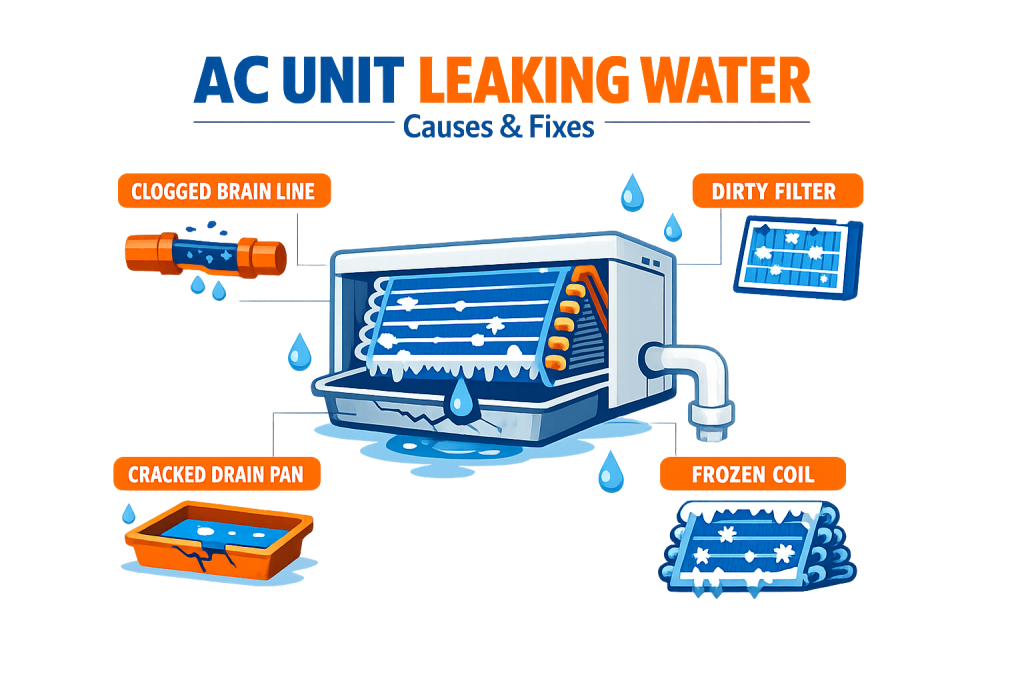
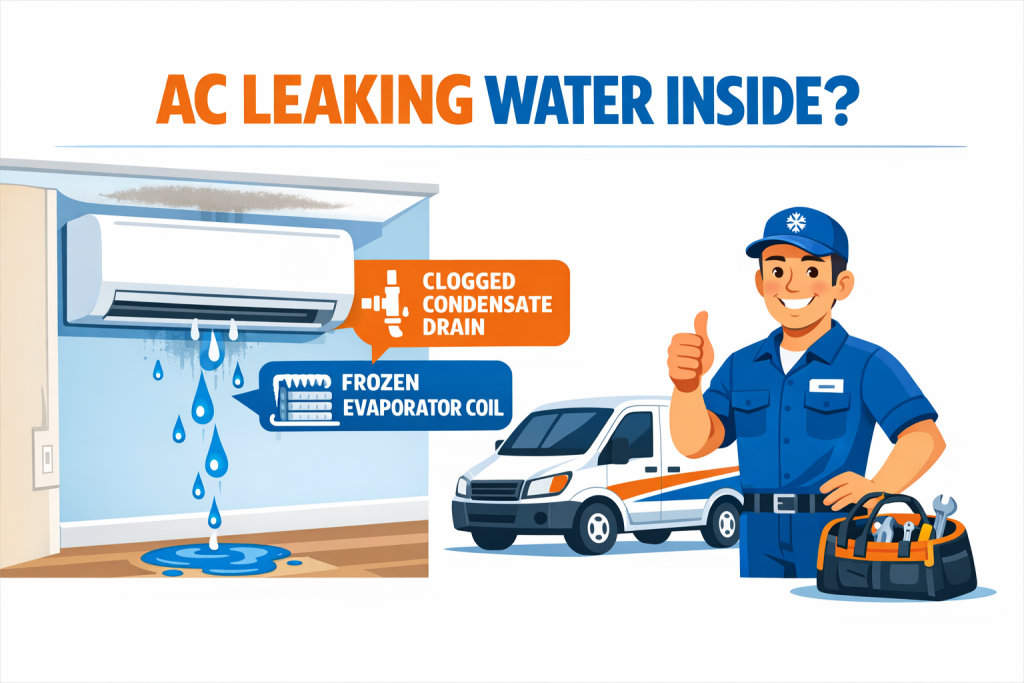
- Water damage — when the ice block melts, it can overwhelm the condensate pan and drain, sending water into your air handler closet, ceiling, or attic insulation.
- Energy use without adequate cooling — ice restricts airflow and heat transfer. Continuing to run a frozen system can waste electricity and worsen the problem; turn cooling off and arrange a diagnosis.
- Heat safety in your home — at 110–115°F outside, a home without cooling becomes a health risk within hours, especially for kids, seniors, and pets.
If your home is heating up fast and the system won’t recover, don’t wait until morning. Our 24/7 emergency AC repair team runs from 6:00 AM to midnight, seven days a week, at (480) 478-2616.
Step-by-Step: How to Thaw and Fix a Frozen AC Line
Here is the safe homeowner procedure — the same first steps our technicians would tell you over the phone:
Step 1 — Turn cooling OFF, fan ON. Set your thermostat to “Off” for cooling and switch the fan to “On.” Warm indoor air moving across the coil melts the ice from the inside out without stressing the compressor.
Step 2 — Let it thaw completely. How long does it take? Typically 2–6 hours for a moderate freeze-up, up to 24 hours if the coil is a solid ice block. Never chip at the ice or pour hot water on the line — coil fins and copper tubing damage easily.
Step 3 — Replace the air filter. If the filter is gray and loaded with dust, you may have found your cause. In East Valley conditions, 1-inch filters often need replacement every 30 days in summer, not the 90 days printed on the package.
Step 4 — Open all vents and clear the returns. Furniture, rugs, and closed registers all restrict airflow.
Step 5 — Check the condensate drain. Melting ice produces a lot of water. Make sure the drain pan is emptying and the line isn’t clogged with algae — a common Arizona issue.
Step 6 — Restart and watch. Turn cooling back on. If the line stays clear and cold air returns, monitor it for 24 hours. If ice comes back, stop running the system and call a professional — refreezing after a filter change points strongly to a refrigerant problem.
Homeowners in Gilbert and nearby areas can have a licensed technician verify airflow, static pressure, and refrigerant charge the same day in most cases.
| Problem | Cause | Solution |
|---|---|---|
| Ice on the suction line, weak airflow from vents | Clogged air filter starving the evaporator coil (desert dust loads filters fast) | Turn cooling off, run fan to thaw, replace filter — check monthly in summer |
| System refreezes after a new filter and open vents | Low refrigerant charge from a leak — pressure drops, coil falls below 32°F | Shut system down; EPA-certified leak search, repair, and recharge by a licensed tech |
| Coil freezes even with a clean filter and full airflow at returns | Failing blower motor, wrong fan speed, or collapsed/leaking ducts in a 140°F attic | Professional airflow and static pressure test; blower repair or duct correction |
| Water around the air handler after the ice melts | Melting ice overwhelming a clogged condensate drain line or pan | Clear the condensate line, treat for algae, verify pan drainage before restart |
When a Frozen Line Means a Refrigerant Leak
If the system refreezes with a clean filter and full airflow, low refrigerant charge is the leading suspect. Warning signs that point to a leak rather than airflow:
- Ice forms on the line even with a brand-new filter and all vents open
- Hissing or bubbling sounds near the indoor coil or line set
- Cooling has been gradually declining for weeks, not suddenly
- The large copper line is ice-cold and sweating heavily even when the system isn’t frozen yet
Refrigerant is not a consumable — a properly sealed system never “uses up” refrigerant. If it’s low, it leaked, and simply topping it off without finding the leak means you’ll pay for the same repair again next summer. Federal law under EPA Section 608 requires certified technicians to handle refrigerant, and the ongoing HFC phasedown is steadily raising the price of R-410A — which changes the repair-vs-replace math for older systems.
How much does it cost to fix?
A frozen line caused by airflow is inexpensive: a filter, a coil cleaning, or a blower adjustment. Leak repairs vary widely — a fitting repair with recharge is very different from a leaking evaporator coil, which on an aging R-410A system can approach 30–50% of replacement cost. Our rule of thumb for East Valley homeowners:
- System age: under 10 years, repair usually wins; over 12–15 years, run the numbers on replacement
- Repair cost vs. replacement cost: if a repair exceeds ~30–40% of a new system, replacement deserves a serious look
- Maintenance history: a well-maintained system justifies repair; a neglected one tends to fail in sequence
- Efficiency: compare a properly sized replacement using our Arizona SEER2 guide. Actual savings depend on equipment condition, installation and operating conditions.
For real numbers instead of guesses, review our cost estimates for AC replacement in Gilbert — it breaks down pricing by system size and efficiency tier so you can compare against your repair quote honestly.
How long can I wait to fix a refrigerant leak?
Not long. A leaking system will refreeze, and every freeze-thaw cycle stresses the compressor. Small leaks also tend to grow. Scheduling a proper leak search within days — not weeks — is the difference between a contained repair and a compressor replacement.
Professional Evaluation and Licensing
Refrigerant diagnosis requires gauges, leak detection equipment, and EPA certification — this is not a DIY repair. Discount AC & Refrigeration is a licensed Arizona contractor (ROC 361623), and our technicians follow ASHRAE standards for system charging and airflow verification. When we evaluate a frozen system, you get an honest answer on whether it’s a $30 filter, a repairable leak, or a system at end of life — with the reasoning behind it, not pressure.
Our clients across Arizona — including breweries, restaurants, and indoor grow facilities running mission-critical commercial refrigeration and commercial HVAC — trust our team because frozen coils in their world mean lost inventory, not just a warm living room. That same diagnostic discipline goes into every residential call. You can see what local homeowners and businesses say on our Google reviews.
Frozen line right now? Turn the system off, switch the fan on, and call (480) 478-2616 — we answer 6:00 AM to midnight, 7 days a week. Prefer to write? Contact us online and we’ll schedule your diagnostic. And if we’ve already helped you, our Refer & Earn program rewards you for sending neighbors our way.
Frequently Asked Questions About Frozen AC Lines
Why is my AC not cooling but the line is covered in ice?
A frozen coil can’t absorb heat, so the system runs without cooling. The ice comes from restricted airflow or low refrigerant pushing the coil below 32°F. Thaw it with the fan on, then find the cause before restarting.
How long does it take a frozen AC line to thaw?
With cooling off and the fan running, most freeze-ups clear in 2–6 hours. A fully iced coil can take up to 24 hours. Never chip ice or use hot water — coil fins and copper lines damage easily.
Can I keep running my AC while it’s frozen?
No. Running frozen risks compressor failure — the most expensive part of your system — plus water damage when the ice melts. If your home is heating up fast, our emergency AC repair team is available 6 AM to midnight. Call (480) 478-2616 for immediate service.
How do I know if the freeze is a refrigerant leak?
If the line refreezes after a new filter with all vents open, or you hear hissing near the coil, low refrigerant is the likely cause. Refrigerant never runs out on its own — if it’s low, it leaked and needs a certified repair.
How often should I change my filter in Arizona?
Every 30 days in summer for 1-inch filters — desert dust clogs them far faster than the 90 days on the package. A preventive maintenance plan keeps filters, coils, and refrigerant charge checked before peak heat.
Should I repair the leak or replace my AC?
Under 10 years old, repair usually wins. Past 12–15 years, or if the repair exceeds 30–40% of a new system, compare real numbers first. See our AC replacement pricing in Gilbert before deciding.
Do you serve my area for frozen AC repairs?
Yes — we cover the Phoenix East Valley including Gilbert, Mesa, Chandler, Tempe, Queen Creek, and Apache Junction, 7 days a week from 6 AM to midnight.
Is Discount AC & Refrigeration licensed for refrigerant work?
Yes — we’re a licensed Arizona contractor (ROC 361623) with EPA-certified technicians and over 20 years of experience in AC and refrigeration for homes and businesses. Call us at (480) 478-2616 for an honest diagnosis with no pressure.
Frozen line and your AC not cooling in this heat?
Our licensed technicians (ROC 361623) will find the real cause — airflow, blower, or refrigerant leak — and tell you honestly whether to repair or replace. Available 6 AM to midnight, 7 days a week.