Root cause: an ac frozen problem happens when the evaporator coil temperature drops below freezing — almost always from restricted airflow, low refrigerant, or a dirty coil — and in Arizona it’s made worse by desert dust, attics that top 130°F, and the extreme heat loads of 110–115°F summers.
When a system runs flat-out in that heat and something interrupts the heat exchange, the moisture in the air freezes onto the coil. The ice blocks airflow, the system loses cooling capacity, and if it keeps running it can damage the compressor — the most expensive repair in the whole system. That’s why it pays to understand the signs, the causes, and what to do before a small blockage turns into a full replacement.
Signs of an ac frozen system: how to catch it early
A frozen AC isn’t always obvious, because the ice usually forms inside the indoor cabinet or on the refrigerant line, out of sight. These are the signs we check first:
- Warm or weak air from the vents even though the thermostat is calling for cooling.
- Visible ice or frost on the copper line set running to the outdoor condenser.
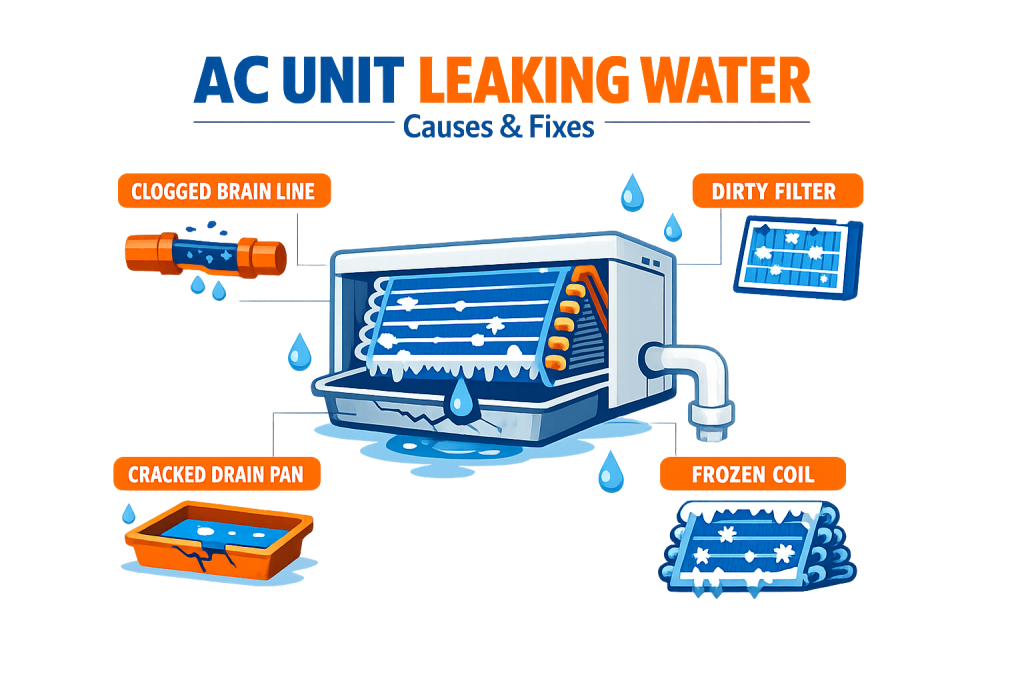
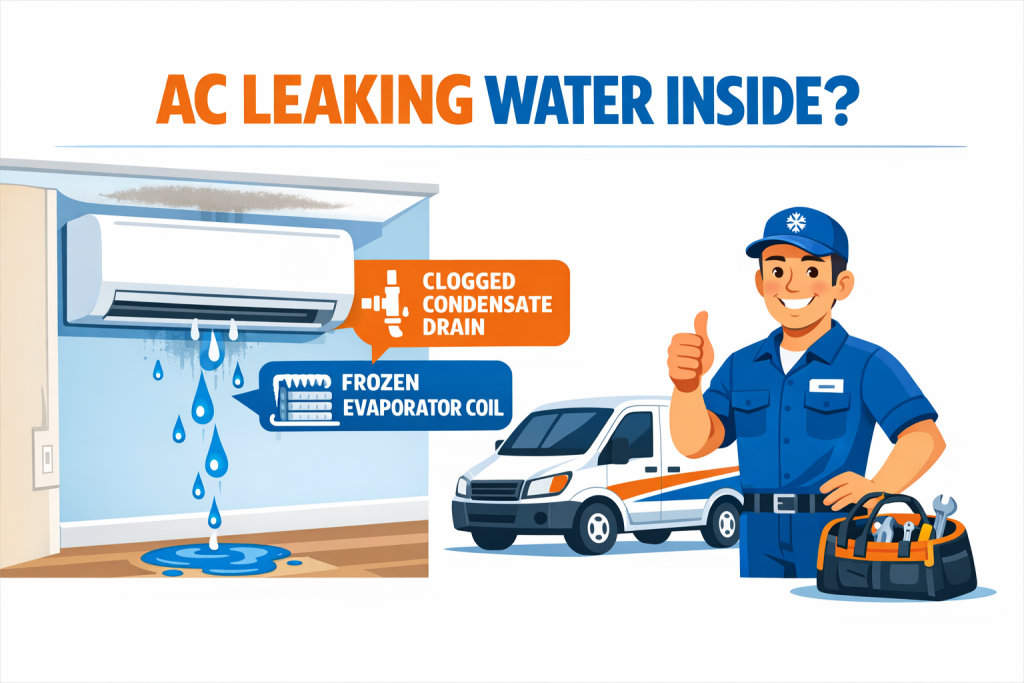
- Water around the indoor unit, in the pan or on the floor, once the ice starts to melt.
- The system runs non-stop and never reaches the set temperature.
- Dripping or hissing sounds, plus higher-than-normal electric bills.
How urgent is it? Very. Running a frozen system exposes the compressor to liquid slugging and overheating. If you see ice, the prudent move is to shut the system off and — in peak summer — consider 24/7 emergency AC repair before the house becomes unlivable.
Causes of ice on the coils
Ice almost never appears on its own. It’s the visible symptom of an underlying problem in either the airflow or the refrigerant circuit. Our licensed HVAC technicians at Discount AC & Refrigeration diagnose two main families of causes, plus a few less common mechanical failures.
Restricted airflow
This is the number-one cause in East Valley homes. The evaporator coil needs a steady flow of warm air so it doesn’t freeze. When that flow is cut off, the coil gets too cold and moisture freezes.
- Dirty filter: with desert dust, a filter can clog in 3–4 weeks during summer. Check it monthly.
- Dirty evaporator coil: dust that gets past the filter builds up and acts as insulation.
- Collapsed or closed ducts: too many closed registers or crushed attic ducts choke the return air.
- Weak blower: a failing fan motor moves less air than the coil needs.
A dirty filter or restricted airflow can contribute to coil icing, but recurring ice needs a diagnosis. ENERGY STAR’s maintenance checklist recommends checking filters regularly and having airflow, coils and refrigerant levels checked during service. Ask about residential AC maintenance before peak heat arrives.
Low refrigerant
The second most common cause of an ac frozen coil is low refrigerant, and here’s the key point: refrigerant doesn’t get “used up.” If the level dropped, there is almost always a leak. With a lower charge, pressure falls, the coil drops below freezing, and ice forms.
Topping off refrigerant without fixing the leak is a temporary patch that fails again — and it’s a poor investment. Refrigerant handling is also regulated: only certified technicians may buy and charge it under EPA Section 608. If your system uses older R-22 or even R-410A, it’s worth weighing the cost of repairing the leak against replacing the unit, especially on systems over 10 years old.
How do you know which makes sense? As a practical rule, if the repair exceeds 40–50% of the cost of a new unit, replacement is usually the better long-term decision. Review our AC replacement cost estimates in Gilbert to compare with real numbers for your area.
How to safely thaw an ac frozen unit
If you spot ice, there are safe steps you can take before the technician arrives. Never chip at the ice with a screwdriver or knife — you can puncture the coil and turn a simple repair into an expensive one.
- Turn off cooling. Set the thermostat to OFF to stop the refrigeration cycle.
- Run the fan only (FAN ON). Room air helps melt the ice faster without damaging anything.
- Wait and dry. Fully thawing can take 1 to 24 hours depending on how much ice there is. Put down towels for the meltwater.
- Change the filter. Install a clean one before turning cooling back on.
- Test again. If ice returns within hours, there’s almost certainly a refrigerant leak or airflow fault that needs a professional.
How long does it take? The thaw itself is a matter of hours, but the real cause is what has to be resolved. If the problem comes back, call us at (480) 478-2616: we’re open 6:00 AM to midnight, 7 days a week, for same-day AC repair in Gilbert.
Prevention: how to keep your AC from freezing again
The good news is that most ac frozen cases are preventable. In Arizona’s climate, where equipment runs more months and more hours than almost anywhere else in the country, prevention pays off double.
- Change the filter every 4 weeks in peak season; desert dust clogs filters far faster than normal.
- Keep registers open and clear of furniture or curtains so you don’t choke the return air.
- Don’t set the thermostat too low overnight; very cold coil temperatures encourage ice.
- Schedule an annual tune-up before summer to clean coils, check the refrigerant charge, and test the blower.
Repeated freezing does not by itself mean you need a new system. Have a technician identify the airflow, refrigerant or control problem first. If replacement is justified, compare a correctly sized, matched system using our Arizona SEER2 buying guide and ENERGY STAR’s installation guidance. A higher efficiency rating alone does not guarantee better extreme-heat performance or prevent freezing.
Professional evaluation and licensing
A correct diagnosis is the difference between overspending and fixing the problem at its root. Our licensed HVAC technicians at Discount AC & Refrigeration operate under license ROC 361623 and meet Arizona standards, with over 20 years of experience in AC and refrigeration for homes and businesses.
We evaluate several criteria before recommending repair or replacement:
- System age and its failure history.
- Repair cost percentage versus the cost of a new unit.
- Efficiency and SEER2 rating of the current equipment.
- Refrigerant type and its current regulations.
We give honest diagnostics, with no sales pressure. Clients across Arizona — including breweries, restaurants, and cold-storage facilities — rely on our team to keep mission-critical cooling running, and you can see why in our Google reviews. Whether it’s a home or a business, we also handle commercial HVAC and commercial refrigeration across the East Valley.
Ready to stop fighting the ice? Contact us for a diagnosis or call directly at (480) 478-2616. And if we help you out, remember our refer & earn program.
| Problem | Cause | Solution |
|---|---|---|
| Ice on the coil and warm air | Filter clogged by desert dust (restricted airflow) | Shut off, thaw with FAN ON, and change the filter every 4 weeks in summer |
| Ice returns within a few hours | Low refrigerant from a leak in the circuit | Repair the leak and recharge with an EPA 608 certified tech — not just a top-off |
| Cools poorly and uses more power | Dirty evaporator coil or closed ducts | Professional coil cleaning and a check of ducts and registers |
| Runs non-stop and won’t cool at night | Weak blower or thermostat set too low | Blower motor diagnosis and temperature adjustment; call (480) 478-2616 |
Why does my air conditioner freeze up in the middle of an Arizona summer?
Almost always from restricted airflow (dirty filter or coil) or low refrigerant from a leak. Extreme heat and desert dust accelerate both. A plan of preventive maintenance prevents it.
How long does it take to thaw a frozen coil?
Between 1 and 24 hours depending on how much ice there is. Turn cooling off, leave the fan on FAN ON, and wait. If ice comes back quickly, there’s an underlying fault. Call us at (480) 478-2616 for same-day service.
Can I run the AC while it has ice on it?
No. Running a frozen system can damage the compressor, the most expensive part of the system. Shut it off immediately. In extreme heat, consider 24/7 emergency repair.
Is it normal for refrigerant to drop and need topping off?
No. Refrigerant isn’t consumed; if the level dropped, there’s a leak. Only a technician certified under EPA Section 608 should repair it and recharge the system.
How often should I change the filter in Arizona?
In summer, every 3 to 4 weeks. Desert dust clogs filters much faster than the national average, and a dirty filter is the #1 cause of a frozen AC.
When is it better to replace instead of repair?
If the system is over 12–15 years old or the repair exceeds 40–50% of a new unit, replacement usually wins. Compare with our AC replacement estimates in Gilbert.
Can the ice damage my home besides the equipment?
Yes. As it melts, water can overflow the drain pan and stain ceilings or floors. Put down towels and address the problem promptly. Our licensed technicians provide same-day AC repair in Gilbert.
Do you serve businesses as well as homes?
Yes. With over 20 years of experience we provide commercial HVAC and refrigeration service to restaurants and cold-storage facilities. We’re available 6 AM to midnight, 7 days: call (480) 478-2616.
Is your frozen AC still forming ice?
Our licensed technicians (ROC 361623) evaluate whether to repair the leak, clean the coil, or replace the unit — with an honest diagnosis and availability from 6 AM to midnight, 7 days a week.