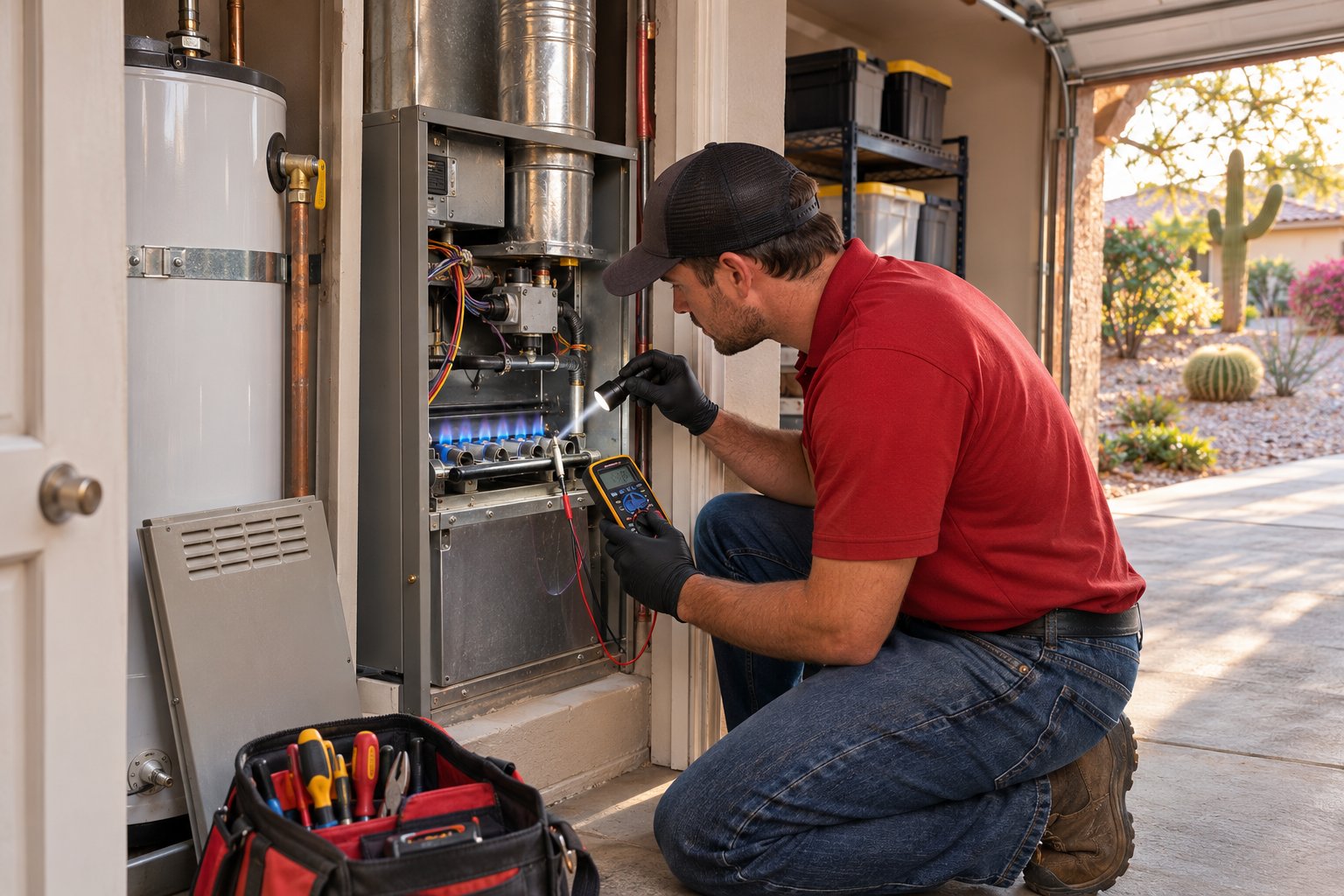
Most furnace repairs in Phoenix depend on the part, labor and your system. Cleaning or replacing a flame sensor or igniter sits at the low end, while a blower motor, inducer motor, gas valve or control board can cost more. A cracked heat exchanger is usually the point where replacement makes more sense. The final price depends on the part and should be confirmed in writing after a diagnosis.
Phoenix furnaces sit idle for most of the year, then get asked to work on the first cold morning of the season. That long rest is exactly why so many heating calls happen in November and December. This guide explains what furnace repairs typically cost in the Phoenix area, which problems are most common here and when a repair is worth it.
How Much Does Furnace Repair Cost in Phoenix?
The table below shows typical 2026 market ranges for common gas furnace repairs in the Phoenix Valley, including parts and labor. Use it as a budgeting reference, not a quote.
| Repair | Relative cost | Common signs |
|---|---|---|
| Flame sensor cleaning or replacement | Lower | Burners light, then shut off after a few seconds |
| Hot surface igniter replacement | Lower | Furnace clicks and tries to start but never lights |
| Thermostat repair or replacement | Lower | Furnace won’t respond or runs at the wrong temperature |
| Limit switch or pressure switch | Lower | Furnace starts and stops repeatedly (short cycling) |
| Control board replacement | Moderate | Error codes, no response, erratic operation |
| Gas valve replacement | Higher | No flame even though the igniter glows |
| Inducer motor replacement | Highest | Loud humming or rattling before the burners light |
| Blower motor replacement | Highest | Burners run but little or no warm air reaches the vents |
Ranges are general Phoenix-area market estimates for 2026 and vary by brand, furnace age and access. Discount AC & Refrigeration confirms your price in writing after diagnosing the system.
The Most Common Furnace Problems in Phoenix
Dirty flame sensor
After six or more months without use, dust settles on the flame sensor. On the first cold morning the furnace lights, the sensor can’t confirm the flame, and the system shuts down for safety. It is one of the least expensive fixes, and it is often found during a pre-season tune-up.
Failed igniter
Hot surface igniters are fragile and wear out over time. If you hear the furnace try to start but never see a flame, the igniter is a common cause.
Dirty filter and overheating
A clogged filter restricts airflow, the furnace overheats and the limit switch shuts it off. Replacing the filter is cheap; ignoring it can damage the blower and heat exchanger over time.
Thermostat and settings
Dead batteries, a thermostat still set to cool or a wiring issue can look like a furnace failure. Check the thermostat first before scheduling service.
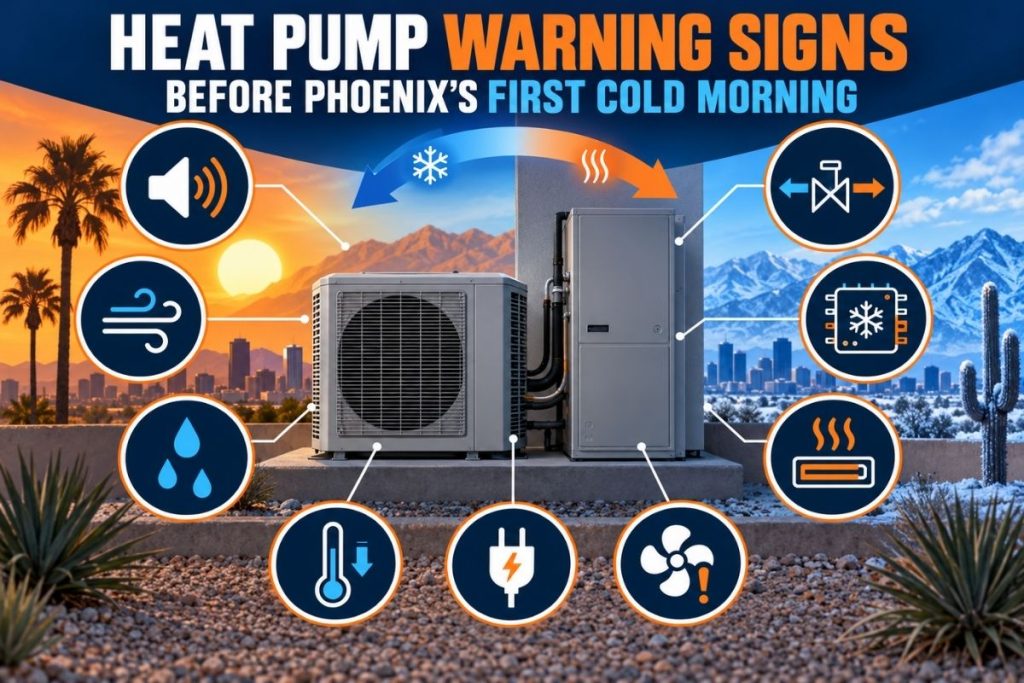
Heat pump instead of a furnace
Many Valley homes heat with a heat pump or a gas package unit on the roof rather than an indoor furnace, and the repairs are different. If you are not sure which system you have, our guide on whether your Phoenix home has a furnace explains how to tell, and our article on heat pumps vs furnaces in Arizona compares the two.
When Furnace Repair Is a Safety Issue
If your carbon monoxide alarm sounds, you smell gas or you see soot around the furnace, leave the home and call your gas utility or 911 first. Do not try to restart the furnace. Learn the warning signs of carbon monoxide from a furnace.
A cracked heat exchanger can allow combustion gases into the home. Because of the safety risk and cost, a cracked heat exchanger on an older furnace is usually the point where replacement is recommended over repair.
Should You Repair or Replace Your Furnace?
Because Phoenix furnaces run only a few months a year, many last 20 years or more. Repair usually makes sense for a single failed part on a furnace in good condition. Replacement is worth comparing when:
- The heat exchanger is cracked.
- The repair costs more than about half the price of a new furnace.
- The furnace is over 20 years old and needs a major part.
- You are also replacing the AC and want a matched system. See replacing your AC and furnace together.
How to Avoid Expensive Furnace Repairs
- Schedule a fall tune-up. Cleaning the flame sensor and checking the igniter before the first cold night prevents most no-heat calls.
- Replace the filter before heating season. A fresh filter protects the blower and prevents overheating.
- Test the system early. Turn on the heat on a mild day in late October or November so a problem shows up before you really need it.
- Test your carbon monoxide detectors. Replace batteries every season and the detector itself according to the manufacturer.
Furnace Not Heating in Phoenix?
Discount AC & Refrigeration diagnoses the problem, explains your options and confirms the price before any work starts. Learn more about our furnace repair in Phoenix or call (480) 478-2616. Open 7 days a week, 6 AM to midnight.
Furnace Repair Cost FAQs
Why does my furnace turn on and then shut off right away?
The most common cause in Phoenix is a dirty flame sensor. The burners light, the sensor can’t confirm the flame and the furnace shuts down for safety. Cleaning or replacing the sensor depends on the part, labor and your system.
How much does it cost to replace a furnace igniter in Phoenix?
A hot surface igniter replacement depends on the furnace model.
How much does a furnace blower motor cost to replace?
Blower motor replacement depends on whether it is a standard or variable-speed motor and how easy the furnace is to access.
Is it worth repairing an old furnace in Phoenix?
Often yes, because Phoenix furnaces run only a few months a year. A single part on a furnace in good condition is usually worth repairing. A cracked heat exchanger or a major repair on a furnace over 20 years old is the time to compare replacement.
Do you give a price before starting the repair?
Yes. Discount AC & Refrigeration diagnoses the furnace first and confirms the price with you before any repair work begins.