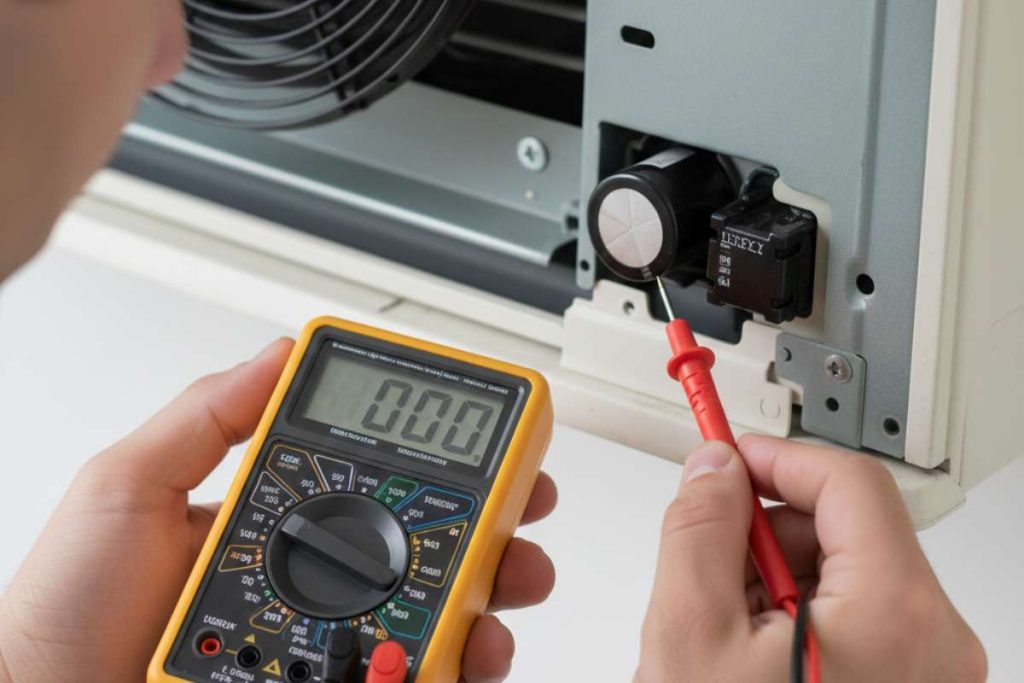
A condensate pump can be the hidden cause of mini-split water leaks, unusual cycling, or a protective shutdown. The right diagnosis follows the entire drainage route before replacing a part.
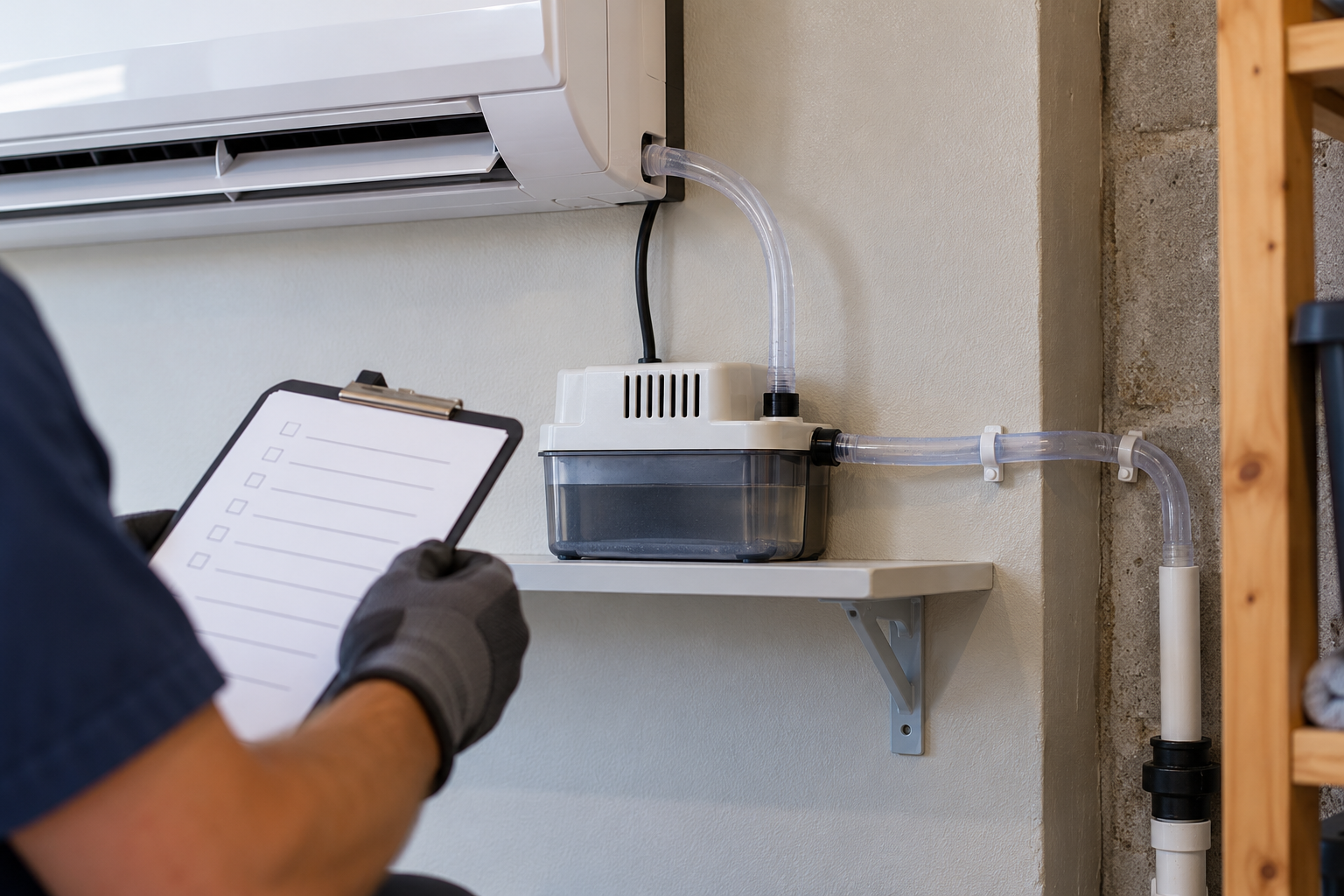
A ductless mini-split can cool a room well while quietly developing a drainage problem. When an indoor unit cannot drain by gravity, an installation may include a small condensate pump to move collected water to a suitable discharge point. If that pump, its tubing, or its controls fail, water may appear near the unit or the system may stop. The symptom deserves attention, but it does not automatically mean the pump itself needs replacing.
This guide is specifically about pump-assisted mini-split drainage. It is different from a general central-AC water leak, which involves a different equipment layout and drain arrangement. Because water and electricity are close together inside the unit, homeowners should limit themselves to safe observations and leave electrical or internal service to a qualified technician.

Why a mini-split may need a pump
Gravity drainage is simplest when a condensate line can slope continuously from the indoor unit to an approved discharge. Some interior walls, additions, and remodeled rooms do not offer that path. A pump lifts or moves the water to a route that works for the installation. The pump must match the unit’s expected condensate volume and the height and length of the discharge run.
Phoenix is dry for much of the year, but humidity can change seasonally and with indoor activity. A drainage arrangement that appears adequate during dry conditions may reveal a restriction when more condensate is produced. That does not prove the climate caused a failure; it makes the timing useful diagnostic information. If the drain keeps backing up, schedule AC repair in Phoenix before water reaches walls or ceilings.
Warning signs to document
Water at the indoor unit
Water dripping from the wall-mounted head can result from a full reservoir, blocked drain, disconnected tubing, poor slope before the pump, a frozen coil thawing, or installation issues. Turn the unit off if water approaches electrical parts or is damaging the wall, and avoid opening the casing.
New or continuous pump noise
Some brief operating noise can be normal. A pump that runs continuously, cycles unusually often, or makes a new grinding or buzzing sound needs investigation. Record when the sound occurs and whether the indoor unit is actively cooling.
Intermittent shutdowns
Some pump arrangements include an overflow safety switch that interrupts cooling when the reservoir rises too high. A shutdown can protect the building from water damage. Do not bypass the safety switch to keep the mini-split running.
Odor or visible residue
Residue in accessible drain components may point to maintenance needs, but a homeowner should not pour chemicals into a pump without the manufacturer’s instructions. Incompatible cleaners can damage seals and tubing or create exposure risks.

What a service visit should check
The technician can trace the full drainage path: collection tray, inlet line, reservoir, float or sensor, pump operation, discharge tubing, check valve, and final outlet. They should also consider airflow and coil conditions if icing or unusual condensate production is suspected. Replacing a pump without finding a kinked or blocked line can leave the original problem in place.
Ask whether the pump has appropriate capacity for the installed route, whether the tubing is secured, and how often it should be inspected under the manufacturer’s maintenance guidance. If the equipment is in a finished room, discuss a practical plan for noticing a leak early.
What homeowners can safely do
Photograph the location of water or residue, note the time and thermostat mode, and check whether the discharge point is visibly obstructed without removing panels. Keep furniture and electronics away from a leak. Do not dismantle the pump, bypass controls, or repeatedly restart a system that shuts itself off. Our residential HVAC team handles ductless comfort systems; an assessment can distinguish a pump fault from other mini-split drainage issues.
Seven condensate pump clues that deserve a closer look
1. Water appears below the wall unit
A wet wall or floor near the indoor head means the water is not reaching its intended outlet. The condensate pump may be involved, but a blocked gravity section, an unseated tube, a damaged pan, or ice melting from the coil can produce a similar leak. Note whether the leak happens only during cooling and whether the wet area grows while the unit runs. If water is near wiring or outlets, stop using the system and keep clear of the affected area.
2. The pump runs longer than before
A brief sound when the reservoir reaches its operating level may be normal for a pump-assisted system. A new continuous hum or repeated short cycles is more informative. Record the duration and timing, not merely that the pump is “loud.” A condensate pump that runs without moving water may face a blocked discharge, a check-valve problem, or a motor fault. Only a technician should open its enclosure or test its electrical components.
3. Cooling stops while the room remains warm
Some installations connect a high-water safety switch to the indoor unit. If drainage cannot keep up, that switch may interrupt operation to limit water damage. Because other faults can also shut down a mini-split, write down the displayed code and the circumstances. Do not bypass the safety switch or repeatedly reset the equipment to force cooling. A temporary restart can allow additional water to accumulate behind the unit.
4. The discharge point stays dry when water is expected
The amount of condensate depends on indoor humidity and runtime, so a dry outlet does not prove a failure on its own. It becomes more useful when paired with a wet indoor unit or a pump that runs continuously. Check only the visible discharge point without disconnecting tubing. The installer may have routed it to a drain or another approved location; ask for the route shown in the installation record rather than assuming water should drip at a particular wall.
5. Leaks follow a humid period
Phoenix humidity can change during monsoon season and inside kitchens, bathrooms, or occupied rooms. More moisture removed from the air means more water must leave the unit. If a condensate pump arrangement has marginal capacity or a partially restricted line, a higher load may reveal the weakness. That is a diagnostic clue, not proof that the pump alone is undersized. The technician should compare the equipment and route with manufacturer requirements.
6. A musty odor or visible residue develops
Moisture around the unit or accessible drain outlet may indicate stagnant water. Avoid pouring bleach or other chemicals into the condensate pump unless the equipment maker explicitly permits that product and method. A wrong cleaner can damage components or create an exposure problem. Photograph visible residue and ask a qualified technician to inspect the collection and discharge path safely.
7. The same leak returns after a pump replacement
A repeat leak suggests the original diagnosis may have been incomplete. The reservoir, inlet path, discharge tubing, lift height, check valve, float, and final outlet all form one system. If any section remains restricted or disconnected, a new condensate pump may not solve the symptom. Provide the technician with the previous invoice and the timing of the recurrence so the full drainage route can be tested rather than replacing the same component again.
What the installation documentation can tell you
Find the mini-split model number, indoor-unit location, pump model if separately installed, and any drawings showing the drain route. The U.S. Department of Energy’s ductless heat-pump inspection checklist explicitly calls for a functional condensate line connected to a drain or working pump. It is an inspection aid, not a substitute for your manufacturer’s instructions, but it illustrates why the complete line matters. A service visit should verify drainage at the final outlet, not merely hear a pump motor run.
Manufacturer requirements may limit lift height, line length, tubing diameter, and the way an overflow device is connected. Those details vary by model. Do not assume a pump that worked in one installation is suitable for a different route. If the line rises too far or is kinked behind a cover, water movement can be weak even while the motor operates. Keep the documentation for the technician and ask what measurements were used to confirm that the route is within specification.
Record any recent work around the indoor unit. Painting, remodeling, cable installation, or moving a wall-mounted accessory can disturb tubing. If the problem began soon afterward, mention the date, even if the work seemed unrelated. A newly observed leak may also have been concealed behind trim before it became visible. Those details help separate a sudden disconnection from a restriction that developed over time.
Distinguish a pump fault from other mini-split leaks
Condensate forms on a cooling coil and should drain safely away. Carrier’s mini-split repair guidance identifies a clogged drain line, frozen coil, and damaged drain pan among possible causes of water leaks. Therefore, visible water at the indoor head does not identify the pump as the failed part. An airflow problem can cause icing, and the thawed water may overwhelm an otherwise functioning drain. A damaged pan can leak before water reaches the pump inlet.
A technician may check the filter, coil, drain pan, gravity segment, pump reservoir, float or sensor, discharge tubing, and final outlet. The order should be guided by the symptoms and equipment design. If water appears only after a long cooling run, ask whether the condensate pump keeps up under that load. If it appears as soon as cooling starts, a disconnected or poorly sloped section may be more likely. Neither pattern is definitive without inspection.
The electrical shutdown is another clue but not a diagnosis. An overflow switch may stop the unit because the reservoir is full, while a separate equipment fault can generate a similar complaint. Preserve any fault code and avoid cycling power to erase it. If an installer left the pump accessible, do not remove its cover or test contacts. Water and electrical components should be handled by someone qualified for the equipment.
A useful service-call log for Phoenix homeowners
Write down the date and time, whether the mini-split was cooling or heating, indoor humidity if measured, thermostat setting, visible water location, pump sound, displayed code, and whether the discharge point is visibly wet. Photograph the wall and floor before drying them, provided you can do so safely. If the unit is above furniture or electronics, move those items away from the leak. Keep the area accessible for the technician.
Tell the service provider whether the system drains by gravity or uses a condensate pump, if known. If unsure, simply say so. A technician can identify the installed configuration. Share the pump model and previous service records if available. The most useful homeowner observation is often the sequence: for example, the unit ran quietly for an hour, a new buzz began, then it shut down and water appeared. That sequence is more informative than a guess about which part failed.
Do not run the unit just to reproduce a leak once water is damaging a surface or approaching an electrical outlet. If the system shut itself down, leave any safety device intact. A qualified professional can test the condensate pump and drainage path under controlled conditions. Ask for a written explanation of the fault and for a functional drain test after repair.
Preventing a repeat drainage problem
Routine mini-split maintenance should include the parts of the drain path the manufacturer designates for inspection and cleaning. The exact interval depends on model, use, and environmental conditions. A visible leak, new pump sound, or recurring shutdown warrants attention sooner than the next scheduled visit. Keep the indoor-unit filter in the condition recommended by its maker; restricted airflow can contribute to coil problems that complicate drainage.
When the technician completes work, ask where water should exit and how the pump’s safety arrangement is intended to behave. Keep that explanation with the equipment documents so future occupants can recognize a change. A condensate pump that operates normally should be evaluated by verified water movement, not just by its sound. After repair, observe the unit during a representative cooling cycle and check for new moisture around the wall and outlet. If the symptom returns, report it promptly rather than bypassing the shutdown protection.
For a home with multiple indoor heads, identify which head leaked. Each may have a different drain route. A service report that names the affected room, pump model, fault, corrective action, and final drain test makes the next visit more effective. It also prevents a later technician from assuming all zones share the same drainage arrangement.
When to arrange professional help
Call when water repeatedly appears, when a condensate pump runs continuously or stops unexpectedly, when a fault code accompanies a leak, or when a safety switch interrupts cooling. Protect the surrounding area and keep the system off if water presents an electrical or property-damage risk. Discount AC & Refrigeration can inspect the mini-split drainage route; call (480) 478-2616 to discuss service. A proper visit should identify the cause before any component is replaced.
Questions to ask before approving a pump replacement
Ask the technician which part of the drainage route failed the test. Was the reservoir filling normally? Did the float or sensor call for the motor? Did water reach the discharge point at the expected rate? Was the line obstructed, pinched, disconnected, or routed beyond the condensate pump manufacturer’s limits? A precise answer helps you understand why a replacement is necessary or why clearing a line is the better remedy.
If replacement is recommended, request the new pump model and the reason it suits the installed lift and tubing route. Confirm that the overflow protection remains connected as specified and that the repair includes a functional water test. The technician should explain whether the indoor unit stopped correctly when high water was detected and whether it resumes normal operation only after drainage is restored. Homeowners should not perform that electrical test themselves.
Finally, ask what maintenance access the installed location allows. A condensate pump hidden behind trim may be difficult to inspect later, while an accessible installation can simplify service. The answer should still respect the manufacturer’s mounting and safety requirements. Keep the model, service date, and drain-route notes with the mini-split paperwork; those details help the next technician assess a recurrence without starting from scratch.
Frequently Asked Questions
Does every mini-split have a condensate pump?
No. Many installations drain by gravity. A pump is used where the drainage route needs a lift or another arrangement that gravity alone cannot provide.
Is a noisy pump always failing?
No. Normal operation creates some noise. A change in sound or run pattern is a clue that should be checked in context.
Can I keep cooling if the overflow switch trips?
Do not bypass the switch. It may be preventing water damage. Document the event and arrange service.
When should I call?
Call when water appears near the indoor unit, the pump’s behavior changes, or shutdowns repeat. Discount AC & Refrigeration can discuss the next step at (480) 478-2616.