After months of triple-digit temperatures, many homeowners start searching for AC replacement near me because the system feels tired, runs longer, or needs another repair. A difficult summer can expose real wear, but one symptom does not automatically mean the entire system must be replaced. The right decision depends on the equipment’s age, repair history, present condition, comfort performance, and whether the proposed work solves an isolated problem or continues a pattern.
This guide gives Phoenix homeowners a practical framework for discussing repair and replacement with a qualified contractor. It does not use a single age or repair price as an automatic cutoff. Instead, it explains the evidence that should support the recommendation.
Why a Phoenix Summer Changes the Decision
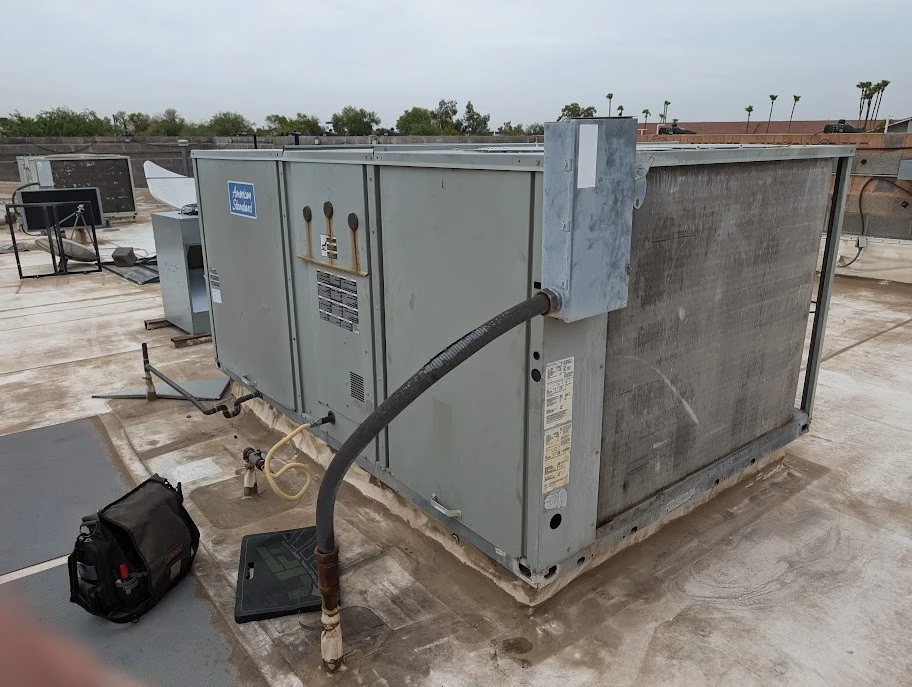
Air conditioners in the Valley operate under a longer and heavier cooling load than systems in many other climates. High outdoor temperatures, long run times, desert dust, monsoon debris, and repeated electrical cycling affect coils, motors, capacitors, contactors, compressors, and airflow. A system can still run at the end of summer while showing reduced capacity or developing reliability concerns.
That operating history matters. A repair that is reasonable on a well-maintained system with stable performance may be harder to justify when several major components have already failed, comfort has deteriorated, and the equipment no longer matches the home’s needs.
Start With a Complete Diagnosis
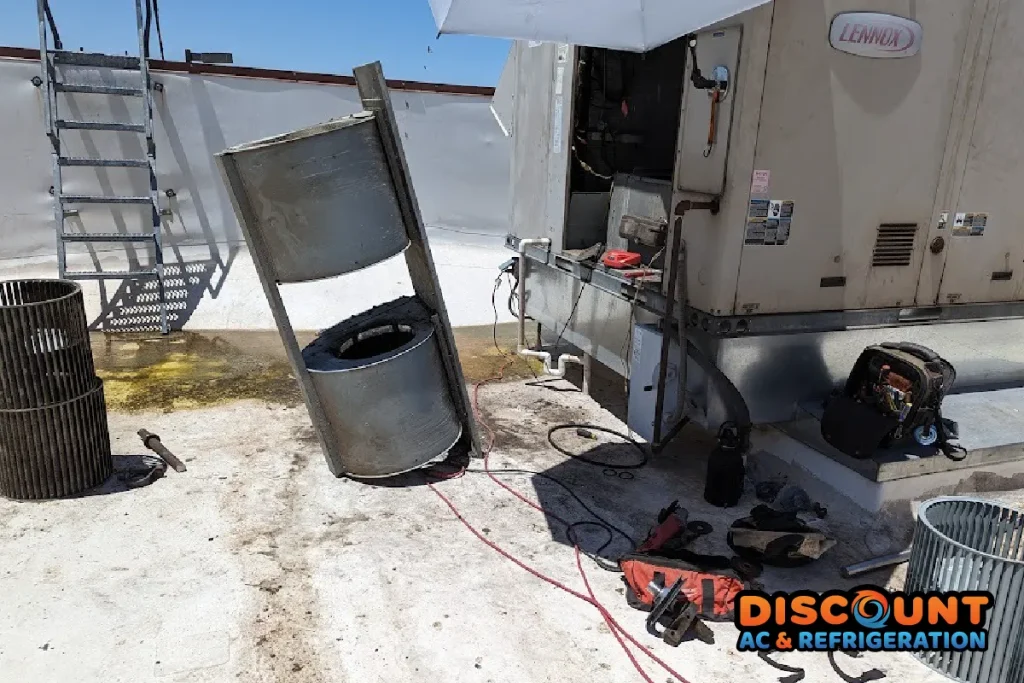
Before comparing repair and replacement, confirm what is actually wrong. Weak cooling can result from restricted airflow, a dirty coil, a failed electrical component, a control issue, duct leakage, an incorrect refrigerant condition, or a mechanical problem. These concerns have very different implications. A replacement proposal based only on system age or a quick visual inspection does not provide enough information.
- Ask which component failed and what test supports that conclusion.
- Request the relevant operating readings and an explanation in plain language.
- Confirm whether airflow and duct conditions were evaluated.
- Ask whether the repair addresses the cause or only the immediate symptom.
- Review the warranty status and documented maintenance history.
Five Factors That Support an AC Repair
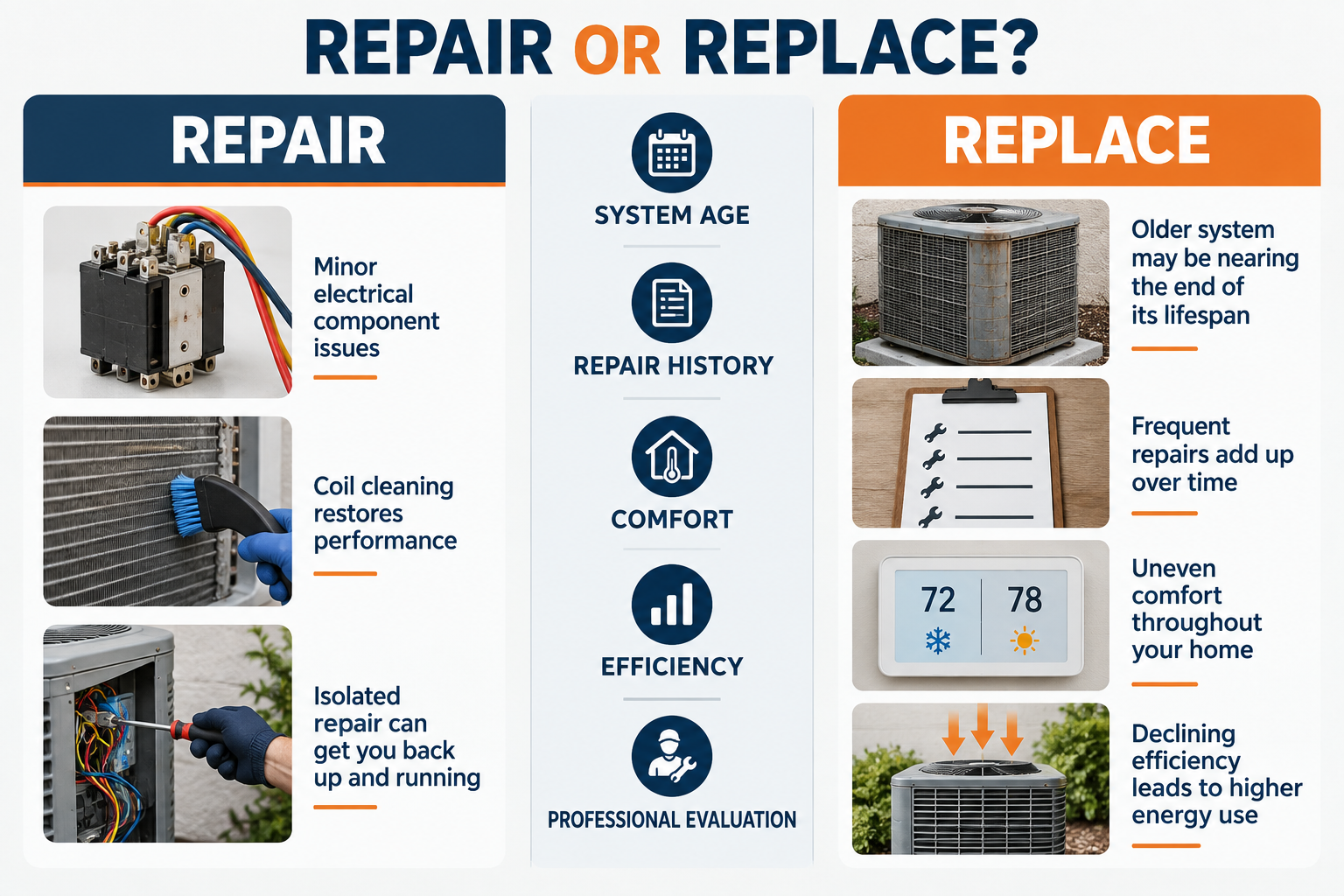
1. The problem is isolated and clearly identified
A failed capacitor, contactor, sensor, drain component, or other isolated part may be a reasonable repair when the rest of the system tests within expected conditions. The diagnosis should distinguish the failed part from related components that remain serviceable.
2. The system has a limited repair history
One repair does not establish a pattern. If the system has delivered consistent comfort and has not required repeated major work, repairing a specific failure may preserve useful service life.
3. Comfort was stable before the failure
If the home cooled evenly, humidity felt normal, and run times were consistent before a sudden component failure, the existing system may still be fundamentally suitable for the home.
4. Parts and refrigerant remain supportable
Availability matters. The technician should explain whether the required part is readily supported and whether the refrigerant circuit can be serviced responsibly. Refrigerant should never be added routinely without investigating why the charge is incorrect.
5. The repair restores measurable performance
A good repair recommendation connects the work to expected operating results. The technician should be able to explain how performance will be verified after the repair through temperature, airflow, electrical, or other appropriate measurements.
Six Signs Replacement Deserves Serious Consideration
- Repeated major repairs: Compressor, coil, motor, or control problems are becoming a pattern.
- Declining comfort: The system runs for long periods but cannot maintain consistent temperatures.
- Major refrigerant-circuit concerns: The diagnosis involves significant leakage, obsolete equipment, or multiple affected components.
- Poor equipment fit: The existing system is incorrectly sized or cannot support the home’s current layout and load.
- High energy use with verified equipment degradation: A contractor has ruled out thermostat, airflow, duct, and maintenance causes.
- Several near-term risks: The current failure is only one of multiple components approaching the end of reliable operation.
Arizona Service Life Is a Range, Not a Deadline
Homeowners often hear a single number for AC lifespan. Real service life varies with installation quality, sizing, maintenance, operating hours, airflow, coil cleanliness, electrical conditions, and repair history. Phoenix heat can shorten the margin for neglected equipment, but age alone does not prove failure. It is better used as context: an older system with a major repair and uneven comfort presents a different decision from an older system with clean history and a minor, well-defined fault.
How to Compare a Replacement Proposal
If replacement is recommended, compare more than the equipment model. A complete proposal should identify the matched indoor and outdoor equipment, capacity, efficiency rating, controls, electrical or drain work, permit responsibilities, warranty terms, and commissioning process. Ask how the contractor confirmed sizing. Replacing an old unit with another unit of the same nominal size is not a substitute for reviewing the home and its current cooling load.
Discount AC & Refrigeration provides AC diagnostics and repair as well as AC installation evaluations throughout the Phoenix metro area. The goal of the visit should be a documented recommendation that explains both options when both are viable.
Frequently Asked Questions
Is an old AC automatically a replacement candidate?
No. Age provides context, but diagnosis, repair history, comfort, efficiency, and parts support should guide the decision.
Should I replace an AC after one major repair?
Not automatically. Review the failed component, the condition of the rest of the system, warranty coverage, and other likely near-term repairs.
Can a dirty coil make a system look like it needs replacement?
Restricted heat transfer can reduce performance and increase run time. The complete system should be inspected before reaching a replacement conclusion.
What should I ask an AC replacement company?
Ask how sizing was confirmed, what matched equipment is included, who handles permits, how startup is documented, and what the labor and equipment warranties cover.
Request a Repair-or-Replacement Evaluation
If you are comparing options after a difficult Phoenix summer, call Discount AC & Refrigeration at (480) 478-2616 or request service online. A clear diagnosis is the first step toward a decision that fits the home and the condition of the equipment.