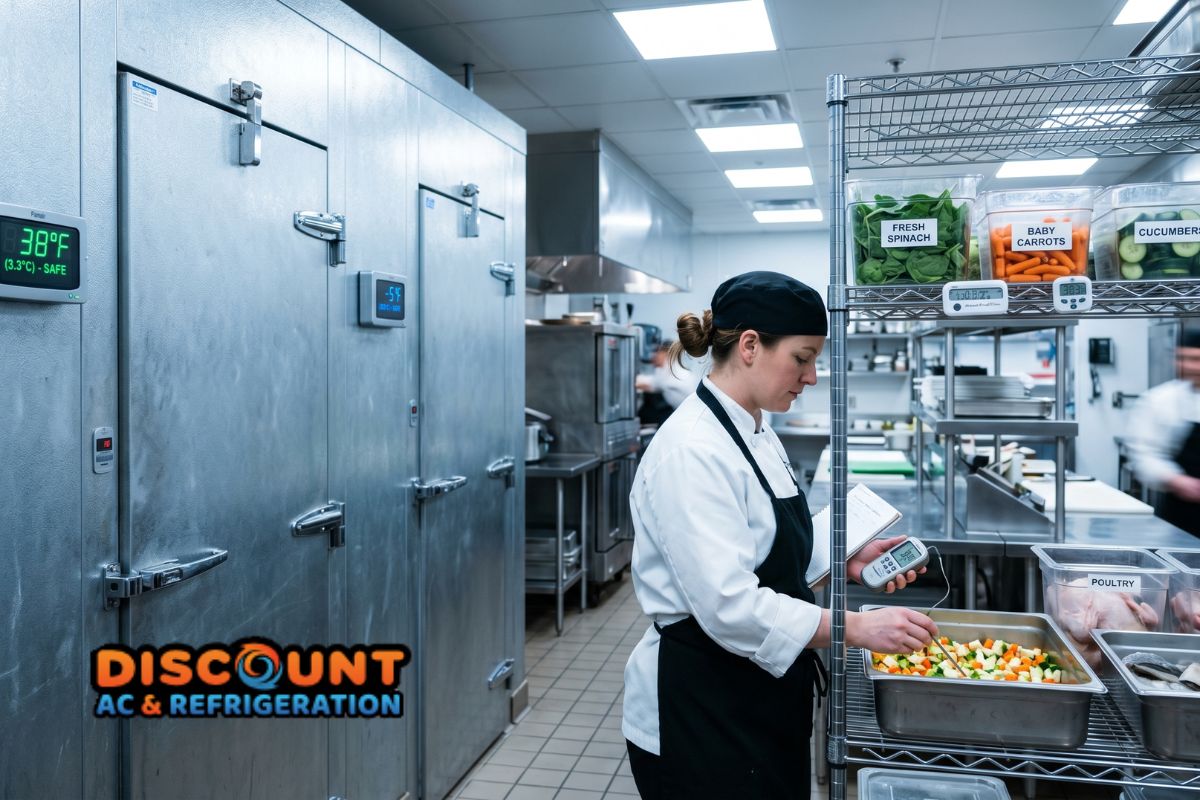
You open the walk-in cooler on a Saturday morning and the air inside feels warmer than it should. The thermometer reads 46°F. Your inventory — thousands of dollars in proteins, dairy, and prepped produce — is sitting inside the FDA “Danger Zone” of 41°F to 135°F. A health inspector could walk in at any moment, and even if they don’t, your liability is already climbing.
This is exactly why restaurant refrigeration maintenance is not a line item you postpone. A properly serviced cooling system protects your food, your license, your customers, and your bottom line. In this guide, you’ll learn the exact temperature standards the FDA Food Code requires, the maintenance schedule commercial kitchens should follow, and how to spot the early warning signs of refrigeration failure before they turn into a shutdown.
Why Refrigeration Failure Is a Food Safety Emergency
The FDA Food Code is explicit: potentially hazardous foods must be held at 41°F or below (cold holding) or 135°F or above (hot holding). Every minute your walk-in drifts above 41°F is a minute bacteria like Salmonella, Listeria, and E. coli begin to multiply. After four cumulative hours in the Danger Zone, that product is legally required to be discarded.
The financial exposure is brutal:
- A single failed walk-in can destroy $5,000–$20,000 in inventory overnight
- Health code violations trigger fines, forced closures, and public score reductions
- Foodborne illness outbreaks average $75,000 in settlement costs per incident for independent restaurants
- Insurance claims for food loss often require documented maintenance records
Commercial refrigeration is not “set it and forget it” equipment. Condenser coils collect grease and dust, door gaskets tear, evaporator fans fail, and refrigerant charges drift. Without a structured maintenance program, your system is failing quietly long before the thermometer tells you.
FDA Temperature Standards for Commercial Kitchens
Your team should be able to recite these numbers without looking. Post them near every refrigeration unit.
| Equipment / Product | Target Temperature | Action Threshold |
|---|---|---|
| Walk-in cooler | 36°F – 38°F | Service call above 40°F |
| Reach-in refrigerator | 36°F – 40°F | Service call above 41°F |
| Walk-in freezer | -10°F to 0°F | Service call above 5°F |
| Ice machine bin | ≤ 40°F | Clean + inspect above 45°F |
| Raw poultry storage | ≤ 40°F internal | Discard after 4 hrs above 41°F |
| Dairy / cut produce | ≤ 41°F | Discard after 4 hrs above 41°F |
| Hot holding (soups, sauces) | ≥ 135°F | Reheat or discard below 135°F |
| Thawing in reach-in | ≤ 41°F | Never thaw at room temperature |
Log temperatures at minimum twice per shift and keep records for a rolling 90 days. Digital data loggers with cloud alerts are now standard in any kitchen doing over $1M in annual revenue.
The Restaurant Refrigeration Maintenance Schedule That Actually Works
After two decades servicing commercial kitchens across Queen Creek, Phoenix, and the East Valley, our EPA-certified technicians have standardized the preventative schedule that keeps systems inside FDA compliance and extends equipment life to 15+ years.
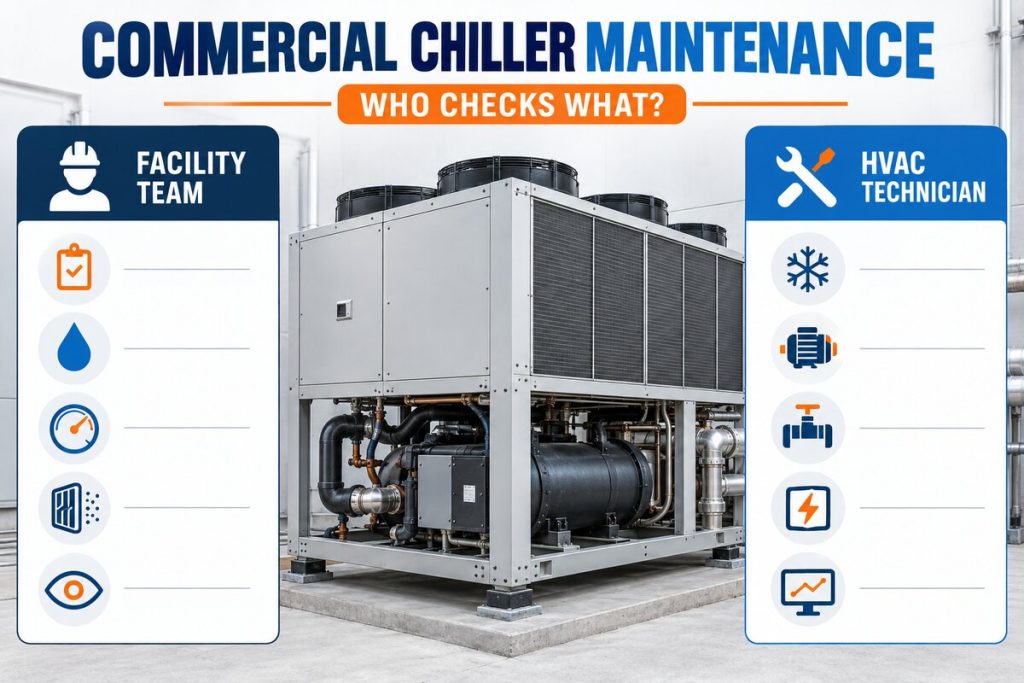
Daily (Kitchen Staff)
- Record temperatures at open, mid-shift, and close
- Visually inspect door gaskets for tears or mold
- Confirm doors close fully and seal on contact
- Clear any ice buildup on evaporator coils
- Wipe down exterior and handles
Weekly (Kitchen Manager)
- Deep clean interior shelving and floor of walk-in
- Check drain lines for standing water or slow drainage
- Verify lighting is functional (bulbs out = safety violation)
- Inspect strip curtains for damage
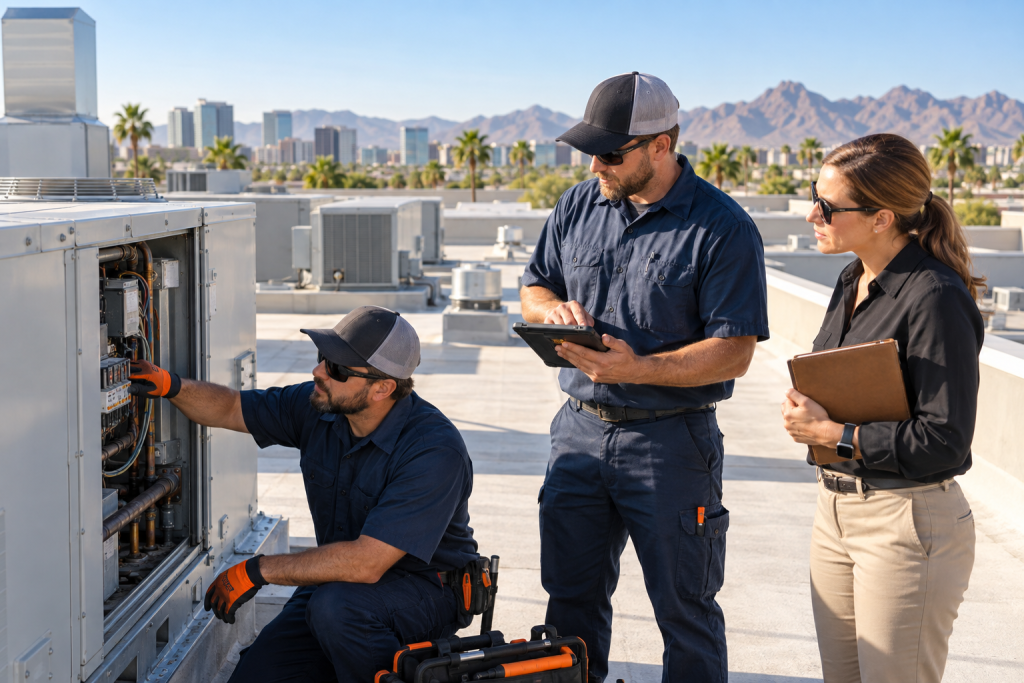
Quarterly (Licensed HVAC-R Technician)
- Clean condenser coils — grease buildup is the #1 cause of compressor failure in Arizona kitchens
- Inspect and replace worn door gaskets
- Check refrigerant pressures and superheat/subcool values
- Tighten electrical connections
- Calibrate thermostats and defrost timers
- Inspect fan motors and blades
- Test defrost cycle on freezer units
Annually (Licensed HVAC-R Technician)
- Full system performance audit
- Replace worn contactors, relays, and capacitors proactively
- Leak test refrigerant lines
- Inspect insulation on suction lines
- Verify ice machine water filtration and sanitation
Warning Signs Your Cooling System Needs Immediate Service
Train every shift lead to recognize these symptoms. Any one of them is a service call, not a “let’s see if it gets better” situation.
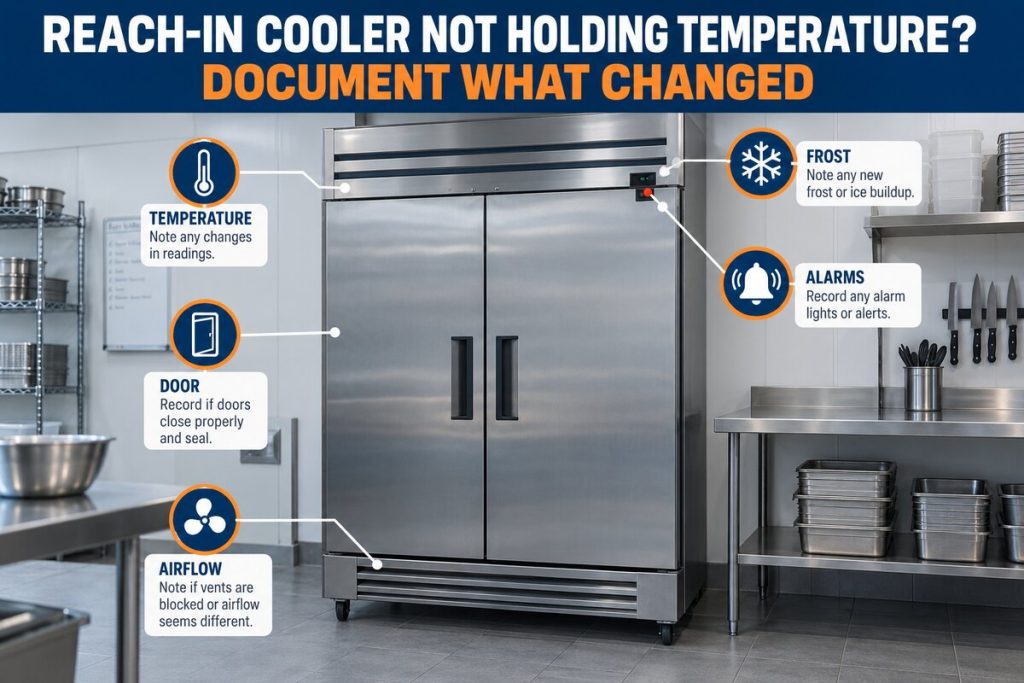
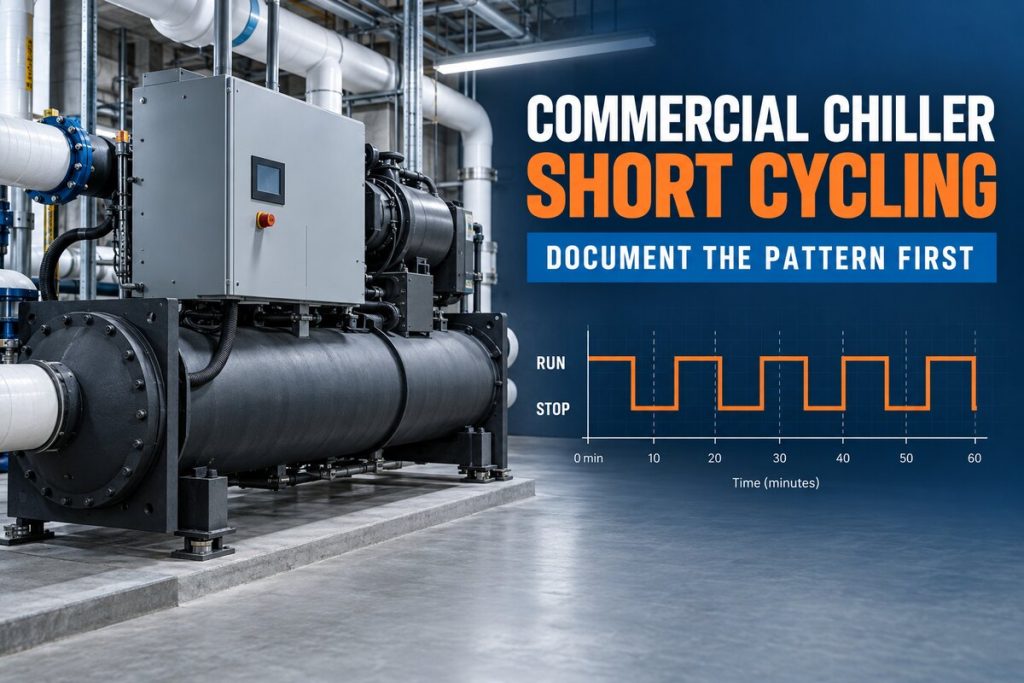
- Compressor running continuously without cycling off
- Ice or frost buildup on evaporator coils or suction lines
- Water pooling on the floor of a walk-in
- Doors that don’t seal or require a push to close
- Unusual humming, rattling, or clicking from the condensing unit
- Temperature swings greater than 5°F during a single shift
- Ice machine producing cloudy, slow, or slush ice
- Condenser coils visibly coated in dust, grease, or lint
In Arizona heat, a condenser running 115°F+ ambient air is already working at the edge of its design envelope. A dirty coil on a 110°F day is a compressor burnout waiting to happen — and a burned compressor on a walk-in freezer is a $4,000–$8,000 repair plus total inventory loss.
How Proper Maintenance Protects Your Bottom Line
Restaurants that follow a quarterly preventative maintenance program see measurable results:
- 60–70% reduction in emergency service calls
- 25–40% lower annual refrigeration energy costs
- Equipment lifespan extended from 8–10 years to 15–20 years
- Zero refrigeration-related health code violations
- Documented records that reduce insurance premiums
The math is simple: a quarterly PM agreement costs a fraction of one emergency weekend service call plus lost inventory.
Frequently Asked Questions About Restaurant Refrigeration Maintenance
How often should a commercial walk-in cooler be serviced?
At minimum, quarterly preventative maintenance performed by a licensed HVAC-R technician. In high-heat climates like Queen Creek and Phoenix, condenser coils collect dust and grease faster, so we often recommend bi-monthly coil cleanings during summer months to prevent compressor failures.
What temperature should a restaurant refrigerator be set to?
Reach-in refrigerators should hold between 36°F and 40°F, and walk-in coolers between 36°F and 38°F. The FDA Food Code requires potentially hazardous food to be stored at 41°F or below. If your unit drifts above 41°F for more than 4 cumulative hours, that product must be discarded.
How much does commercial refrigeration repair cost in Arizona?
Minor repairs (gaskets, thermostats, relays) range from $200–$600. Fan motor and capacitor replacement averages $400–$900. Compressor replacement on a walk-in runs $2,500–$8,000 depending on size and refrigerant type. A quarterly PM agreement prevents most of these emergency costs.
What are the signs my walk-in cooler is about to fail?
Watch for compressor running non-stop, ice buildup on evaporator coils, water pooling on the floor, door gaskets that no longer seal, temperature swings over 5°F in a shift, and visibly dirty condenser coils. Any one of these symptoms warrants an immediate service call — not a wait-and-see approach.
Do you offer 24/7 emergency refrigeration service in Queen Creek?
Yes. Discount AC & Refrigeration provides 24/7 emergency response for commercial refrigeration failures throughout Queen Creek, Phoenix, and the entire East Valley. Call (480) 478-2616 any time — we understand that refrigeration failure means inventory loss and health code exposure.
Can regular maintenance really extend the life of my refrigeration equipment?
Absolutely. Commercial refrigeration units with documented quarterly PM routinely reach 15–20 years of service life, compared to 8–10 years for neglected systems. You also cut annual energy consumption by 25–40% because clean coils and properly charged refrigerant let the compressor run at design efficiency.
Protect Your Kitchen with Queen Creek’s Commercial Refrigeration Experts
Discount AC & Refrigeration has served restaurants and commercial kitchens across Queen Creek, Phoenix, and the entire East Valley for more than 20 years. Our technicians are EPA Universal certified, our lead instructors train other professionals in the industry, and we provide 24/7 emergency response for refrigeration failures — because food safety doesn’t wait until Monday morning.
Whether you need a quarterly preventative maintenance agreement, an emergency walk-in repair, or a full refrigeration system replacement, we deliver real engineering solutions built for Arizona’s climate.
Call (480) 478-2616 now to schedule your commercial refrigeration inspection — or email [email protected] to request a custom maintenance quote for your restaurant or facility.