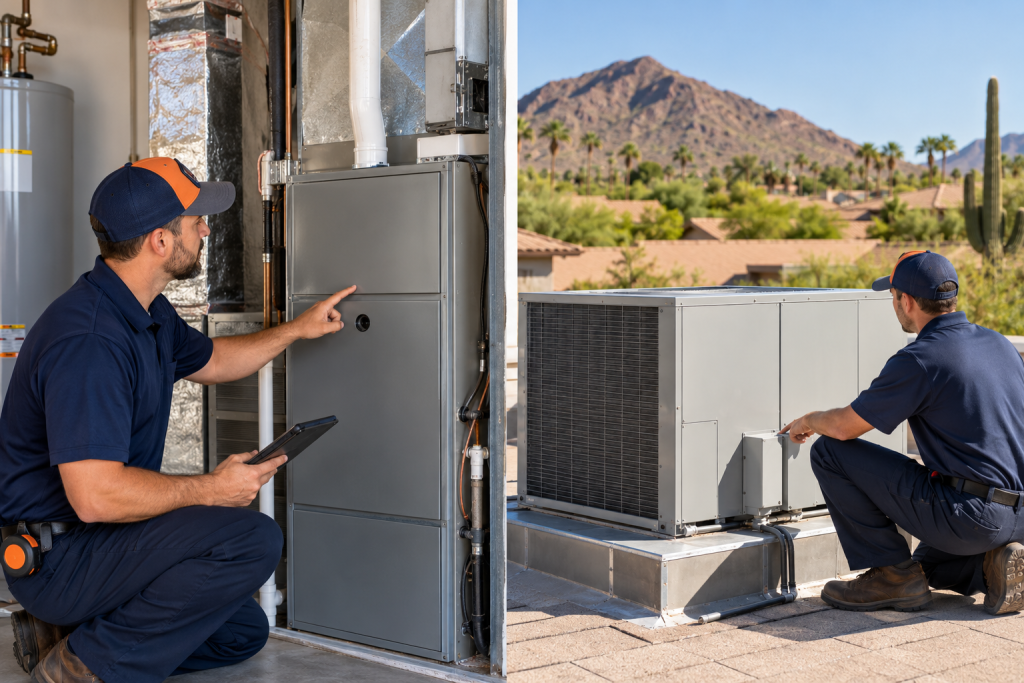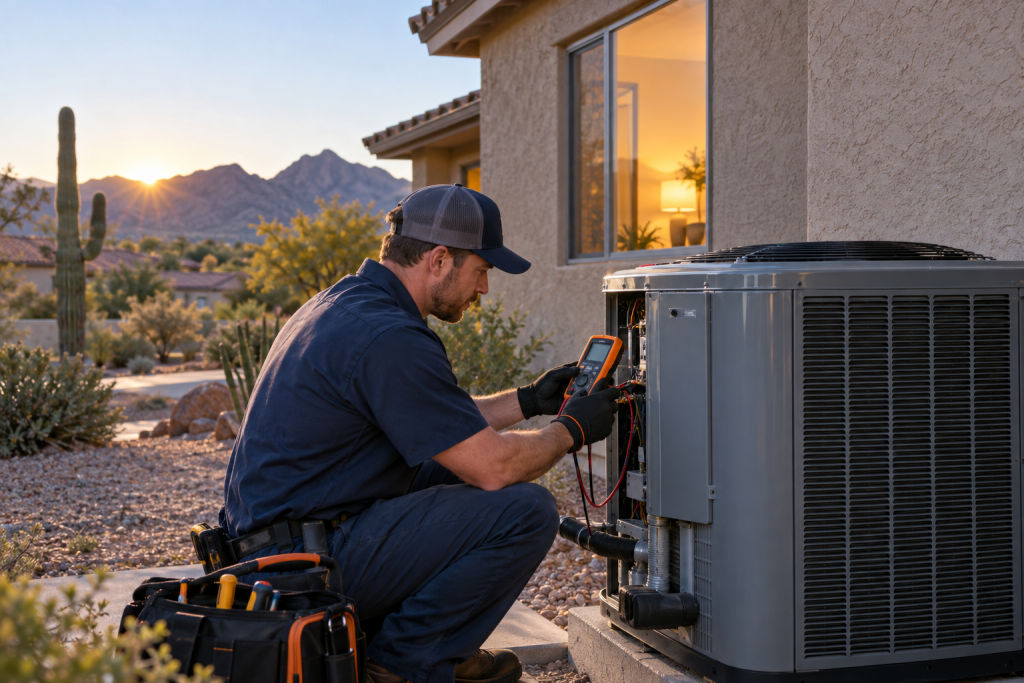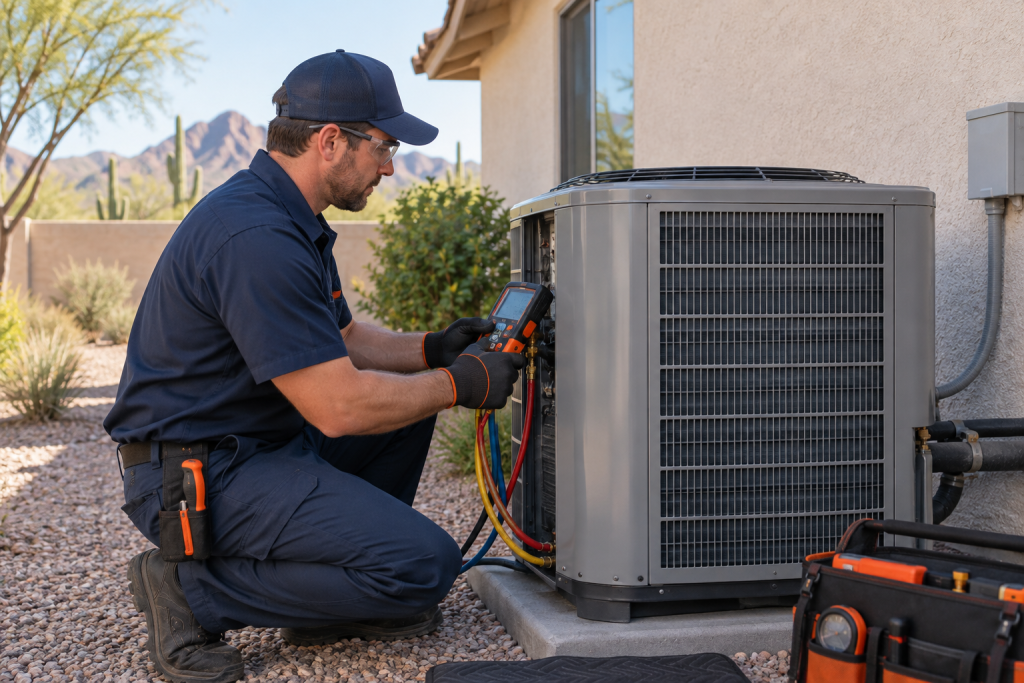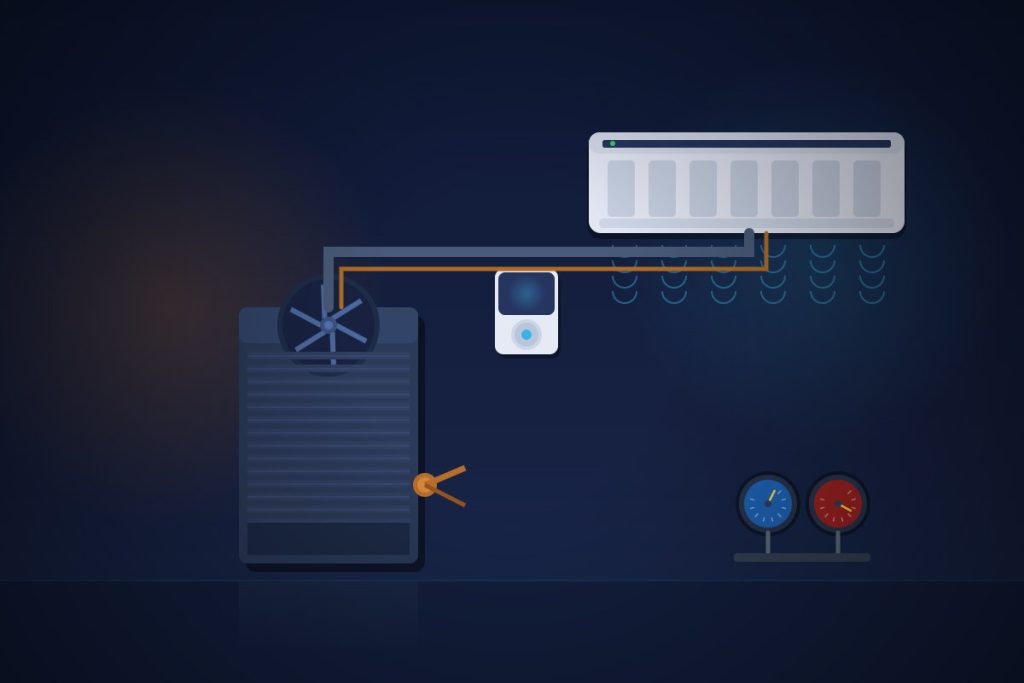
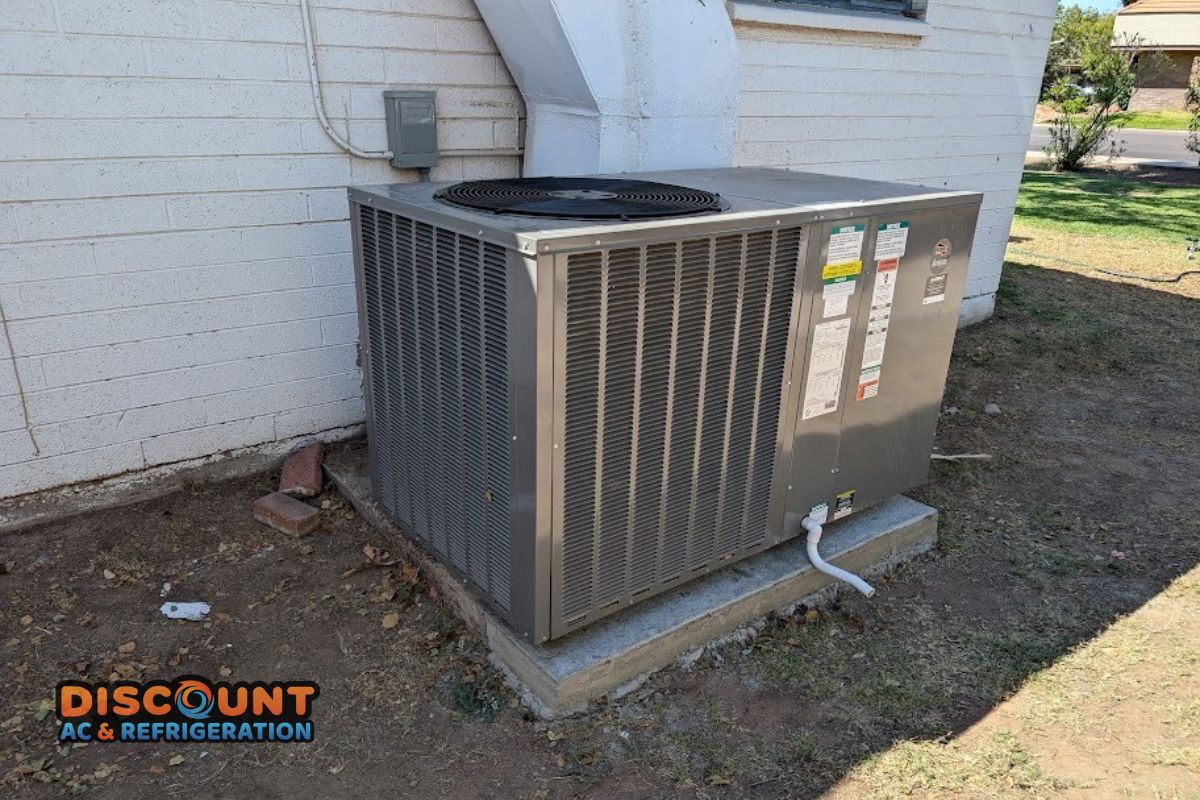
AC installation in Phoenix, AZ is won or lost on the details: correct sizing, airflow, and proper commissioning—not just the brand name on the condenser. If you get these five considerations right, you’ll see steadier comfort, fewer breakdowns, and better long-term efficiency.
Phoenix heat is relentless, and a system that’s “almost right” can still short-cycle, struggle in late-afternoon peaks, or wear out early. That’s why this guide focuses on the handful of decisions that have the biggest impact on real-world performance.
If you’re planning a new install or replacement, start with our local hub for the Valley: AC installation near me in Phoenix, AZ. You can also review our core site pages early (so you don’t hunt later): Discount AC & Refrigeration, About Us, Contact, and our broader coverage map on Service Areas. For the actual install service details, see AC Installation & Replacement and our main residential service category page: Residential Services.
Why Phoenix Installs Need a Smarter Plan (Not a “Swap and Go”)
In moderate climates, installers can sometimes get away with shortcuts. In Phoenix, shortcuts show up fast—especially when outdoor temps spike and your system runs long cycles.
Here’s what this post will help you do:
- Spot the difference between a quote that’s “cheap today” and a system that’s stable for years
- Ask the right questions about sizing, ducts, efficiency, and commissioning
- Compare contractors by scope and standards, not by brand name alone
If you’re still deciding whether you need repair vs. replacement, start with diagnostics first: AC Repair & Diagnostics. If you want a deeper technical overview of what a real diagnostic should include, check: AC Diagnostic Phoenix.
Quick Snapshot Table (What Matters Most)
| Consideration | What You’re Preventing | What “Good” Looks Like |
|---|---|---|
| 1. Correct sizing (Manual J) | Short-cycling, uneven rooms, high humidity | Load-based sizing, not a guess |
| 2. Desert-ready efficiency choices | High bills and poor comfort control | SEER2 + staging matched to the home |
| 3. Ductwork + airflow | Weak supply, noisy returns, hot spots | Static pressure checks + balanced airflow |
| 4. Commissioning + QA | Early failures, poor cooling performance | Verified charge, airflow, electrical, drains |
| 5. Permits, warranty, support | Headaches later, gaps in coverage | Clear documentation + maintenance plan |
The Top 5 Considerations for AC Installation in Phoenix, AZ
1) Correct Sizing (Manual J), Not Guesswork
The most common problem in Phoenix installations is mis-sizing—often oversizing. Bigger isn’t better when it causes the system to cycle on/off too frequently. That can create temperature swings, uneven comfort, and unnecessary wear.
A professional plan typically includes a Manual J load calculation (or an equivalent engineering approach). The goal is to match capacity to the home’s real heat load, including:
- Square footage and ceiling height
- Insulation and attic conditions
- Window size, direction, and solar exposure
- Duct layout and return air capacity
- Occupancy, appliances, and lifestyle patterns
What to ask on every quote
- “Are you running a load calculation or matching the old tonnage?”
- “How will you handle hot rooms or long duct runs?”
- “What airflow target are you planning after install?”
If you want a simple framework for comparing contractors beyond price, use: How to choose the best HVAC contractor near me.
2) Equipment Selection That Fits Phoenix Reality (Efficiency + Control)
“High efficiency” can be a smart investment, but only if your system is matched to the home and installed correctly. In Phoenix, equipment selection should be based on:
- How your home handles heat load (sun exposure, insulation, layout)
- Your comfort priorities (steady temps vs. fastest pull-down cooling)
- Your budget and your long-term plan for the home
Common equipment decision points
- Single-stage vs. two-stage vs. variable-speed: More staging can smooth temperature swings and reduce cycling in shoulder seasons.
- Thermostat and control strategy: A great thermostat setup can improve comfort, but poor configuration can cause cycling or poor staging behavior.
- Noise and placement considerations: Where the outdoor unit sits matters—tight side yards and heat recirculation can reduce performance.
If you’re also improving filtration or air quality during the install (often a smart time to do it), review: Indoor Air Quality.
3) Ductwork, Airflow, and Static Pressure (The “Invisible” Performance Limit)
A brand-new AC cannot outperform bad ductwork. In Phoenix homes, attic duct issues are common—and they show up as:
- Hot spots (one side of the house never cools evenly)
- Weak airflow in far rooms
- High dust and frequent filter loading
- Noisy returns or “whooshing” at doors
A strong installation plan accounts for airflow delivery, not just equipment replacement. That includes:
- Checking return air capacity (undersized returns choke airflow)
- Confirming duct sizing and balancing (especially for far bedrooms)
- Evaluating leakage and insulation in attic ducts
- Measuring static pressure to confirm the system can breathe
Practical rule: If airflow was weak before, a new unit won’t magically fix it. It may even make it worse if the new system is more sensitive to static pressure.
If you’ve had comfort issues for a while, it’s worth starting with a diagnostic baseline before you commit to new equipment: AC Repair & Diagnostics.
4) Installation Quality and Commissioning (Where Systems Live or Die)
This is the “make or break” area for AC installation in Phoenix, AZ. Commissioning is what proves the system is operating in safe, efficient ranges under real conditions.
A professional commissioning approach typically includes:
- Line set evaluation: Correct sizing, proper routing, and condition checks
- Evacuation (proper vacuum): Removes air and moisture before charging
- Charge verification: Using the correct method for the equipment type (not guesswork)
- Airflow confirmation: Fan speed settings, static pressure, supply delivery checks
- Electrical checks: Breaker/disconnect sizing, connections, and safe operation
- Condensate management: Drain routing, slope, and safety protection where needed
- Start-up testing: Stabilized temps, pressure/temperature readings, and performance verification
If you want a Valley-specific example of what “installation done right” should look like, see: Most reliable AC installation in Mesa, AZ.
5) Permits, Warranty, and Long-Term Support (The Part People Forget)
An install isn’t finished when the unit turns on. It’s finished when the project is documented correctly and the system has a plan to stay efficient.
Key items to confirm
- Permits and compliance: If permits are required for your scope, make sure it’s clearly included (and clearly priced).
- Warranty registration: Confirm who registers the equipment and what you’ll receive as documentation.
- Maintenance plan: Phoenix runtime and dust load make maintenance a performance requirement, not an upsell.
If you want a structured approach to protect your investment, start here: Maintenance Programs.
Steps: How to Compare AC Installation Quotes (Fast, Fair, and Technical)
Use these steps to compare apples-to-apples—especially if two quotes use different equipment brands.
- Confirm sizing method
- Must include a load calculation (or documented equivalent)
- Must account for your home’s layout and solar exposure
- Confirm ductwork scope
- Ask what will be inspected and what will be measured (static pressure/airflow)
- Get clarity on fixes vs. “recommendations”
- Confirm commissioning steps
- Ask how they verify refrigerant charge and airflow
- Ask what final start-up tests are documented
- Confirm electrical and safety scope
- Ask what gets inspected, repaired, or replaced at the disconnect/breaker
- Ask how condensate safety is handled
- Confirm warranty and paperwork
- Who registers the warranty?
- What documentation do you receive?
- Confirm support plan
- What happens if comfort issues show up after install?
- Is there a recommended maintenance schedule?
For a more detailed contractor evaluation framework, reference: How to choose the best HVAC contractor near me.
Quick Diagnosis: “Is My Home Ready for a New AC?”
If you answer “yes” to any of these, you should plan on ductwork/airflow attention during your install—not later.
Step 1: Comfort
- One or two rooms always warmer than the rest
- Big temp swings between day and night zones
Step 2: Runtime behavior
- Short-cycling (frequent on/off)
- Runs long but still can’t keep up late afternoon
Step 3: Airflow signals
- Weak supply at far vents
- Noisy returns or doors that “pull” shut when the system runs
Step 4: Dust + filtration
- Filters clog unusually fast
- Dust buildup feels constant even with regular cleaning
Step 5: Home changes
- New windows, roof changes, insulation upgrades, additions, garage conversion
If you want a clean baseline before installation, schedule a diagnostic review first: AC Repair & Diagnostics.
Local Coverage Across Phoenix Metro (Helpful Links)
Even if your installation is in Phoenix, it’s common to compare timing and service options across nearby cities. Here are local AC service pages across the metro:
- Phoenix: AC service near me in Phoenix
- Scottsdale: AC service near me in Scottsdale
- Mesa: AC service near me in Mesa
- Gilbert: AC service near me in Gilbert
- Chandler: AC service near me in Chandler
- Goodyear: AC service near me in Goodyear
For the full list, visit: Service Areas.
FAQs
1) How do I know if I should replace my AC instead of repair it?
If repairs are becoming frequent, performance is inconsistent, or the system can’t maintain temperature during peak heat, it’s time to compare repair cost vs. replacement value. Start with a proper evaluation: AC Repair & Diagnostics.
2) Why is Manual J sizing so important for AC installation in Phoenix, AZ?
Because Phoenix heat load is extreme and solar exposure varies drastically by home. Guess-sizing often leads to short-cycling, uneven comfort, or nonstop runtime.
3) Will a higher SEER2 unit automatically lower my bill?
Not automatically. Efficiency ratings only deliver results when sizing, airflow, and commissioning are correct. Poor ductwork or incorrect charge can wipe out the expected savings.
4) Should I replace ductwork during AC installation?
Not always, but duct issues can limit performance. If you have hot rooms, weak airflow, or high dust, duct evaluation and corrections should be part of the install plan.
5) How long does a typical AC installation take?
Many residential replacements can be completed in a day, but the real factor is scope: duct fixes, electrical updates, and airflow balancing can add time (and usually add stability).
6) Can indoor air quality upgrades be included during installation?
Yes, and it’s often the best time since airflow and filtration can be set up together. Options are outlined here: Indoor Air Quality.
7) What maintenance should I plan after a new AC install in Phoenix?
Plan on routine inspections, filter strategy adjustments, and performance checks—especially due to dust and high runtime. Start here: Maintenance Programs.
8) What’s the safest way to compare installation quotes?
Compare scope and standards: sizing method, ductwork evaluation, commissioning steps, warranty handling, and support plan. This guide helps you vet the contractor, not just the price: How to choose the best HVAC contractor near me.
Final Thoughts on AC Installation in Phoenix, AZ
AC installation in Phoenix, AZ comes down to five fundamentals: correct sizing, smart equipment selection, ductwork and airflow that support performance, commissioning that verifies real operating conditions, and a clear plan for permits, warranty, and maintenance.
If you want a simple takeaway, it’s this: don’t buy a brand—buy a process. A well-installed mid-range system can outperform a premium unit that’s mis-sized or airflow-starved.
At Discount AC & Refrigeration, we’re family-owned, backed by 20+ years of Arizona experience, licensed under ROC #361623, and focused on installs that hold up under real Phoenix conditions. Call (480) 478-2616 or reach out through our Contact page. You can also learn more about our team on the About Us page and review our services at Residential Services and AC Installation & Replacement.
Hours: 6:00 a.m. to Midnight
Address: 17426 E Hunt HWY, Queen Creek, AZ 85142
Directions and reviews: Google Maps
Updates and tips on our social channels