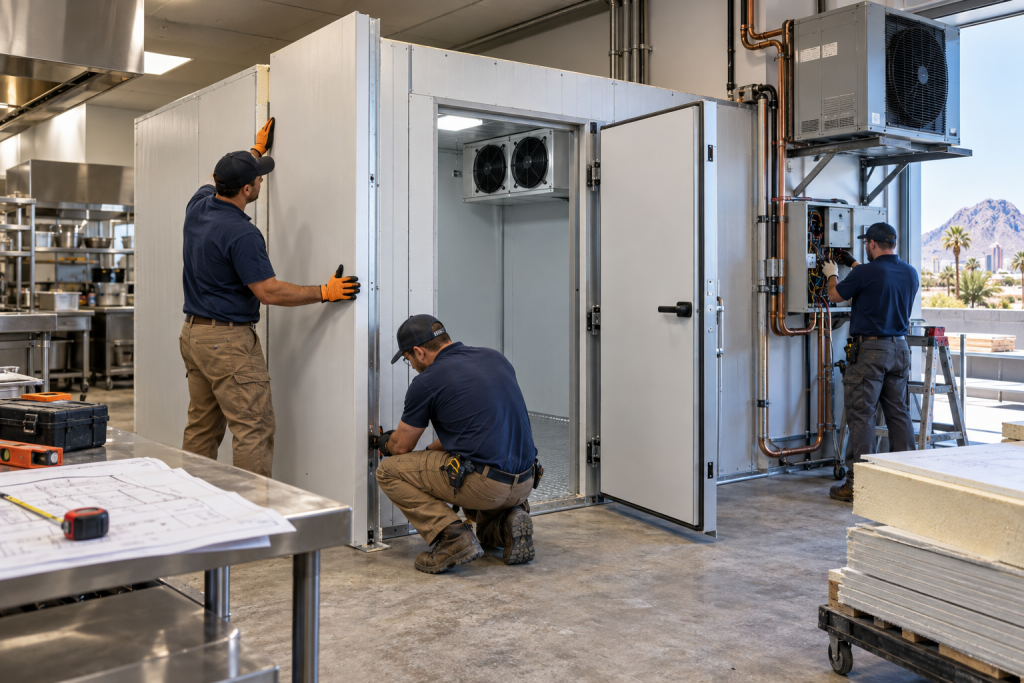
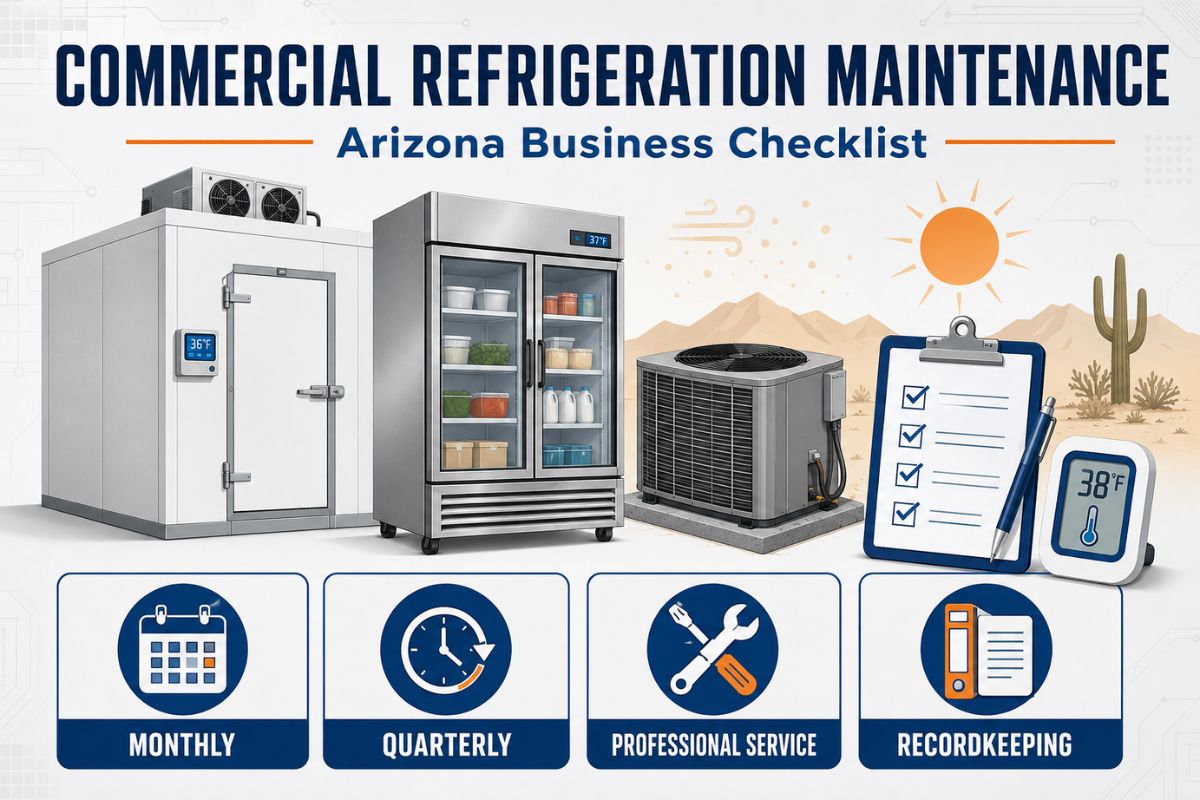
Commercial refrigeration maintenance helps Arizona businesses identify developing problems before temperature instability threatens inventory, daily operations, or equipment reliability. A practical maintenance program should combine routine observations by employees with scheduled inspections performed by qualified refrigeration professionals.
This distinction matters in Arizona. High outdoor temperatures increase the demand placed on refrigeration systems, while desert dust can accumulate on condenser surfaces and around mechanical equipment. Restaurants, grocery stores, convenience stores, commercial kitchens, and food-storage facilities should therefore monitor airflow, operating temperatures, door conditions, and service history throughout the year.
The following checklist explains what staff can observe monthly and quarterly, what should be reserved for a trained technician, and how accurate records support better walk-in cooler and freezer service.
What Should Commercial Refrigeration Maintenance Include?
A commercial refrigeration maintenance program should cover five essential areas:
- Temperature monitoring and documentation.
- Condenser airflow and equipment-area housekeeping.
- Door, gasket, hinge, and closer observations.
- Drainage, frost, moisture, and unusual-noise checks.
- Professional inspection of electrical, refrigeration, and control components.
Maintenance frequency should reflect the equipment type, manufacturer recommendations, operating hours, food-safety requirements, location, and environmental exposure. A busy restaurant with rooftop equipment exposed to Arizona dust may need a different service schedule than a lightly used reach-in cooler located indoors.
Monthly Commercial Refrigeration Maintenance Checklist
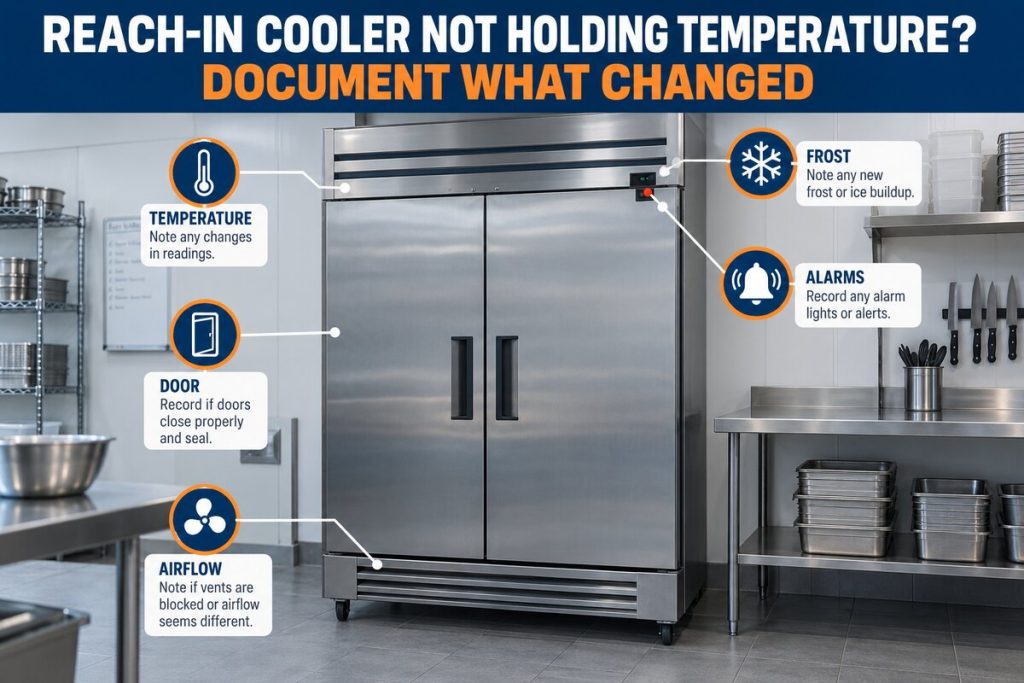
Monthly observations allow employees or facility managers to compare current operation with the equipment’s normal baseline. The objective is not to diagnose internal failures. It is to identify changes early and provide useful information when professional service is required.
1. Review temperature records
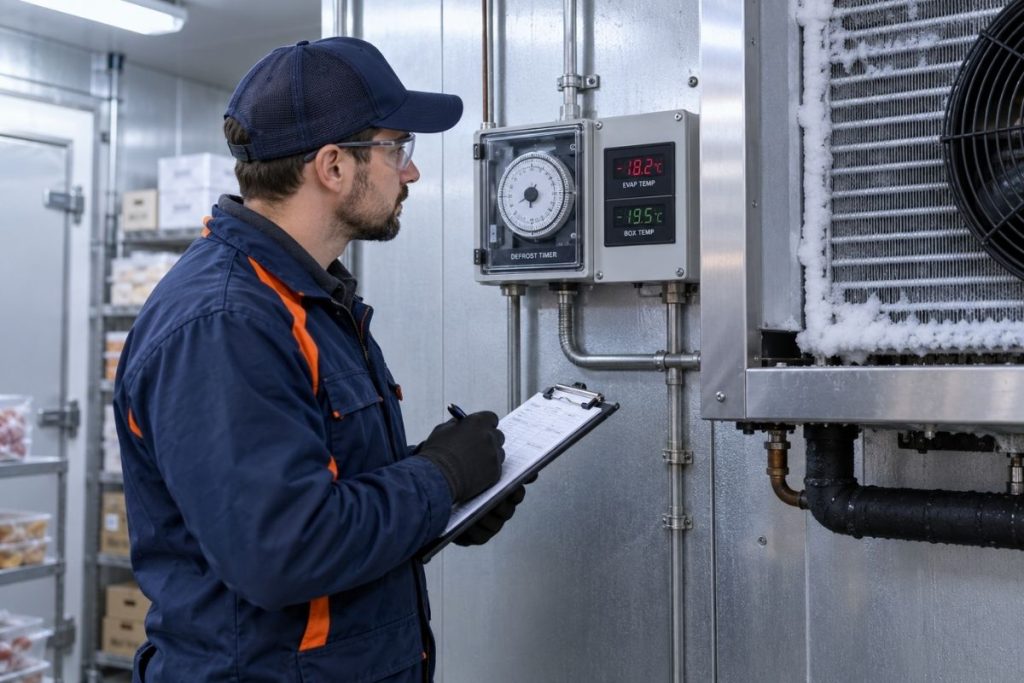
Compare daily temperature logs from the previous month. Look for gradual increases, wider temperature swings, repeated alarms, or recovery periods that are taking longer than normal.
Record temperatures consistently using the same approved method. A display reading, an independent product thermometer, and the temperature of stored products may not always match because they measure different conditions. Follow applicable food-safety procedures when determining whether inventory can remain in service.
2. Inspect door gaskets and closing action
Look for cracked, loose, hardened, folded, or visibly dirty gasket material. Confirm that doors close completely without being pushed and that hinges or closers are not leaving a gap.
A worn gasket is not the only possible cause of air leakage. Misaligned hinges, a damaged door, floor irregularities, or closer problems can also prevent proper sealing. Businesses experiencing condensation or frost around the entrance may benefit from a professional walk-in cooler assessment.
3. Check for frost and unusual moisture
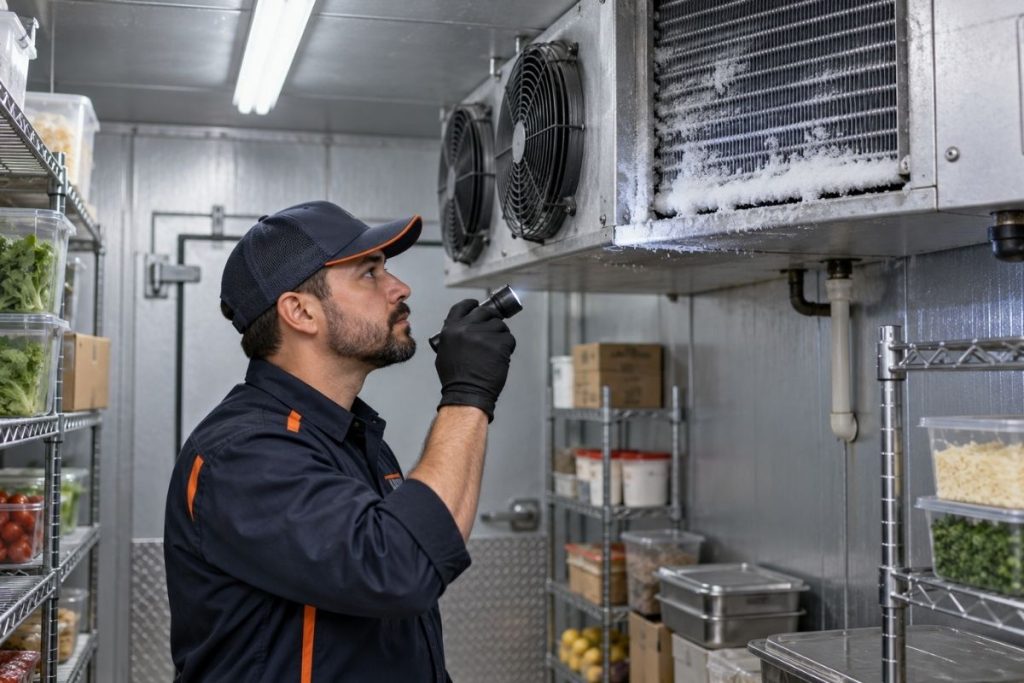
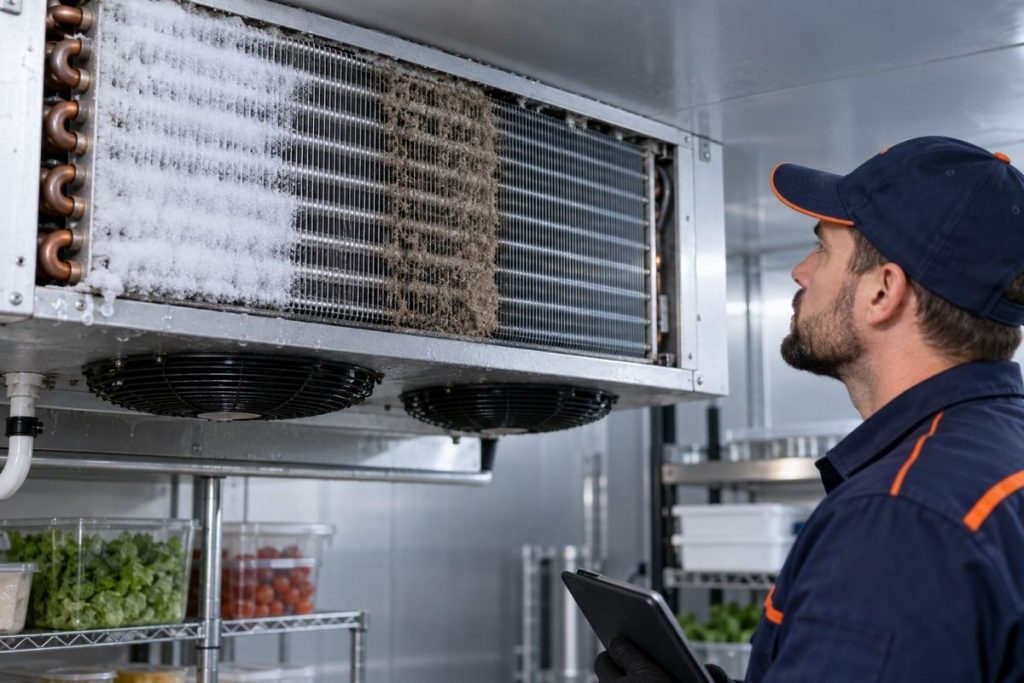
Document new frost patterns on walls, doors, evaporator housings, lines, or stored products. Also look for water near drains, beneath equipment, or around door openings.
Frost can be associated with air infiltration, door traffic, drainage issues, airflow restrictions, or a defrost-system problem. Avoid breaking ice away with sharp tools because this can damage coils, tubing, panels, and wiring.
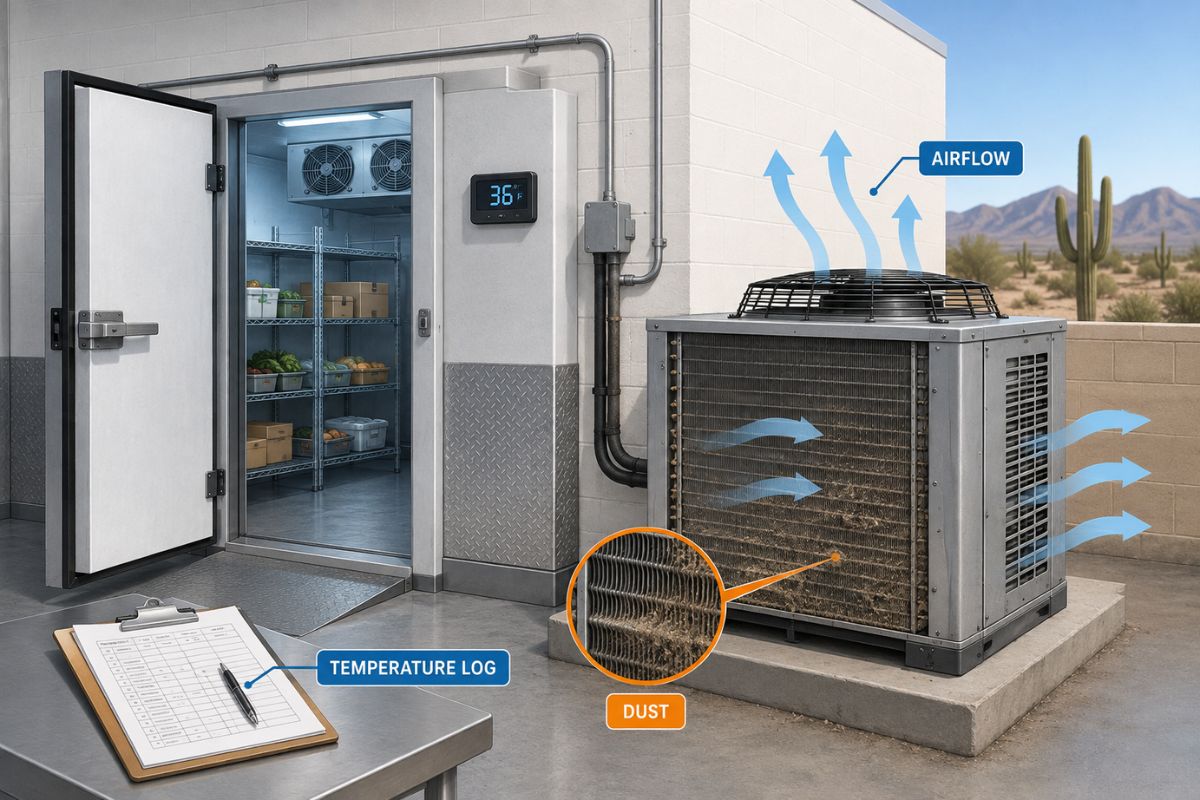
4. Observe condenser airflow
Confirm that boxes, supplies, landscaping debris, or stored materials are not blocking the condensing unit. The equipment needs adequate space to move air and reject heat.
Employees may visually check exposed surfaces from a safe distance, but they should not remove protective panels or insert tools into the unit. If the condenser surface appears heavily coated, arrange a professional inspection instead of using an aggressive pressure washer or chemical cleaner.
5. Listen for changes in equipment operation
Note new rattling, grinding, buzzing, clicking, or unusually loud fan operation. Also record whether the equipment appears to be running for substantially longer periods than normal.
A change in sound or runtime does not identify the failed component by itself. It does, however, provide valuable diagnostic information for a technician performing commercial refrigeration repair.
6. Inspect accessible drains and floor areas
Keep accessible floor drains and surrounding areas free from packaging, food debris, and other visible obstructions. Document standing water, recurring overflow, odors, or ice near drainage areas.
Do not disconnect drain components or use unapproved chemicals. Internal drain service and recurring blockages should be evaluated professionally.
Quarterly Commercial Refrigeration Observations
A quarterly review looks beyond individual symptoms and evaluates operating patterns across the facility. This is a useful time to compare records, inspect equipment areas, and prepare a consolidated list for the next professional visit.
Compare temperatures by equipment and time period
Review whether specific units generate more alarms or require longer recovery after deliveries, cleaning, or busy operating periods. Note any seasonal pattern associated with higher outdoor temperatures.
Review door traffic and loading practices
Frequent or prolonged door openings increase the amount of warm, humid air entering refrigerated spaces. Check whether employees are leaving doors open during deliveries or placing warm products directly in front of evaporator airflow.
Inspect shelves and product placement
Stored products should not obstruct designated air passages or crowd the evaporator area. Maintain the clearances specified by the equipment manufacturer and the facility’s operating procedures.
Evaluate the equipment environment
Check whether remodeling, new storage, exhaust equipment, landscaping changes, or temporary materials have affected condenser ventilation. Commercial kitchens should also consider the interaction between refrigeration equipment and other heat-producing systems, including cooking appliances and kitchen exhaust equipment.
Review maintenance and repair history
Identify repeated complaints, recurring alarm codes, previous refrigerant work, component replacements, and outstanding recommendations. Repeat failures may indicate an underlying condition that has not been fully resolved.
Monthly and Quarterly Checklist Summary
| Frequency | Observation | What Staff Should Record | When to Request Service |
|---|---|---|---|
| Monthly | Temperature performance | Readings, alarms, recovery time, and unusual variation | Persistent drift, repeated alarms, or failure to maintain the required range |
| Monthly | Doors and gaskets | Visible gaps, tears, stiffness, condensation, and incomplete closing | Door will not seal or moisture and frost repeatedly return |
| Monthly | Condenser area | Dust, debris, blocked clearance, and unusual heat or noise | Heavy buildup, restricted airflow, or abnormal operation |
| Monthly | Moisture and drainage | Standing water, ice, overflow, stains, and recurring odors | Active leakage, repeated blockage, or ice around the drain |
| Quarterly | Storage and airflow | Blocked air paths, overloading, and changes in shelf placement | Temperatures remain unstable after product placement is corrected |
| Quarterly | Operating history | Repeat alarms, repairs, parts replaced, and technician recommendations | The same symptom or component issue continues to return |
What Should a Refrigeration Professional Inspect?
Professional maintenance extends beyond surface housekeeping. The exact procedure should follow the manufacturer’s requirements and the configuration of the equipment, but a qualified technician may evaluate:
- Condenser and evaporator coil condition.
- Condenser and evaporator fan operation.
- Electrical connections, contactors, relays, and protective devices.
- Compressor operation and electrical measurements.
- Temperature sensors, thermostats, controllers, and alarm functions.
- Defrost initiation, termination, drainage, and related components.
- Refrigerant circuit performance and indications of leakage.
- Door heaters, drain heaters, and other application-specific components.
- Accessible piping insulation and mounting conditions.
- System operation after inspection or service.
Only appropriately qualified personnel should open electrical compartments or connect instruments to the refrigeration circuit. If testing indicates a refrigerant problem, the technician can determine whether refrigerant leak detection is needed. Compressor concerns may require a more focused compressor evaluation.
Arizona Heat and Desert Dust Considerations
Commercial refrigeration systems move heat from a controlled refrigerated space to another location. When outdoor conditions become hotter, air-cooled condensing equipment has less favorable conditions for rejecting that heat.
Dust can add another challenge. Airborne particles may collect on condenser surfaces, fan guards, louvers, and surrounding areas. This buildup can reduce effective airflow and make the system work under greater stress.
Arizona businesses should therefore consider:
- How exposed the condensing equipment is to dust, landscaping debris, grease, or construction activity.
- Whether rooftop or outdoor equipment has the manufacturer-required clearance.
- Whether summer operating patterns differ from cooler months.
- Whether coil inspection frequency should increase during dusty or high-demand periods.
- Whether nearby heat-producing equipment affects the refrigeration system’s environment.
Cleaning frequency should be based on actual conditions, not a single universal interval. A technician can assess the coil construction and contamination type before selecting appropriate cleaning methods.
Why Refrigeration Maintenance Records Matter
A maintenance log creates a history that employees, managers, and technicians can use to distinguish isolated events from developing problems. Each equipment asset should have a unique identifier so records are not confused between similar units.
A useful record should include:
- Date and time of the observation or service.
- Equipment name, number, location, make, and model.
- Temperature readings and alarm information.
- Visible frost, moisture, dust, gasket, or airflow conditions.
- Reported noises, odors, or operational changes.
- Corrective action taken and the name of the responsible person.
- Technician findings, parts replaced, and follow-up recommendations.
- Date of the next scheduled inspection.
Good records make it easier to explain when a symptom began and whether it is associated with weather, deliveries, door traffic, or previous service. They can also support maintenance planning across multiple walk-ins, reach-ins, display cases, and commercial ice machines.
When Maintenance Should Become a Service Call
Contact a commercial refrigeration professional when employees observe:
- Temperatures that remain outside the required operating range.
- Repeated temperature alarms or unusually slow recovery.
- Heavy frost that returns after normal operating conditions resume.
- Water leaking into occupied, storage, or food-preparation areas.
- An electrical or burning odor.
- A breaker or protective device that repeatedly trips.
- A fan that is not operating or is producing abnormal noise.
- A door that cannot close or seal reliably.
- Visible equipment damage or suspected refrigerant leakage.
- A complete loss of refrigeration.
Do not repeatedly reset breakers, bypass controls, remove ice with sharp objects, or attempt to add refrigerant. If cooling has failed or inventory may be at risk, follow the company’s product-safety procedures and request emergency refrigeration service.
Frequently Asked Questions About Commercial Refrigeration Maintenance
1. How often should commercial refrigeration equipment receive maintenance?
2. What can employees safely check without opening the equipment?
3. Why is condenser airflow important in Arizona?
4. Can employees clean a commercial condenser coil?
5. What information belongs in a refrigeration maintenance log?
6. Does frost always mean the refrigeration system is low on refrigerant?
7. Why does a commercial refrigerator run longer during Arizona summers?
8. Should a door gasket be replaced whenever condensation appears?
9. What professional tasks should never be treated as employee housekeeping?
10. When is a refrigeration problem an emergency?
Build a Maintenance Schedule Around Your Equipment
A useful commercial refrigeration maintenance checklist is specific to the facility. Equipment type, operating load, placement, environmental exposure, manufacturer requirements, and service history should all influence the schedule.
Discount AC & Refrigeration provides professional support for commercial refrigeration systems, including walk-in coolers and freezers, ice machines, refrigerant diagnostics, compressor concerns, and urgent system failures across Arizona.
Schedule Commercial Refrigeration Maintenance
Have your refrigeration equipment inspected before Arizona heat, dust buildup, or an unnoticed operating change affects your business.
Call (480) 478-2616 Request Service Online