Reviewed by a Licensed HVAC Technician
A walk-in freezer defrost timer helps the evaporator shed frost before ice blocks airflow. When defrost does not start, ends too soon, lasts too long, or occurs at the wrong times, operators may see heavy ice, temperature swings, water, or unusual cycling. The timer is only one part of the defrost system, so symptoms must be diagnosed rather than assigned to one component.
How Walk-In Freezer Defrost Systems Differ
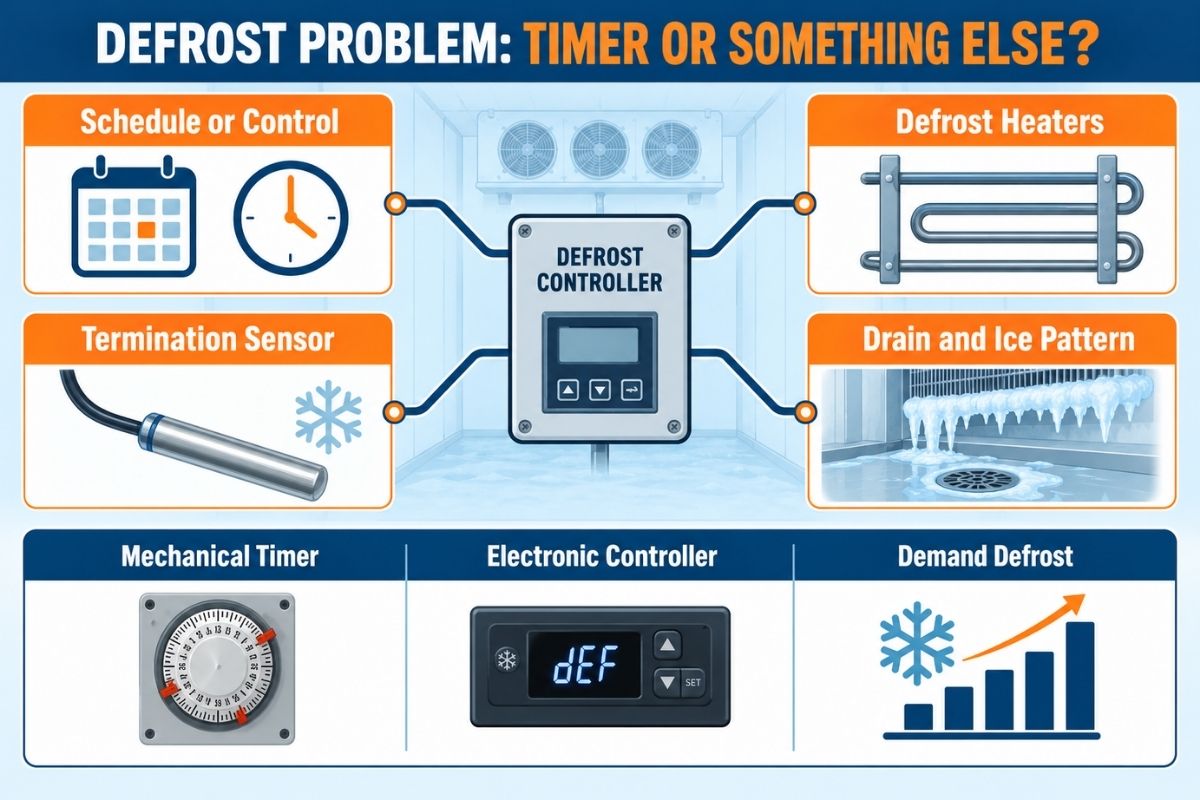
Equipment may use a mechanical time clock, an electronic controller, or demand-based logic. Defrost heat may come from electric heaters, hot gas, or another manufacturer-designed method. Sensors and termination controls determine when the coil is sufficiently clear. For a broader response to rising freezer temperature, see our walk-in freezer repair guide.
| Pattern | Possible area | Why diagnosis matters |
|---|---|---|
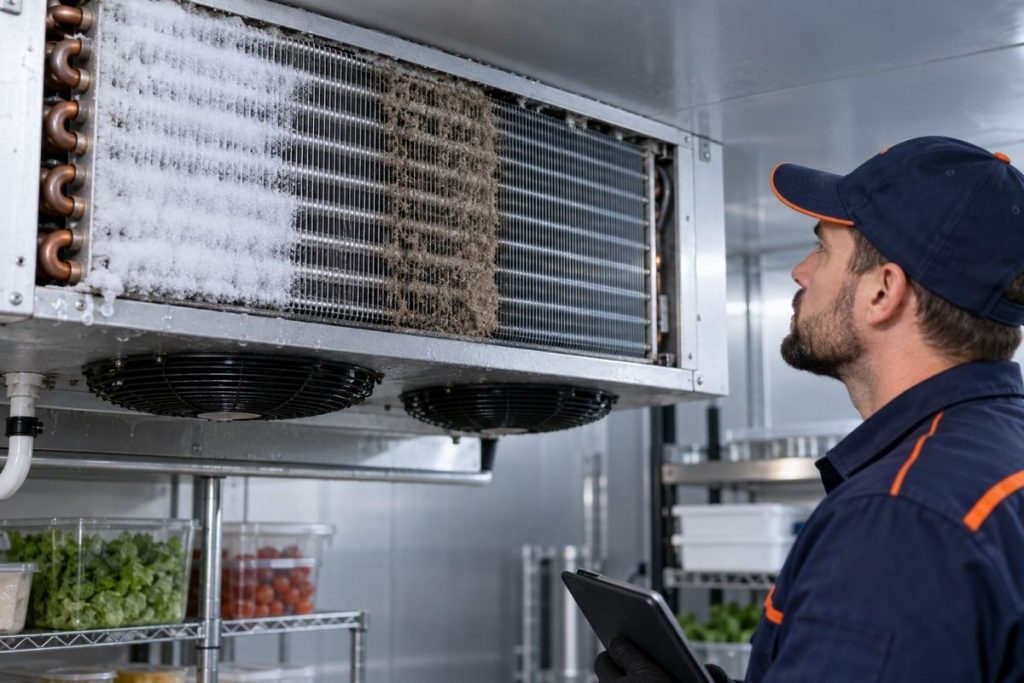
| Coil becomes a solid ice block | Defrost initiation, heaters, sensor, or airflow | Several failures create the same appearance |
| Freezer warms during or after defrost | Duration, termination, fan delay, or control | The sequence must be observed |
| Water or ice near drain | Drain heat, blockage, pitch, or refreezing | A timer replacement may not address drainage |
| Irregular or missing defrost events | Clock, controller, power, settings, or sensor input | Control type changes the test method |
Common Symptoms of a Defrost Problem
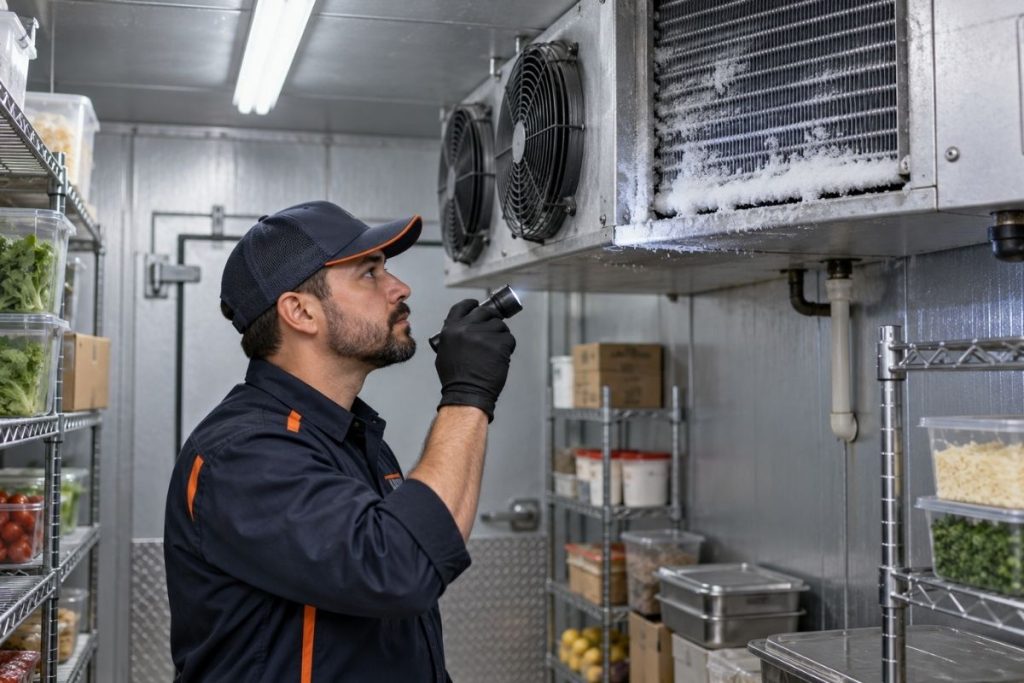
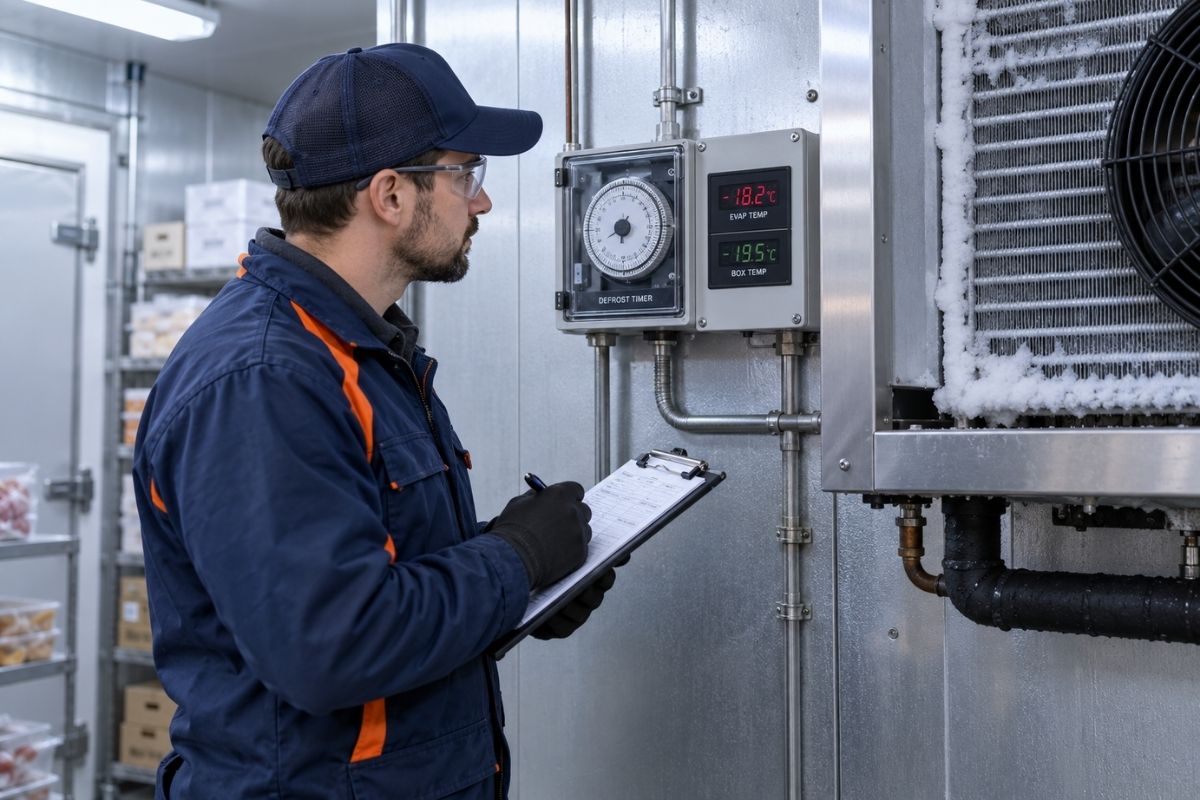
- Ice gradually covers most of the evaporator face.
- Airflow from the evaporator becomes weak.
- Fans sound different because ice is restricting movement.
- The box temperature rises even though refrigeration runs.
- Water appears after a defrost event and later refreezes.
- The controller shows alarms or inconsistent event history.
These symptoms overlap with the causes in why a walk-in cooler freezes up and with evaporator coil airflow problems.
Mechanical Timer Problems
A mechanical timer uses a clock mechanism and programmed defrost positions. The clock may stop advancing, a contact may fail, or the schedule may no longer match operating needs. Even when the dial appears to move, technicians must verify what the connected equipment actually does. Do not remove the cover or rotate electrical controls unless the manufacturer’s authorized procedure and qualified service conditions apply.
Electronic Controller and Schedule Issues
Electronic controls may manage refrigeration, defrost, alarms, fan delay, and termination. Incorrect settings, a sensor fault, lost programming, or a control failure can change the sequence. A display value should be compared with actual temperatures; our walk-in cooler thermostat guide explains that distinction.
Heaters, Sensors, and Termination Controls
If a defrost event is commanded but ice remains, the timer may be working. Electric heaters, wiring, contactors, hot-gas components, termination sensors, or safety controls may be involved. These tests can expose live electrical circuits and must be performed by qualified personnel.
A sensor that ends defrost too early may leave ice behind. A control that does not terminate correctly can create extended warming. Diagnosis must evaluate the sequence and manufacturer specifications, not just one resistance or temperature reading.
Drain and Refreezing Patterns
Meltwater must leave the evaporator pan and drain before it freezes again. A blocked drain, damaged heater, poor pitch, or insulation problem may form ice below the coil even when defrost begins. Water near food or electrical areas should be addressed promptly. Related routine observations are included in our commercial refrigeration maintenance checklist.
Safe Limits for Operators
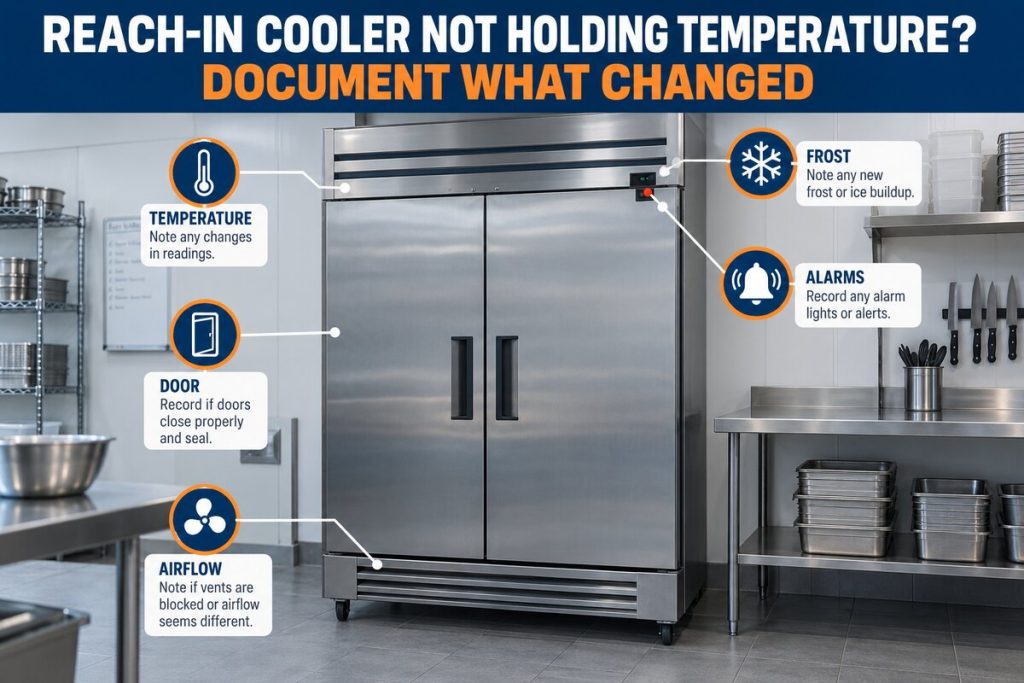
Operators can record the box temperature, alarm history, approximate defrost times, visible ice pattern, fan behavior, and recent door or loading activity. Keep stored items clear of airflow paths and confirm the door closes. The door seal guide explains how infiltration can add frost that resembles a defrost problem.
Do not bypass a timer, jumper a safety, energize heaters manually, open electrical enclosures, chip ice, apply flame, or perform refrigerant work. If product temperature is at risk, follow the facility’s food-safety procedure.
What Professional Diagnosis May Include
A technician may review the control type and settings, event history, coil ice pattern, fan operation, heater circuit, sensor readings, termination, fan delay, drain condition, door infiltration, and refrigeration performance. Compressor symptoms should be separated from control problems; see our walk-in cooler compressor guide.
Repeated failures may require a broader condition review using the factors in our commercial refrigeration repair-versus-replacement article. For restaurant preparation, review what to document before a walk-in fridge service visit. Queen Creek businesses can also learn what to expect from local commercial refrigeration service.
Freezer Ice Keeps Returning?
Discount AC & Refrigeration can evaluate the full defrost sequence and related airflow, drainage, control, and refrigeration conditions for businesses in Queen Creek and the Phoenix metro area.
Frequently Asked Questions
Does every walk-in freezer use a mechanical defrost timer?
No. Some systems use electronic controllers or demand-based strategies.
Does heavy ice prove the timer failed?
No. Heaters, sensors, termination controls, fans, doors, drainage, and refrigeration conditions can create similar symptoms.
Can I manually advance the defrost timer?
Operators should not manipulate electrical controls unless specifically authorized by the equipment documentation and qualified procedures.
Why does the freezer warm during defrost?
Some temperature movement may occur, but excessive or prolonged warming can relate to duration, termination, fan delay, or another control issue.
Why is ice forming around the drain?
The drain may be blocked, improperly heated, poorly pitched, or allowing meltwater to refreeze.
What information helps a technician?
Temperature and alarm logs, the visible ice pattern, approximate defrost times, fan behavior, loading activity, and previous service records are useful.