Reviewed by a Licensed HVAC Technician
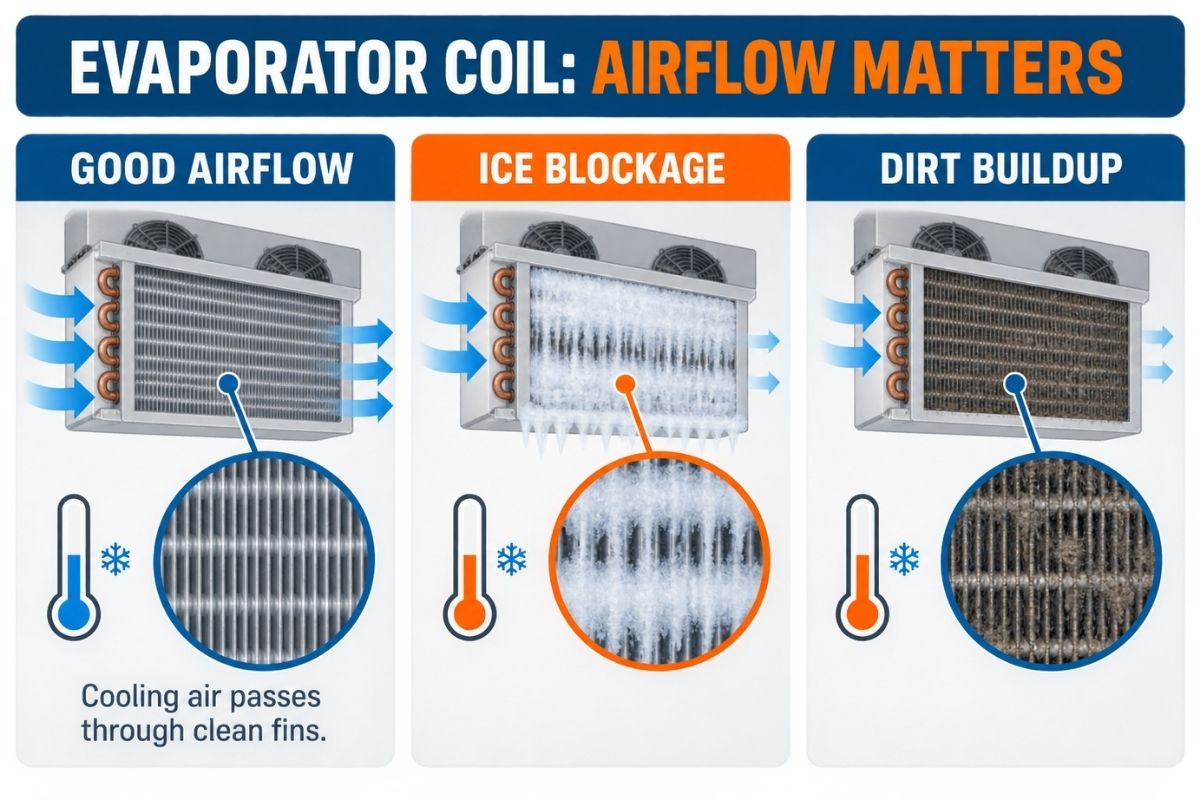
The walk-in cooler evaporator coil is where heat leaves the refrigerated space. When air can move freely across clean fins, the coil absorbs heat and the fans distribute cooled air through the box. Ice, dirt, blocked storage, or fan problems change that process and can cause temperature drift.
This guide explains what the coil does, which symptoms operators can document safely, and where professional cleaning and diagnosis begin.
What Does a Walk-In Cooler Evaporator Coil Do?
Refrigerant inside the coil absorbs heat from the air passing over the fins. The evaporator fans then return cooled air to the room. Moisture condenses on the cold surface and should drain away or be managed through the equipment’s defrost strategy. For expected box temperatures, review walk-in cooler temperature guidance.
| Coil condition | Possible effect | What to document |
|---|---|---|
| Clean, evenly exposed fins | Normal heat transfer when other components work correctly | Temperature trend and fan sound |
| Dust or grease buildup | Reduced airflow and efficiency | Coverage, location, and service history |
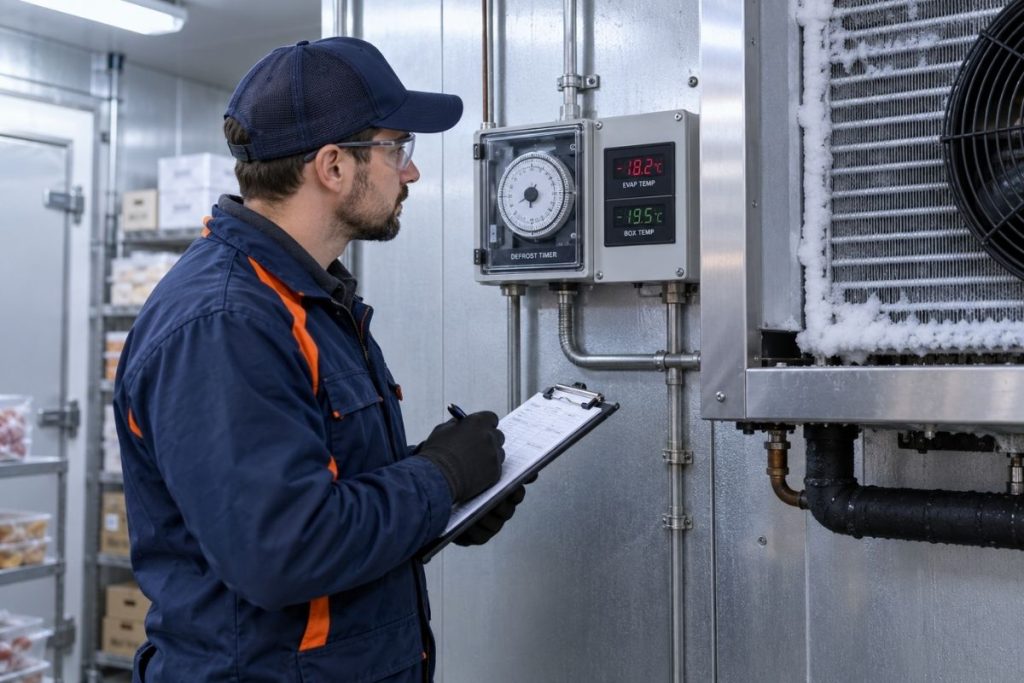
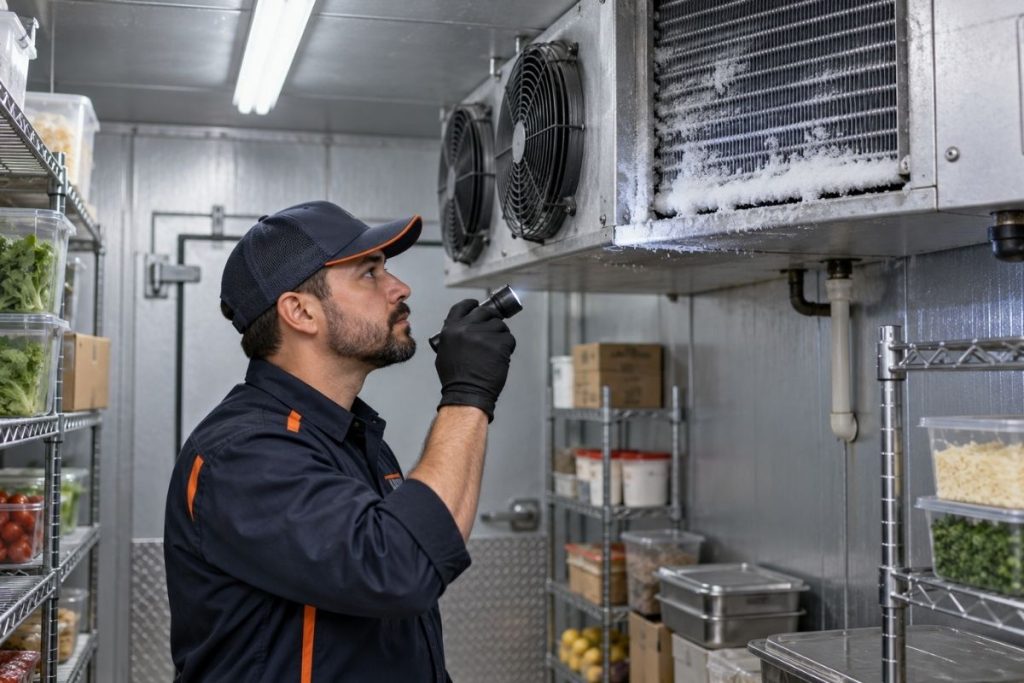
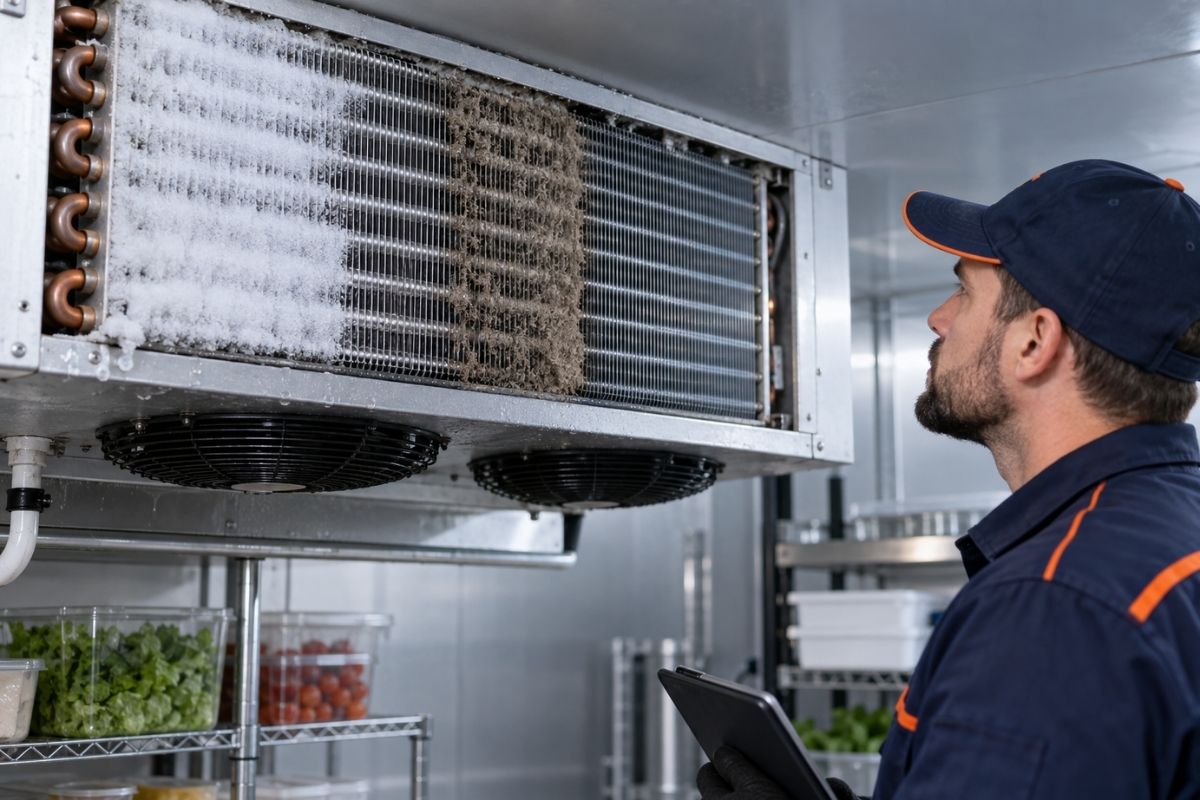
| Heavy frost across the face | Restricted airflow | Ice pattern and when it appeared |
| Uneven ice in one section | Airflow or refrigerant-feed concern | Photo without removing guards |
How Airflow Affects Coil Performance
Air must reach the return side, pass through the fin surface, and leave through the supply side. Boxes, plastic curtains, labels, or stored product placed too close to the unit can interfere with circulation. Failed or slow fans can create a similar result. Restricted airflow may produce longer run cycles, warmer product zones, ice, or uneven temperature.
Operators may verify that marked clearances are respected, but should not reach through fan guards. Our guide to walk-in fridge repair observations lists other safe information to gather before service.
Why Ice Forms on the Evaporator
Light frost at certain operating stages can be normal, but thick ice that remains or expands should be investigated. Possible causes include reduced airflow, a controller or sensor issue, door infiltration, a failed defrost component, drainage trouble, or a refrigerant-feed problem. See the related guide, why a walk-in cooler freezes up, for the full diagnostic picture.
The pattern matters. Uniform ice may point technicians toward airflow or defrost, while a partial pattern can require refrigeration measurements. Ice is not proof that refrigerant should be added.
How Dirt Changes Heat Transfer
Dust, grease, lint, and paper fibers reduce the open area between fins. In Arizona, airborne dust can add to contamination around receiving areas. A dirty coil may run longer, struggle under heavy loads, or freeze because the available airflow is too low. A consistent commercial refrigeration maintenance plan helps catch buildup before it becomes severe.
Safe Visual Checks
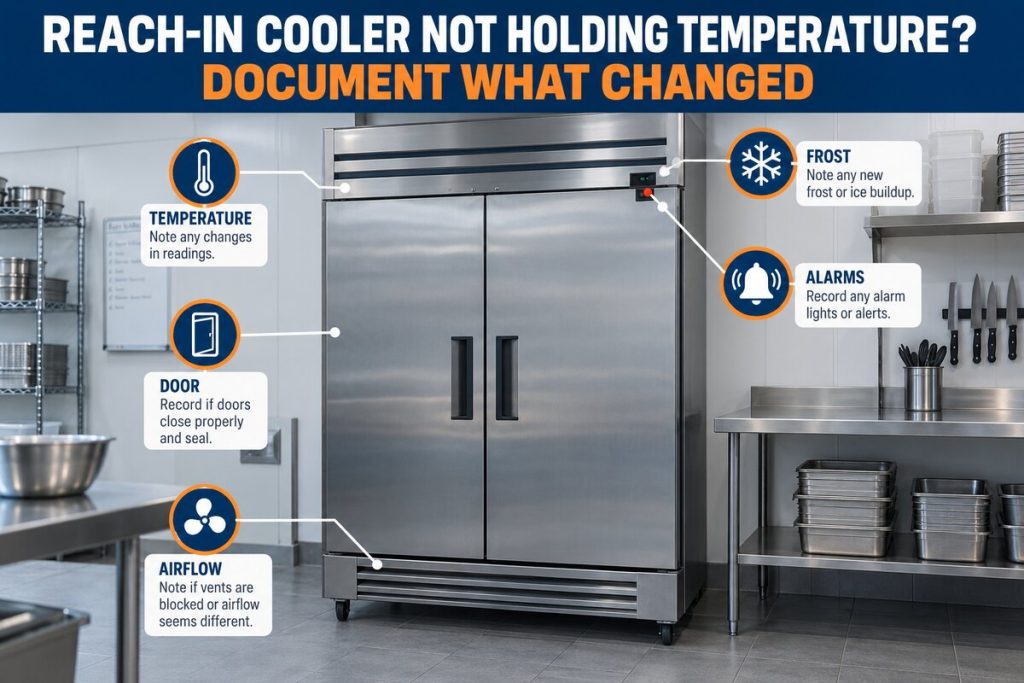
- Record the controller reading and an approved independent temperature reading.
- Observe the coil and fan area from outside the guard.
- Confirm stored items do not block supply or return airflow.
- Photograph visible frost, dirt, water, or staining.
- Check that the door closes normally; use the door seal guide to understand related symptoms.
- Note recent deliveries, cleaning, alarms, and prior repairs.
Cleaning Boundaries
Do not scrape fins, chip ice, use an open flame, spray unknown chemicals, or direct high-pressure water at the coil. Fins bend easily, tubing can be punctured, and electrical components may be nearby. Professional coil service may require isolating power, protecting food and surrounding surfaces, selecting an appropriate cleaner, straightening fins, clearing drainage, and verifying operation afterward.
If the coil is damaged, corroded, or repeatedly freezing, diagnosis should extend beyond cleaning. Recurring repairs, age, capacity, and efficiency can also inform a repair-versus-replacement evaluation.
Maintenance That Supports the Evaporator
Maintenance frequency depends on environment, door traffic, product type, and manufacturer requirements. A technician may inspect fan motors, blades, guards, fins, drain pan, drain line, insulation, controls, and the defrost sequence. The service record should note coil condition and temperature performance before and after work.
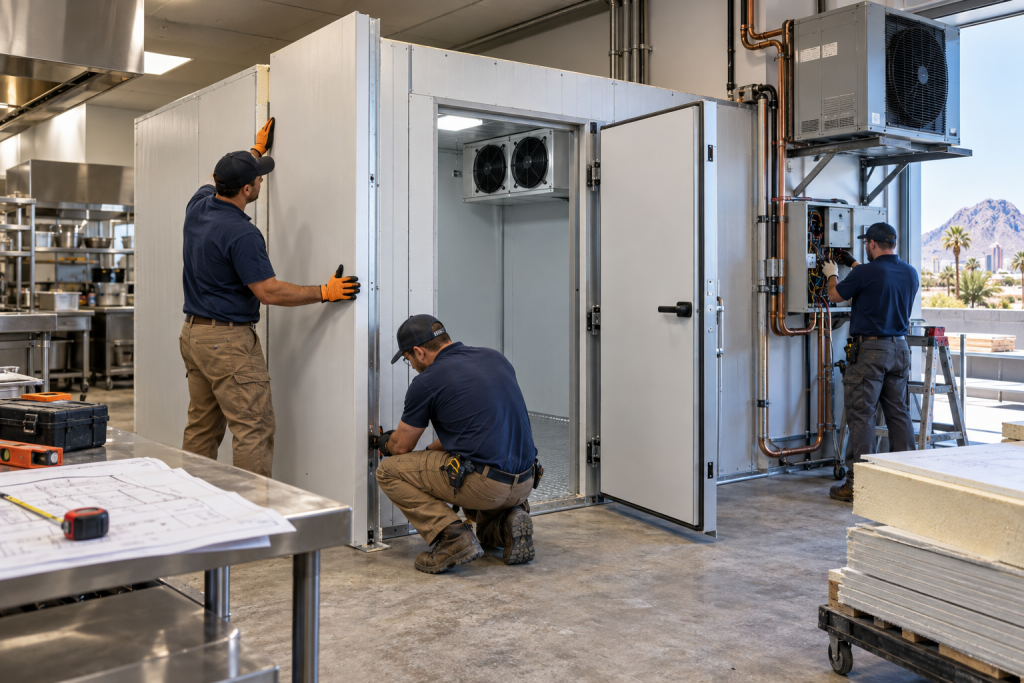
Coil performance also depends on the rest of the system. Unusual cycling or noise may require evaluation using the principles in our compressor warning-sign guide. For new or modified boxes, proper heat-load planning and airflow clearances should be addressed during walk-in cooler installation.
When to Schedule Service
Arrange professional evaluation when ice persists, temperature rises, fans stop or sound abnormal, water collects, the drain repeatedly backs up, or dirt cannot be addressed safely. Businesses near Queen Creek can also review what to expect when choosing walk-in cooler repair near Queen Creek.
Evaporator Coil Problems Need a Complete Evaluation
Discount AC & Refrigeration services commercial refrigeration equipment in Queen Creek and the Phoenix metro area. Share the temperature trend, ice pattern, and maintenance history when you call.
Frequently Asked Questions
Can a dirty evaporator coil make a cooler run warm?
Yes. Dirt can restrict airflow and insulate the fins, reducing heat transfer.
Is frost on the coil always abnormal?
Not necessarily. The amount, location, persistence, and system design determine whether frost indicates a problem.
Can I pressure-wash the evaporator?
No. High pressure can bend fins, force water into electrical areas, and spread contamination.
Why is only part of the coil icy?
Uneven airflow or a refrigerant-feed issue may be involved. Instrument-based diagnosis is needed.
How often should the coil be inspected?
Frequency depends on the environment, operating hours, door traffic, and manufacturer guidance.
Does coil cleaning solve every icing problem?
No. Controls, fans, doors, defrost, drainage, and the refrigerant circuit may also require evaluation.