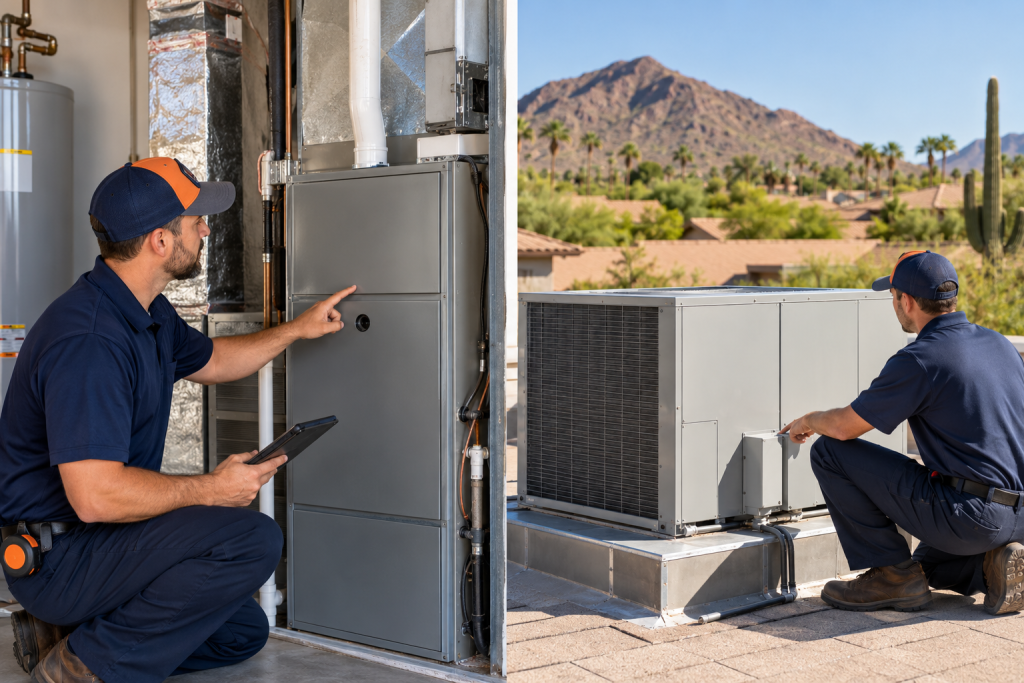
A professional heat pump service visit in Phoenix should evaluate both sides of the system. Cooling performance alone does not confirm that the equipment is ready to heat. Because the same outdoor unit changes operating mode, a fall tune-up needs to inspect the cooling history, verify airflow and controls, and test the heating sequence before the first cold morning.
This guide explains what a complete fall appointment should include, how heat pump service differs from a basic AC tune-up, and which factors affect the scope of the visit. Exact pricing depends on the equipment, accessibility, condition, and whether maintenance uncovers a separate diagnostic or repair need.
AC Service and Heat Pump Service Are Not Identical
During summer, a heat pump operates much like a conventional central air conditioner. In heating mode, it changes the direction of refrigerant flow and moves heat into the home. That transition involves controls and components that may have been inactive for months. A cooling-only inspection can miss a reversing-valve issue, defrost-control concern, auxiliary-heat problem, or thermostat configuration error.
What a Real Fall Heat Pump Tune-Up Includes
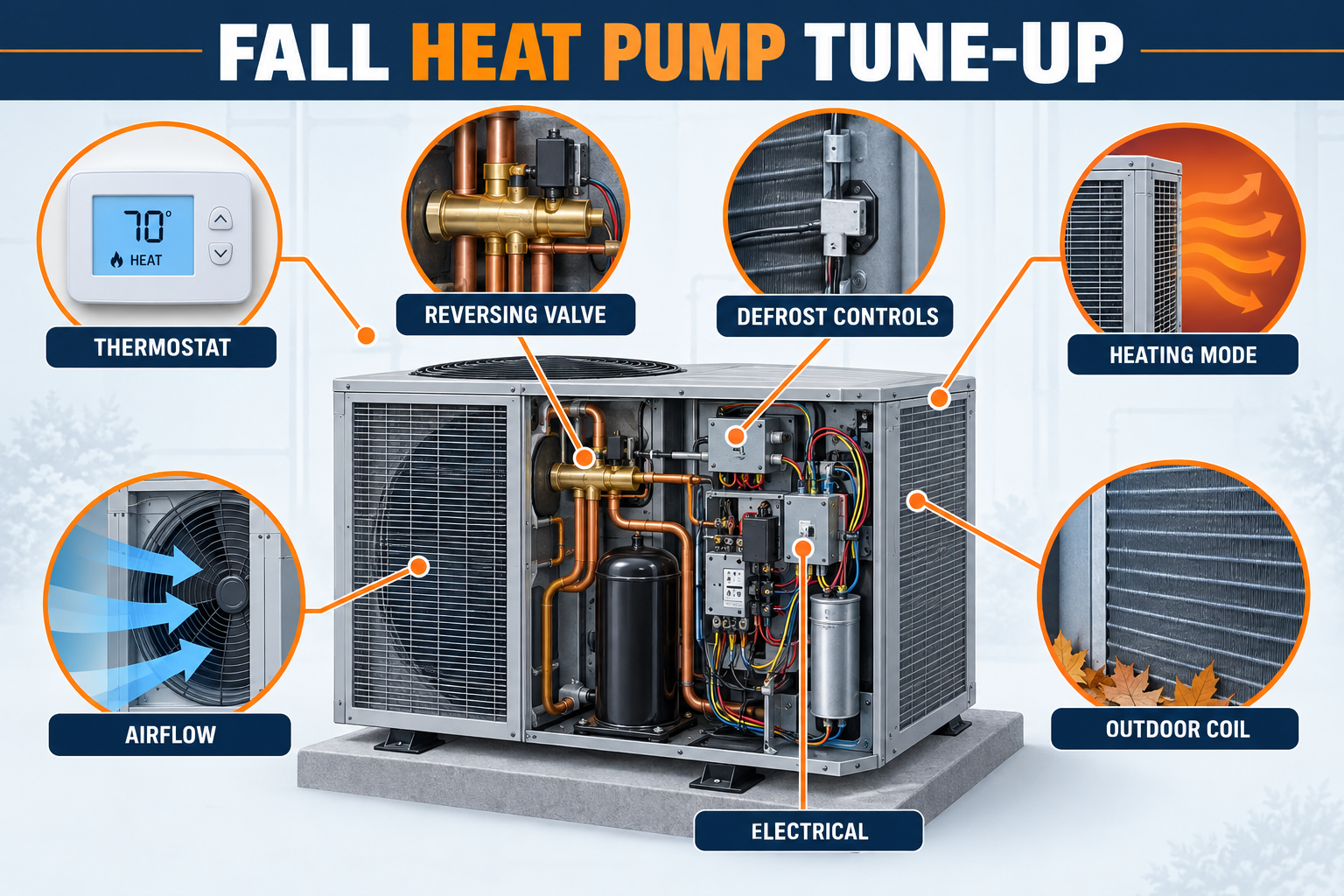
- Thermostat review: Confirm equipment type, mode selection, setpoint response, and staging or auxiliary-heat configuration.
- Cooling and heating sequence: Observe how the system starts, changes mode, and completes a normal call.
- Airflow: Inspect filter condition, blower operation, accessible return and supply conditions, and temperature patterns.
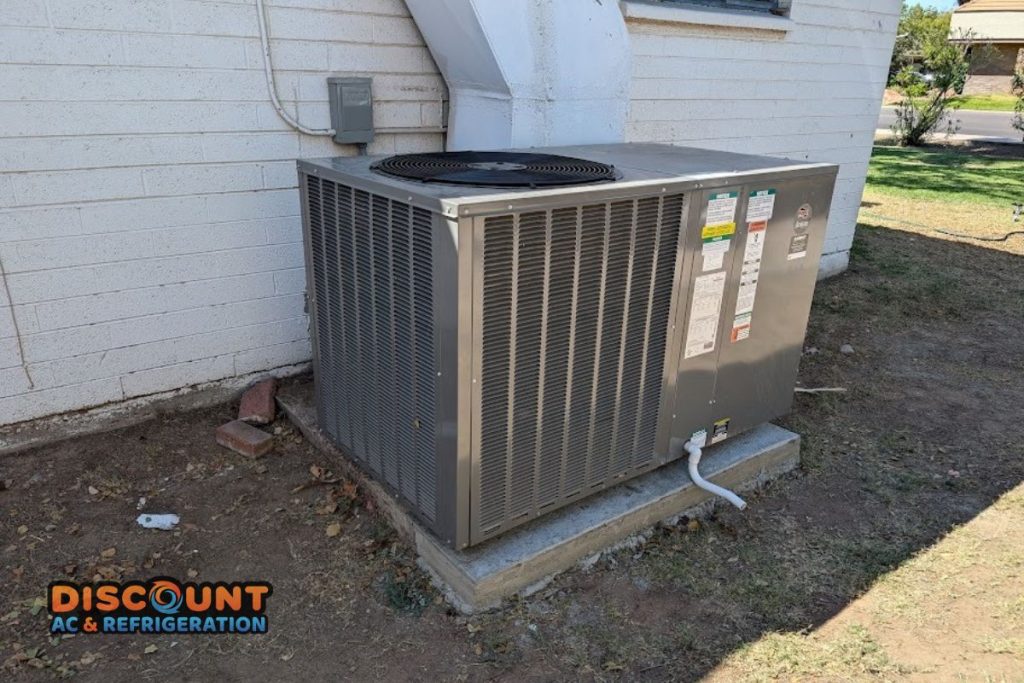
- Outdoor coil and clearance: Check for dust, debris, vegetation, damaged fins, and restrictions that affect heat transfer.
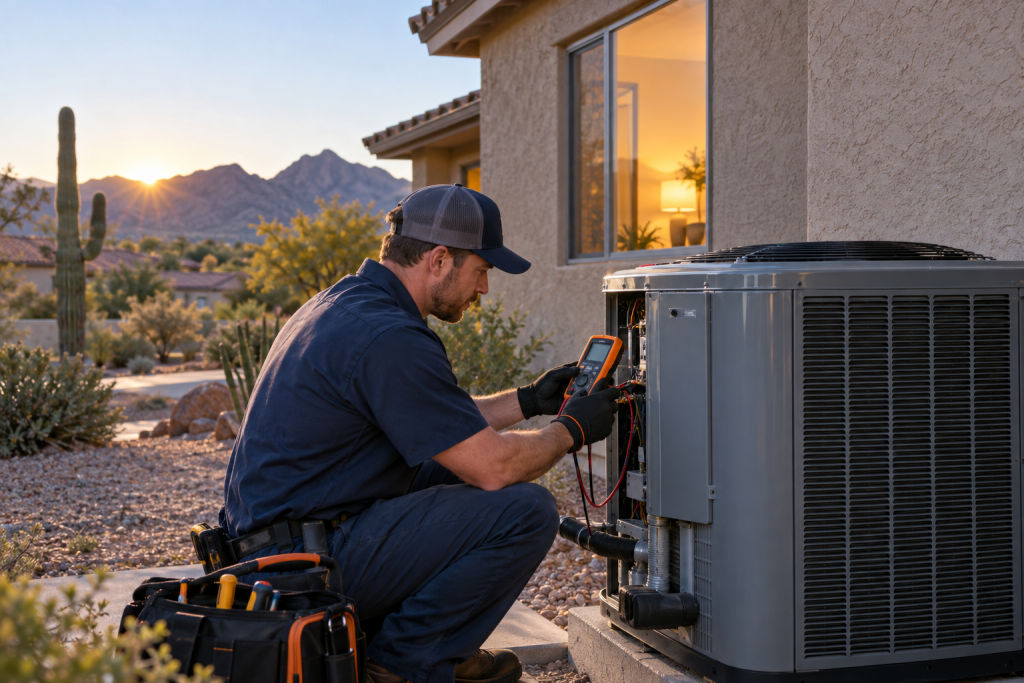
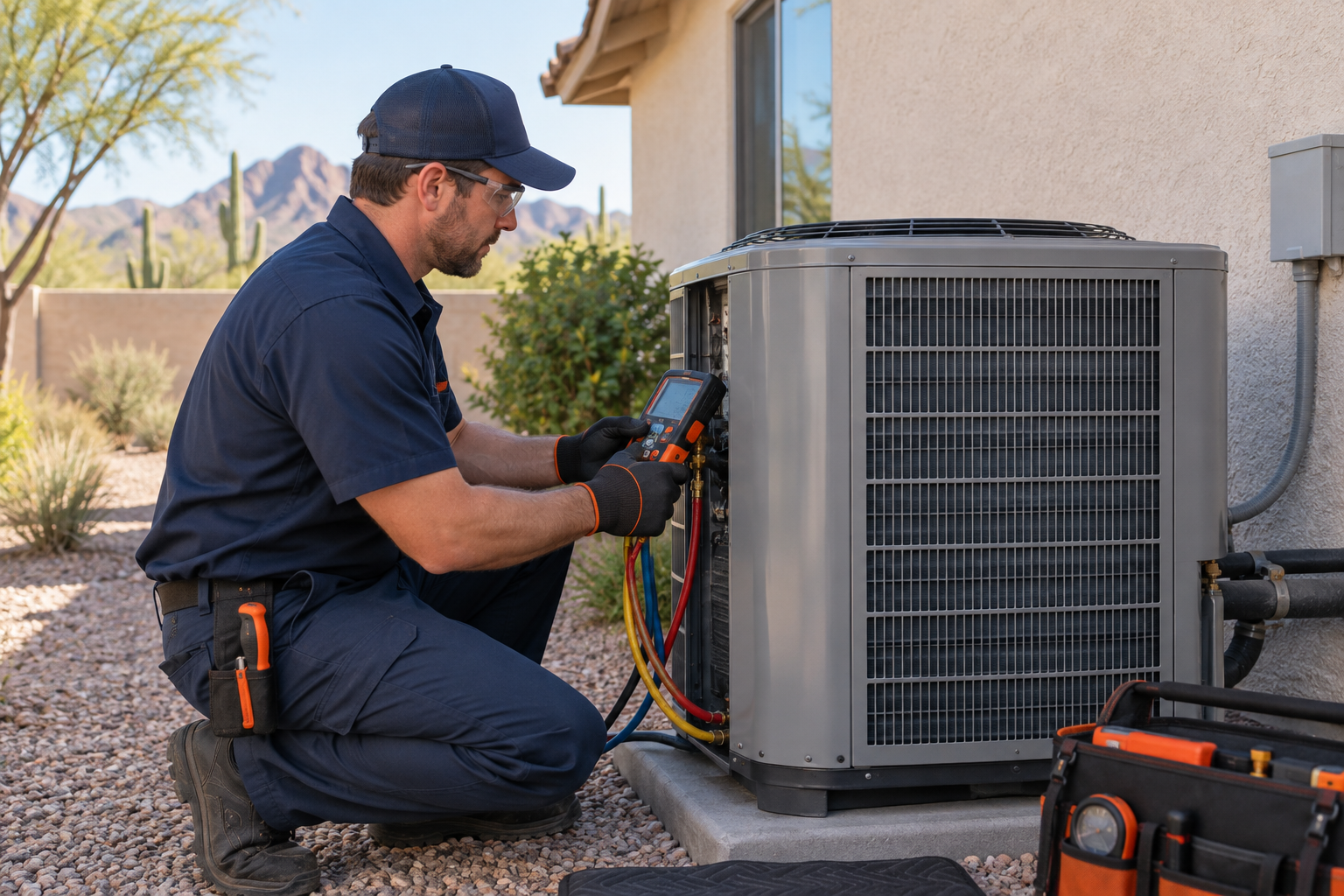
- Electrical condition: Test applicable capacitors, contactors, motors, connections, current, and voltage using safe procedures.
- Reversing operation: Verify that the system changes between cooling and heating as designed.
- Defrost controls: Review applicable sensors, boards, and operating logic according to equipment requirements.
- Drainage and indoor coil observations: Look for moisture, restriction, debris, or evidence of previous icing.
- Performance documentation: Record findings and explain repairs separately from routine maintenance.
Why Heating Mode Should Be Tested Before You Need It
Phoenix homeowners can go many months without selecting heat. During that time, the system may cool normally while a heating-specific fault remains hidden. Testing in fall gives the technician an opportunity to identify the symptom under controlled conditions rather than during the first cold morning, when many households discover similar problems at once.
The test should follow manufacturer procedures and current weather limitations. Homeowners can report what they observe at the thermostat, but they should not open electrical panels or attempt to force components manually.
What Affects the Cost of Heat Pump Service?
A flat advertised tune-up price may not describe every property. The total scope can vary based on system quantity, equipment type, roof or attic access, age, maintenance history, filter requirements, and whether the system is operating normally when the technician arrives. Diagnostic work, repairs, replacement parts, coil restoration, and corrective electrical work should be presented separately so the homeowner knows what is included.
When comparing heat pump services, ask for a written checklist or service report. A useful report identifies readings, observations, recommended repairs, and items that can be monitored. It should not rely on vague labels such as “bad” or “old” without supporting evidence.
How Often Should a Phoenix Heat Pump Be Serviced?
Many residential systems benefit from professional service at least annually, while equipment that provides both cooling and heating may benefit from seasonal checks based on operating hours, manufacturer guidance, property conditions, and prior findings. Phoenix dust and long cooling cycles make filter and outdoor-coil observations especially important between professional visits.
Warning Signs That Need Diagnosis, Not Just Maintenance
- The system cools but does not produce heat.
- The thermostat displays auxiliary or emergency heat for unusually long periods.
- The outdoor unit repeatedly starts and stops.
- Airflow is weak or room temperatures are inconsistent.
- A breaker trips or an electrical odor develops.
- The system makes a new buzzing, grinding, or repeated clicking sound.
- Ice appears under conditions that do not match a normal defrost cycle.
Describe the symptom when scheduling. A maintenance appointment assumes the system is generally operating. A reported failure allows the company to prepare for diagnostic work and set accurate expectations.
Choosing a Heat Pump Service Company
Ask whether the company regularly services heat pumps, tests heating mode during fall appointments, documents results, and explains the boundary between maintenance and repair. Discount AC & Refrigeration provides heat pump service and HVAC diagnostics across the Phoenix metro area.
Frequently Asked Questions
Does heat pump service include testing the heating mode?
A fall service should include the heating sequence when conditions and manufacturer procedures allow. Confirm the provider’s checklist before scheduling.
Is refrigerant added during every tune-up?
No. Refrigerant belongs to a sealed circuit. An incorrect condition should be diagnosed rather than treated as routine maintenance.
Why does auxiliary heat matter?
Auxiliary heat supports the system under specific conditions. Incorrect controls or extended unnecessary operation can affect comfort and energy use.
Can I test my heat pump myself?
You can observe thermostat response, airflow, and indoor temperature. Do not open panels, touch electrical components, or attempt refrigerant work.
Schedule Fall Heat Pump Service in Phoenix
To prepare your system for the seasonal transition, call (480) 478-2616 or request service online. Tell us whether the system is operating normally or showing a specific heating or cooling symptom.