If you are searching for furnace service in Phoenix, first confirm what heating equipment your home actually has. Many Valley homes use heat pumps or packaged rooftop systems rather than a separate gas furnace. The thermostat may display “heat” in every case, but the components, maintenance tasks and diagnostic process are different.
Knowing the equipment type helps you describe the problem accurately, request the right service and understand what a technician is checking.
The Three Heating Systems Commonly Confused
Gas Furnace With Split Air Conditioning
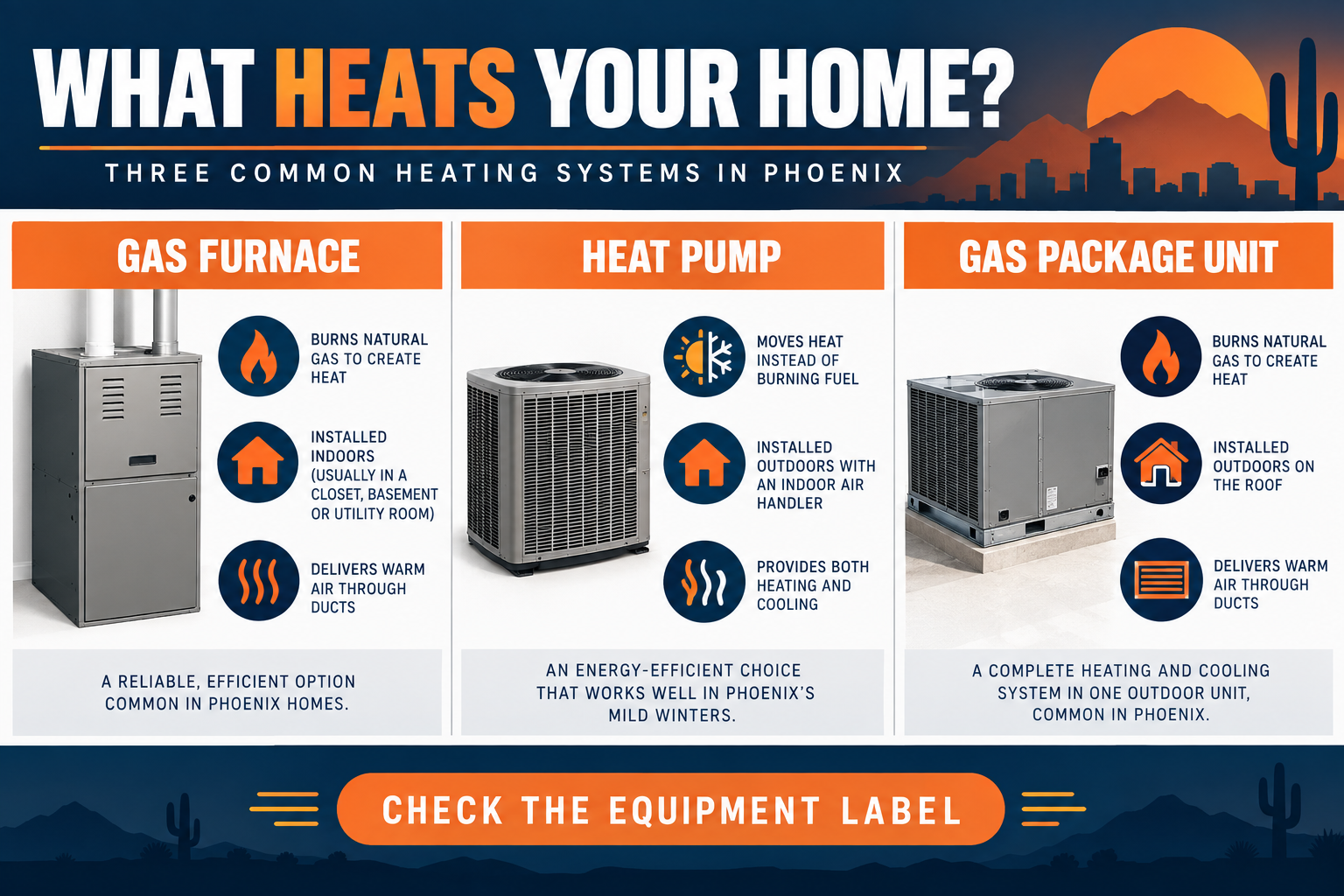
A gas furnace burns natural gas or propane and moves heated air through the duct system. It is commonly installed indoors, in an attic, closet or garage, and paired with an outdoor air-conditioning condenser. Look for a gas line, combustion vent or flue, burner compartment and furnace data plate.
Heat Pump
A heat pump uses the refrigeration cycle in reverse to move heat indoors. The outdoor unit normally runs in both cooling and heating modes. During cold conditions, the system may enter defrost and may use electric auxiliary heat. Learn more about professional heat pump service.
Gas or Heat-Pump Package Unit
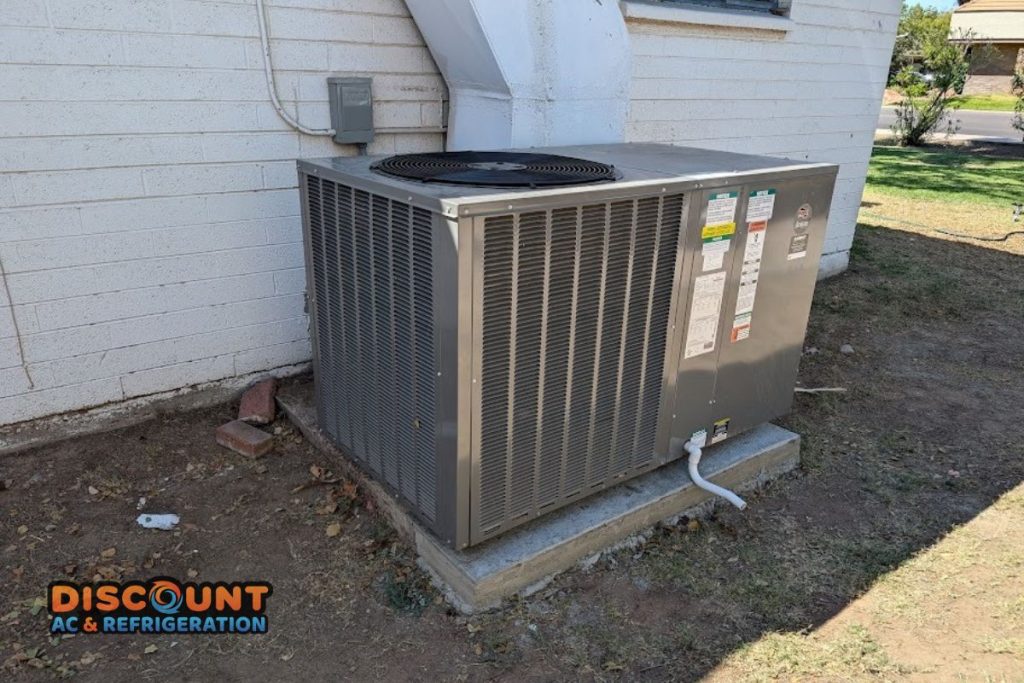
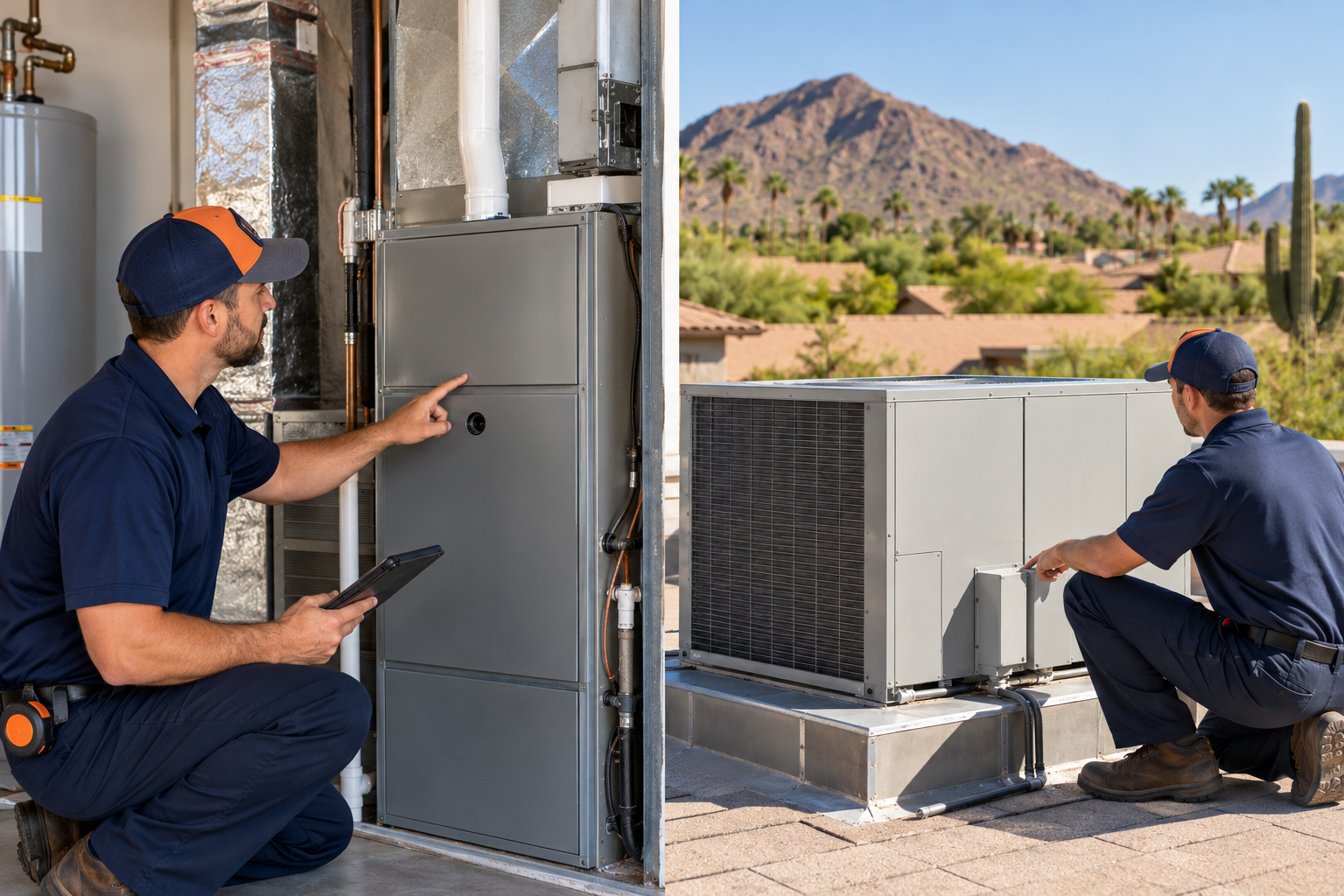
A package unit places the primary heating and cooling components in one cabinet, often on the roof. A gas package has burners and a heat exchanger; a heat-pump package uses a reversing valve and refrigeration components. The indoor closet may contain only ductwork and controls, which is why homeowners sometimes assume a hidden furnace exists.
How to Identify Your System Safely
- Check the thermostat: “Aux Heat” or “Emergency Heat” often indicates a heat pump, though thermostat labels are not conclusive.
- Look at the utility setup: a gas meter or propane tank suggests gas equipment somewhere on the property, but not necessarily a furnace.
- Find the model label: photograph model and serial plates on accessible equipment without opening electrical or burner compartments.
- Observe the outdoor unit: if it runs while the home is heating, the system may be a heat pump.
- Review inspection or service documents: prior invoices and home-inspection reports often list the equipment type.
Do not remove access panels, handle wiring or inspect burners yourself. If the equipment type remains unclear, send the photographs to the service company or schedule an identification visit.
What Service Each System Needs
Gas furnace service may include inspection of burners, ignition, flame sensing, venting, gas pressure, temperature rise, blower performance, electrical connections and safety controls. Heat-exchanger concerns require qualified evaluation; visible damage, unusual combustion or carbon-monoxide alarms should never be ignored.
Heat-pump service focuses on refrigeration performance, reversing-valve operation, defrost controls, outdoor and indoor coils, airflow, auxiliary heat and electrical components. Because the same system handles heating and cooling, a fault noticed in winter may also affect summer operation.
Package-unit service depends on the heat source but also includes rooftop access, cabinet condition, drainage, duct connections and weather exposure. Safe access should be established before the visit.
Symptoms Worth Reporting
- No heat or air that never becomes warm
- Short cycling or unusually long run times
- Outdoor unit icing that does not clear normally
- Burning odors, gas odors or repeated ignition attempts
- Unusual sounds at startup or shutdown
- Auxiliary heat operating more than expected
- Carbon-monoxide alarm activation
If you smell gas, leave the building and contact the gas utility or emergency services from a safe location. Do not operate switches or attempt to restart the system.
What to Provide When Scheduling Service
Tell the company whether the equipment is in an attic, closet, garage or on the roof; share model-number photos; describe thermostat messages; and note when the symptom began. Mention fuel type, recent power interruptions and any previous diagnosis. This information helps the dispatcher send a technician prepared for the equipment and access conditions.
If cooling performance is also a concern, review professional AC repair and diagnostics. A complete system evaluation can separate thermostat, airflow, electrical, refrigeration and heating-component problems.
Not Sure What Heats Your Phoenix Home?
Discount Air Cooling & Refrigeration can identify the equipment and diagnose heating performance based on the system actually installed.