

September is a useful decision point for homeowners searching for AC maintenance near me in Phoenix. The system has already operated through months of high outdoor temperatures, long cooling cycles, desert dust, and monsoon conditions. At the same time, the heaviest summer demand is beginning to ease. That combination makes September an ideal month to document how the equipment performed, address developing concerns, and prepare the system for the seasonal transition.
A professional tune-up is more than a quick visual check. It should evaluate the condition and operation of the cooling system while giving the homeowner a clear record of what was inspected, what needs attention, and what can be monitored. This guide explains why Phoenix has a different maintenance calendar from many other parts of the country and what a useful September service visit should include.
Why the Standard Spring Tune-Up Calendar Does Not Fully Fit Phoenix
In milder climates, an air conditioner may sit unused for much of the year. A spring inspection makes sense because the equipment is about to return to regular operation. Phoenix systems follow a different pattern. Many begin working hard well before summer and continue running through September or later. By early fall, the equipment has already experienced its longest and most demanding operating period.
A spring visit can help prepare a system for summer, but it cannot show how that system actually responded to months of heat and dust. September maintenance adds a second perspective. The technician can review current operating conditions after the high-load season and look for changes that developed during extended use.
What Phoenix Summer Conditions Can Change
Air-conditioning components do not all experience stress in the same way. Some changes are visible, while others appear in electrical readings, temperature differences, airflow measurements, or operating patterns. A September inspection helps connect those observations instead of treating each symptom in isolation.
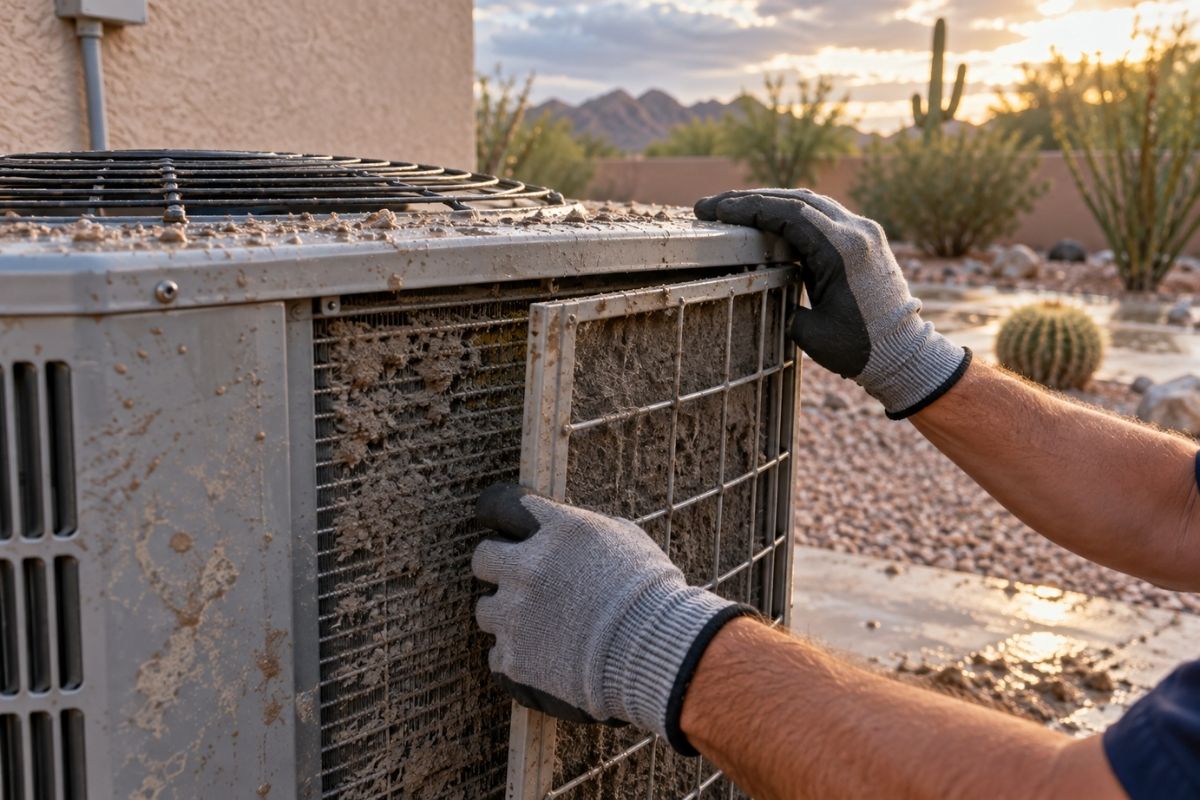
Dust and debris around the condenser
The outdoor unit must release heat from the home. Dust, landscaping debris, and material carried by monsoon winds can collect around the cabinet and coil surface. Restricted heat rejection may contribute to longer run times and higher operating pressure. Coil condition should be evaluated carefully because aggressive cleaning or incorrect chemicals can damage delicate fins.
Electrical wear after extended cycling
Contactors, capacitors, terminals, motors, and wiring operate repeatedly during the cooling season. Heat and long run periods can expose weak connections or components that are drifting outside their expected operating range. Electrical testing belongs to a trained technician because the equipment can retain dangerous voltage even when it is not actively cooling.
Airflow changes inside the home
A loaded filter, dirty indoor coil, blower issue, closed register, duct restriction, or incorrect fan setting can reduce airflow. Homeowners may notice a room that takes longer to cool, weak air at certain vents, or unusually long cycles. These observations are helpful, but they do not identify the cause by themselves. A maintenance visit should compare filter condition, blower operation, supply and return airflow, and the temperature pattern across the system.
What a Professional September AC Tune-Up Should Include
The exact scope depends on the system type, age, access, and manufacturer requirements. A useful residential maintenance visit commonly includes the following areas:
- Thermostat and control review: Confirm the cooling call, setpoint response, basic programming, and communication with the equipment.
- Filter and airflow assessment: Inspect the filter, visible return path, blower operation, and accessible airflow conditions.
- Indoor coil and drain observations: Check accessible areas for debris, moisture concerns, drainage problems, or signs of icing.
- Outdoor coil condition: Look for dust loading, blocked clearance, bent fins, vegetation, and other heat-rejection restrictions.
- Electrical inspection: Evaluate accessible connections and test applicable components using the correct procedures and instruments.
- Motor and fan operation: Observe the indoor blower and outdoor fan for abnormal sound, vibration, or operating behavior.
- Temperature and system performance: Compare system readings with equipment specifications and current indoor and outdoor conditions.
- Refrigerant-circuit evaluation: Investigate only when system performance or measured conditions indicate a need. Refrigerant should not be added as routine maintenance without identifying why the charge is incorrect.
- Maintenance record: Document findings, readings, recommended work, and items that can be monitored.
What Homeowners Can Check Before Scheduling Service
Simple observations can make the service visit more focused. Homeowners can note the thermostat setpoint, indoor temperature, rooms that feel different, unusual sounds, recent filter changes, and the time of day when the concern appears. It is also helpful to report whether the issue began after a storm, power interruption, landscaping work, or another change near the equipment.
Keep the area around the outdoor unit accessible and remove loose objects that could obstruct the technician. Do not remove electrical panels, touch capacitors, open sealed refrigeration components, or attempt to correct wiring. Those steps require appropriate training, tools, and safety procedures.
Signs That Maintenance May Need to Become a Diagnostic Visit
Maintenance is intended for a system that is operating and needs inspection, cleaning, adjustment, and documentation. Some symptoms indicate that the appointment should be described as a repair or diagnostic request instead:
- The system runs but does not maintain the selected indoor temperature.
- Airflow has changed noticeably or one part of the home is consistently uncomfortable.
- The outdoor unit or air handler produces a new grinding, buzzing, or repeated clicking sound.
- The system starts and stops frequently without completing normal cooling cycles.
- Water appears near the indoor equipment or drain line.
- Ice is visible on refrigerant piping or accessible coil areas.
- A breaker trips, an electrical odor develops, or the equipment stops unexpectedly.
When requesting service, describe the symptom instead of assuming the failed part. Similar problems can come from airflow, controls, electrical components, refrigeration conditions, or mechanical wear. Clear observations support a more efficient diagnostic process.
September Maintenance and the Heating Transition
Many Phoenix homes use heat pumps. The same outdoor system that provides cooling changes operating mode to provide heat. Cooling performance alone does not prove that the heating cycle is ready. A fall service visit is an opportunity to identify the equipment type, review the thermostat settings, and test the heating sequence when appropriate.
This seasonal check is particularly useful when the heating mode has not operated for several months. It can reveal a control, reversing-valve, auxiliary-heat, or airflow concern before the homeowner depends on the system during a cold morning. The technician should explain any finding and separate required repair from optional maintenance.
How to Compare AC Maintenance Services Near You
When comparing providers for AC maintenance near me, look beyond a short list of promotional terms. Ask what the visit includes, whether readings will be documented, how repair recommendations are presented, and whether the company services your equipment type. A useful maintenance report should help you understand the current condition of the system without treating every observation as an immediate replacement decision.
Discount AC & Refrigeration serves homeowners throughout the Phoenix metro area with residential AC diagnostics and repair, seasonal maintenance, heat-pump service, and system replacement evaluations. You can also review our heat pump service information if your home uses the same system for cooling and heating.
Frequently Asked Questions
Is September too late for AC maintenance in Phoenix?
No. September can be especially useful because the technician can evaluate the system after months of heavy cooling demand. The best timing still depends on system condition and recent service history.
How often should a Phoenix AC system be maintained?
Many systems benefit from professional maintenance at least once each year. Equipment that runs for long periods, serves a high-use property, or provides both cooling and heating may need a schedule based on manufacturer guidance and actual operating conditions.
Does an AC tune-up include adding refrigerant?
Not automatically. Refrigerant is part of a sealed circuit. If testing indicates an incorrect charge, the technician should determine why and explain the appropriate diagnostic or repair process before adding refrigerant.
Can maintenance prevent every AC breakdown?
No maintenance program can prevent every failure. It can identify visible wear, abnormal readings, restricted airflow, drainage concerns, and other conditions that deserve attention before they become harder to diagnose.
Should the heating mode be tested during fall AC maintenance?
If the home uses a heat pump or combined heating and cooling equipment, a fall visit is a practical time to verify the heating sequence when conditions and manufacturer procedures allow.
Schedule AC Maintenance in the Phoenix Area
If your air conditioner has just completed another Phoenix summer, September is a practical time to review its condition and prepare for the next season. Contact Discount AC & Refrigeration to request a professional maintenance visit or describe a symptom that needs diagnosis. Call (480) 478-2616 or request service online.