AC coil cleaning in Phoenix starts with checking which coil is dirty and whether cleaning will address the cooling problem. This guide explains the difference between condenser and evaporator coils, signs that warrant inspection, and when to book professional service. For help, see our Phoenix AC repair and service page.
Two Coils, Two Very Different Problems
Your AC system has two coil sets. The condenser coil sits in the outdoor unit and releases heat outside. The evaporator coil sits in the indoor air handler and absorbs heat from your home’s air. Both accumulate deposits — but from different sources and with different consequences.
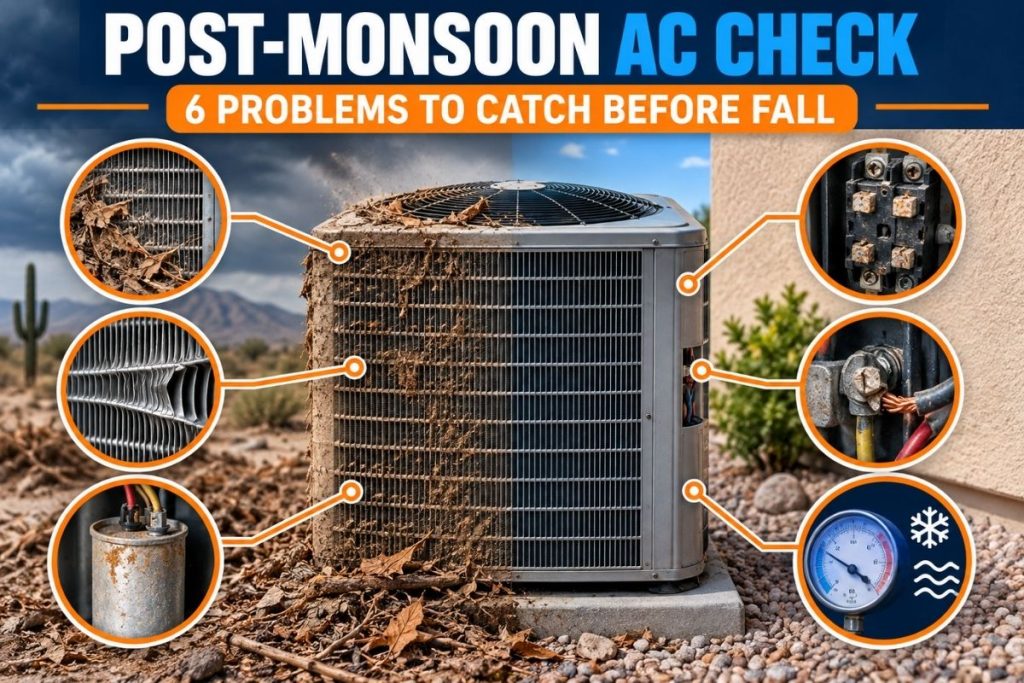
Condenser coil fouling in Phoenix is accelerated by dust storms, cottonwood seeds (April–May), and desert dust that packs tightly between fins. When the condenser coil is dirty, the system can’t release heat efficiently — head pressure climbs, discharge temperatures spike, and the compressor overheats. In Phoenix’s already extreme ambient temperatures, this is a fast path to compressor failure.
Evaporator coil fouling happens more slowly but degrades air quality and dehumidification. A dirty evaporator restricts airflow, can cause the coil to freeze, and creates a breeding environment for mold and bacteria — a real concern during monsoon season when humidity spikes.
How to Clean Condenser Coils (What a Pro Does)
| Step | Method | DIY Safe? |
|---|---|---|
| Rinse exterior debris | Manufacturer-approved cleaning method after safe isolation | Follow the equipment manual; ask a technician if access is unclear |
| Apply coil cleaner | Cleaner approved for the specific coil and equipment | Use a professional for chemical cleaning |
| Straighten bent fins | Assess fin condition and manufacturer guidance | Professional service recommended |
| Deep chemical clean | Commercial coil cleaner with flushing | Pro recommended |
| Evaporator coil clean | Requires air handler access, spray cleaner | Pro only |
What to Ask Before Booking Coil Cleaning
Tell the team whether you need outdoor condenser cleaning, indoor evaporator inspection, or help diagnosing poor cooling. Share the equipment location and model if available, and mention roof or attic access. Ask which coil is included, what cleaning method is appropriate, and whether performance checks are part of the visit.
A dirty coil is only one possible cause of warm air or long run times. If the system still struggles after maintenance, request a diagnosis instead of assuming another cleaning will solve it. Call (480) 478-2616 from 6 AM to midnight to check service availability.
Signs Your Coils Need Inspection
Your AC is running but can’t reach the set temperature. Electric bills are suddenly higher without a change in habits. The unit is blowing air that isn’t as cold as it used to be. The condenser fan is running but the discharge air (from the top of the outdoor unit) doesn’t feel hot — it should feel very warm. Visible matted debris on the condenser fin surface. Any of these in a Phoenix summer is a call to action.
Dirty coils can reduce cooling performance and increase run time. The ENERGY STAR maintenance checklist includes coil care in professional maintenance. Results depend on system condition; cleaning is not a guaranteed fix for every cooling problem. Explore our AC maintenance programs, or request AC diagnostics if the system is not cooling.
Frequently Asked Questions
Answered by Discount AC & Refrigeration — EPA Certified · ROC #361623 · Phoenix, AZ