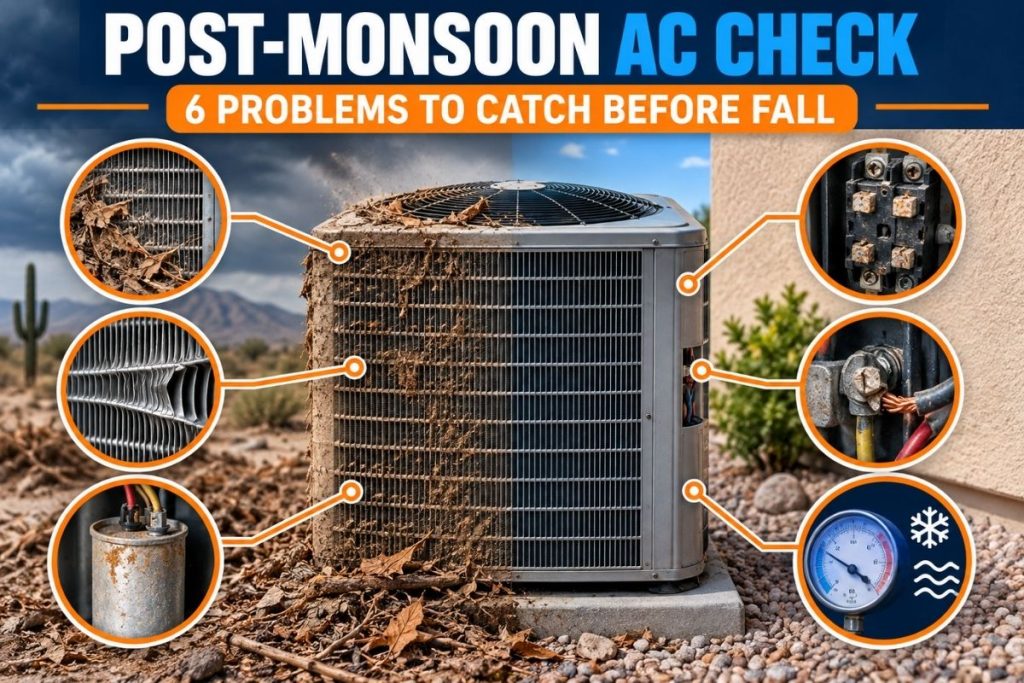
Phoenix AC systems do not enter October in the same condition they were in when monsoon season began. After roughly four months of extreme heat, airborne dust, wind-driven debris, humidity swings and storm-related electrical stress, an air conditioner may still cool while already carrying problems that will surface later. A timely AC maintenance Phoenix visit is not a generic tune-up—it is a post-season inspection based on what the system has just endured.
Why September 30 Matters for Phoenix AC Maintenance
Arizona’s official monsoon window runs from June 15 through September 30. During that period, outdoor equipment operates through repeated 110°F days while dust storms and haboobs push fine particles deep into condenser coils. Storms can also bring moisture, voltage irregularities and debris that ordinary spring maintenance could not predict. The weeks immediately after the season are the logical time to document the damage before the first heating cycle or the next cooling emergency.
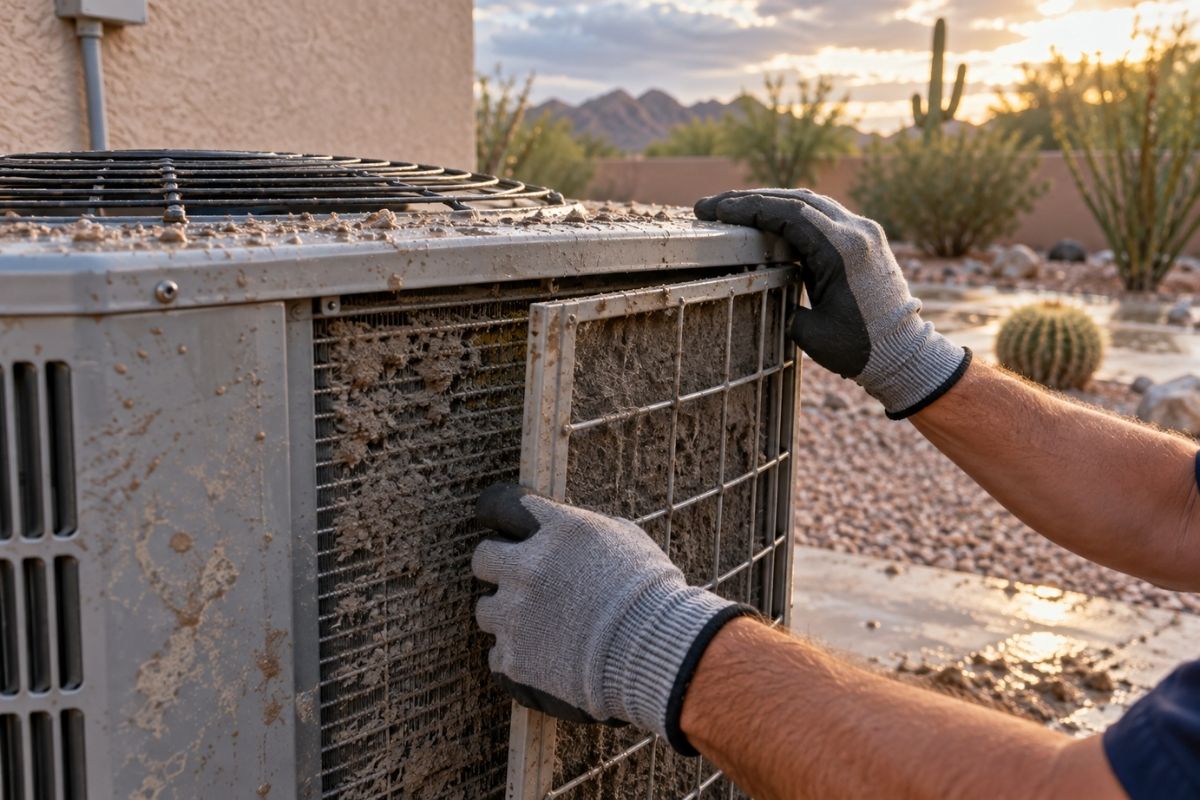
What Desert Dust Does to an Outdoor Condenser
The condenser releases indoor heat outdoors. Its aluminum fins need open airflow to do that job. Fine desert dust settles between those fins, then moisture turns it into a denser film. The fan may continue running, but the system must operate at higher pressure and for longer cycles to move the same amount of heat. That can increase energy use and strain the compressor, fan motor and electrical components. Learn how this fits into a broader HVAC maintenance program.
The 6 Problems Phoenix Technicians Commonly Find in October
| Post-monsoon finding | What it can cause | What you may notice |
|---|---|---|
| Dust-loaded condenser coil | Poor heat rejection and longer cycles | Higher bills or weaker cooling late in the day |
| Bent or blocked fins | Restricted outdoor airflow | Unit runs longer than usual |
| Weakened capacitor | Hard starting or motor failure | Delayed starts or intermittent operation |
| Pitted contactor | Unreliable power delivery | Chattering or inconsistent starts |
| Storm-loosened wiring or terminals | Heat buildup and intermittent faults | Unexpected shutdowns |
| Low refrigerant from an existing leak | Reduced capacity and possible icing | Long cycles, warm air or ice |
How to Spot Trouble Without Opening the System
- Compare current cooling cycles with what was normal before monsoon season.
- Listen from a safe distance for repeated clicking, buzzing, rattling or hard starts.
- Look for leaves, plastic or heavy dust against the outdoor coil without removing panels.
- Check whether supply air feels weaker at several vents.
- Review utility use against similar weather periods, not just the previous month.
- Watch for water where it normally should not appear or ice on visible refrigerant lines.
If the system is blowing warm air, review the common causes in AC Not Cooling in Phoenix. A burning odor, repeated breaker trip or visible electrical damage is a stop-use condition; turn the equipment off at the thermostat and request professional AC repair and diagnostics.
What a Licensed Technician Checks
A post-monsoon service should match the season’s risks. The technician evaluates condenser cleanliness and fin condition, verifies temperature split and airflow, inspects the drain system, measures motor and compressor performance, checks capacitor condition and contactor wear, confirms accessible electrical connections, and evaluates refrigerant performance when readings indicate a possible issue. Refrigerant is not consumed during normal operation; a low charge requires leak diagnosis rather than a blind top-off. See our guide to what an AC tune-up includes and AC tune-up versus full service.
Why Waiting Until November Can Cost More
October offers a useful diagnostic window: the AC has just completed its hardest season, but Phoenix may still have warm afternoons that allow the technician to evaluate cooling performance under a meaningful load. Waiting can allow a marginal capacitor, dirty coil or drainage problem to remain hidden. When the first cold morning arrives, a heat pump may also reveal heating-side faults that were not visible in cooling mode. If your home uses a heat pump, review our heat pump service options before seasonal changeover.
Post-Monsoon AC Check FAQs
Should I schedule AC maintenance after every Phoenix monsoon?
An annual professional inspection is a practical baseline. A post-monsoon check is especially useful after heavy dust exposure, storm debris, unusual cycling or a season of near-continuous operation.
Can I wash the condenser myself?
Homeowners can keep loose vegetation away from the unit, but aggressive washing can bend fins or push debris deeper. Internal cleaning and electrical inspection should be handled by a trained technician.
Does a dirty condenser cause low refrigerant?
No. Dirt restricts heat transfer; low refrigerant indicates a leak or service issue. The symptoms can overlap, so measurements are needed before deciding on a repair.
Why does my AC still cool if the condenser is dirty?
A partially restricted system can continue cooling while running longer and at higher operating pressure. Performance often deteriorates gradually.
What should make me shut the AC off?
Turn it off at the thermostat if you smell burning, see smoke or damaged wiring, hear severe mechanical noise, or experience repeated breaker trips.
Is October too late for Phoenix AC maintenance?
No. It is a useful time to assess summer and monsoon wear while warm daytime conditions may still support meaningful cooling tests.
Schedule a Post-Monsoon AC Check
Discount AC & Refrigeration serves Phoenix-area homes with licensed HVAC maintenance and diagnostics. Call (480) 478-2616 to discuss the symptoms you are seeing and schedule service.