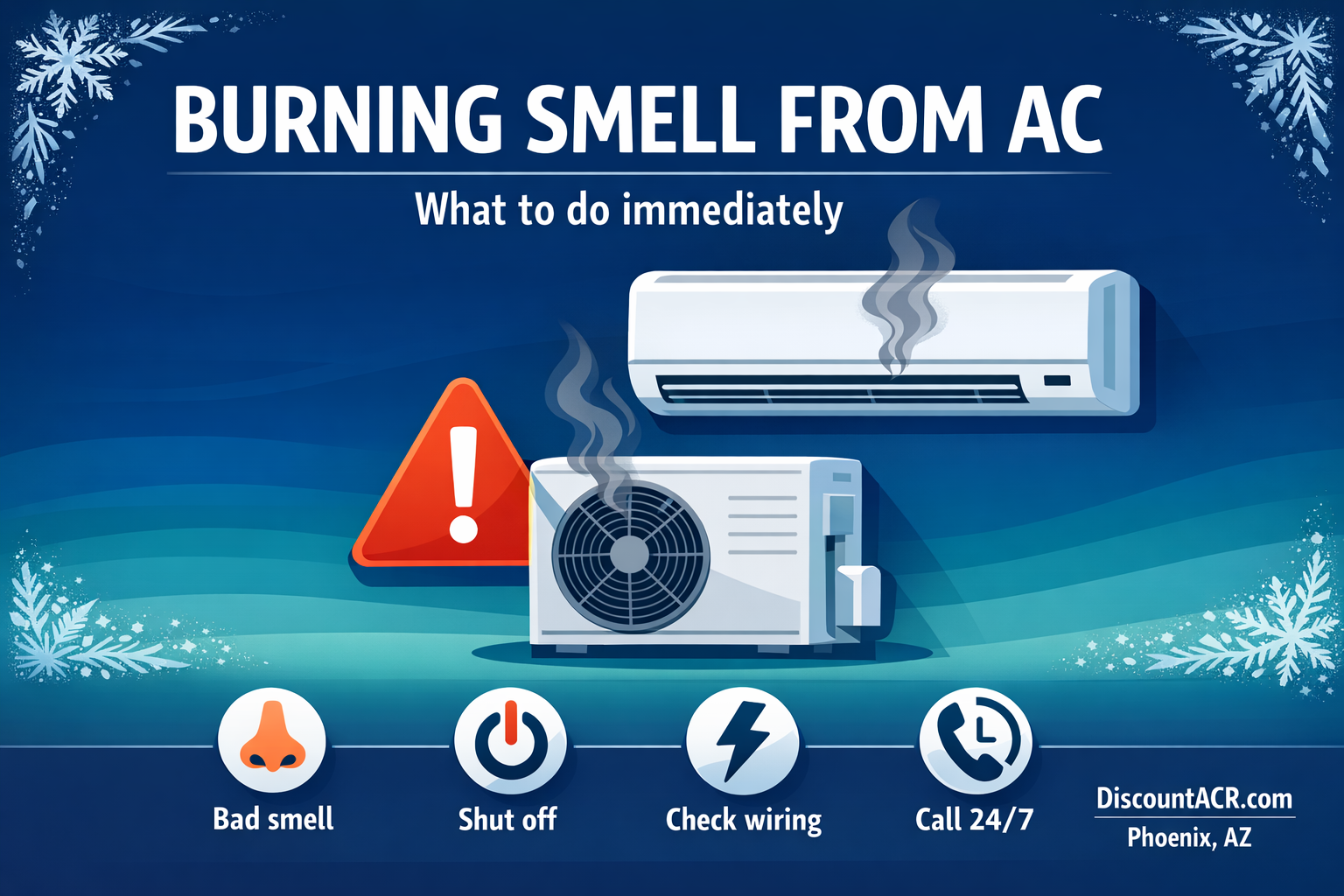
If your AC smells like burning plastic, hot wiring or electrical smoke, stop using it. Turn the system off at the thermostat if you can do so safely and arrange professional inspection before restarting it. A smell alone cannot identify the failed component.
Burning Electrical Smell From the Air Handler: Should I Cut the Power?
Stop the system. If there is no smoke, fire or suspected gas leak and the correctly labeled HVAC breaker is safely accessible, switching that breaker off can disconnect the circuit. Do not approach a hot, damaged, sparking or buzzing electrical panel. If you are unsure which circuit serves the equipment or cannot reach it safely, keep away and get professional help.
Turning the thermostat off is not the same as making internal components safe to touch. Do not remove access panels, handle wiring, test capacitors or repeatedly reset a tripped breaker. Keep the equipment off until a qualified professional has identified the cause and advised that it can be used.
What Different AC Odors Can Mean
| What you notice | Why it matters | What to do |
|---|---|---|
| Burning plastic, rubber or electrical odor | May involve overheating components or wiring; the odor is not a diagnosis. | Stop using the AC and arrange prompt inspection. |
| Burning odor with no airflow, a hum or repeated shutdowns | Needs evaluation of the indoor equipment and controls. | Leave the system off. Report both the sound and the loss of airflow. |
| Smoke, flames or signs of fire | Emergency requiring evacuation. | Get outside and call 911. Do not wait for an HVAC appointment. |
| Dusty odor at the first furnace heating cycle of the season | Dust can produce a temporary odor on heated furnace components. | Do not apply this explanation to a burning smell during AC cooling. Persistent, strong or uncertain odors need inspection. |
Burnt Dust on Startup: Heating Is Different From Cooling
A temporary dusty odor can occur when a furnace first heats up after months of inactivity. That explanation concerns heating components. It should not be used to dismiss a burning smell from an air conditioner running in cooling mode.
Do not run a cooling system for another 20 or 30 minutes just to see whether an electrical smell clears. If the smell resembles melting plastic, becomes stronger or you cannot confidently identify it, stop using the equipment and request an inspection.
Possible Causes a Technician Will Check
Electrical or mechanical faults can produce similar symptoms. The indoor blower, electrical connections and controls may need examination, especially when the odor comes with weak airflow or unusual noise. A tripped breaker also needs its cause investigated; resetting it is not a repair.
Tell the technician whether the smell comes from a vent, indoor cabinet or outdoor unit. If you also hear a hum, our AC humming noise guide explains what details to report. Avoid assuming the capacitor is responsible simply because another system had that problem.
What to Do While Waiting for Service
- Keep the affected system off and avoid opening the equipment.
- Write down when the odor began and whether the thermostat was set to cool, heat or fan.
- Report any smoke, unusual sound, airflow loss, thermostat message or breaker trip.
- Share the model number only if already available or safely visible; do not enter a hazardous attic or roof area to find it.
- If the cooling outage makes the building unsafe to occupy, move to a cooler location.
AC Inspection and Repair in Phoenix
After any immediate fire or gas emergency is addressed, Discount AC & Refrigeration can help arrange AC repair in Phoenix. Call (480) 478-2616, 6 AM–midnight, seven days a week, and describe the odor and symptoms. Appointment timing depends on availability.
Repair pricing depends on the diagnosis, affected parts, equipment access and warranty. Request a written explanation of the fault and the proposed repair before approving work. A burning smell alone does not establish whether a component repair or system replacement is needed.
Frequently Asked Questions
Can I keep using the AC if the burning smell is faint?
Do not keep running a cooling system with an unexplained burning or electrical smell. Stop using it and have the cause evaluated.
Is a burning smell always an electrical fire?
No, but you cannot rule out a serious fault by smell alone. Smoke, flames or suspected fire require evacuation and emergency help; an unexplained electrical odor requires the system to stay off pending inspection.
Will changing the filter fix it?
A filter change does not establish that equipment with a burning smell is safe. Report the odor and have the fault assessed before restarting the system.
Should I call an HVAC company or 911?
For smoke, flames or a suspected fire, get outside and call 911. For an electrical odor without an active emergency, keep the system off and arrange professional inspection. If you are unsure whether there is a fire, prioritize emergency help.
References: Carrier AC odor guidance, Carrier furnace odor guidance and U.S. Fire Administration escape planning. This guide is general information, not a remote safety clearance or electrical repair procedure.