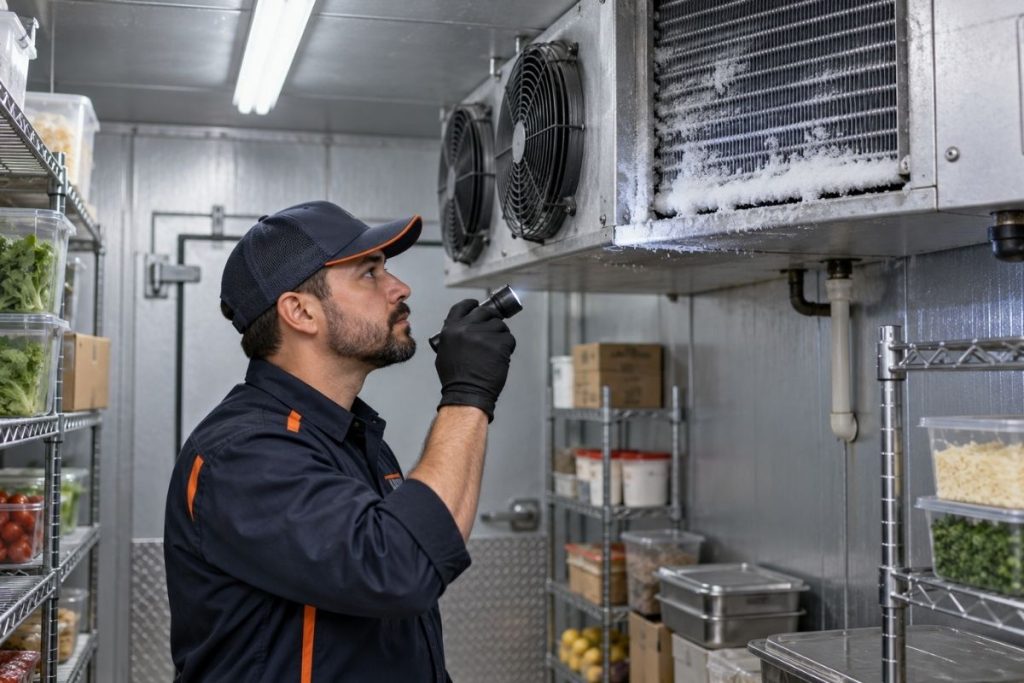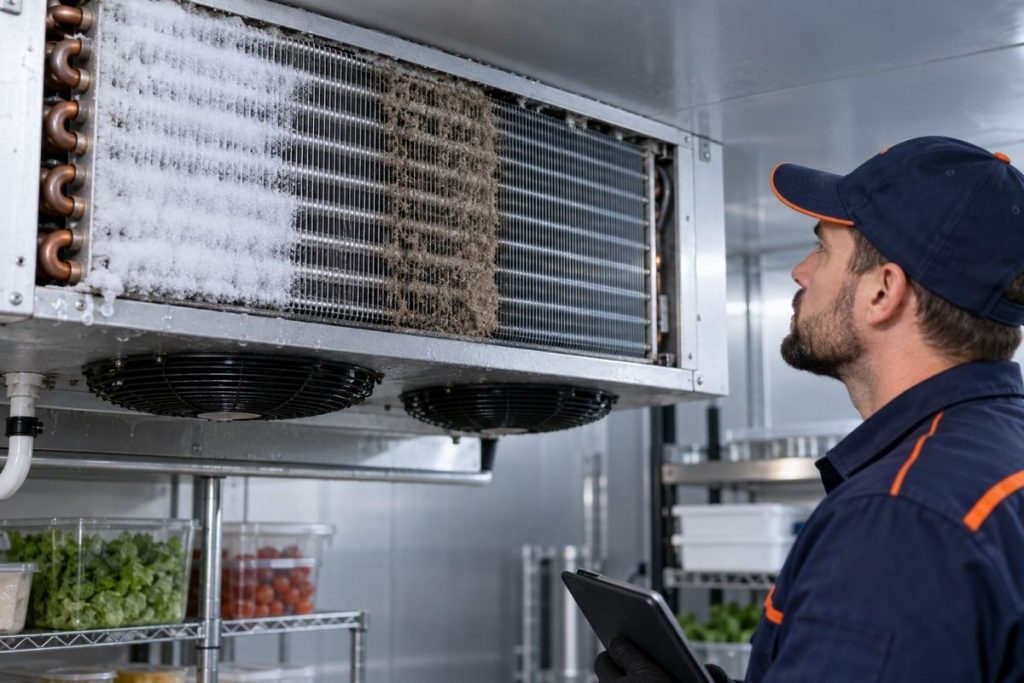
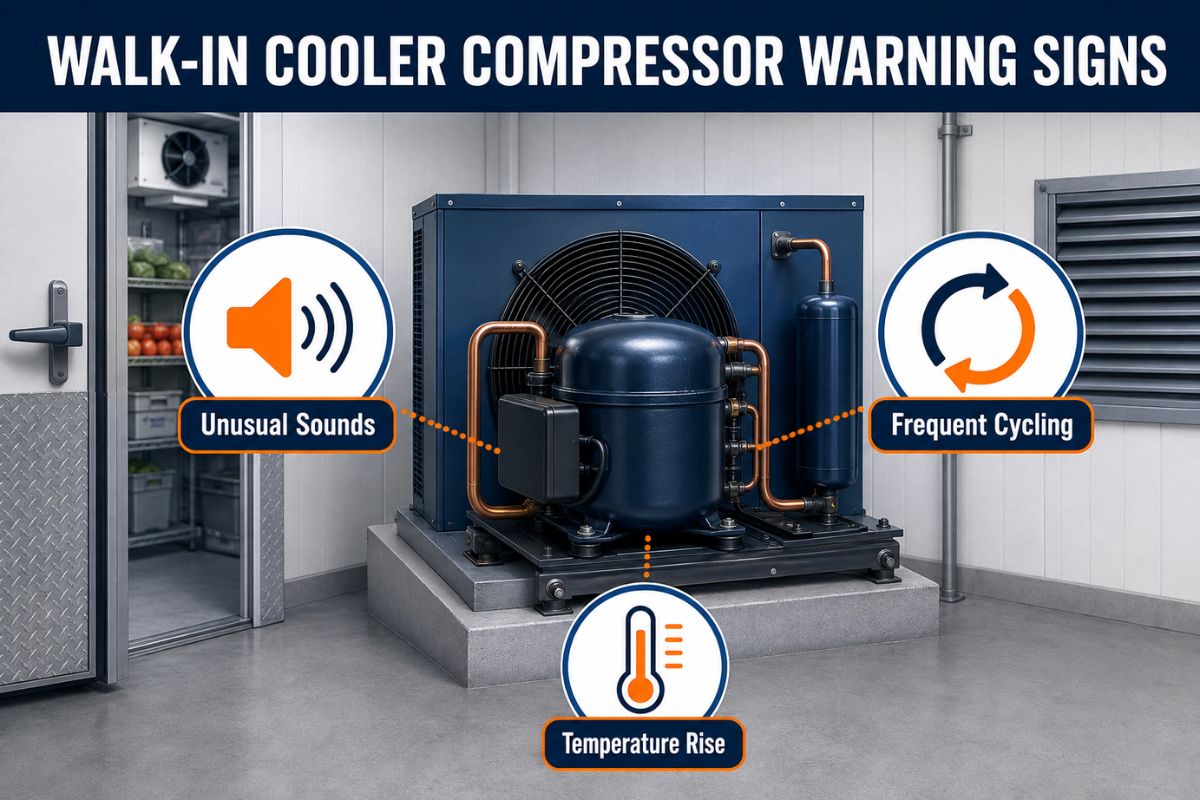
A walk in cooler compressor can make unusual sounds, cycle repeatedly, or appear to run without keeping the cooler cold. These symptoms deserve attention, but they do not automatically prove that the compressor itself has failed. Airflow restrictions, dirty condenser coils, faulty controls, refrigerant circuit problems, fan failures, and changing operating conditions can produce similar warning signs.
For restaurants, grocery stores, commercial kitchens, and other Phoenix-area businesses, identifying the real cause matters. Replacing a compressor without evaluating the rest of the refrigeration system may leave the original problem unresolved. This guide explains what operators can safely observe, what different symptoms may indicate, and when professional commercial refrigeration service should be requested.
What Does a Walk-In Cooler Compressor Do?
| Observed symptom | Possible compressor-related concern | Other causes to investigate |
|---|---|---|
| Loud knocking or rattling | Internal mechanical wear or mounting movement | Loose panels, tubing vibration, fan motor, or mounting hardware |
| Humming followed by shutdown | Compressor unable to start or operating protection opening | Voltage, controls, starting components, excessive pressure, or wiring problems |
| Frequent starting and stopping | Overheating or internal overload response | Sensor placement, controller settings, dirty coils, fan failure, or refrigerant issue |
| Runs but temperature rises | Reduced pumping capacity | Door traffic, airflow restriction, iced evaporator, low refrigerant, or condenser problem |
| Compressor does not appear to run | Internal failure or open protection | Controller, sensor, contactor, safety control, or facility power issue |
The compressor circulates refrigerant through the system. It receives low-pressure refrigerant vapor from the evaporator, compresses it, and sends higher-pressure vapor toward the condenser. This process allows heat collected inside the cooler to be rejected outside the refrigerated space.
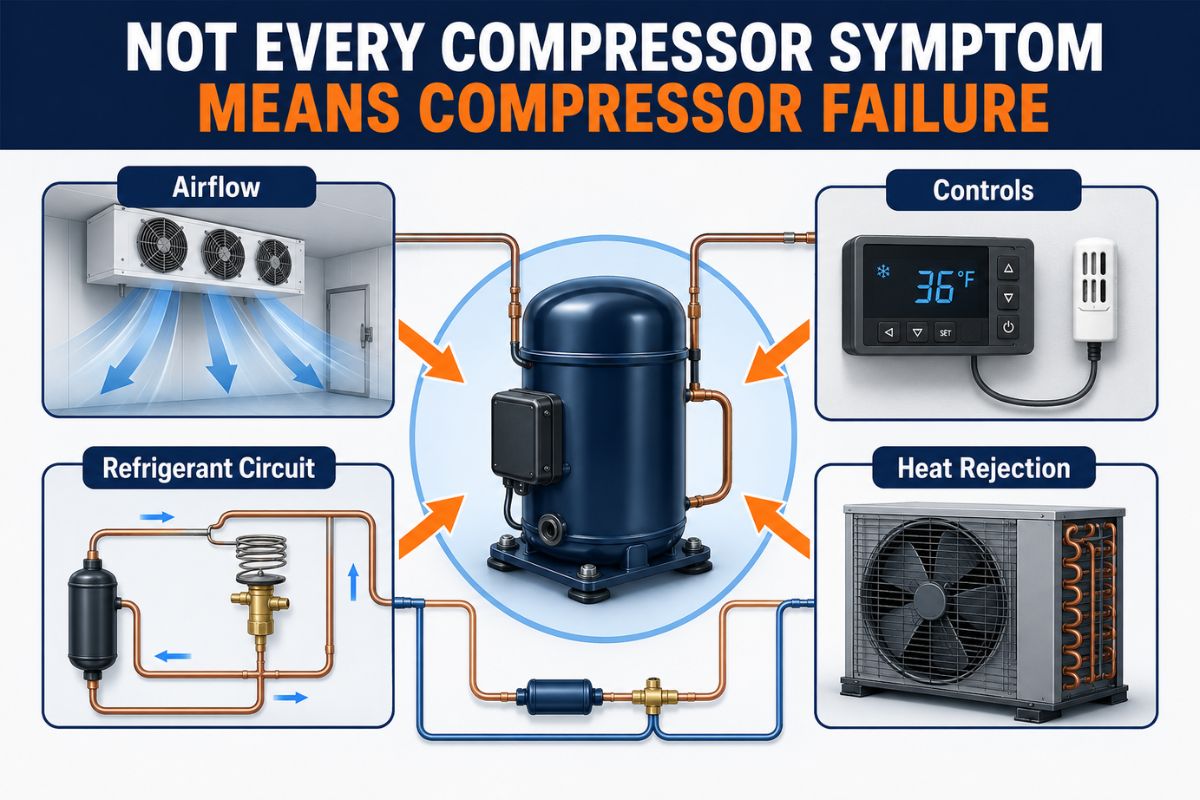
Because the compressor sits at the center of the refrigeration circuit, problems elsewhere often become noticeable through its operation. A dirty condenser, blocked evaporator, failed fan, incorrect control signal, or refrigerant restriction may cause the compressor to run longer, start more frequently, operate at abnormal temperatures, or stop on a safety control.
This is why a complete diagnosis should precede any decision about commercial compressor replacement.
Walk-In Cooler Compressor Sounds That Need Attention
Compressors and condensing units normally produce a steady mechanical hum, airflow from the condenser fan, and brief changes in sound during startup and shutdown. Operators who work around the equipment regularly often recognize its normal sound pattern. A new, louder, or irregular sound is more meaningful than noise alone.
Rattling or metallic vibration
Rattling may come from compressor mounting hardware, nearby tubing, a loose access panel, or a condenser fan assembly. Internal compressor wear is also possible, but the sound must be isolated before drawing that conclusion. A technician can determine whether the vibration originates inside the compressor or is being transmitted through another component.
Clicking followed by repeated startup attempts
A single click during normal operation may come from a relay, contactor, or control. Repeated clicking combined with unsuccessful startup attempts can indicate that a control or protection device is opening and closing. Starting components, electrical supply conditions, excessive system pressure, or compressor problems can all create this pattern.
Business operators should not remove electrical panels, touch terminals, bypass controls, or attempt to force the compressor to start. These checks require proper instruments and electrical safety procedures.
Hissing, bubbling, or refrigerant-flow sounds
Some refrigerant movement is normal, especially as pressures equalize after shutdown. A new or persistent hissing sound accompanied by reduced cooling, oil residue, or ice in an unusual location may require professional refrigerant leak detection.
A refrigerant leak is not the same as a failed compressor. However, operating under abnormal refrigerant conditions can place additional stress on the compressor and reduce system capacity.
Sizzling, sputtering, or popping
These are stop-use warning signs, particularly when they appear near compressor terminals or electrical components. Keep people away from the equipment, do not cycle power repeatedly, and request qualified service. Operators should never remove the terminal cover or investigate energized electrical components.
Why Is the Compressor Cycling On and Off?
Every walk-in cooler cycles as its controller responds to temperature and system conditions. The concern is not simply that the compressor stops and starts; it is a noticeable change in the established operating pattern.
Short cycles may involve brief run times, repeated restart attempts, or frequent shutdowns before the cooler reaches its normal temperature range. Possible causes include:
- Incorrect controller differential or control settings
- A temperature sensor affected by drafts, doors, products, or evaporator discharge air
- Dirty condenser surfaces that cannot reject heat effectively
- A condenser or evaporator fan that is not operating correctly
- Restricted airflow around the condensing unit
- Low- or high-pressure safety controls responding to abnormal conditions
- Refrigerant charge, restriction, or metering-device problems
- Compressor overheating or internal protection opening
- Changes in product load, door traffic, or ambient temperature
In the Phoenix and Queen Creek area, high outdoor temperatures and dust accumulation can make heat rejection especially important. A compromised condenser may cause symptoms that appear to point toward the compressor. Professional walk-in cooler condenser coil cleaning and airflow evaluation can help establish whether the condensing section is operating under appropriate conditions.
When the Compressor Runs but the Cooler Gets Warmer
A running compressor does not guarantee that the system is delivering its expected refrigeration capacity. At the same time, a temperature increase does not prove that the compressor has lost pumping ability.
Before condemning the compressor, a refrigeration technician may evaluate:
- Actual product and air temperatures using appropriate instruments
- Controller readings compared with independent temperature measurements
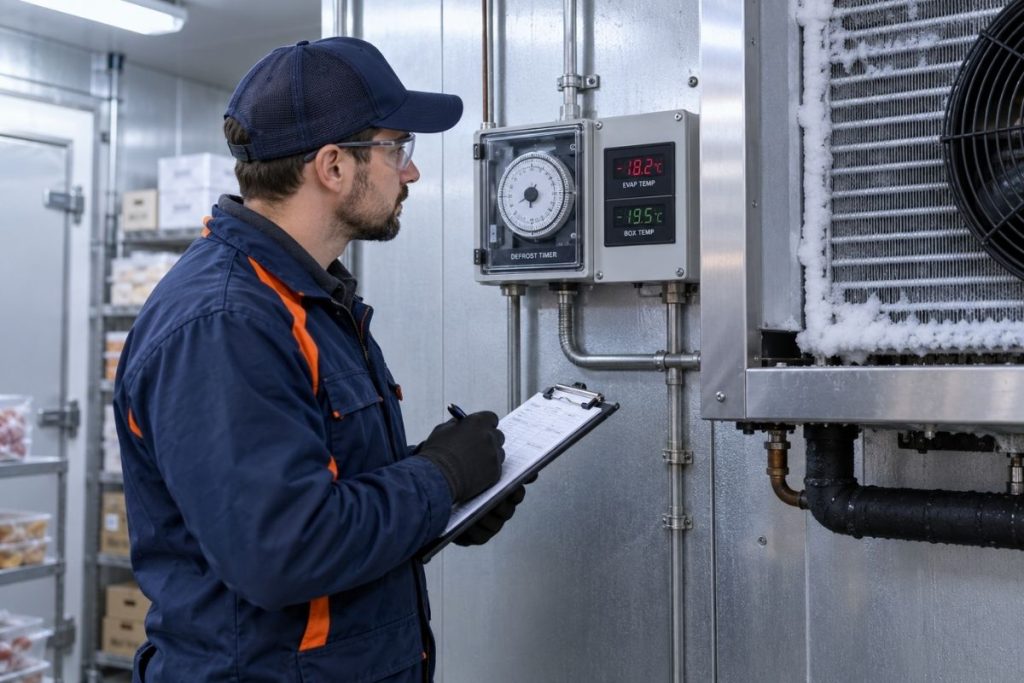
- Evaporator airflow and ice accumulation
- Condenser cleanliness, fan operation, and surrounding ventilation
- Door gaskets, closers, hinges, and frequency of door openings
- Refrigerant pressures and temperatures under stabilized conditions
- Safety controls and operating sequence
- Compressor current, temperature, and capacity indicators
Temperature behavior should also be reviewed over time. A brief rise after a delivery is different from a sustained upward trend while the equipment runs continuously. The guide to a fluctuating walk-in cooler temperature explains how door activity, loading, sensors, defrost, and mechanical issues can produce different patterns.
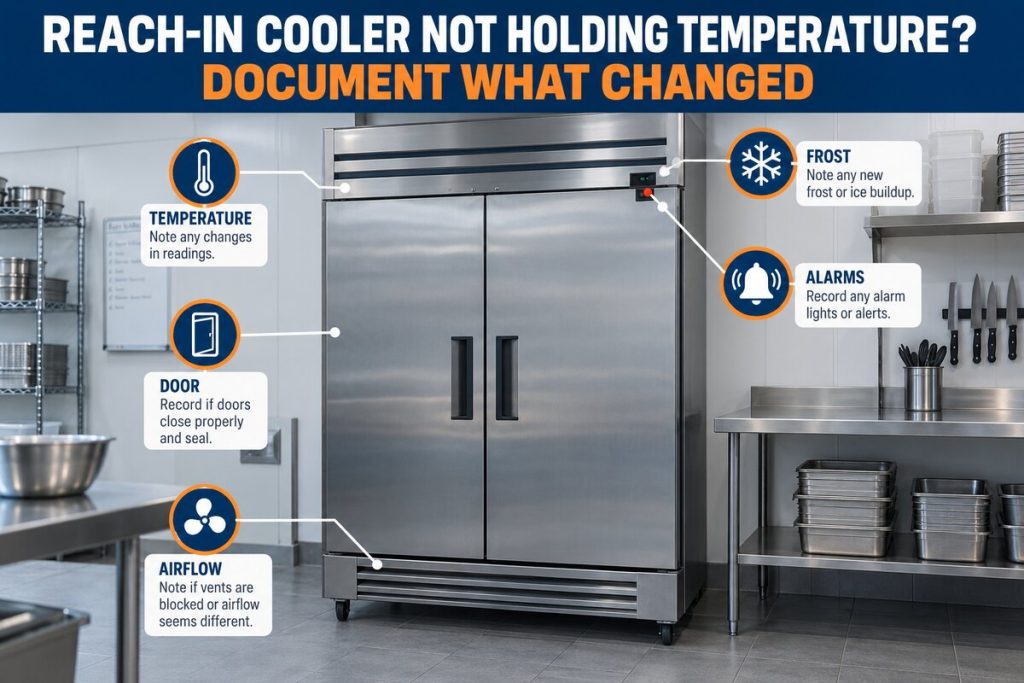
Warning Signs Operators Can Document Safely
Useful observations can shorten the diagnostic process without requiring access to electrical or refrigerant components. Record what the system is doing rather than trying to determine which part has failed.
- The controller temperature and an independent temperature reading
- The time the unusual behavior began
- Whether the temperature is stable, slowly rising, or changing rapidly
- Whether the compressor appears to run continuously or starts repeatedly
- The type and location of any unusual sound
- Visible ice, water, oil residue, or blocked airflow
- Recent deliveries, heavy door traffic, cleaning, maintenance, or power interruptions
- Any alarm or controller code displayed
Do not open sealed-system connections, add refrigerant, test energized terminals, reset safety devices repeatedly, or bypass the temperature controller. These actions create safety risks and may obscure the conditions a technician needs to diagnose.
When Should a Walk-In Cooler Be Shut Down or Escalated?
Move to an urgent response when the condition presents an electrical hazard, threatens inventory, or suggests rapid loss of refrigeration. Warning signs include:
- Sizzling, sputtering, popping, smoke, or a burning odor
- Visible damage near compressor terminals or electrical wiring
- Repeated breaker trips or protective shutdowns
- A compressor that becomes unusually loud and unstable
- A rapidly rising temperature with no evidence of recovery
- Thawing products or product temperatures outside the facility’s approved food-safety limits
- Oil residue or suspected refrigerant leakage
Keep personnel away from visibly damaged equipment and follow the business’s food-safety and inventory procedures. If cooling loss threatens stored products or operations, contact the company’s emergency refrigeration service.
How Technicians Separate Compressor Failure From Other Causes
A responsible diagnosis evaluates the system as a connected circuit. The goal is to determine whether the compressor is the source of the problem, reacting to another fault, or operating normally while another component limits refrigeration.
1. Confirm the complaint
The technician compares controller readings, measured temperatures, operating patterns, and information from staff. This helps distinguish a temporary load-related temperature change from a mechanical problem.
2. Inspect airflow and heat rejection
The condenser and evaporator must move air and exchange heat effectively. Dirty coils, blocked airflow, failing fan motors, and ice accumulation can change system pressures and compressor behavior.
3. Evaluate controls and safety devices
Controllers, sensors, contactors, pressure controls, and overload protection determine when the compressor operates. A shutdown at the compressor may be the result of a safety device responding correctly to another condition.
4. Assess the refrigerant circuit
Qualified technicians use pressure and temperature measurements to evaluate refrigerant flow, evaporator performance, heat rejection, restrictions, and charge conditions. These readings should be interpreted together rather than using a single measurement to justify replacement.
5. Test compressor operation and capacity
Only after checking the surrounding system can the technician assess whether the compressor starts properly, remains within operating limits, and provides sufficient pumping capacity. This diagnostic sequence helps determine whether repair, correction of another system problem, or compressor replacement is appropriate.
Businesses experiencing broader cooling problems can also review the company’s guide to walk-in cooler repair in Phoenix and its professional walk-in cooler and freezer services.
Repairing Another Cause vs. Replacing the Compressor
Replacement should be based on verified compressor condition—not on noise, cycling, or temperature complaints alone. A system may only need a control correction, fan repair, airflow restoration, coil service, or another targeted refrigeration repair.
When the compressor is confirmed as damaged or unable to provide the required capacity, the recommendation should consider:
- The compressor’s electrical and mechanical condition
- The cause of the failure or abnormal operating condition
- The age and condition of the complete refrigeration system
- Refrigerant and component compatibility
- Contamination or damage elsewhere in the sealed system
- Current and expected refrigeration load
- Whether correcting the root cause can protect the replacement component
Finding the cause is essential. Installing a replacement without correcting inadequate heat rejection, refrigerant problems, contamination, or control faults can expose the new compressor to the same damaging conditions.
Get a Professional Walk-In Cooler Diagnosis
If your compressor is making unusual sounds, cycling repeatedly, or running while the cooler temperature rises, Discount AC & Refrigeration of Phoenix can evaluate the complete system before recommending repair or replacement.
Call (602) 889-1367Frequently Asked Questions About Walk-In Cooler Compressors
Schedule Walk-In Cooler Compressor Service in Phoenix
Sounds, cycling patterns, and temperature changes provide useful clues, but they are not standalone proof of compressor failure. The safest and most cost-effective approach is to evaluate the compressor together with the controls, airflow, condenser, evaporator, and refrigerant circuit.
Discount AC & Refrigeration of Phoenix provides commercial refrigeration diagnostics for businesses in Phoenix, Queen Creek, Mesa, Chandler, Gilbert, Scottsdale, and nearby Arizona communities. Visit the commercial refrigeration blog for additional equipment guidance or contact the refrigeration team to request an assessment.
Safety note: This article provides general operational information. Compressor terminals, electrical controls, pressurized refrigerant circuits, and sealed-system repairs should only be inspected or serviced by qualified refrigeration professionals.