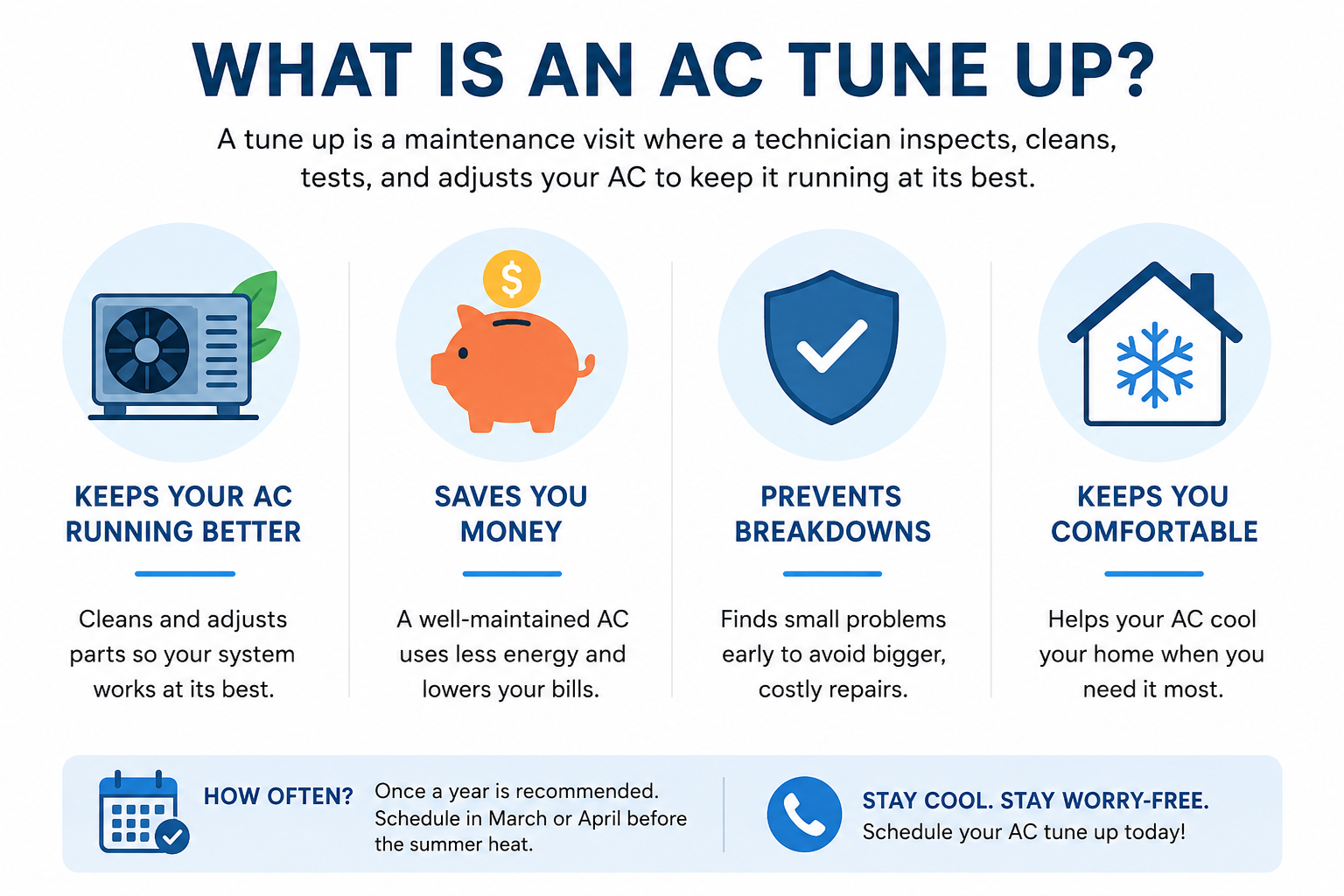
Phoenix summers push air conditioning systems harder than almost anywhere else in the country. Temperatures regularly climb past 110 degrees, and a system that runs 12 or more hours a day accumulates wear quickly. An AC tune up is a scheduled maintenance visit in which a licensed technician inspects, cleans, tests, and adjusts your system to keep it operating at its rated performance levels. Scheduling one before peak cooling season can mean the difference between a summer with consistent indoor comfort and one interrupted by an unexpected breakdown.
If you have been wondering what actually happens during a tune up, this guide walks through the process step by step so you know exactly what to expect when a technician from Discount AC & Refrigeration arrives at your door.
Why Phoenix Homeowners Schedule Tune Ups Annually
In a moderate climate, an AC system might run four to five months a year. In Phoenix, it runs for seven to nine months. That extended operating schedule accelerates wear on electrical components, refrigerant connections, and mechanical parts. Dust, pollen, and desert particulates also accumulate in coils and filters at a faster rate than in humid regions.
Annual tune ups catch small issues, such as a slightly low refrigerant charge or a capacitor showing early signs of failure, before those issues grow into full system failures on a 115-degree afternoon. They also keep your system running at the efficiency level the manufacturer designed it to achieve, which directly affects your monthly electricity bill.
What a Standard AC Tune Up Includes
A thorough tune up covers both the indoor air handler and the outdoor condenser unit. The following tasks represent the standard scope of work a qualified technician will complete. AC Tune Up Tasks and Their Purpose
| Tune-Up Task | Component Checked | Why It Matters in Phoenix |
|---|---|---|
| Coil Cleaning | Evaporator and condenser coils | Desert dust blocks heat transfer, forcing the compressor to work harder. |
| Refrigerant Level Check | Refrigerant charge | Low charge reduces cooling output and can freeze the evaporator coil. |
| Electrical Component Testing | Capacitors, contactors, disconnect boxes | Heat accelerates capacitor degradation, making failure more likely in summer. |
| Thermostat Calibration | Thermostat accuracy and communication | A 2- to 3-degree reading error causes incorrect cycling and wasted energy. |
| Air Filter Inspection | Filter condition and airflow | Clogged filters restrict airflow and strain the blower motor. |
| Drain Line Flush | Condensate drain line | Blocked drains cause water backup and potential indoor water damage. |
Inspection and Cleaning of the Evaporator and Condenser Coils
Dirty coils reduce heat transfer and force the compressor to work harder. A technician cleans both coil sets to restore their rated heat exchange capacity. In Phoenix, condenser coils accumulate dust and debris rapidly because of frequent wind events and dry soil conditions.
Refrigerant Level Check
A technician measures the refrigerant charge using digital manifold gauges and compares the reading against the manufacturer’s specification for your unit. Low refrigerant reduces cooling output and can cause the evaporator coil to freeze. If the charge is off, the technician will inspect for a leak before adding refrigerant, since topping off a leaking system produces only a short-term result.
Electrical Component Testing
Capacitors, contactors, and disconnect boxes receive a visual inspection and electrical testing. Capacitors are among the most frequently replaced components in Phoenix systems because heat accelerates their degradation. A technician measures microfarad ratings to identify capacitors that are weakening before they fail completely.
Thermostat Calibration and Operation Check
A technician verifies that the thermostat reads temperature accurately and communicates correctly with the air handler and condenser. A thermostat reading two or three degrees off will cause the system to cycle incorrectly, wasting energy and reducing comfort.
Air Filter Inspection and Replacement
A clogged filter restricts airflow across the evaporator coil, reducing cooling capacity and increasing strain on the blower motor. During a tune up, the technician checks filter condition and replaces it if needed.
Blower Motor and Belt Inspection
The technician checks blower motor amperage draw, inspects the fan belt on belt-driven units, and lubricates moving parts where the manufacturer recommends it. A blower motor drawing too many amps often indicates a failing bearing or a dirty wheel.
Drain Line Flush
The condensate drain line removes moisture pulled from your indoor air. Algae and debris can clog the line, causing water to back up into the drain pan and potentially overflow into your ceiling or walls. A technician flushes the line to keep drainage clear.
How Often Should You Schedule a Tune-Up in Phoenix?
For most residential systems in the Phoenix area, one tune up per year is the standard recommendation. Scheduling in March or early April puts the work ahead of the summer cooling season, when service demand is highest and technician availability is tightest. Homes with two systems, or systems that are more than ten years old, sometimes benefit from a second inspection in the fall before winter heating use begins.
What a Tune Up Does for Your Energy Bill
A well-maintained AC system operates closer to its rated SEER efficiency level. As components accumulate dirt and wear, actual efficiency drops below that rating. Studies from the Department of Energy indicate that a neglected system can lose 5 to 25 percent of its original efficiency over time. In Phoenix, where a central AC system may account for 50 percent or more of a summer electricity bill, restoring even a portion of that lost efficiency produces a measurable reduction in monthly costs.
Schedule Your AC Tune Up with Discount AC & Refrigeration
Discount AC & Refrigeration serves homeowners and businesses throughout Phoenix with licensed HVAC maintenance and repair. Our technicians carry the tools and training to complete a full system tune up in a single visit, and we back every job with the standards that have earned us a 5-star rating from our customers.
Frequently Asked Questions
How long does an AC tune-up typically take?
Most tune-ups take between one and two hours, depending on the size of your system and how much cleaning the coils require. If the technician identifies a failing component, such as a weakening capacitor, replacing it on the spot adds a small amount of time but avoids a separate service call later.
How much does an AC tune-up cost in Phoenix?
Tune-up pricing in Phoenix generally ranges from $75 to $150 for a single-system visit, though rates vary by company and the scope of work included. Discount AC & Refrigeration can provide a specific quote when you call to schedule, so you know the cost before the technician arrives.
Will a tune-up fix my AC if it is already not cooling properly?
A tune-up addresses maintenance tasks and catches developing issues, but a system that has already stopped cooling adequately may need a diagnostic service call instead. During the tune-up, the technician will identify any faults found and explain what repairs are needed to restore full cooling output.
Does an AC tune-up cover the ductwork in my home?
A standard tune-up focuses on the air handler and outdoor condenser unit rather than the duct system. If you have concerns about duct leaks or airflow inconsistencies between rooms, ask the technician to assess the ductwork as a separate service during the visit.
What is the best time of year to schedule a tune-up in Phoenix?
Scheduling in February or March, before temperatures rise above 100 degrees, gives the technician a chance to catch and resolve any issues while your system is still running in mild conditions. Booking early also makes it easier to get a convenient appointment, since demand for HVAC services rises sharply in April and May.
Call us at (480) 478-2616 or visit discountacr.com to schedule your AC tune-up before the heat arrives. Getting on the calendar now means your system is ready when Phoenix temperatures climb.