Reviewed by a Licensed HVAC Technician
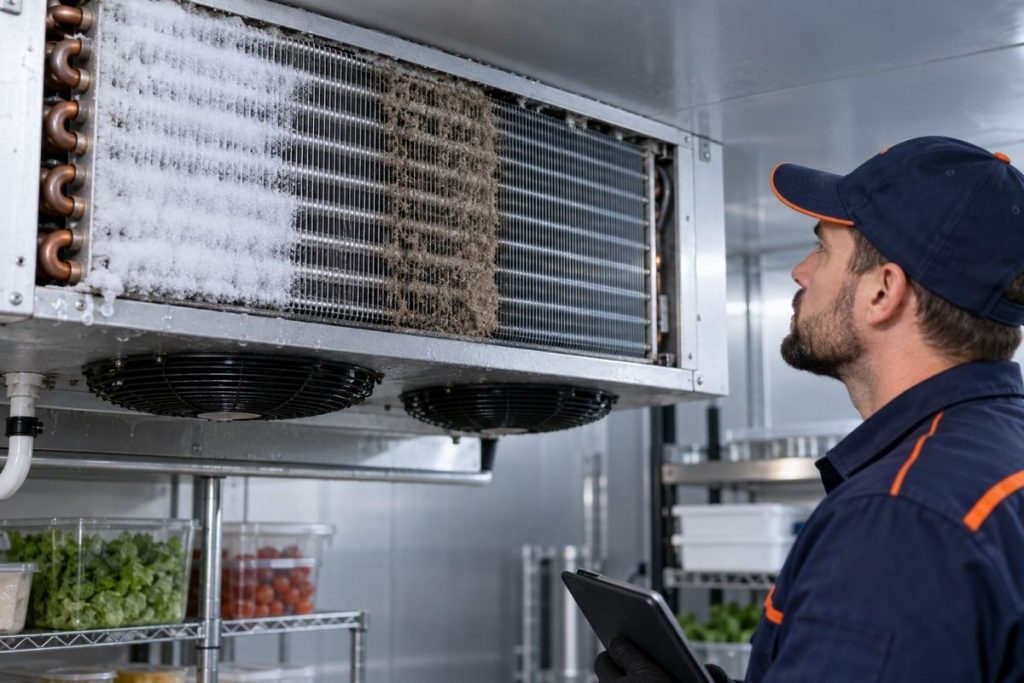
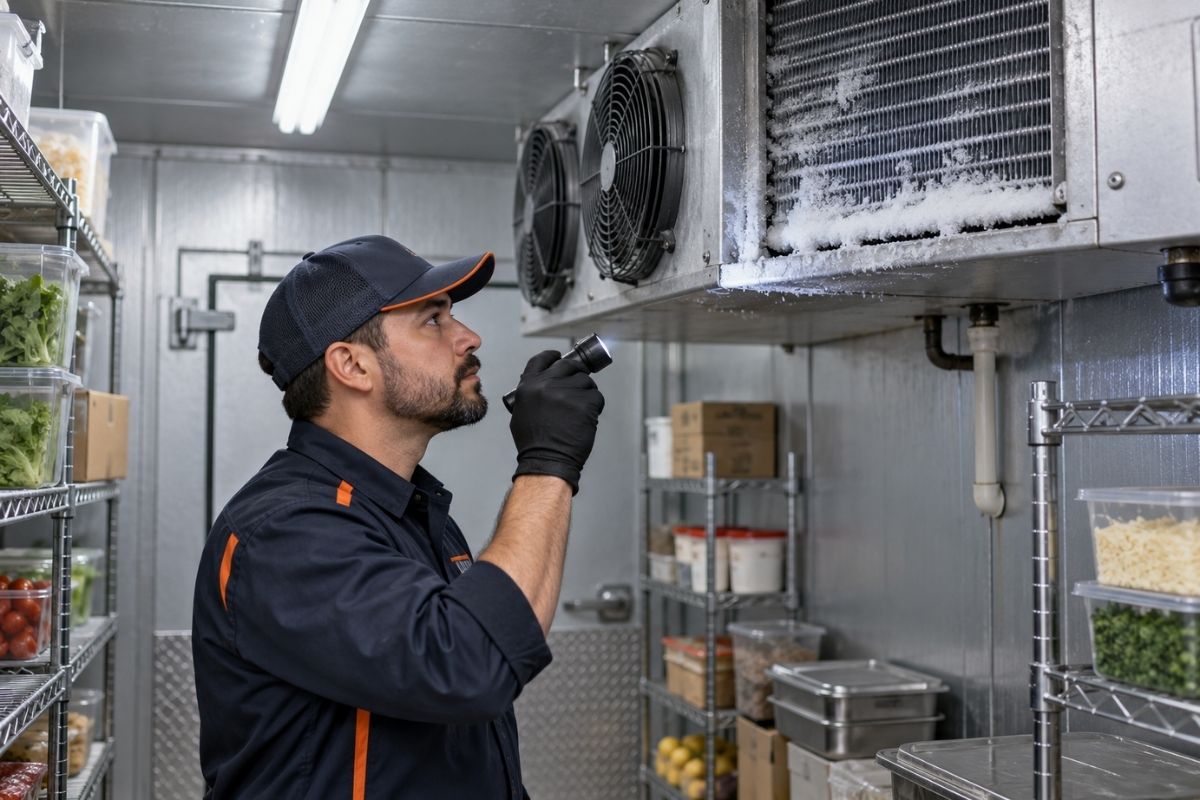
Ice inside a walk-in cooler is not simply a sign that the system is “cooling too much.” It usually means heat, moisture, airflow, or refrigeration control is no longer balanced. The location and shape of the ice can help a technician narrow the cause, but several faults can create similar symptoms.
If product temperatures are moving outside your approved food-safety range, follow your facility’s inventory protocol and arrange professional service. For normal operating guidance, see what temperature a walk-in cooler should be.
Why Is My Walk-In Cooler Freezing Up?
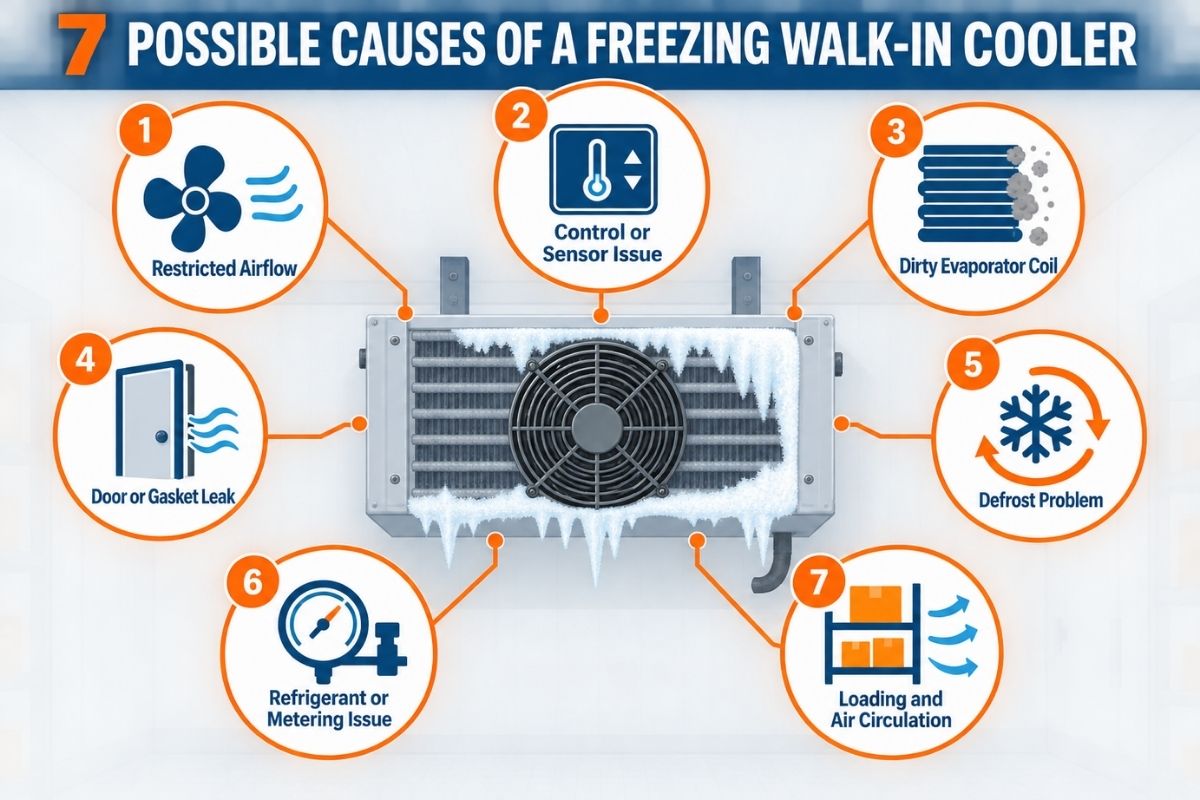
The seven common possibilities are restricted airflow, control or sensor problems, a dirty evaporator coil, door infiltration, a defrost fault, a refrigerant or metering issue, and improper loading. A complete diagnosis must consider the whole system rather than assuming that visible ice identifies one failed part.
| What you notice | Possible area | Safe response |
|---|---|---|
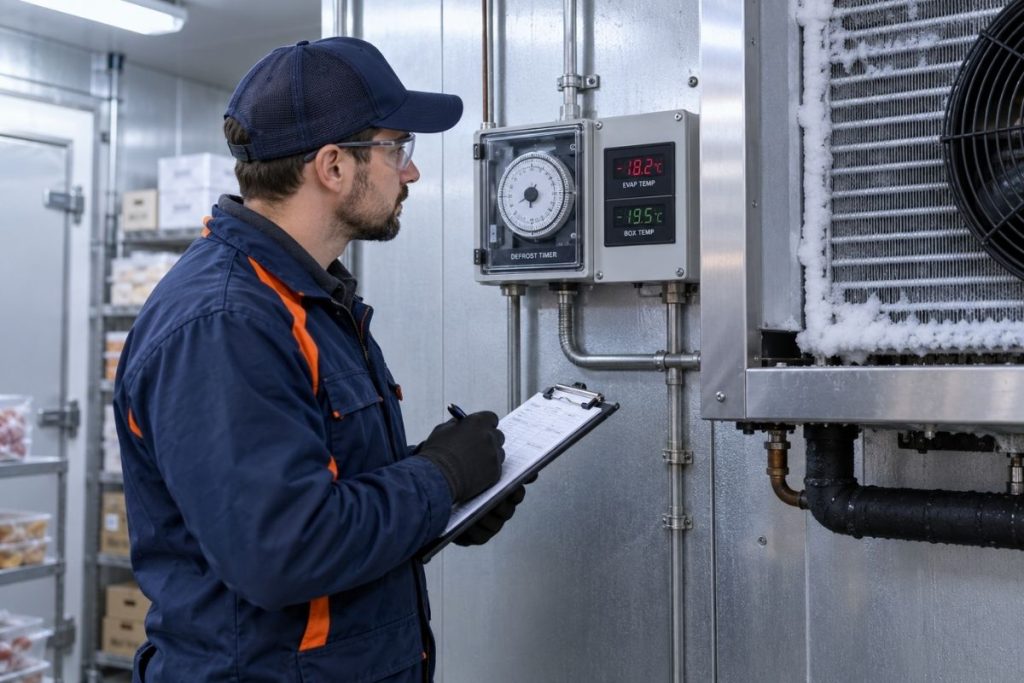
| Ice across most of the coil | Airflow or defrost | Document the pattern and call for diagnosis |
| Ice concentrated in one area | Refrigerant feed or airflow distribution | Do not add refrigerant; schedule service |
| Frost near the door | Gasket, closer, traffic, or alignment | Check that the door closes unobstructed |
| Ice returns after thawing | Underlying control or system fault | Request a complete diagnostic evaluation |
1. Restricted Airflow
The evaporator fans must pull room air across the coil and return cooled air throughout the box. Packages stacked against the coil, blocked fan guards, failed fan motors, or dense ice can reduce that movement. The coil surface then becomes colder than intended and moisture freezes instead of leaving through the drain. Review our guide to the walk-in cooler evaporator coil for more context.
A safe visual check is limited to confirming that stored products are not blocking marked air passages. Do not reach through guards or remove panels while equipment is energized.
2. Controller, Thermostat, or Sensor Problems
The display setpoint and the actual box temperature are not always the same. A displaced sensor, damaged probe, incorrect differential, or control fault may keep refrigeration running longer than expected. Temperature records and alarm history are useful evidence. Learn how technicians distinguish these issues in our walk-in cooler thermostat guide.
3. A Dirty Evaporator Coil
Grease, dust, fibers, and packaging debris insulate the coil fins and restrict air passage. Arizona businesses can experience additional dust loading, especially near frequently opened receiving doors. Cleaning requirements depend on the coil condition, surrounding food operations, and manufacturer guidance. Bent fins, electrical components, and chemical selection make aggressive DIY cleaning inappropriate.
4. Door, Gasket, or Infiltration Problems
Warm humid air becomes frost when it enters a cold box. A torn gasket, misaligned hinge, weak closer, damaged threshold, or a door held open during deliveries can add more moisture than the system can remove. Frost concentrated around the entry deserves special attention. Our article about walk-in cooler door seal problems explains why the gasket is only one part of the door assembly.
5. A Defrost Problem
Coolers and freezers use different defrost strategies. Depending on the equipment, defrost may rely on off-cycle operation, scheduled electric heat, hot gas, sensors, termination controls, or electronic logic. A timer that never initiates defrost is only one possibility; failed heaters, a sensor issue, or an early termination can create a similar ice pattern. Freezer operators can also review our walk-in freezer repair response guide.
6. Refrigerant or Metering Issues
Low refrigerant charge, a restricted metering device, liquid-line restriction, or incorrect superheat can produce abnormal coil temperatures. These conditions require instruments, system-specific data, and licensed handling practices. Ice alone is not proof that a system “needs Freon.” Do not connect gauges, release refrigerant, or attempt to charge the system yourself.
Some symptoms overlap with walk-in cooler compressor problems, which is why technicians evaluate pressures, temperatures, airflow, and controls together.
7. Loading and Air-Circulation Conditions
Warm deliveries add heat and moisture. Dense stacking can prevent cold air from returning to the evaporator, while uncovered products may contribute moisture. Keep manufacturer-required clearances around the evaporator and follow your facility’s loading plan. If the cooler is consistently undersized for current production, compare repair needs with the broader factors in our repair-versus-replacement guide.
What You Can Check Safely
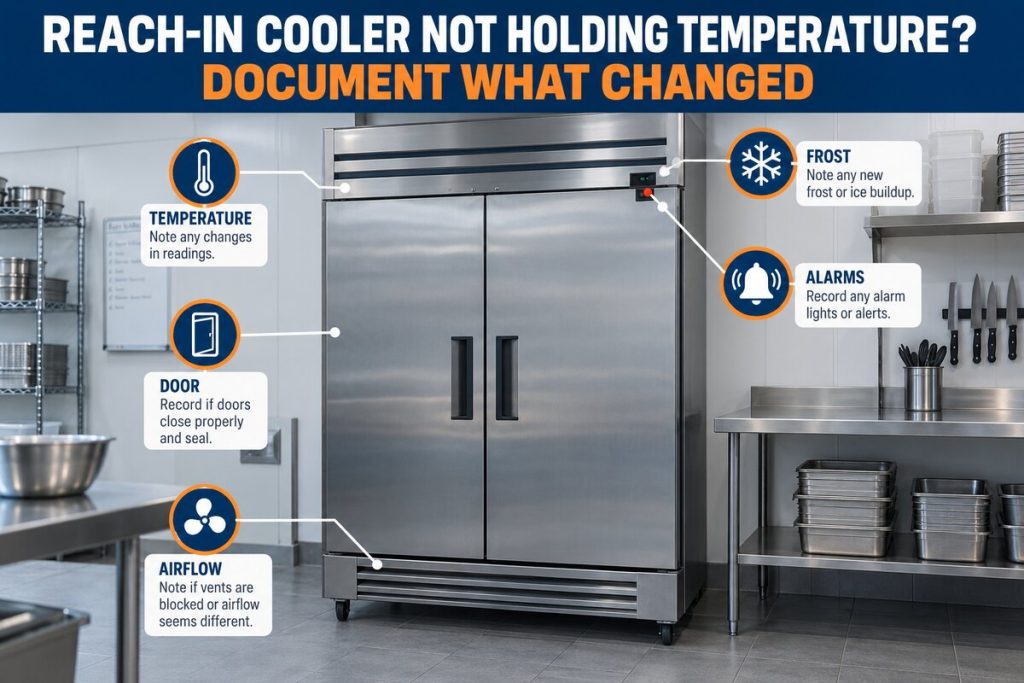
- Record the displayed and independently measured temperatures.
- Photograph the ice pattern without removing panels.
- Confirm products are clear of fan guards and airflow paths.
- Check whether the door closes completely without forcing it.
- Note recent deliveries, extended door openings, alarms, and previous service.
- Review maintenance records. Our commercial refrigeration maintenance checklist can help organize observations.
Do not chip ice from a coil, apply open flame or high heat, bypass a control, or perform refrigerant work. Sharp tools can puncture tubing and improvised thawing can damage components or create electrical hazards.
When Professional Diagnosis Is Appropriate
Arrange service when ice returns, the fans stop, the box cannot maintain temperature, water reaches electrical areas, or inventory may be at risk. A technician may inspect the coil, fan operation, temperature controls, defrost sequence, door assembly, drainage, refrigerant circuit, and operating history. Restaurants can use our walk-in fridge troubleshooting guide to prepare relevant information before the visit.
Need Help With a Freezing Walk-In Cooler?
Discount AC & Refrigeration evaluates commercial refrigeration systems for businesses in Queen Creek and the Phoenix metro area. Describe the ice pattern, temperature trend, and recent operating changes when you call.
Frequently Asked Questions
Can a dirty coil make a walk-in cooler freeze?
Yes. Dirt can restrict airflow and insulate the fins, allowing parts of the coil to become abnormally cold. A technician should also check the fans, controls, and defrost operation.
Does ice always mean low refrigerant?
No. Airflow, controls, door infiltration, defrost faults, and loading can also cause ice. Refrigerant charge must be evaluated with proper instruments.
Can I chip ice off the evaporator?
No. Tools can damage fins or puncture refrigerant tubing. Avoid forced removal and arrange safe service.
Why does ice form near the cooler door?
Warm, humid air may be entering through a gasket, misaligned door, threshold, or repeated openings. The complete door assembly should be evaluated.
Why does the ice return after the coil is thawed?
Thawing removes the symptom but not the cause. If airflow, controls, defrost, or the refrigeration circuit remains faulty, the ice will return.
Can loading warm product cause frost?
Large warm loads and blocked circulation can increase heat and moisture. Loading history helps a technician interpret the temperature trend.
Should I turn the cooler off?
Follow the equipment manual, facility procedures, and food-safety plan. If water or ice is near electrical components, keep personnel clear and request service.