Blast chiller vs walk-in cooler is a food-safety workflow question, not simply a comparison of two stainless-steel boxes. A blast chiller is designed to remove heat from freshly cooked food; a walk-in cooler primarily holds food that is already cold. A restaurant may need both, but the right choice depends on menu volume, batch size, available space and a validated cooling plan. This guide explains the operational differences for Phoenix-area kitchens without treating a blog as a substitute for local health requirements or a professional equipment specification. If your current walk-in already struggles to hold temperature during busy service, start with walk-in cooler repair in Phoenix before planning new equipment.
1. Blast chiller vs walk-in cooler: the job each one performs
A walk-in cooler is a large refrigerated room. Its normal job is cold holding: storing ingredients and prepared products at the establishment’s required temperature while staff open the door throughout the day. A blast chiller is a smaller piece of rapid-cooling equipment intended to pull heat from cooked food within a defined process. It commonly uses strong airflow around relatively shallow, spaced containers. A holding room may cool food slowly if a hot batch is placed inside, and the additional heat can warm nearby inventory.
That difference matters when a restaurant prepares large pots of soup, sauce, rice or protein in advance. The manager must validate a method that achieves applicable food cooling requirements. The FDA Food Code is a model for retail food practice; its 2022 cooling section includes two stages for cooked time/temperature control for safety food and lists rapid-cooling equipment among possible methods. The enforceable rule is set by the local authority. Buying a blast chiller does not automatically make a process compliant; food temperature and time must still be measured.
2. Heat removal is different from cold storage
Every refrigerated system has a finite capacity to remove heat. A walk-in cooler designed for holding an established cold load must also handle door openings, lights, people and heat entering through the building envelope. Adding a large pan of hot food imposes another substantial load. If the room cannot remove that heat soon enough, the hot food cools too slowly and the room air may rise around already-stored products. That is why a holding setpoint is not evidence that the center of a deep pan is cooling at the required rate.
A blast chiller can direct more airflow and cooling capacity toward a limited batch. Even then, container depth, spacing, initial temperature, product density and lid position affect performance. The actual cooling curve is measured in the food, not inferred from the equipment display. A restaurant should test representative recipes and batch sizes under normal production conditions, document results and revisit them when the menu or volume changes. The blast chiller vs walk-in cooler decision therefore begins with the production plan, not with a catalog photo.
3. The two units fit different points in the kitchen workflow
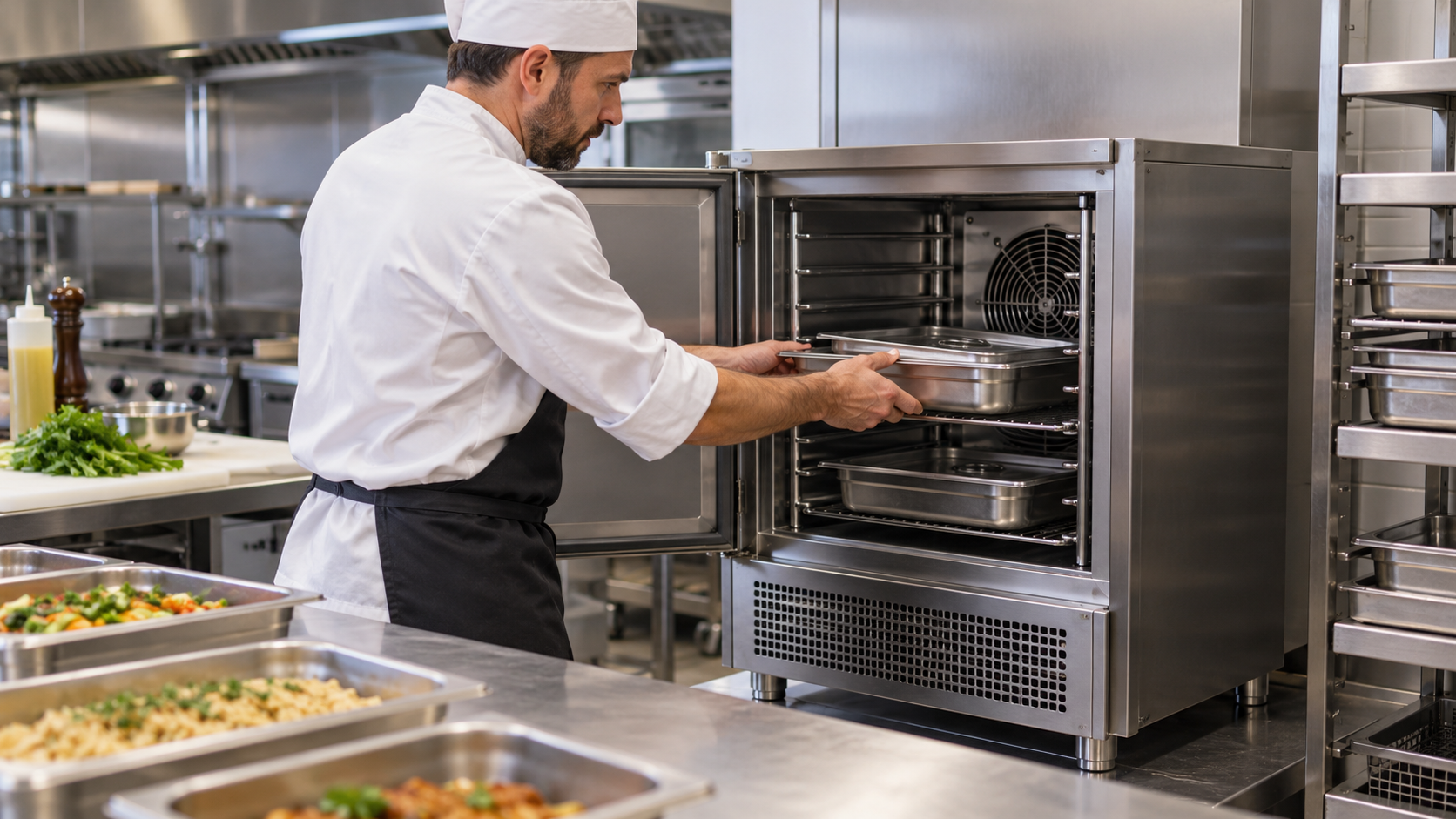
For a cooked batch, the workflow may start with portioning into appropriate shallow containers, moving those containers into a validated rapid-cooling process and recording product temperatures at the required checkpoints. Once the food reaches the approved cold-holding condition, it can be transferred to a walk-in cooler for organized storage. The walk-in then does what it is designed to do: maintain the cold product while staff prepare service. That sequence also prevents a large hot load from affecting other stored ingredients.
Some foods can be cooled safely using other approved methods, such as smaller portions or an ice-water bath, depending on the product and operation. The FDA Food Code lists several possible methods; a blast chiller is not universally mandatory. A manager should work with the food-safety lead and local authority to establish the approved procedure. Refrigeration contractors can evaluate equipment capacity and installation requirements, but the establishment remains responsible for its food-handling process.
4. Time and temperature records answer different questions
In a blast chiller vs walk-in cooler comparison, a walk-in cooler log typically records room trends, alarms, independent checks and cold-holding observations. A cooling log records the food’s temperature over time as it moves from hot toward cold. These are not interchangeable. If the walk-in reads 38°F, a thick pan of soup may still be much warmer in the center. Conversely, a short room-air spike during a delivery does not automatically prove that every product has warmed. In a blast chiller vs walk-in cooler comparison, ask which record proves each stage of the process.
For cooked time/temperature control for safety food, the FDA 2022 model specifies cooling from 135°F to 70°F within two hours and from 135°F to 41°F or less within a total of six hours. Do not substitute those figures for the actual law or policy that governs a particular restaurant; check the local health authority and any product-specific procedure. A digital probe can help capture the curve, but staff still need to measure correctly, identify the batch and respond if a checkpoint is missed.
5. Batch size and container geometry can decide the outcome
Cooling a small, shallow pan is different from cooling a full stockpot. The center of a deep container can stay warm after the surface feels cool. Spacing also matters: tightly packed pans restrict air movement and slow heat transfer. A blast chiller has a rated capacity and tray arrangement; loading above that capacity can defeat the intended process. A walk-in has shelving and airflow constraints of its own. Treat equipment capacity as a tested operating limit rather than a promise that any quantity of food will reach a target by a certain time.
When the restaurant scales from a few batches to a catering order, test the larger real-world load. Record recipe, pan depth, number of pans, starting temperature, rack spacing and cooling times. If results differ, adjust the approved method or equipment plan. The blast chiller vs walk-in cooler distinction becomes particularly important when kitchens grow: the holding room may be adequate for inventory but not designed for the heat load of daily batch cooking.
6. Installation and maintenance needs are not identical
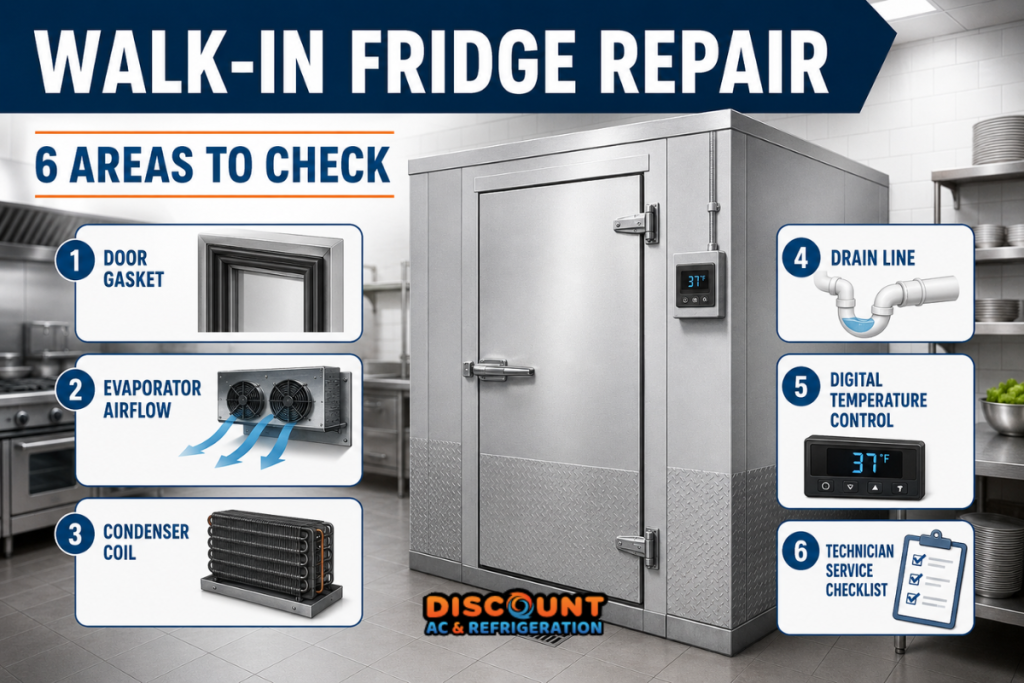
A walk-in cooler involves an insulated enclosure, door system, refrigeration equipment, drainage, electrical supply and enough floor space for safe access and storage. A blast chiller may be a cabinet or other rapid-cooling unit with its own electrical, ventilation and condensate requirements. Exact requirements depend on the model and site. A commercial refrigeration contractor should review utility capacity, heat rejection, access, service clearances and how the equipment fits the kitchen’s production sequence before purchase.
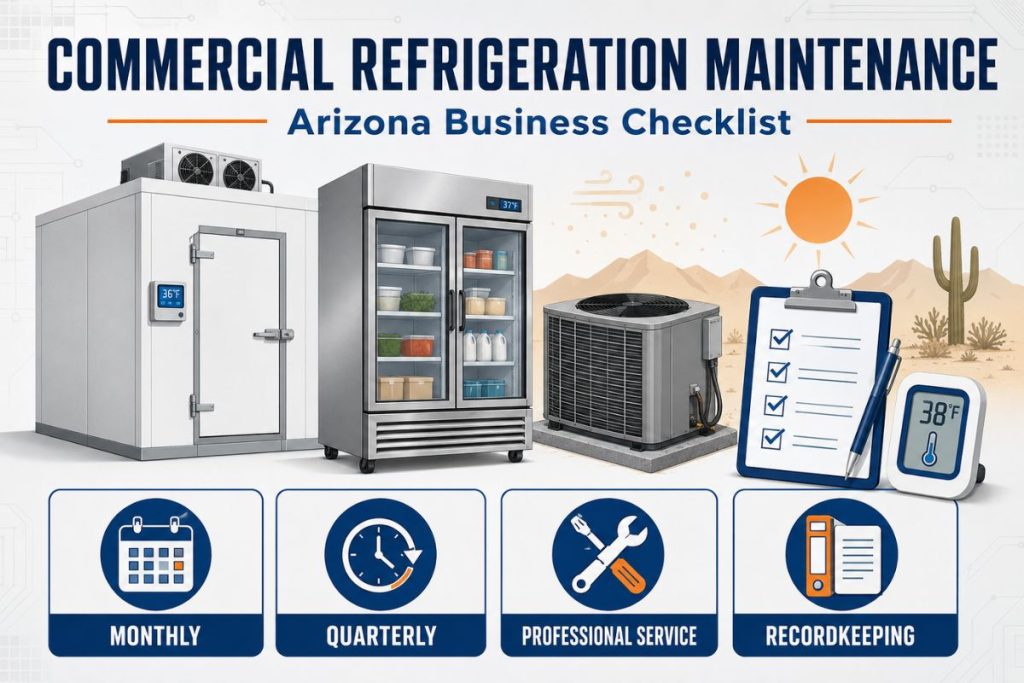
Both types of equipment need cleaning, temperature verification and maintenance. Staff can keep gaskets and accessible surfaces clean according to manufacturer guidance, maintain clear airflow and report alarms. Electrical and refrigerant work belongs to qualified professionals. A neglected blast chiller may fail a cooling process even if the walk-in holds properly; a poorly performing walk-in may compromise food after the rapid-cooling stage. The systems are complementary, not substitutes for one another.
7. The purchase decision is about verified throughput
Before comparing equipment prices, count how many pounds or pans of cooked food the kitchen cools on its busiest day, how many batches overlap, and where the food will be held afterward. Measure how the current procedure performs. A restaurant that cooks only occasional small batches may meet its requirements with another approved method; a high-volume commissary may benefit from dedicated rapid-cooling capacity. The right blast chiller vs walk-in cooler plan is one that satisfies the actual production profile and can be documented reliably by staff.
Ask vendors and contractors for model-specific performance under the intended load, installation constraints, service access and coverage details. Do not compare a nominal cabinet volume with a walk-in’s floor area as if they describe the same function. Confirm that the kitchen can move food from cooking to cooling and then to cold storage without unnecessary delay. A labor-intensive workflow that staff cannot sustain on a busy night is a weak plan even if the equipment specification looks impressive.
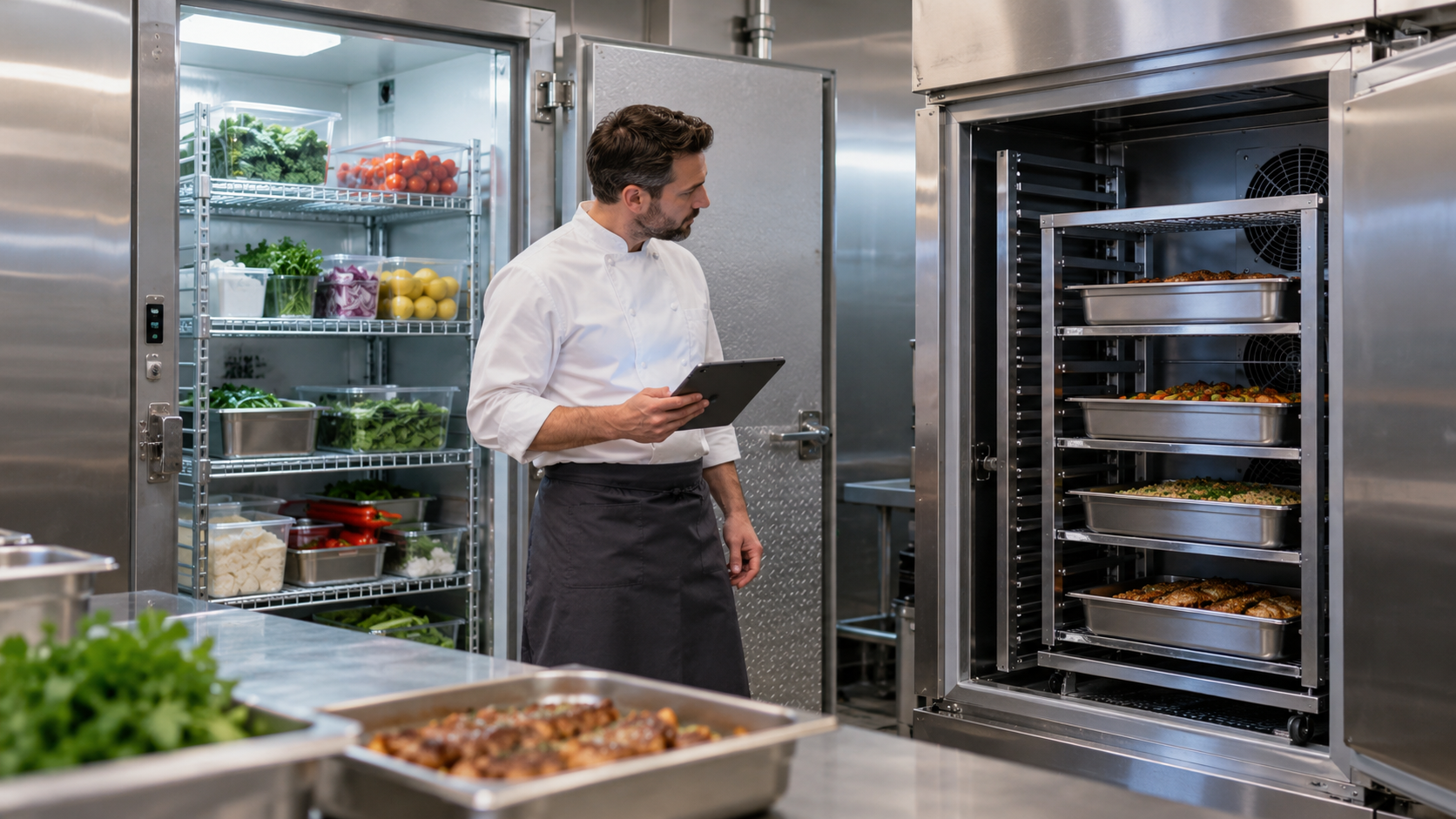
A practical decision worksheet for restaurant owners
Start with the menu. Which cooked foods are cooled for later service, and in what quantities? Identify the largest expected batch, the packaging and the time at which each batch finishes cooking. Then map the current cooling method, including containers, thermometers and staff checkpoints. Record whether the existing process consistently meets the requirements applicable to the restaurant. If a failure occurs, identify whether it is caused by batch size, airflow, workflow delay, inadequate equipment capacity or incomplete monitoring.
Next, review the cold-holding room separately. Does it maintain the required conditions with its usual inventory and door traffic? Is shelving arranged so air can circulate and staff can clean? Are alarms and logs reviewed? A larger walk-in might solve a storage constraint while doing little to improve rapid cooling of a hot batch. Likewise, a blast chiller might improve cooling throughput while leaving an overloaded walk-in’s holding problem unresolved. Separating those needs avoids buying the wrong solution.
Finally, consider the building. A new rapid-cooling unit adds electrical demand and rejects heat somewhere; a walk-in expansion changes floor area, service access and perhaps permitting. Have a qualified commercial refrigeration contractor assess the site and the selected equipment. Discount AC & Refrigeration’s commercial refrigeration team can discuss system performance and installation needs. Food-safety process approval remains with the restaurant and applicable authority.
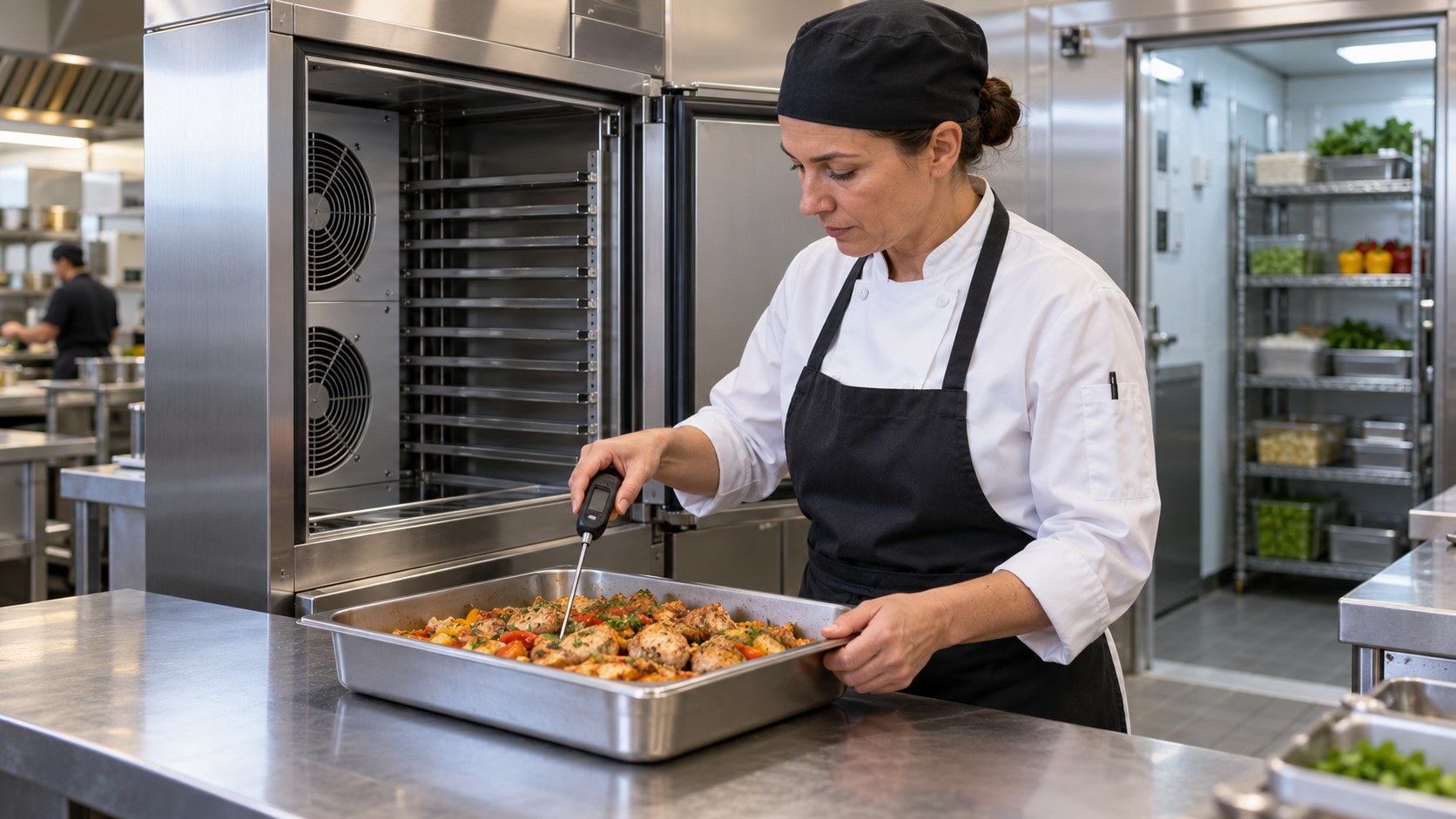
How to test a cooling process without guessing
Choose a representative high-volume recipe and a normal busy shift. Record the cooking-end time, the temperature of the food at the start of cooling, container dimensions, number of pans, shelf positions and each required checkpoint. Use a calibrated food thermometer at a representative location, following the establishment’s method. Compare results with the approved plan. A single successful test may not cover every recipe: a thick sauce, a dense protein and a light broth can behave differently. Test the products and loads that create the greatest challenge.
Keep the blast chiller’s air display separate from the product probe data. Air can be cold while the core is still warm. If the process misses a checkpoint, follow the food-safety plan for corrective action; do not invent a longer time allowance. Adjust pan depth, batch size, spacing or approved equipment and retest under supervision. A validated record is stronger evidence than an equipment brochure or a thermostat reading.
Common mistakes in a blast chiller vs walk-in cooler comparison
Comparing only setpoints: both units may display a cold target, but their intended loads differ. Ignoring container depth: a deep pan cools differently from shallow portions. Overloading the rapid-cooling cabinet: blocking airflow can make a rated unit underperform. Using the walk-in as a staging room: repeated openings during paperwork add heat. Moving food too early: a pan should not enter routine cold holding before the approved cooling stage is complete. Skipping product measurements: room air alone cannot prove a cooling process succeeded.
Another mistake is treating a blast chiller as a remedy for a malfunctioning walk-in. If the holding room runs warm, chilled food can still be exposed after transfer. Conversely, replacing a perfectly adequate walk-in with a larger one will not necessarily provide the airflow and batch-specific process needed for rapid cooling. Diagnose the specific bottleneck. That is the value of a blast chiller vs walk-in cooler assessment: each purchase is tied to a defined job.
When to call a commercial refrigeration professional
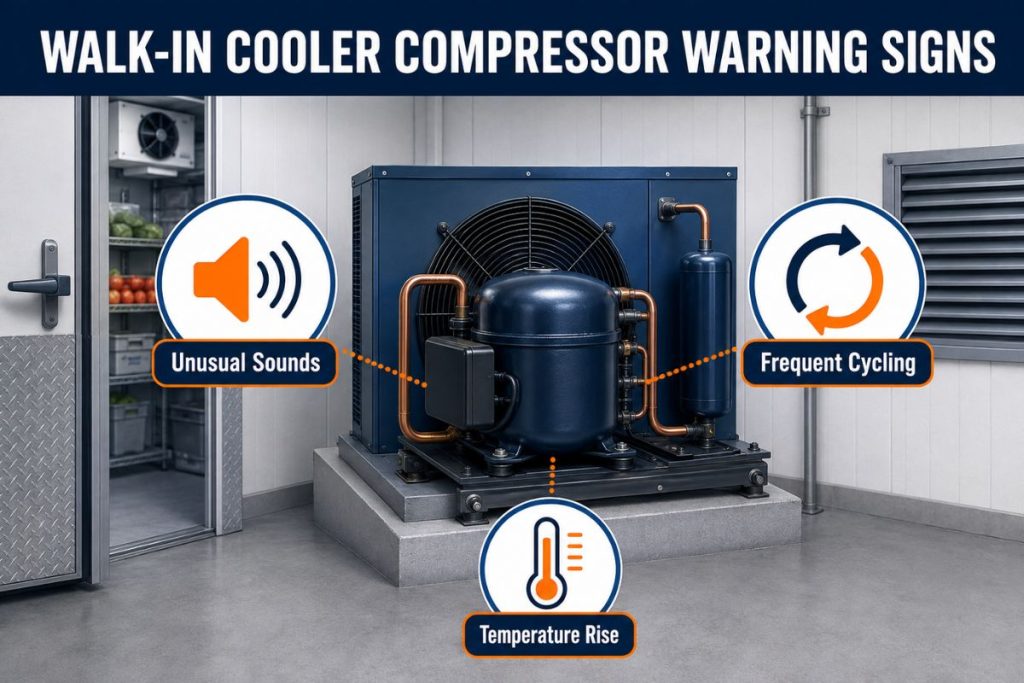
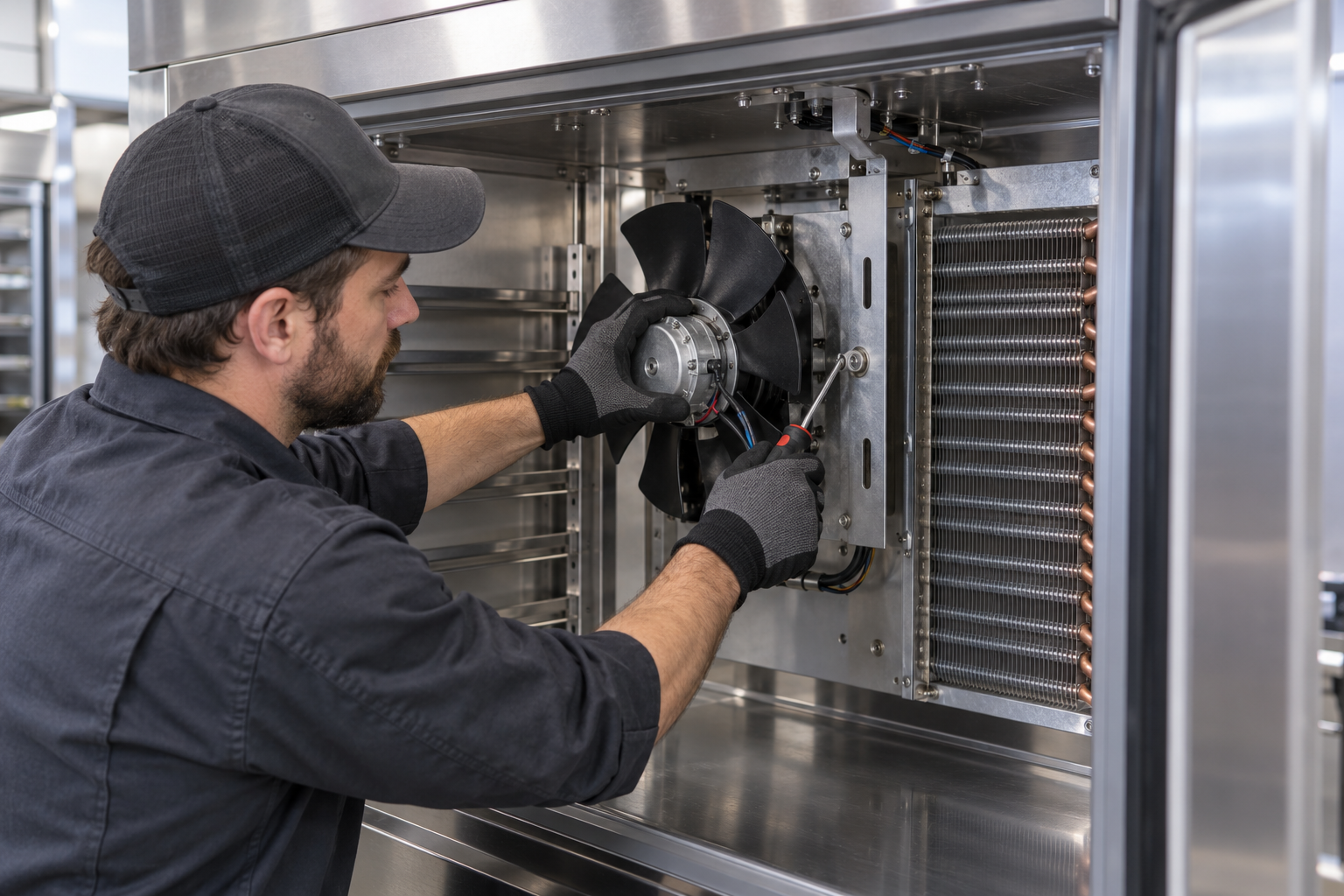
Request a review if the walk-in struggles to hold temperature after routine deliveries, if alarms recur, if the room warms whenever a hot load is introduced, or if an existing blast chiller fails to achieve its expected cooling profile under the validated load. Share the temperature logs, equipment model, batch sizes and operating schedule. A technician can check refrigeration performance, airflow, controls, door closure and installation constraints. Staff should not bypass safety devices or change refrigerant settings to force a short-term number.
Also involve the food-safety lead. A refrigeration repair and a food disposition decision are separate. The technician can restore equipment performance; the manager must decide what happened to food during a failed cooling or holding process under the applicable rules. Keeping both records makes future prevention more effective.
Training and review after installation
After a blast chiller vs walk-in cooler decision, the purchase is not complete when the unit powers on. Train opening and closing teams on the approved loading pattern, probe placement, log entries, cleaning procedure and who responds to an alarm. Retest the cooling process with a representative batch after installation, maintenance or a major menu change. Keep a written handoff between shifts so a partly cooled batch is not mistaken for food ready for normal storage. This prevents the blast chiller vs walk-in cooler distinction from disappearing during a busy service.
Review records monthly. Look for cooling runs that increasingly approach a time limit, a walk-in room that recovers more slowly after normal door traffic, and staff notes about blocked shelves or damaged seals. Trends should trigger investigation before a failure becomes an emergency. A blast chiller vs walk-in cooler plan works only when the rapid-cooling stage and cold-holding stage are both measured and maintained.
Frequently Asked Questions
Can a walk-in cooler replace a blast chiller?
Not automatically. A walk-in is normally a holding room. A restaurant must validate any cooling method against its approved time and temperature requirements for the actual food and batch size.
Does every restaurant need a blast chiller?
No. The blast chiller vs walk-in cooler choice depends on menu, volume and local requirements. Other approved methods may work for some operations when correctly validated and documented.
Can a blast chiller store food overnight?
Check the specific model and the restaurant’s approved process. Rapid cooling and routine cold holding are different functions; do not assume one mode substitutes for a dedicated storage plan.
What temperature should staff record?
For a cooling process, record the food’s temperature at the checkpoints in the approved plan. Record room air and cold-holding checks separately.
Why might a deep pot fail to cool in time?
Heat leaves the center of a deep mass more slowly. Shallow portions, spacing and a validated cooling method can improve heat transfer.
Will a larger walk-in solve slow cooling?
Not necessarily. More storage volume does not prove greater rapid-cooling capacity for hot batches. Test the specific process before buying equipment.
Can staff rely on the blast chiller display alone?
No. A cabinet air reading does not prove that the food’s center reached the required temperature in time. Use the approved product-temperature method.
Who should approve the cooling procedure?
The responsible food-safety manager should work from applicable local rules and the establishment’s plan. A refrigeration contractor can advise on equipment capacity, not replace regulatory approval.
What should be included in an equipment quote?
Ask for model-specific capacity, electrical and ventilation requirements, service clearances, installation work and the intended batch profile. Confirm who will train staff and maintain the unit.
When is professional service necessary?
Call when the cooling or holding trend worsens, alarms recur or the equipment fails to operate as expected. Provide logs so a technician can test the actual conditions.
Plan refrigeration around the way your kitchen cooks
Discount AC & Refrigeration helps Phoenix-area commercial kitchens evaluate refrigeration equipment and performance. For a blast chiller vs walk-in cooler discussion grounded in your batch sizes and storage needs, call (480) 478-2616. Bring your cooling and holding logs; follow your health authority and food-safety plan for all food decisions.