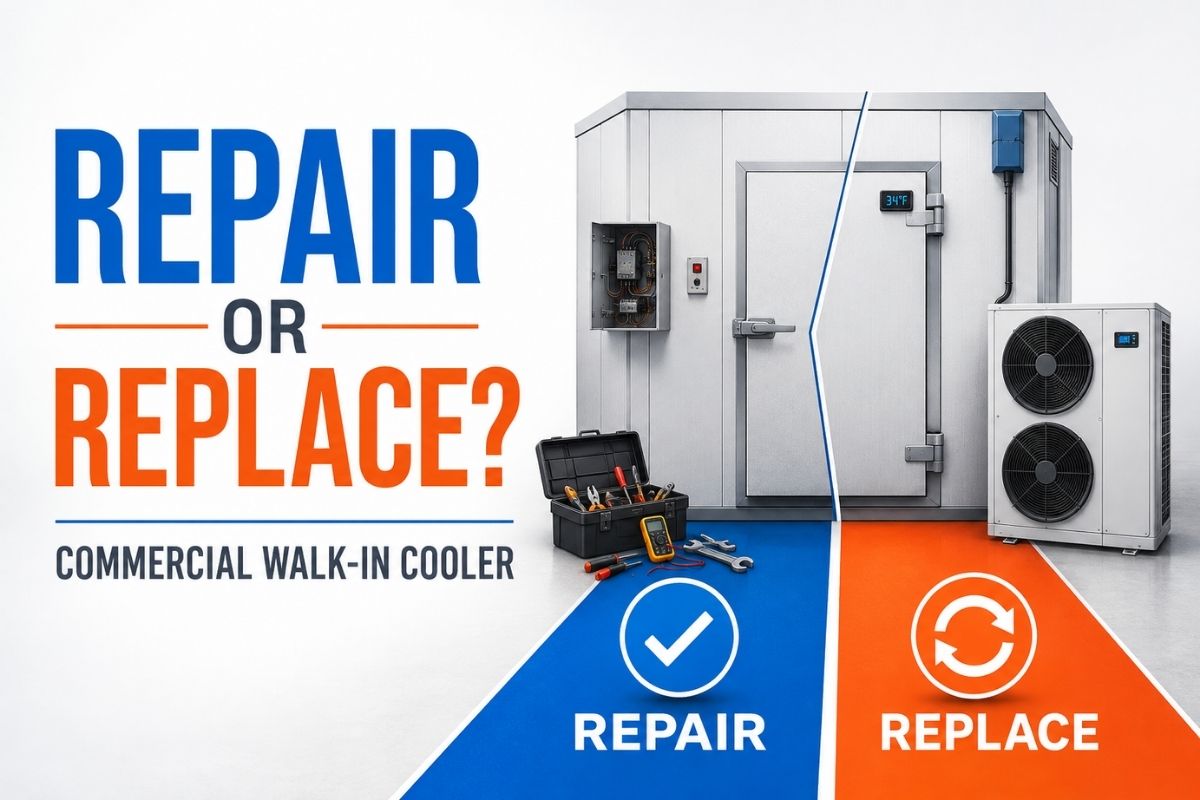
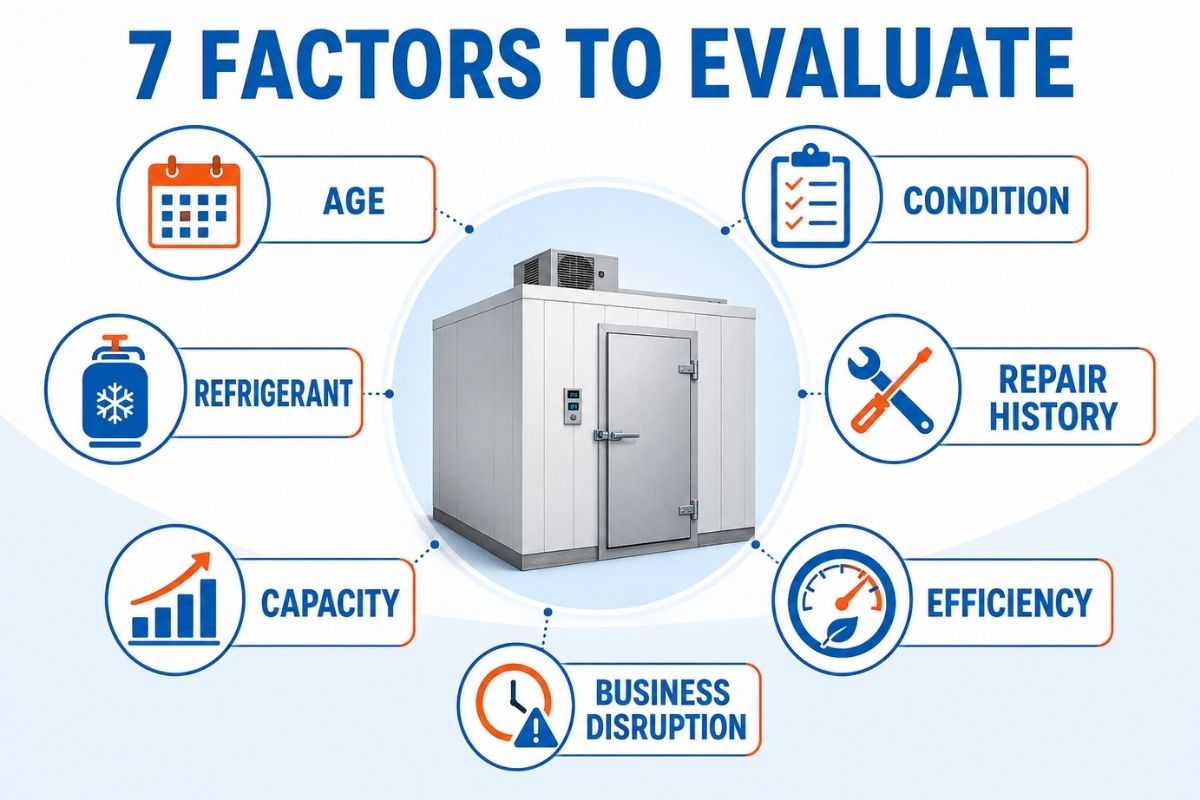
The right choice rarely comes from age or repair price alone. A restaurant, grocery store, bakery, school kitchen, or food-preparation facility needs to consider the complete system: insulated box, door, evaporator, condensing unit, controls, refrigerant, electrical components, drainage, airflow, and current product load. The decision should also reflect what an interruption would mean for inventory, staff, customers, and food-safety procedures.
This guide explains how Phoenix-area businesses can organize that evaluation without treating every malfunction as a reason to replace the cooler—or continuing to repair a system that no longer fits the operation. For an equipment-specific assessment, call Discount AC & Refrigeration at (480) 478-2616.
Start With the Current Failure, Not a Predetermined Answer
| Decision factor | Repair may remain practical when… | Replacement deserves evaluation when… |
|---|---|---|
| Age | Components are serviceable and the system has a stable history. | Age is combined with deterioration, obsolescence, and repeated failures. |
| Condition | The box, floor, panels, door, and major components remain sound. | Moisture damage, insulation failure, corrosion, or structural issues are widespread. |
| Refrigerant | The refrigerant and compatible parts can be supported responsibly. | Refrigerant or component availability complicates long-term service. |
| Repair history | The failure is isolated and prior service has produced stable operation. | Service calls recur or failures are spreading across major components. |
| Capacity | The cooler matches the product load, door traffic, and required temperature. | The business has outgrown the box or refrigeration system. |
| Efficiency | Maintenance or an isolated repair can restore normal operation. | Long run times and high load persist after correct maintenance and diagnosis. |
| Disruption | Parts, access, and a safe inventory plan make repair manageable. | Unplanned outages now create greater risk than scheduled replacement. |
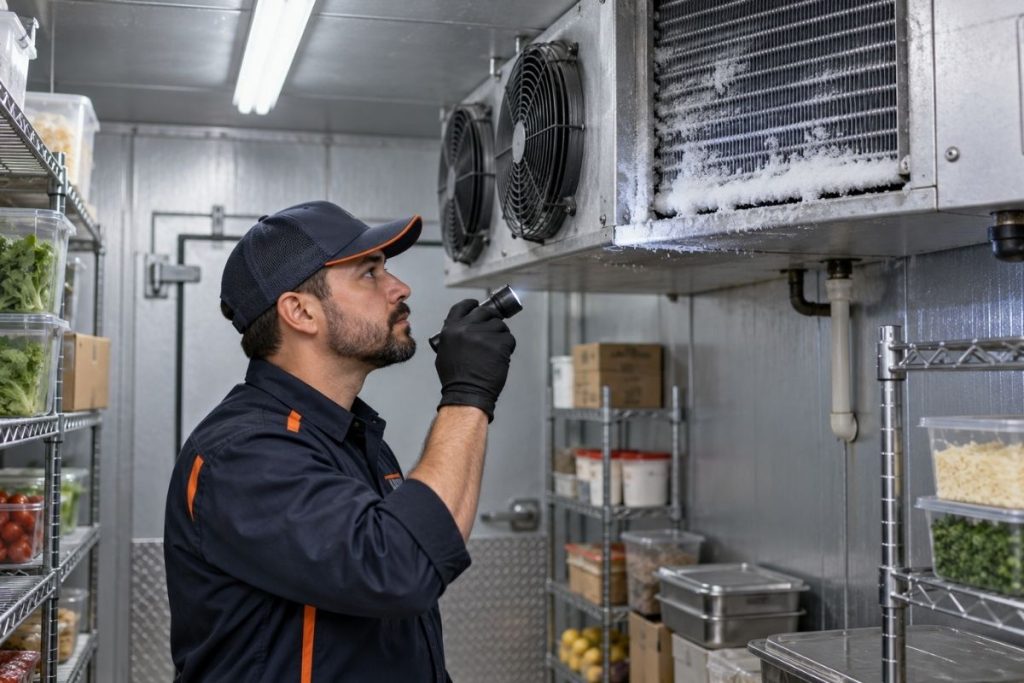
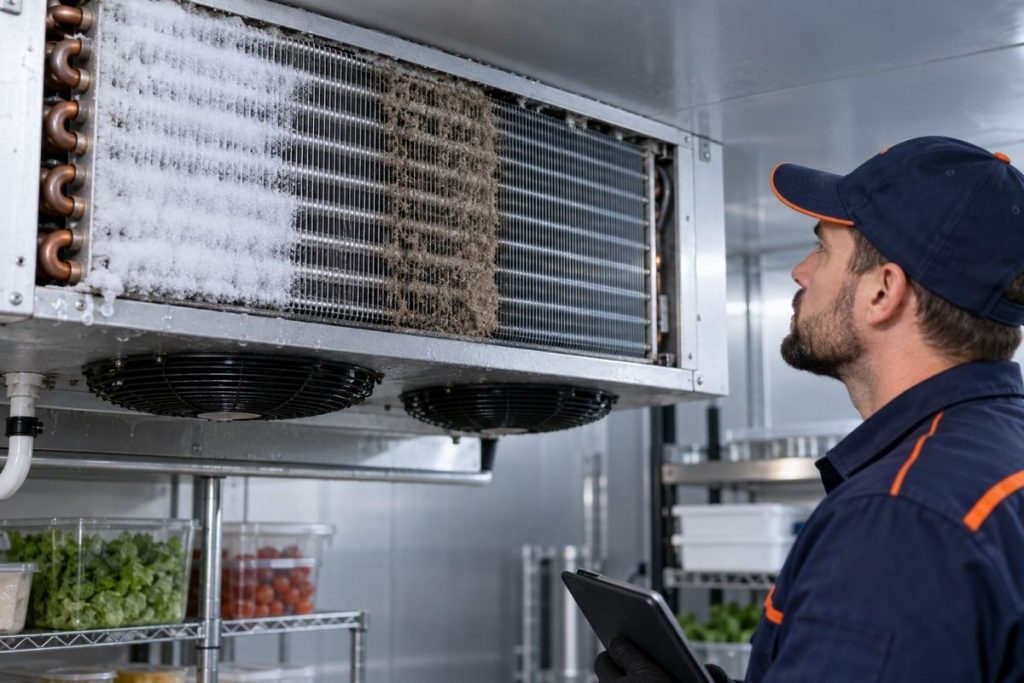
A diagnosis should first identify what actually failed. A temperature complaint may come from a damaged gasket, misaligned door, blocked airflow, dirty condenser, iced evaporator, drain problem, sensor issue, fan failure, refrigerant-side fault, or compressor problem. These conditions do not have the same scope or consequences. The walk-in cooler and freezer service page outlines the types of components a technician may need to evaluate.
Before approving major work, ask for the diagnosed cause, the condition of related components, and what measurements support the recommendation. A useful commercial walk in cooler repair assessment separates the immediate failure from the overall health of the equipment.
1. Evaluate Age in Context
Age is a planning signal, not a verdict. Two coolers of similar age can have very different futures because of installation quality, maintenance, door traffic, cleaning practices, heat exposure, and prior component replacement. A mature cooler with a sound insulated box and a limited mechanical issue may still be a reasonable repair candidate. A newer unit with incorrect sizing or severe moisture damage may require a broader correction.
Request the model and serial information for the condensing unit, evaporator, controls, and any major components that have been replaced. That record helps determine whether parts remain available and whether the system is still serviceable as a whole. Discount AC & Refrigeration’s commercial preventive maintenance guidance also explains why documentation is useful for long-term equipment planning.
2. Look Beyond the Refrigeration Unit to the Cooler’s Physical Condition
The insulated enclosure affects every mechanical component attached to it. Inspectors should consider panel joints, floor condition, ceiling penetrations, door alignment, gasket contact, hinges, closers, thresholds, and evidence of moisture intrusion. Warm, humid air entering through a door or damaged panel increases frost and run time. Replacing a condensing unit will not correct a box that cannot maintain its thermal boundary.
At the same time, visible frost or condensation does not automatically mean the cabinet has failed. Door adjustments, gasket replacement, operating habits, drainage, or airflow may be involved. The goal is to determine whether the condition is local and correctable or part of widespread deterioration.
3. Identify the Refrigerant and the Long-Term Service Implications
The refrigerant used by the system can affect service strategy, component compatibility, availability, and future planning. The nameplate and service records should identify what the equipment was designed to use and whether it has been converted in the past. A technician should also determine why charge is low before recommending refrigerant addition; refrigerant is not consumed during normal operation.
Do not make this decision from the refrigerant name alone. The correct evaluation includes leak location, repairability, system condition, compatible components, operating pressures and temperatures, and applicable handling requirements. For a broader overview, see the company’s guide to commercial refrigerants.
4. Review Recurring Repairs as a Pattern
One repair invoice tells you what happened once. A service history shows whether the equipment has become unstable. Organize invoices by date, symptom, diagnosed cause, part replaced, and result. Repeated calls for the same unresolved symptom may point to an incomplete diagnosis. Different failures across compressors, fan motors, controls, coils, and wiring may indicate broader deterioration or harsh operating conditions.
Compressor symptoms require particular care because short cycling, unusual noise, overheating, and poor temperature performance may also be caused by airflow, controls, electrical supply, refrigerant conditions, or system load. Review the walk-in cooler compressor warning signs before assuming the compressor is the only possible cause.
5. Confirm That Capacity Still Matches the Business
A cooler can operate mechanically and still fail operationally if the business has outgrown it. Changes in menu, delivery volume, storage density, hot-product loading, shelving, door openings, occupancy, or required temperature can shift the load beyond what the original system was selected to handle.
Capacity evaluation should use actual conditions rather than square footage alone. The technician or system designer may need to consider product pull-down requirements, ambient design conditions, insulation, door traffic, infiltration, evaporator selection, condensing-unit capacity, and airflow clearance. Phoenix heat makes outdoor equipment condition and condenser airflow especially important. Businesses planning a major change can review commercial refrigeration installation considerations.
6. Separate Efficiency Problems From Maintenance Problems
Long run time or higher electricity use can be caused by age, but it can also result from dirty coils, damaged door seals, poor airflow, iced evaporators, incorrect controls, high product load, blocked condenser discharge, or excessive door traffic. Those conditions should be corrected or accounted for before comparing the existing system with replacement equipment.
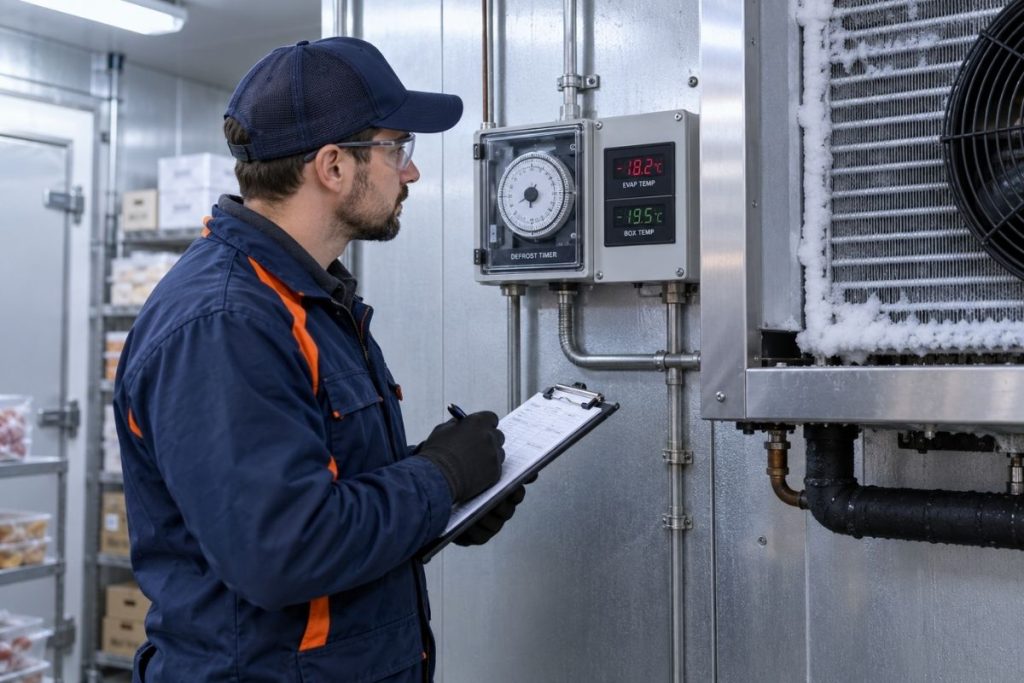
Ask the technician to document temperature behavior, system cycling, coil condition, fan operation, door condition, and relevant operating measurements. Efficiency claims should be tied to a defined equipment selection and real operating conditions—not a generic promise. Routine observations and professional service tasks are covered in the company’s preventive maintenance program.
7. Calculate the Business Disruption, Not Just the Invoice
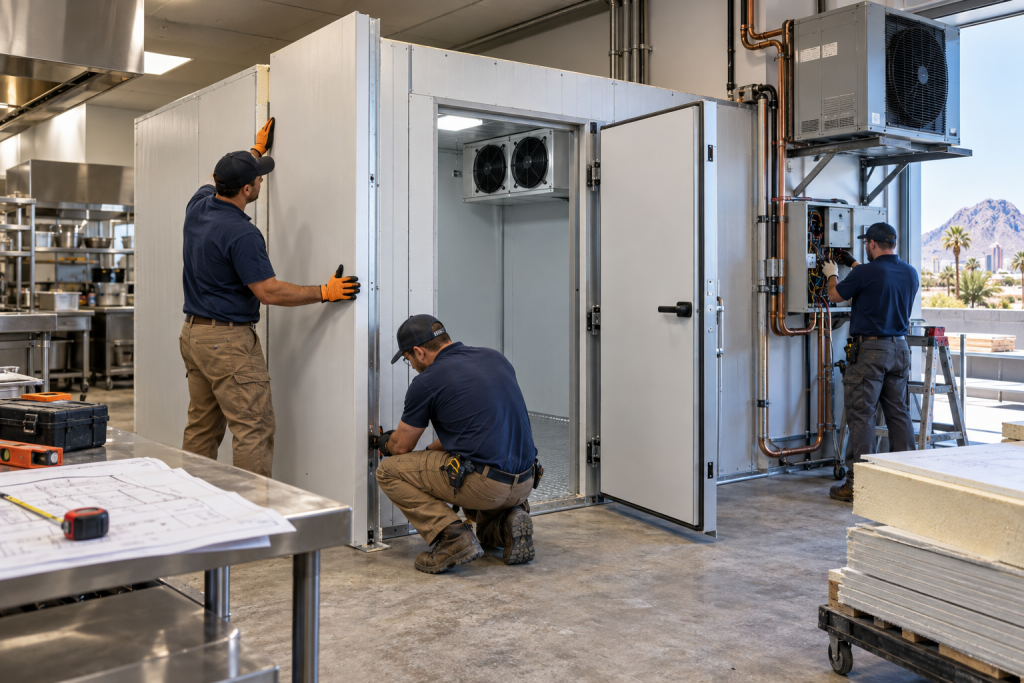
The lowest immediate invoice is not always the lowest operational risk. Evaluate the timing of the work, expected access requirements, inventory relocation, health-department or internal food-safety procedures, delivery scheduling, staff changes, and the availability of temporary cold storage. A repair may be completed with limited interruption, while a replacement may require coordinated electrical, mechanical, panel, roof, crane, or permitting work depending on the installation.
Replacement also offers the opportunity to schedule disruption instead of waiting for another unplanned failure. Conversely, replacing equipment during peak operations without a complete plan can create more disruption than a well-defined repair. When temperatures are already rising or product is at risk, use your established inventory protocol and contact emergency commercial refrigeration service. Do not rely on smell, appearance, or a single display reading to determine food safety.
How to Compare a Repair Proposal With a Replacement Proposal
Ask for a defined repair scope
A repair proposal should identify the failed component or condition, related findings, parts and labor scope, exclusions, and any conditions that could change the work. Ask whether the recommendation addresses the root cause and what should be monitored afterward.
Ask for a complete replacement scope
A replacement proposal should clarify whether it covers only a condensing unit or evaporator, a matched refrigeration system, controls, line-set work, electrical work, drain work, insulated panels, doors, floor, permits, removal, startup, and commissioning. “Replace the cooler” can describe very different scopes.
Compare the same operating requirement
Both options should be judged against the required box temperature, product load, ambient conditions, door use, and business schedule. If replacement is recommended, ask how capacity was selected and whether the new components are matched. You can also explore Discount AC & Refrigeration’s broader commercial refrigeration services.
Prepare for a Professional Evaluation
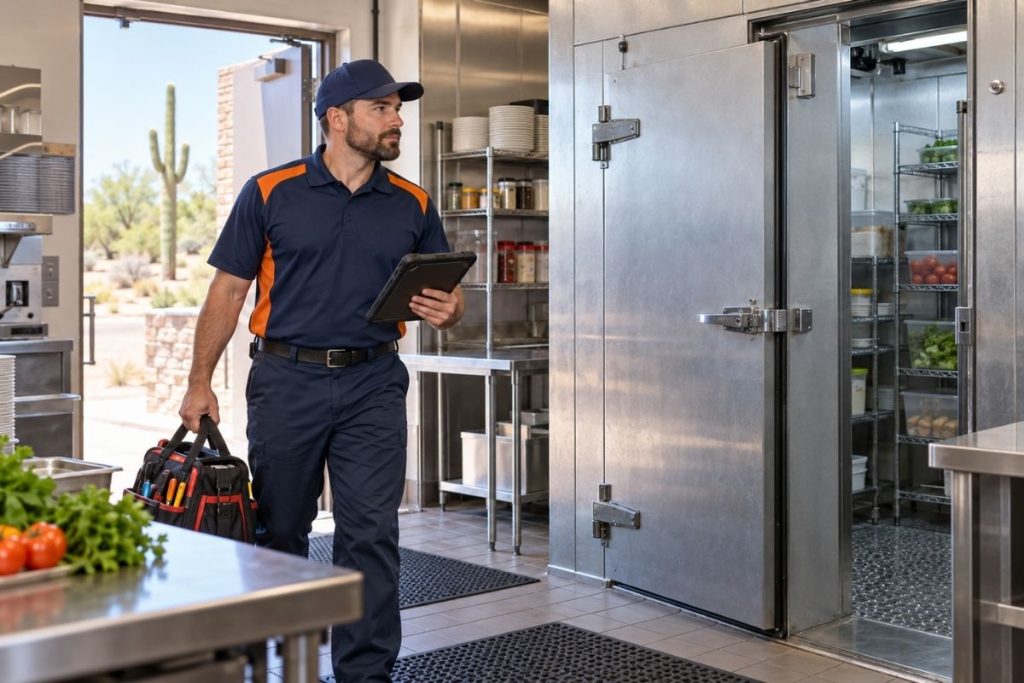
Before the service visit, gather temperature logs, equipment nameplate photos, previous invoices, a description of recent operational changes, and the time the symptom began. Note whether the problem changes with door traffic, deliveries, outdoor temperature, defrost cycles, or specific times of day. Keep access paths clear and identify who can authorize work.
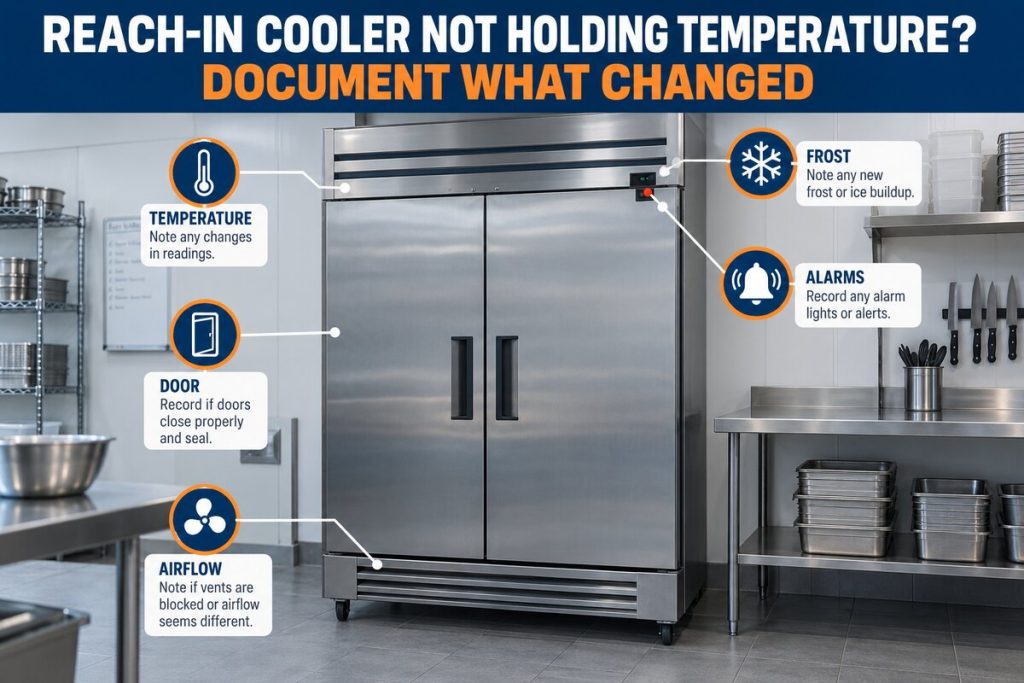
Safe customer observations include checking that the door closes, noting visible frost or water, listening for changes in fan or compressor sound, and recording controller and independent thermometer readings. Avoid removing electrical panels, bypassing controls, handling refrigerant, or reaching through fan guards. For a local assessment in Gilbert, Mesa, Chandler, Queen Creek, Tempe, or the Phoenix area, contact the Discount AC & Refrigeration team or call (480) 478-2616.
Frequently Asked Questions
Is an old walk-in cooler always better to replace?
When do recurring repairs become a replacement signal?
Can only the refrigeration equipment be replaced?
Does an obsolete refrigerant automatically require replacement?
How does Phoenix heat affect the decision?
What records should a business provide to the technician?
How should repair and replacement proposals be compared?
Who can evaluate commercial walk in cooler repair in Phoenix?
Conclusion: Make a Documented Business Decision
The strongest commercial walk in cooler repair or replacement decision combines technical findings with business realities. Start with the current failure, then evaluate age, physical condition, refrigerant, repair patterns, capacity, efficiency, and disruption. This prevents a minor correctable problem from triggering an unnecessary project while also revealing when repeated repairs are no longer supporting dependable operations.
For commercial walk in cooler repair and replacement evaluations in Phoenix, Gilbert, Mesa, Chandler, Queen Creek, and Tempe, work with a team that can assess the complete refrigeration system. Learn more about commercial HVAC and refrigeration support or request service at Discount AC & Refrigeration.
Need a Clear Repair-or-Replacement Assessment?
Have your equipment information, temperature logs, and service history ready so the technician can evaluate the full operating picture.
Call (480) 478-2616 Request ServiceDiscount AC & Refrigeration · Licensed contractor ROC 361623 · Open daily from 6 AM to midnight