Root cause: food safety temperature range — the single most critical variable in commercial refrigeration is maintaining consistent temperatures outside the 40°F–140°F bacterial growth window, and when cooling equipment fails in Arizona’s extreme desert heat, that window can be breached within hours.
Your walk-in cooler reads 42°F at 9 AM, but by mid-afternoon it’s quietly drifting toward 48°F — and you don’t know it yet. That invisible failure is enough to put dozens of customers at risk, trigger a failed health inspection, and cost you thousands in discarded inventory. The good news: understanding the food safety temperature range and keeping your refrigeration equipment in peak condition are the two most powerful tools you have to prevent it. Read this guide to protect your restaurant, stay compliant, and keep your walk-in running reliably even through Arizona’s brutal summers.
What Is the Food Safety Temperature Range?
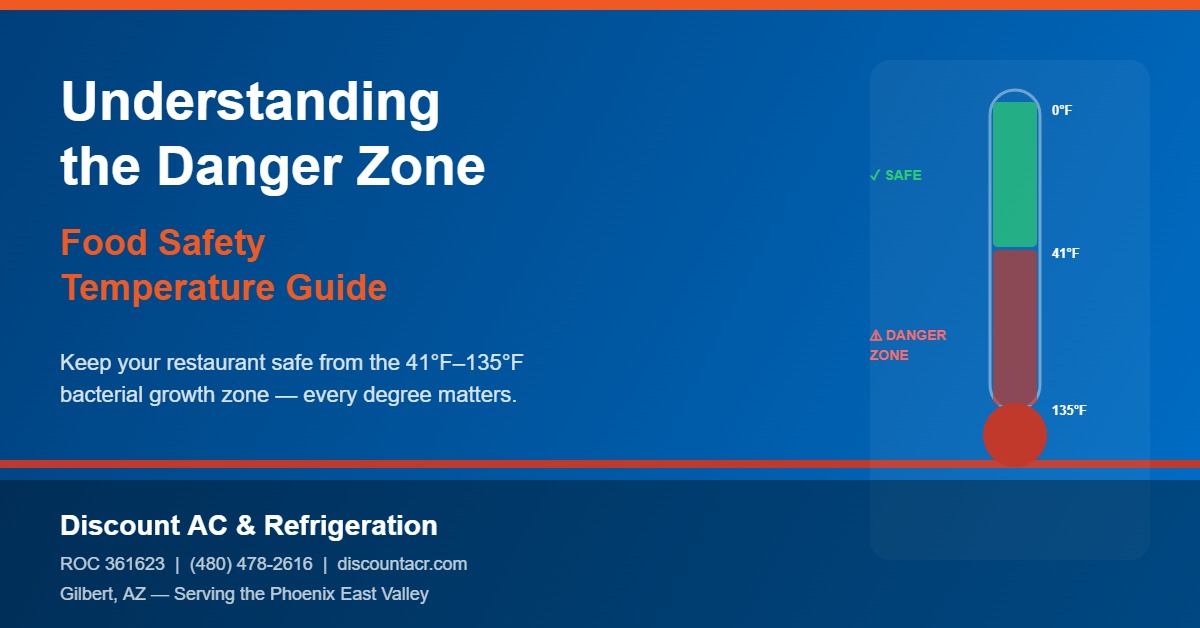
The food safety temperature range is defined by the FDA Food Code as the complete span of safe temperatures for storing and holding food — essentially, everything below 41°F (cold holding) and above 135°F (hot holding). Between those two numbers lies what the food service industry calls the Temperature Danger Zone.
According to the Centers for Disease Control and Prevention (CDC), roughly 48 million Americans experience foodborne illness each year. Most of those cases trace back to one root cause: food left too long in the danger zone. For restaurant owners and facility managers, this isn’t an abstract health statistic — it’s a direct business liability.
- Below 32°F: Freezing range — bacterial growth halts, but does not kill bacteria
- 32°F to 40°F: Ideal refrigeration zone — bacterial growth slowed to near zero
- 41°F to 135°F: The Temperature Danger Zone — bacteria multiply rapidly
- Above 135°F: Safe hot-holding range — bacterial growth effectively halted
- Above 165°F: Cooking kill zone — most pathogens destroyed
The USDA Food Safety and Inspection Service reinforces that pathogenic bacteria like Salmonella, Listeria, and E. coli can double in number every 20 minutes when food sits in this range. A product that starts at safe levels at noon can reach dangerous bacterial counts by dinner service — with no visible or odor-based warning signs.
The Temperature Danger Zone: Why 40°F–140°F Is Your Biggest Risk
Commercial refrigeration equipment is designed to keep food reliably below 41°F — the threshold set by both the FDA and most state health codes, including Arizona Department of Health Services food safety regulations. But a walk-in cooler that was holding 38°F last week can be holding 44°F today if any one of a dozen components starts to fail.
In Arizona’s East Valley — where outdoor temperatures regularly push past 110°F from June through September — every degree of ambient heat adds strain to your refrigeration system’s condenser coils, compressor, and door gaskets. Our team at Discount AC & Refrigeration has seen this play out repeatedly: a condenser coil clogged with desert dust reduces heat rejection efficiency, the compressor runs longer cycles to compensate, and eventually the cabinet temperature creeps upward — right into the danger zone — while the unit’s thermostat display still reads normal.
The most dangerous part? Many walk-in cooler failures happen gradually, not all at once. A failing door gasket may raise your average temp by 3–4°F over two weeks. A refrigerant leak may cause a slow drift from 38°F to 46°F over a month. By the time a health inspector measures 48°F inside your cooler, you may have been unknowingly serving food from the danger zone for days.
Food Safety Temperature Quick Reference Guide
| Temperature Range (°F) | Zone / Status | Bacterial Risk | Required Action |
|---|---|---|---|
| 0°F or below | Deep freeze (freezer) | None — growth stopped | Maintain; check door seals quarterly |
| 0°F – 32°F | Freezing range | Minimal — dormant | Keep frozen foods below 32°F at all times |
| 33°F – 40°F | Safe cold-holding zone ✅ | Negligible | Target range for all walk-in coolers and reach-ins |
| 41°F – 135°F | ⚠️ DANGER ZONE | Rapid multiplication (doubles every 20 min) | Never hold perishable food here >2 hours total |
| 135°F – 165°F | Safe hot-holding zone ✅ | Growth halted | Required for all hot-holding applications |
| 165°F and above | Cooking/kill zone ✅ | Pathogens destroyed | Minimum internal cook temp for poultry/reheated foods |
Reference: FDA Food Code | USDA FSIS Safe Food Handling Guidelines
Commercial Refrigeration Failures That Violate the Food Safety Temperature Range
Understanding the danger zone is only half the equation. Knowing which equipment failures push your products into that zone — especially during an Arizona summer — is what separates a proactive operator from one who gets blindsided by a health inspection failure.
Our licensed HVAC technicians at Discount AC & Refrigeration’s commercial refrigeration division diagnose these issues every week across the Phoenix East Valley:
- Dirty or blocked condenser coils: In desert environments, dust and debris accumulate fast. A clogged condenser coil forces the compressor to work harder and longer, reducing its ability to pull cabinet temperatures below 41°F. It’s one of the most common reasons walk-in coolers fail during summer in Gilbert, Mesa, and Chandler.
- Worn or damaged door gaskets: A compromised door seal allows warm ambient air — sometimes 115°F outdoor air radiating into your kitchen — to constantly enter the cooler. Over time, this raises average cabinet temps by 4–8°F without triggering an obvious alarm.
- Low refrigerant charge / refrigerant leaks: When refrigerant levels drop, the system loses its ability to transfer heat efficiently. The compressor runs continuously but can never reach setpoint. This is a slow failure that often goes unnoticed until a health inspector finds it first.
- Faulty or uncalibrated thermostats: A thermostat that reads 38°F while the actual cabinet temperature is 45°F is one of the most dangerous silent failures in food service. Regular calibration checks — part of a solid commercial HVAC preventive maintenance schedule — catch this before it becomes a liability.
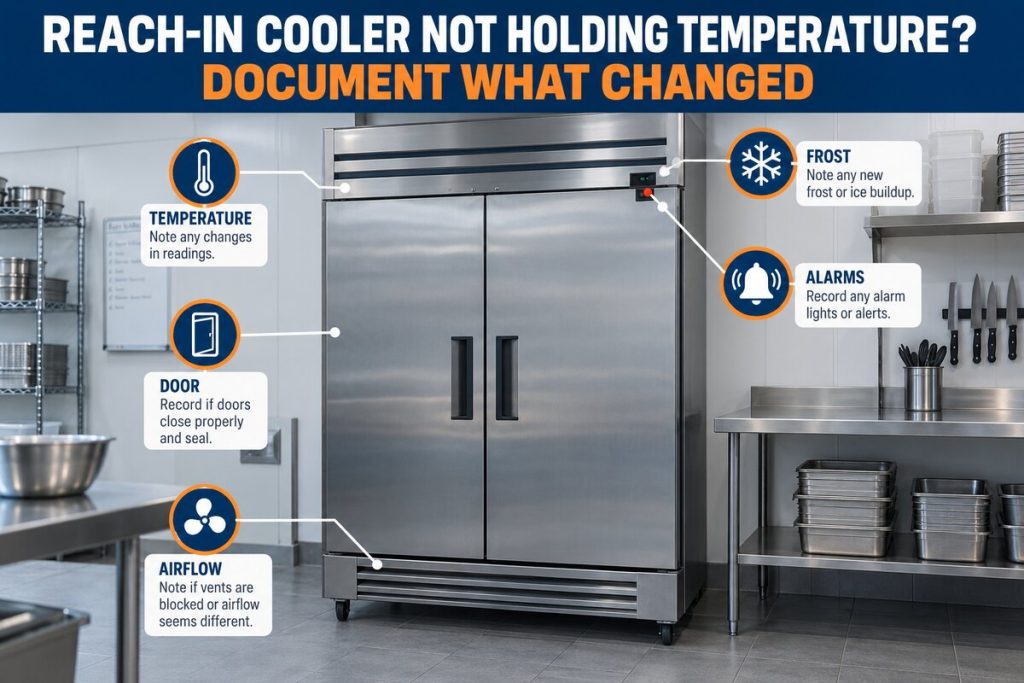
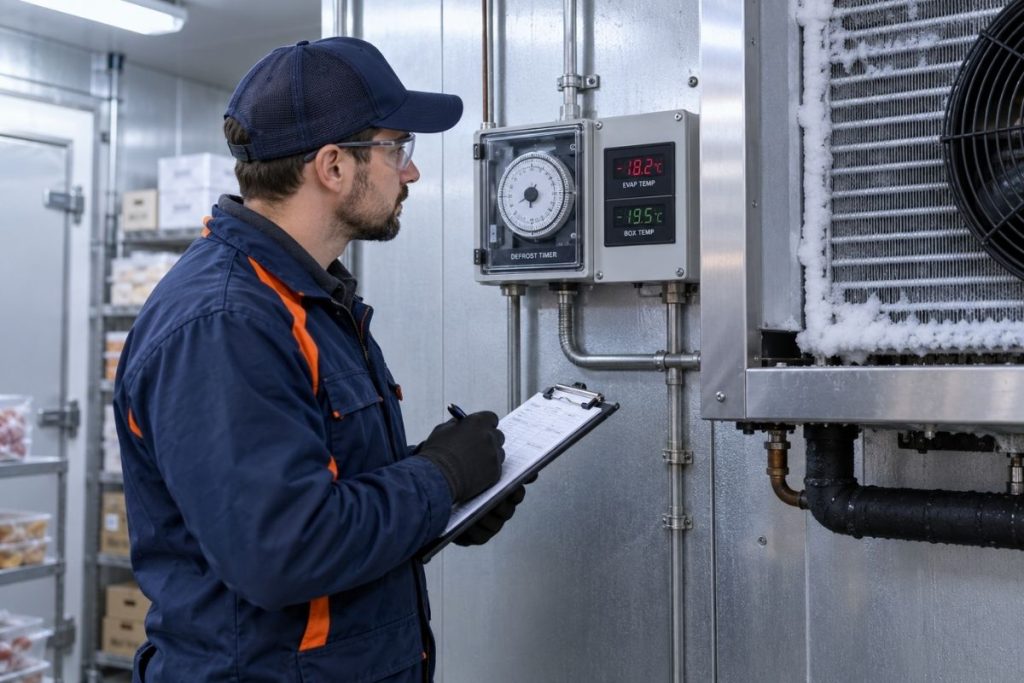
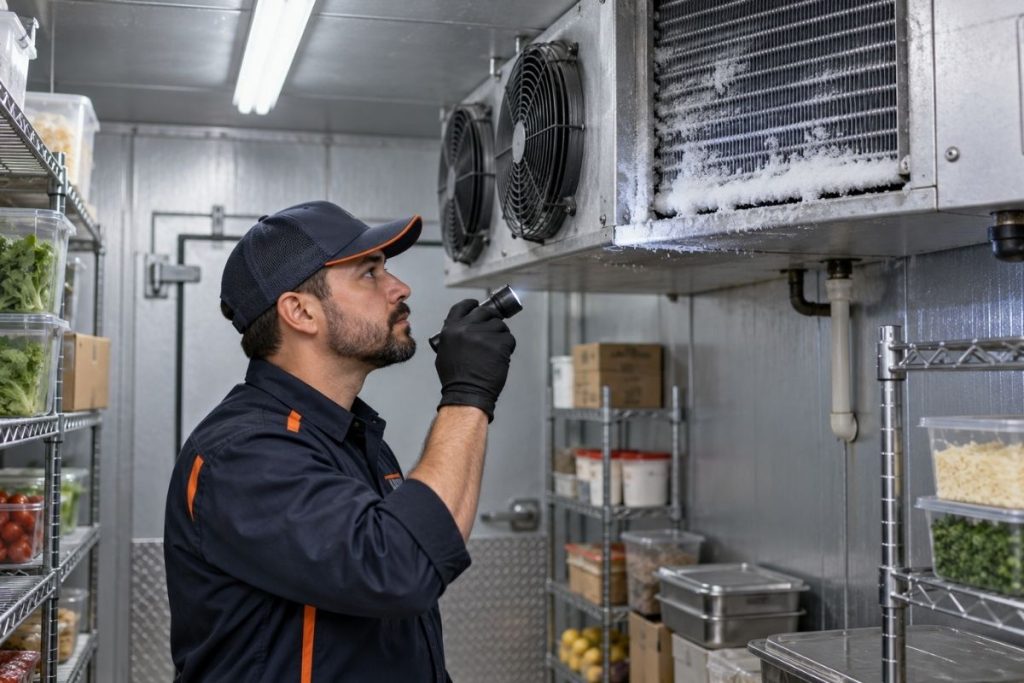
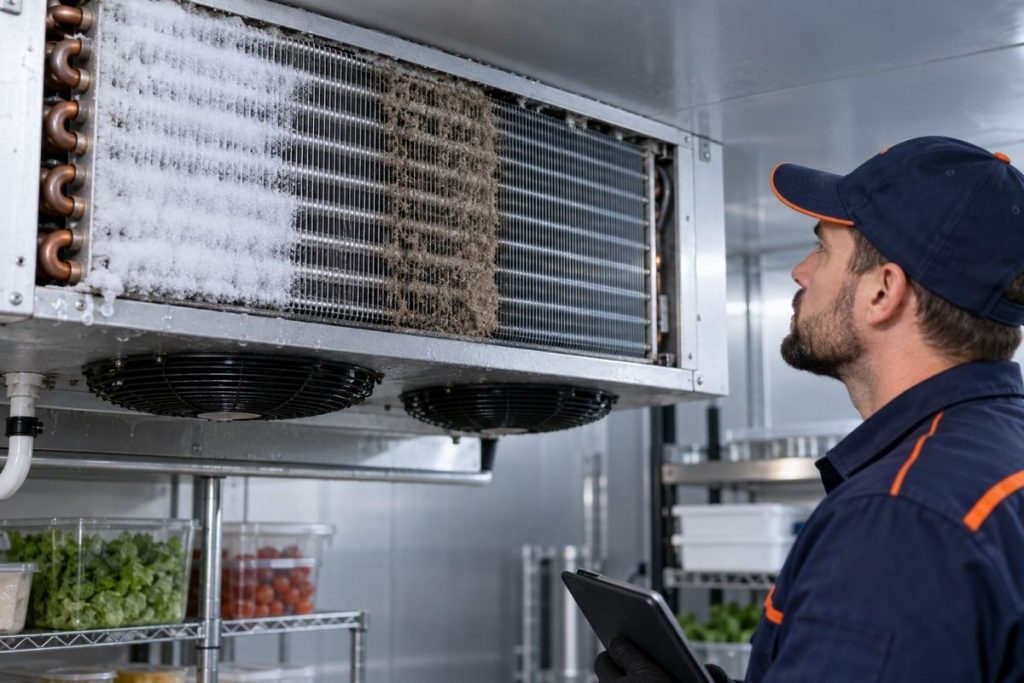
- Evaporator coil ice buildup: When the defrost cycle fails, ice accumulates on the evaporator coil and restricts airflow inside the cabinet. The unit sounds like it’s running normally, but cold air circulation is severely reduced — and cabinet temps rise steadily.
- Overloaded or improperly stocked units: Even a perfectly functioning cooler can struggle to maintain safe temperatures if it’s overstocked, if hot food is loaded directly in, or if the unit is positioned near heat sources.
If your commercial cooler is showing any of these signs, don’t wait for a failed health inspection to act. The team at Discount AC & Refrigeration is available from 6 AM to Midnight, 7 days a week, for emergency diagnostics and repairs across the Phoenix East Valley.
How Preventive Maintenance Keeps You Out of the Danger Zone
The most cost-effective way to keep your commercial refrigeration running within the food safety temperature range isn’t reactive repair — it’s a structured preventive maintenance program. According to NSF International, properly maintained commercial refrigeration equipment has a measurably lower rate of food safety violations and a significantly longer operational lifespan.
- Condenser coil cleaning and airflow inspection
- Door gasket condition and seal integrity check
- Thermostat calibration against a certified reference thermometer
- Refrigerant level check and leak inspection
- Defrost cycle functionality test
- Evaporator coil inspection for ice bridging or restriction
- Electrical connections and control board check
- Fan blade and motor inspection
Our clients across Arizona — including breweries, restaurants, and food production facilities — rely on Discount AC & Refrigeration’s commercial HVAC and refrigeration team to keep mission-critical cooling running safely. You can verify our reputation and read our Google reviews — real feedback from restaurant owners and facility managers throughout the East Valley. We hold Arizona ROC License 361623 and have over 20 years of experience in AC and refrigeration for homes and businesses.
What Gilbert and Phoenix East Valley Restaurant Owners Should Know
Running a commercial kitchen in Arizona means playing a harder game than most of the country. When outdoor temperatures exceed 110°F from late May through early September, your refrigeration systems are fighting against ambient heat loads that most equipment was never designed to handle without regular maintenance.
That scenario is exactly what our technicians in Gilbert and the surrounding service areas encounter regularly from June through August. The solution isn’t replacing the equipment — it’s addressing each failure point before summer arrives.
If you’re wondering about refrigeration or AC replacement cost estimates in Gilbert, our team provides honest diagnostic assessments with no pressure. And if you know another local business owner who could use reliable commercial refrigeration service, our Refer & Earn program rewards you for every successful referral.
Don’t Let a Failing Cooler Put Your Restaurant at Risk — Call Us Today
Food safety compliance starts with refrigeration equipment that reliably holds the right temperatures, every hour of every day. When a walk-in cooler drifts into the 41°F–135°F danger zone — even briefly — the consequences range from discarded inventory to failed inspections to serious health liability.
Our licensed technicians at Discount AC & Refrigeration serve restaurants, grocery stores, food production facilities, and commercial kitchens across Gilbert, Mesa, Chandler, Tempe, Queen Creek, and the greater Phoenix East Valley. Available 6 AM to Midnight, seven days a week — including emergency repair service when your cooler fails during service hours.
Call us at (480) 478-2616. Arizona ROC License 361623. Honest diagnostics, fast response, no pressure.
| Problem | Cause | Temperature Risk | Recommended Action |
|---|---|---|---|
| Cabinet temp drifting above 41°F | Dirty condenser coils, low refrigerant, or overloading | ⚠️ Danger Zone entry — immediate risk | Call for service same day; move perishables to backup unit |
| Unit runs continuously but can’t reach setpoint | Refrigerant leak or compressor stress from Arizona heat | ⚠️ High — slow temperature creep into 41–45°F range | Schedule refrigerant check & leak inspection immediately |
| Frost or ice buildup inside cooler | Defrost cycle failure or damaged door gasket | ⚠️ Moderate — airflow restricted, uneven temperatures | Inspect defrost timer/heater; replace gasket if torn |
| Thermostat reads safe but food feels warm | Uncalibrated thermostat sensor or sensor displacement | ⚠️ Critical — hidden danger zone entry, no visible alarm | Verify with calibrated reference thermometer; recalibrate sensor |
What is the food safety temperature range for a commercial walk-in cooler?
Your walk-in cooler must maintain food at or below 41°F to keep food safely outside the Temperature Danger Zone. If your unit is consistently reading above 41°F, call (480) 478-2616 — we provide same-day commercial refrigeration diagnostics across the East Valley.
How long can food safely stay in the temperature danger zone?
According to FDA guidelines, perishable food should not remain in the 41°F–135°F Danger Zone for more than 2 cumulative hours. After 4 hours, it must be discarded. This is why a failing cooler that drifts to 45°F during a busy service creates hidden liability.
Why does my walk-in cooler struggle to stay cold in Arizona summers?
Arizona’s 110–115°F summer temperatures force condensers to reject heat into extremely hot ambient air, dramatically increasing system strain. Our commercial refrigeration team specializes in high-heat-load diagnostics for Arizona’s unique climate.
How often should I schedule maintenance for my commercial cooler?
For Arizona restaurants, we recommend a minimum of two preventive maintenance visits per year. Our commercial preventive maintenance program covers full coil cleaning, thermostat calibration, gasket checks, and refrigerant verification.
What temperature should my commercial freezer maintain?
Commercial freezers should maintain 0°F or below for long-term frozen storage. Temperatures above 10°F in a freezer indicate equipment stress that warrants immediate inspection. Call us at (480) 478-2616 if your freezer is struggling in Arizona’s summer heat.
Can a faulty thermostat display a false safe temperature?
Yes — this is one of the most dangerous silent failures in commercial refrigeration. A thermostat sensor that has drifted out of calibration can display 38°F while the actual cabinet average is 45°F. We always verify with an independent calibrated reference thermometer during service calls.
How do I know if I should repair or replace my commercial refrigeration unit?
If repair costs exceed 50% of replacement cost for a unit older than 10 years, replacement is usually smarter. For honest, no-pressure cost estimates, visit our refrigeration replacement cost page or call us directly.
Do you provide emergency refrigeration repair in Gilbert and the Phoenix East Valley?
Yes. We provide emergency repair service from 6 AM to Midnight, 7 days a week, throughout Gilbert, Mesa, Chandler, Tempe, and Queen Creek. Call (480) 478-2616. Arizona ROC License 361623.
Is Your Walk-In Cooler Really Holding the Right Temperature?
Our licensed technicians at Discount AC & Refrigeration can inspect, diagnose, and repair commercial refrigeration systems across Gilbert and the Phoenix East Valley — available 6 AM to Midnight, 7 days a week. Arizona ROC License 361623.