Thermostat placement can make a Phoenix home uncomfortable even when the device works exactly as designed. If the wall around it is warmer or cooler than the rooms people use, the system responds to that local reading, not to an average of the whole house. The result can look like an oversized electric bill, long cooling cycles, or a bedroom that never catches up. Before replacing equipment, check whether thermostat placement allows a representative reading.
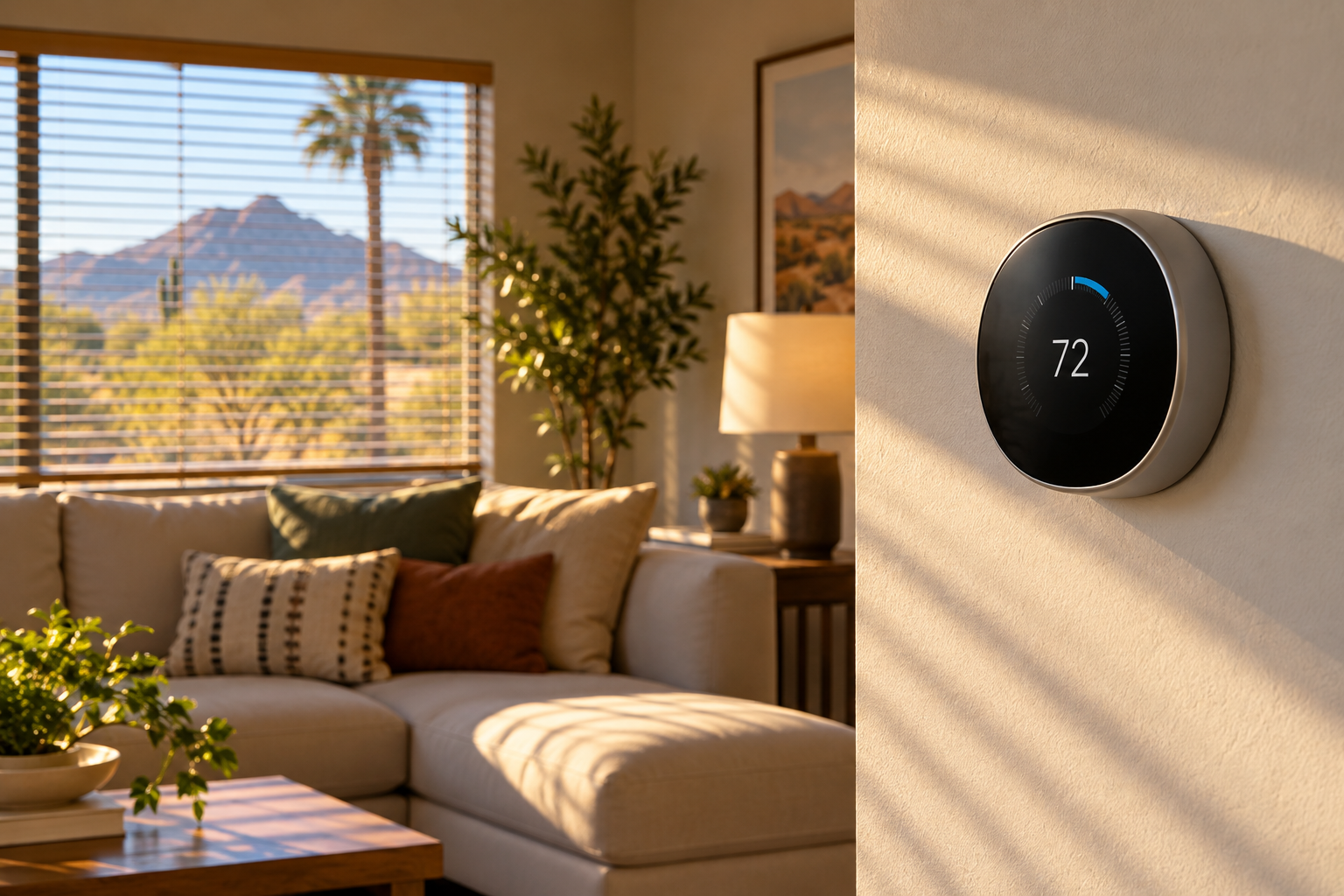
Why thermostat placement matters in a desert home
Strong sun, hot attic spaces, and uneven airflow can create substantial differences between rooms. Poor thermostat placement beside a sunny window may call for cooling long after shaded rooms are comfortable. One near a supply register can shut the system off early because cold air reaches the sensor first. A thermostat on an exterior wall can also react to heat conducted through that wall instead of the room’s typical air temperature. None of those patterns proves the thermostat is defective; the location may be the problem.
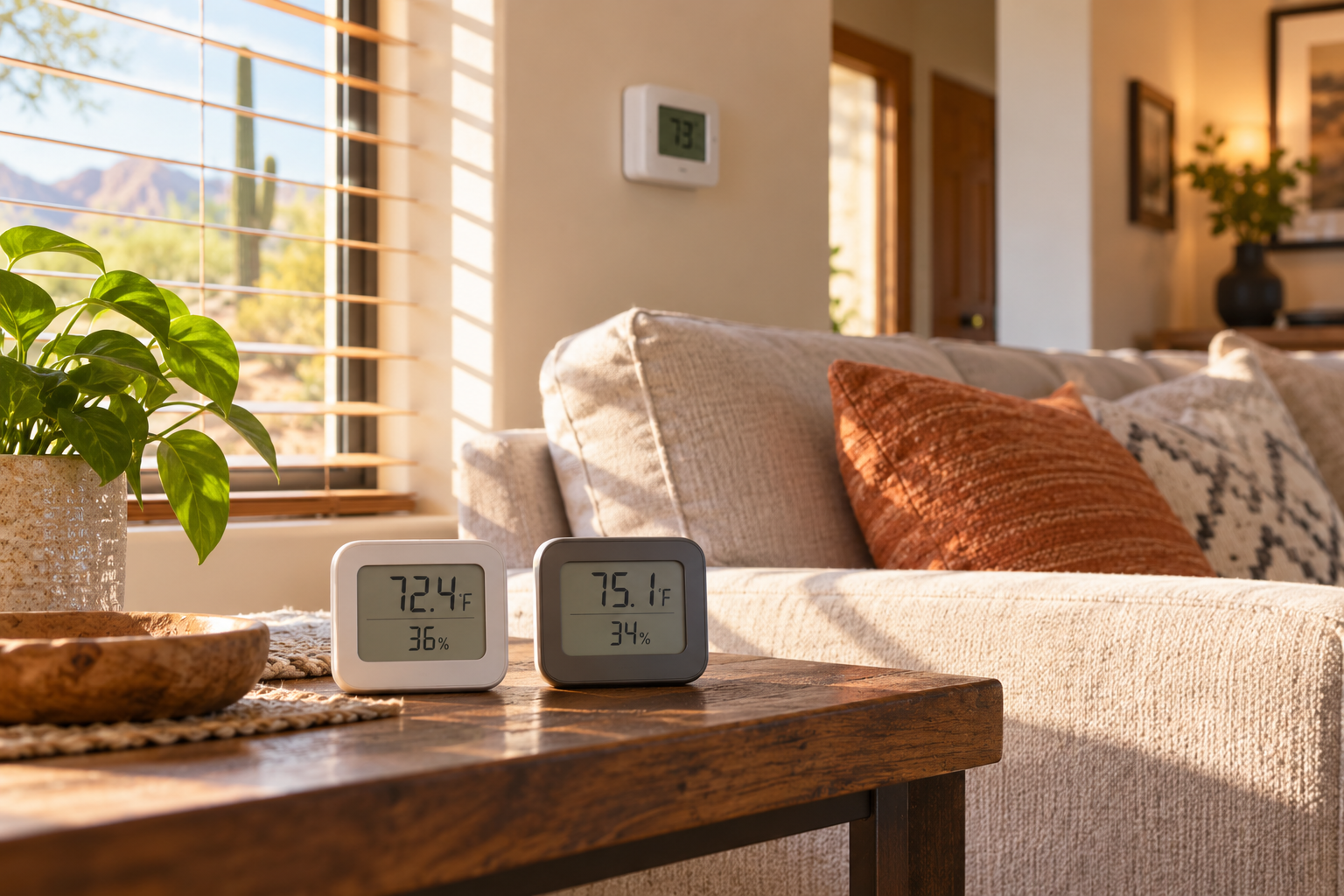
Use the thermostat display as one clue, not as a complete diagnosis. ENERGY STAR’s heating and cooling guidance also recommends an interior wall away from direct sun, drafts, and heat sources. Compare it with a reliable room thermometer placed nearby, away from direct sun and supply air. Then compare readings at several occupied rooms at the same time of day. Record where the sun hits, whether interior doors are open, and whether the fan is running. A consistent difference helps a technician separate a placement issue from a calibration, wiring, duct, or capacity problem.
Five thermostat placement mistakes to look for
Direct sunlight
Afternoon sun through a west-facing window can warm the thermostat’s housing. The AC may run longer because the sensor experiences more heat than the rest of the home. Shade the window for a controlled comparison, but do not cover the thermostat itself.
Supply vents and returns
Cold air blowing directly at the device can end a cooling call too soon. A return-air path can expose it to air from a different part of the house. Check the airflow pattern before assuming that moving a register or thermostat is the right fix.
Exterior walls and attic-adjacent cavities
A wall exposed to outdoor heat can alter the sensor’s immediate environment. An unsealed opening behind the thermostat may also allow warmer wall-cavity air to affect the reading. A qualified technician can assess this without guessing at the root cause. If the system still short-cycles after the thermostat is checked, schedule AC repair in Phoenix.
Kitchens, appliances, and hallways
A kitchen’s temporary heat can make a thermostat call for cooling the whole home. A hallway may be convenient for wiring but may not represent the temperature of bedrooms or living areas, especially when doors are closed overnight.
Furniture or decorations around the sensor
Bookshelves, curtains, and large wall art can trap air near the device. Keep its surroundings clear so it can respond to circulating room air.
Thermostat placement problem or HVAC problem?
If the thermostat reading matches a nearby independent thermometer yet other rooms differ, investigate airflow, duct leakage, insulation, and room heat gain. If the thermostat itself differs substantially from the nearby measurement, the sensor or its immediate environment deserves attention. If cooling runs for hours and every room remains warm, the problem may be elsewhere in the system. Our AC repair and diagnostics team evaluates the entire system rather than assuming a new thermostat will solve it.
Should you change thermostat placement?
Relocation can help when the current wall cannot provide a representative reading. First document the pattern and ask for an assessment of wiring, controls, and the most appropriate new location. Moving a thermostat without considering the home’s zones can trade one inaccurate reading for another. In some homes, properly configured remote sensors or zoning are more suitable than a simple move; compatibility and setup matter.
Do not open live electrical equipment or rewire controls to test a theory. A service visit can check the thermostat reading, control response, airflow, and system performance together. For broader home comfort options, see our residential HVAC services.
A room-by-room test before changing equipment
A useful test starts with a consistent routine, not a single glance at the wall display. Write down the thermostat reading and the cooling setpoint. Place an independent thermometer in the same room, but not directly against the thermostat, a window, or an air register. Allow it to settle, then note the time, outdoor conditions, and whether the system is actively cooling. Repeat this in the afternoon and after sunset. The aim is to identify a repeatable pattern, not to prove an exact degree of error from one inexpensive instrument.
Next, check two or three occupied rooms at the same time. A bedroom that is warmer only during late afternoon may face more solar gain than the hallway containing the thermostat. A room that is always warmer may have a different airflow, duct, insulation, or door-closure issue. Record whether blinds are closed, doors are open, and the fan is set to Auto or On. These details help a professional interpret the readings. Do not move the thermostat or alter wiring as a first experiment.
What to record for a technician
Bring a brief log: time, setpoint, thermostat reading, independent reading, room readings, equipment running status, and visible sun exposure. Note when discomfort started and whether it followed remodeling, a new thermostat, furniture relocation, or ductwork changes. A photo showing the thermostat relative to nearby vents, windows, and appliances is often more useful than a close-up of the display alone. If the system is cycling rapidly, fails to cool any room, or has a new noise or leak, report that separately; those symptoms need broader AC diagnostics.
Sun exposure, wall heat, and misleading readings
In a Phoenix house, two nearby surfaces can feel very different in the afternoon. A west-facing window may illuminate a thermostat or the wall around it for several hours. Radiant heating can make the sensor area warmer than the room air people experience. An exterior wall or wall cavity may also be affected by heat even when the device never receives direct sun. Poor thermostat placement can therefore lengthen cooling calls or create an apparent mismatch between the display and a shaded room thermometer.
For a controlled observation, compare readings when the window shade is open and when it is closed under similar conditions. Avoid placing a temporary cover over the thermostat because that can trap heat and create a new error. If the wall itself feels unusually warm, mention it during the service visit. The solution might involve location, insulation, or an air path behind the device; it cannot be chosen reliably from a photo. An interior wall is commonly preferred, but the best spot still needs to represent the area the system is intended to control.
Airflow can make a good thermostat look bad
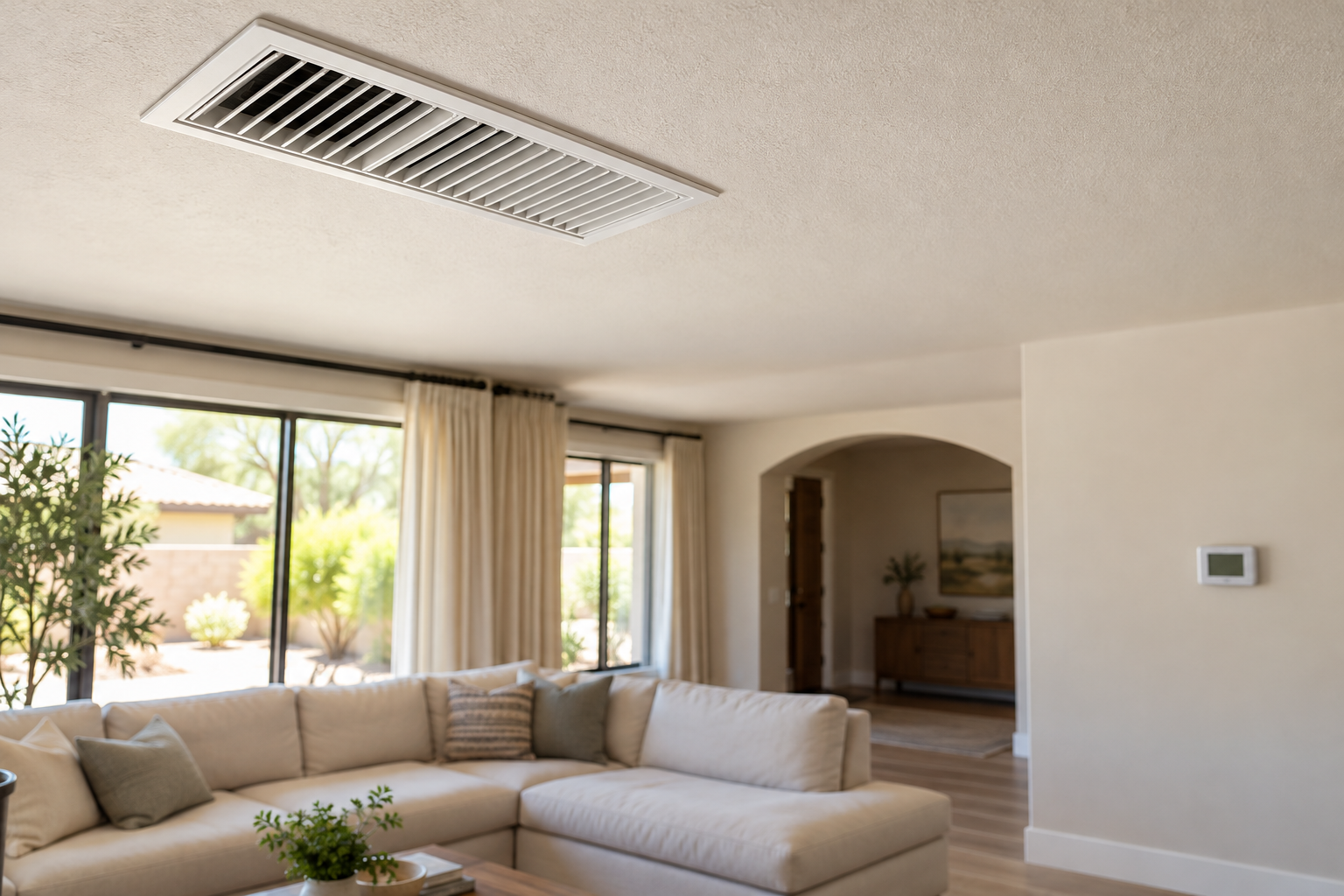
Thermostat placement is only one part of a comfort diagnosis. A supply register pointed toward the device can deliver a burst of cold air to its sensor before the rest of the home catches up. The system may then stop cooling while distant rooms remain warm. Conversely, a thermostat in a stagnant corner can keep calling for cooling after better-ventilated rooms are comfortable. Look at the direction of nearby registers and whether furniture blocks normal circulation. Do not close multiple vents to force air into one room; doing so can alter system airflow and pressure.
Closed bedroom doors can also change return-air paths. If a bedroom warms up overnight while the hallway thermostat reads normally, that does not automatically mean the thermostat should move into the bedroom. The home may need a return-path or duct evaluation. Our ductwork services address distribution issues that a new wall control cannot fix. A technician should compare room temperatures with airflow observations before recommending relocation, equipment replacement, or zoning.
Calibration, batteries, and control settings
A display that differs from an independent thermometer may be affected by location, a sensor issue, or a configuration setting. First verify that both measurements were taken after enough time to stabilize and away from direct sun or moving supply air. Check the thermostat manual for its stated accuracy and whether it supports an installer-adjustable temperature offset. Do not use an offset merely to hide a real airflow or wall-heat problem; the number could be correct at one hour and wrong at another.
Some thermostats use batteries, while others draw power from HVAC wiring. Low-battery warnings, a blank display, lost schedules, or intermittent connectivity may have a different cause from an inaccurate temperature reading. Smart thermostats can also rely on schedules, occupancy features, remote sensors, and app settings. Review the active mode and schedule with the installer or service provider. A system that switches settings unexpectedly can imitate a placement problem even when the sensor measures the room accurately.
Remote sensors and zoning: useful, but not automatic fixes
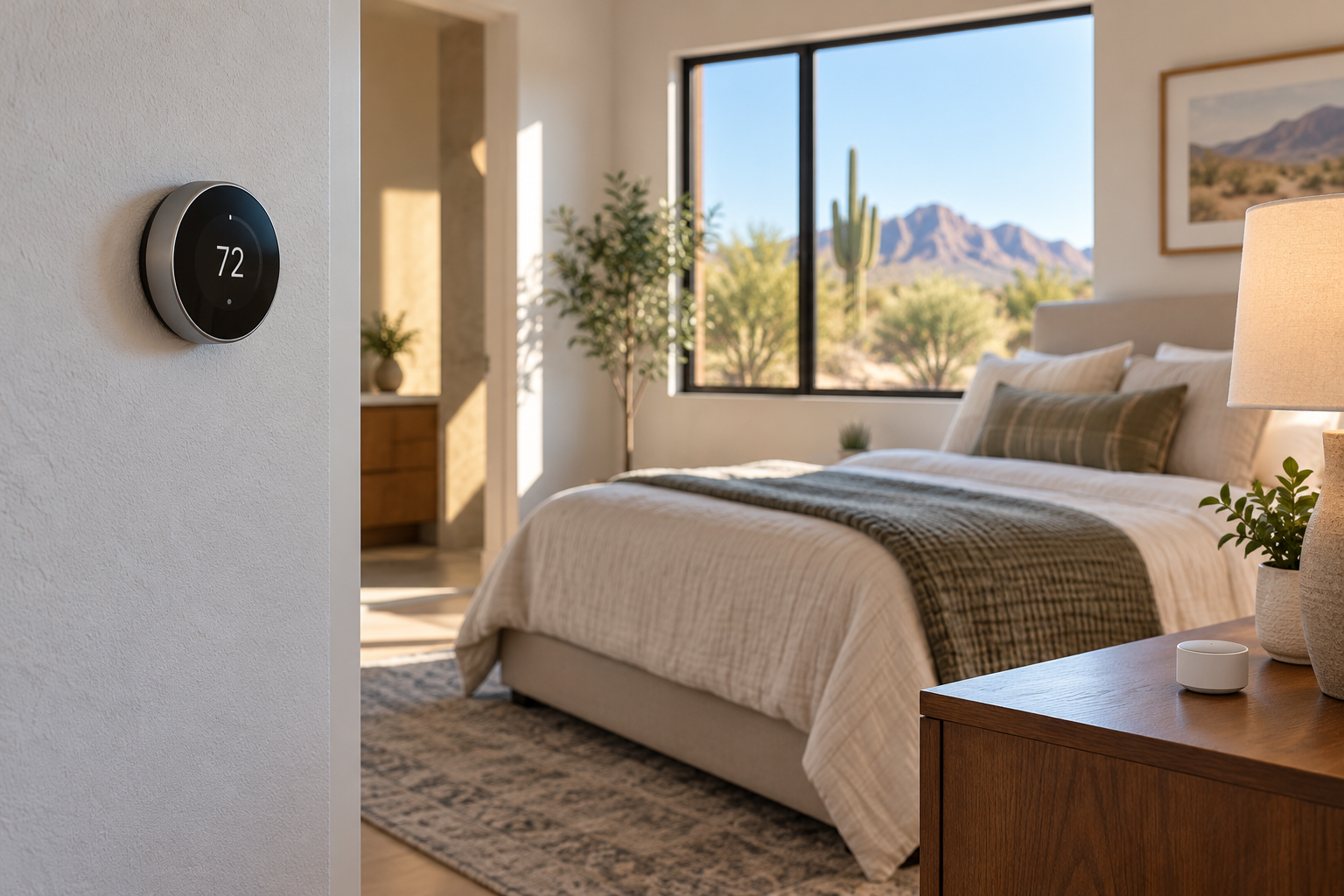
A remote room sensor can help a compatible smart thermostat pay attention to a bedroom or living area that matters most at a given hour. It does not create more cooling capacity or repair an undersized duct. Some systems average several sensors; others prioritize one sensor on a schedule. Either approach can improve comfort when it matches how the home is occupied. It can also make another room less comfortable if the control responds to a hot location with unusually high solar gain.
Before purchasing sensors, confirm compatibility with the thermostat and HVAC equipment. Ask whether the system is single-zone or has separate dampers and controls. In a single-zone home, the equipment still conditions the whole connected duct system even if a bedroom sensor calls for cooling. In a zoned installation, damper operation, bypass strategy, and airflow must be designed for the equipment. If thermostat placement is poor, a remote sensor may help; it is not a substitute for diagnosing a leaking return, obstructed register, or wiring problem.
Three Phoenix-home scenarios and what they suggest
Sunny hallway, cool bedrooms
The hallway display rises during late afternoon while bedrooms feel cold. This pattern is consistent with sun or wall heat influencing the control area, but it does not prove that the sensor is defective. Compare the hallway reading with a shaded independent thermometer and document when sunlight reaches the wall. A technician can decide whether shading, sealing a wall opening, changing the control location, or a remote sensor would address the measured condition without overcooling the rest of the house.
Normal hallway, hot west-facing bedroom
The thermostat seems accurate, yet one bedroom remains hot after school or work. The room may have high solar gain, limited supply or return airflow, duct leakage, or insulation differences. Moving the thermostat to that bedroom could make the rest of the house too cold. Compare the room with another similar room, note shade position and door use, and ask for an airflow and envelope assessment. Thermostat placement may not be the main problem in this scenario.
Every room warm despite a low setpoint
If the AC runs continuously and the entire house stays warm, investigate the equipment and distribution system before blaming the wall sensor. A dirty filter, restricted airflow, refrigerant-side fault, outdoor-unit issue, or other malfunction may be involved. Keep the system accessible for service, note any unusual sound or water, and avoid repeated setpoint changes. A lower number on the display does not increase the cooling capacity of a struggling system.
Questions to ask before approving a thermostat move
Ask what evidence shows the current location is unrepresentative. Was the nearby room temperature checked with a second instrument? Was the reading compared at more than one time of day? Were supply-air direction, wall exposure, and nearby heat sources evaluated? Ask how the proposed location represents the occupied rooms and what happens when doors are closed. A clear answer should explain the expected improvement and the remaining uncertainties, not simply point to a more convenient wall.
Also ask whether the move requires wiring work, patching, or a compatible mounting location, and whether a remote sensor would be simpler. In multi-stage or heat-pump systems, control compatibility and configuration matter. The service proposal should identify what will be tested after the change: display accuracy, heating and cooling calls, fan response, and comfort in rooms that previously differed. It is reasonable to request a documented baseline so you can judge whether the work solved the original symptom.
When a service visit is the better next step
Call a qualified HVAC professional when measurements show a repeatable mismatch, cycling is unusual, or several rooms remain uncomfortable despite a clean filter and ordinary use. Seek prompt help if there is water around equipment, an electrical smell, or a system that cannot cool the home during severe heat. Do not open electrical compartments, bypass safety devices, or handle refrigerant. The technician can test the controls alongside airflow and equipment performance and then recommend a change proportional to the evidence.
Discount AC & Refrigeration can review the symptoms in the context of the complete residential system. Share your temperature log, the rooms affected, recent changes to the home, and any photos of the thermostat location. That preparation can shorten the diagnostic conversation. To discuss AC performance or thermostat placement in a Phoenix-area home, call (480) 478-2616. The goal is a reliable reading and balanced comfort, not a higher SEO score or a new device for its own sake.
A simple follow-up after changes
Whether the recommendation is shading, a sensor adjustment, ductwork, or a thermostat move, repeat the same room-temperature observations after the work. Use comparable times of day and note outdoor conditions, because a mild morning and a very hot afternoon are not equivalent tests. Review comfort in the rooms that mattered before the change rather than relying only on the thermostat display. A successful adjustment should reduce the original mismatch without creating a new cold room or excessive cycling.
If the problem returns, keep the original and follow-up logs. They may show that another factor, sun exposure, closed doors, airflow, or equipment performance, varies with the season. Do not keep changing the temperature offset to chase every reading. Ask the service team what measurement would distinguish a persistent location problem from a new system fault. Good thermostat placement helps the control sense a representative space, but lasting comfort also depends on the rest of the HVAC system working as intended.
For renters or recent buyers, document the observations before requesting a change to the wall or wiring. A written summary makes it easier for the owner and technician to agree on the symptom and the scope of work. Keep manufacturer instructions available for the thermostat model, especially if schedules or remote sensors are involved. This measured approach is more reliable than replacing a device because one room felt warm on one afternoon.
Frequently Asked Questions
Can direct sun make a thermostat read too high?
Yes. Sunlight can warm the sensor or its housing above the surrounding room air. Compare readings with a shaded, independent thermometer before deciding what to change.
Is a warm bedroom always a thermostat problem?
No. Closed doors, inadequate return airflow, duct restrictions, insulation, and room exposure can all create a warm bedroom even when the thermostat reads correctly.
Will a smart thermostat fix poor placement?
Not automatically. Some systems support remote sensors, but they need compatible equipment and thoughtful settings. A smart display mounted in the same bad location can still respond to an unrepresentative reading.
When should I call for an assessment?
Call when rooms stay uneven despite normal filter maintenance, the displayed temperature disagrees with a nearby independent measurement, or the system cycles abnormally. Discount AC & Refrigeration serves the Phoenix metro; call (480) 478-2616 to discuss the symptoms.