Reviewed by: Licensed HVAC technician
A failing walk in cooler door seal can allow warm, humid air to enter a refrigerated space every time the system is trying to remove heat. The first clues may be frost at one corner, water droplets around the frame, a door that rebounds after closing, or a compressor that seems to run longer than usual. However, the gasket is not always the only cause. Door alignment, hinges, latch pressure, the closer, the threshold, and even product blocking the door can change how the seal contacts the frame.
This guide explains what the common symptoms mean, what a paper test can and cannot tell you, and how a professional assessment determines whether the gasket needs cleaning, adjustment, replacement, or support from other door repairs. For a complete overview of the equipment we service, visit our walk-in cooler and freezer service page.
What Door-Seal Symptoms Usually Mean
| Observation | Possible Explanation | What to Check Next |
|---|---|---|
| Frost at one corner | Localized air gap, torn gasket, or door sag | Gasket contact, hinge condition, and frame alignment |
| Condensation around frame | Warm-air infiltration, high humidity, or heater issue | Seal continuity, door heater, and surrounding conditions |
| Door will not stay closed | Closer, latch, hinge, floor, or obstruction problem | Full opening-and-closing movement |
| Longer system runtime | Added heat and moisture load, but other faults are possible | Door leakage plus temperature, airflow, coil, and controls |
No single symptom proves that the gasket must be replaced. Frost can also develop because of frequent door traffic, an evaporator or defrost problem, blocked airflow, or a door left ajar. Condensation can be influenced by indoor humidity, a failed perimeter heater on equipped doors, or damaged insulation. If the box is not holding temperature, our guide to a walk-in cooler not cooling explains why the full refrigeration system may also need diagnosis.
Frost Around the Door: A Map of the Air Leak
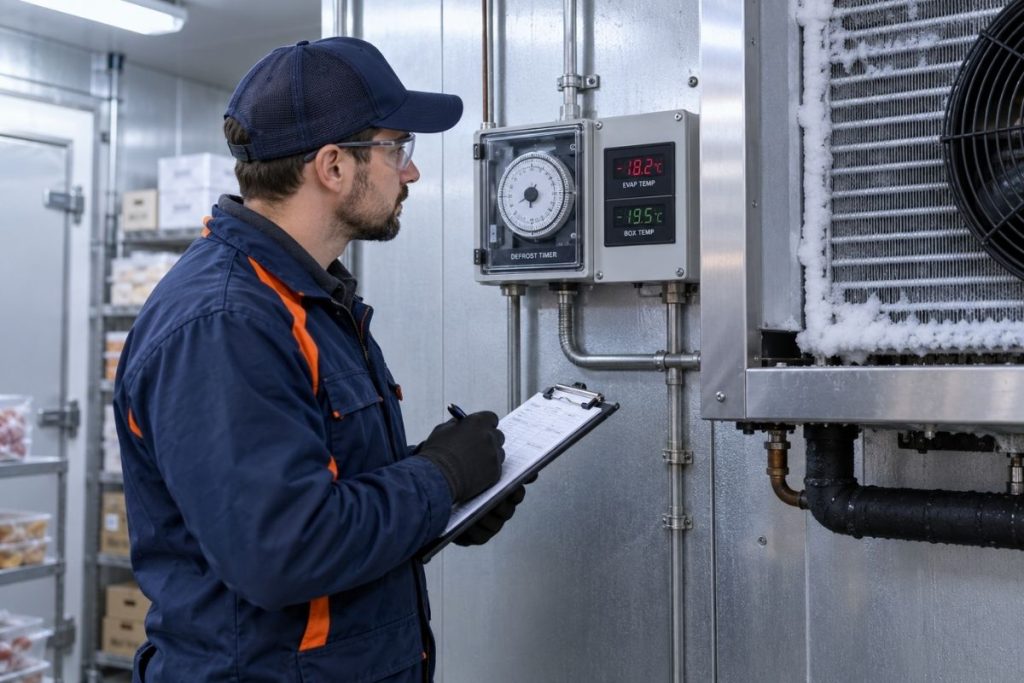
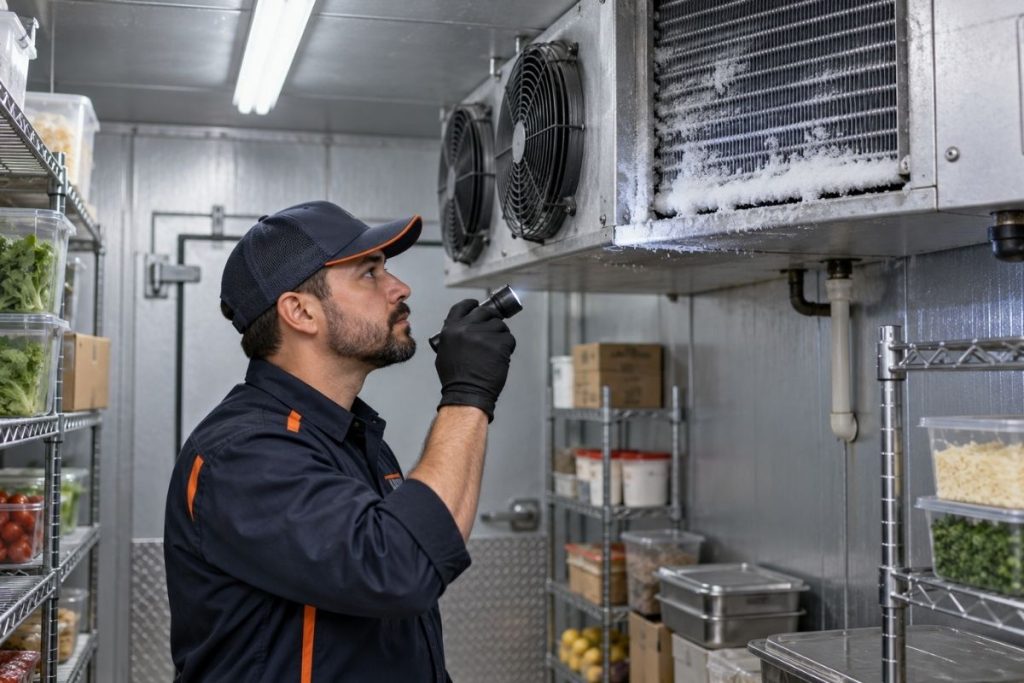
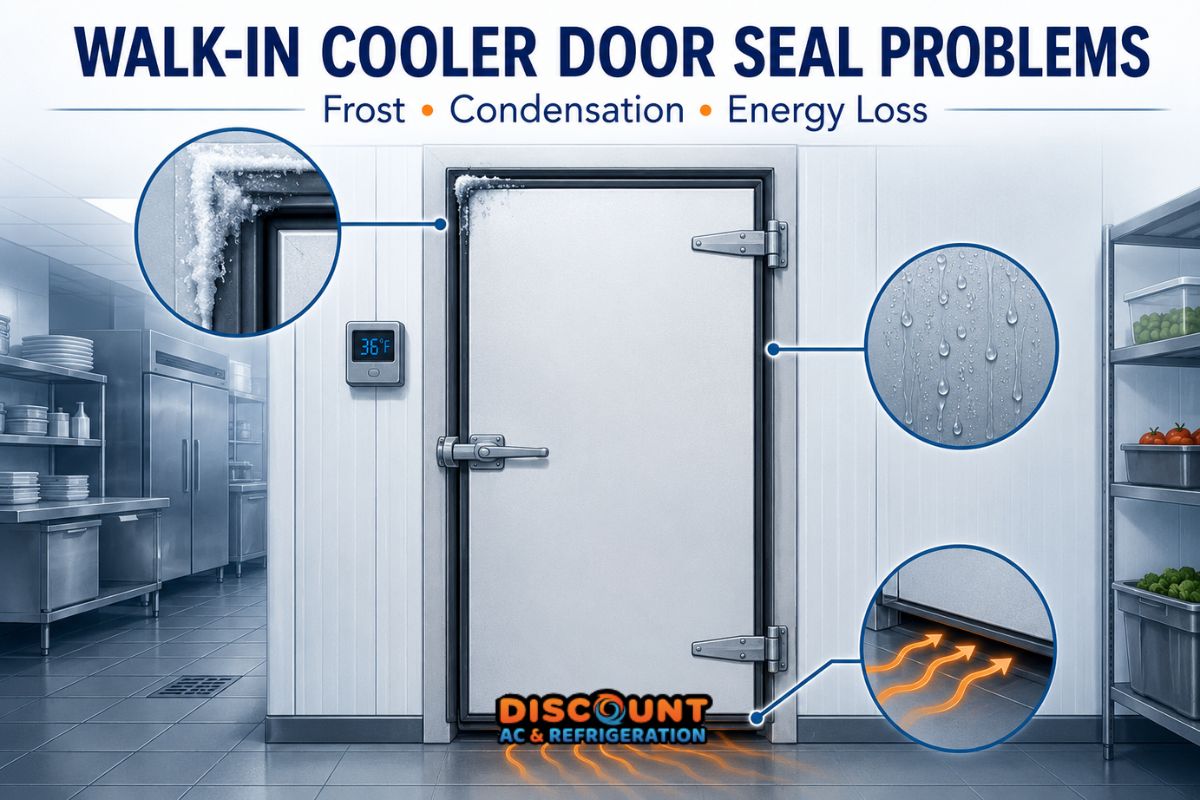
Frost near the door is often a visible record of where warm, moisture-bearing air is entering. A concentrated patch at the upper latch corner may point toward uneven compression. Ice along the hinge side may suggest door sag, worn hardware, or a gasket that has rolled out of position. A continuous band of frost can indicate broader contact problems or a door that is not completing its closing movement.
Do not chip the ice with a sharp tool. That can cut the gasket, damage the door skin, or create a new leak. Clear only what can be removed safely according to the equipment instructions, keep the door closed as much as operations allow, and note where the frost returns. Photos taken before cleaning can help a technician see the pattern.
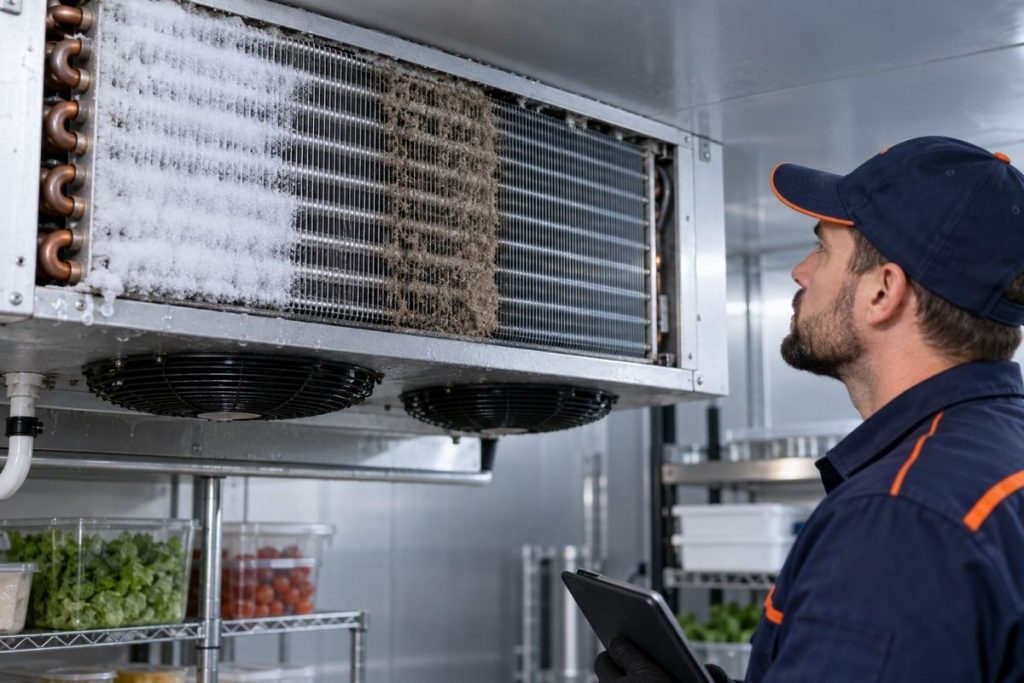
Frost away from the door deserves a different investigation. Ice on the evaporator, ceiling, product, or drain area can involve airflow and defrost controls rather than a perimeter leak. Review the broader warning signs in our walk-in cooler repair troubleshooting guide before assuming the door is responsible.
Condensation: Where the Water Appears Matters
Moisture on the warm side of a cooler door can develop when cold surfaces meet humid room air. A narrow line of droplets beside a flattened gasket may follow an air leak. Water concentrated around hardware or the threshold can instead point toward thermal bridging, heater performance, drainage, or a floor-level gap. Condensation inside the box near the opening may also increase after heavy deliveries or repeated door openings.
Arizona is dry for much of the year, but commercial kitchens, dishwashing zones, monsoon humidity, and frequent deliveries can create a demanding local environment. That is why technicians compare the moisture pattern with door use and ambient conditions. They do not diagnose a seal from one wet surface alone.
Wipe the area, confirm the door closes fully, and observe whether water returns in the same location. Keep food and packaging away from moisture. If water is spreading across the floor, creating a slip hazard, or reaching electrical components, restrict access to the area and request service. For maintenance items that support the whole system, see our commercial refrigeration maintenance checklist.
Energy Loss Without Guessing at the Cause
A leaking door adds both sensible heat and moisture to the refrigerated space. The refrigeration system must remove that extra load, while moisture can freeze on cold surfaces and interfere with airflow. In practical terms, operators may notice longer cycles, more frost, temperature recovery that takes longer after deliveries, or a door area that repeatedly sweats.
Those observations do not isolate energy use to the gasket. Dirty condenser coils, poor evaporator airflow, incorrect controls, high product loads, frequent traffic, and refrigeration faults can create similar behavior. Utility-bill changes are especially difficult to interpret when operating hours or ambient temperatures have also changed. Our walk-in cooler efficiency tips cover door practices alongside coil care and operating habits.
The useful question is not simply, “Is energy use higher?” It is, “Is the door achieving continuous, even contact while the rest of the system operates normally?” That question requires visual inspection, mechanical checks, temperature records, and, when appropriate, professional testing.
How to Inspect a Walk In Cooler Door Seal Safely
Begin with the cooler operating and the door closed. Look for visible daylight or uneven gaps without placing fingers near hinges, latches, or moving hardware. From inside the box, verify that the safety release works before performing any observation and never allow someone to work alone inside a walk-in. Follow the manufacturer’s safety and cleaning instructions.
- Inspect the gasket. Look for tears, hardened sections, permanent flattening, pulled corners, shrinkage, and areas that have come out of the retainer.
- Clean the contact surfaces. Food residue and grease can prevent full contact. Use only gasket-safe products recommended for the equipment.
- Watch the closing movement. Open the door and observe whether it closes smoothly, slows before contact, rebounds, drags, or stops short.
- Compare all four sides. A good-looking latch side does not rule out a gap at the hinge side or threshold.
- Record temperature trends. Note readings, loading events, door traffic, and when frost or moisture appears.
If the door is damaged, unusually heavy, difficult to control, or misaligned, stop adjusting it yourself. Commercial door assemblies can involve tensioned hardware and heavy panels. A technician can separate a gasket problem from a hinge, closer, latch, frame, threshold, or structural issue.
The Paper Test—and Its Limitations
The paper test is a quick screening method. Place a clean strip of ordinary paper between the gasket and frame, close the door normally, and pull the paper. Noticeable resistance suggests contact at that point; little or no resistance suggests weaker compression. Repeat at several positions around the perimeter rather than testing only one spot.
However, the test does not measure an exact sealing force and cannot certify that the door is airtight. Paper thickness, pulling angle, gasket style, magnetic strength, surface contamination, frost, and latch position all affect the result. A passing spot can sit beside a leaking corner, while a weak result may come from door misalignment rather than a failed gasket.
A technician may compare compression around the entire perimeter, inspect hardware movement, check frame condition, and evaluate temperature or moisture patterns. The goal is to identify why contact is uneven before recommending parts.
Why a New Gasket May Not Fix the Leak
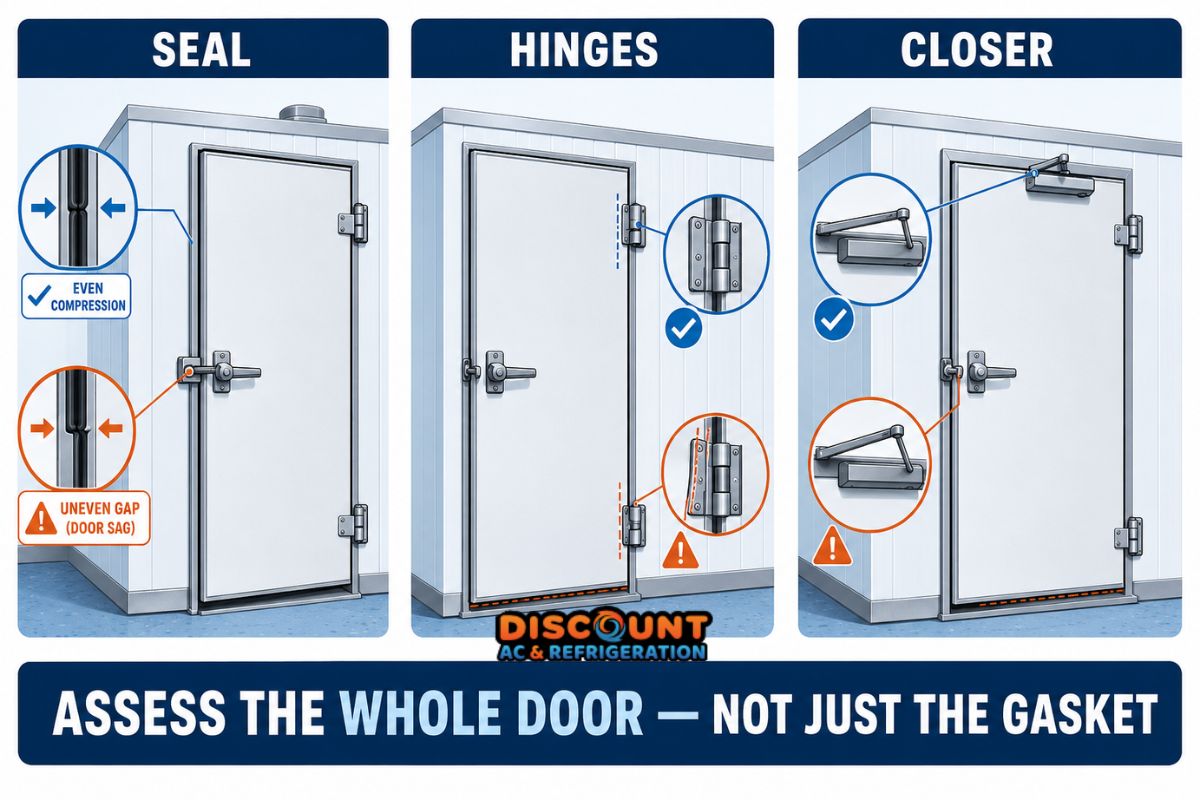
A replacement gasket can only seal against the surface it reaches. If the door has dropped on its hinges, the upper corner may stay open even when the gasket is new. If the closer lacks enough controlled movement to bring the door to the frame, the seal may never engage. If the latch pulls too aggressively or unevenly, one area can be overcompressed while another remains loose.
The threshold and frame also matter. A bent frame, damaged sweep, uneven floor, loose hardware, or debris can prevent consistent contact. Product racks, strip curtains, boxes, and floor mats can obstruct the closing path. On some doors, excessive ice buildup physically prevents closure and must be traced back to the condition that produced it.
Place the in-article image here: “Seal, Hinges, and Closer — Assess the Whole Door, Not Just the Gasket.”
A complete assessment therefore checks the walk in cooler door seal together with hinge play, closer action, latch engagement, frame alignment, threshold contact, and door-panel condition. If temperature remains unstable after the door closes correctly, technicians move on to airflow, controls, defrost, refrigerant, and electrical diagnostics. Our emergency refrigeration service page explains when a broader failure needs prompt attention.
Cleaning, Adjustment, or Replacement?
Cleaning may be appropriate when:
The gasket remains flexible and intact, but grease, residue, or debris is preventing clean contact. Cleaning should follow the door manufacturer’s instructions because harsh chemicals, excessive heat, and abrasive tools can damage gasket material.
Adjustment may be appropriate when:
The gasket is serviceable, but the door sags, the latch does not draw the panel evenly, or the closer stops short. Adjustment depends on the specific hinge and door system. It should restore alignment without forcing the gasket into excessive compression.
Replacement may be appropriate when:
The gasket is torn, brittle, permanently flattened, shrunken, missing a section, or unable to remain secured in its retainer. The replacement must match the door manufacturer, profile, dimensions, corner construction, and mounting method. A similar-looking gasket may not seat or compress correctly.
After installation, the door should be checked across its complete operating range. The technician verifies that the gasket contacts evenly, the door closes without obstruction, the latch and closer behave correctly, and the original frost or condensation pattern does not immediately return. For related equipment issues, explore our commercial refrigeration services and reach-in cooler repair guide.
When to Request Professional Service
Request an assessment when cleaning does not restore contact, frost repeatedly returns at the same location, condensation spreads, the door will not close reliably, the gasket is visibly damaged, or temperature records show unexplained drift. Service is also appropriate when hinge or closer movement is irregular, the frame appears damaged, or the door panel has dropped.
Treat a door issue as part of a larger refrigeration concern if product temperature is outside your facility’s required range, alarms activate, the evaporator becomes heavily iced, or the equipment cannot recover after normal loading. Follow your food-safety plan and applicable health requirements; do not rely on appearance or a single air-temperature reading to decide whether stored product is safe.
For local support from Queen Creek across the Phoenix East Valley, contact Discount AC & Refrigeration through our service request page or call (480) 478-2616. We can assess the door assembly and determine whether the next step is cleaning, hardware adjustment, gasket replacement, or broader walk-in cooler repair.
Frequently Asked Questions
What are the signs of a bad walk in cooler door seal?
Common signs include localized frost, recurring condensation, visible gaps, torn or hardened gasket material, weak contact at parts of the frame, and a door that does not remain fully closed. These signs should be assessed with the hinges, latch, closer, frame, and operating conditions.
Does frost always mean the gasket needs replacement?
No. Frost near the perimeter may indicate an air gap, but frequent door traffic, misalignment, a closer problem, high humidity, or a broader defrost or airflow issue can produce similar symptoms.
How accurate is the paper test?
It is a useful screening check for relative resistance at several points, but it does not measure airtightness or exact compression. Paper thickness, pulling angle, gasket type, dirt, frost, and door alignment can change the result.
Can I clean a cooler gasket instead of replacing it?
Cleaning may restore contact when the gasket is flexible and undamaged but coated with grease or residue. Use only manufacturer-compatible cleaning methods. Cleaning will not repair tears, shrinkage, brittleness, or permanent flattening.
Can bad hinges make a new gasket leak?
Yes. Worn or misaligned hinges can let the door sag, changing gasket compression at the top, bottom, or latch side. The hardware should be assessed before assuming a new gasket will correct the gap.
What does the door closer have to do with the seal?
The closer must bring the door through its full movement so the gasket meets the frame. If it stops short, rebounds, or cannot overcome an obstruction, the gasket may not engage even when it is in good condition.
How is the correct replacement gasket selected?
Selection should account for the door manufacturer and model, gasket profile, mounting method, dimensions, corner construction, and required compression. Visual similarity alone is not enough to confirm fit.
When should a business call for walk-in cooler door service?
Call when the door does not close reliably, frost or condensation returns after cleaning, the gasket is damaged, hardware movement is irregular, or the cooler cannot maintain the required temperature. Protect inventory according to your food-safety procedures while awaiting assessment.
Get the Entire Door Assembly Assessed
A walk in cooler door seal should be evaluated as part of the complete door—not as an isolated strip of rubber. Discount AC & Refrigeration can inspect gasket condition, compression, alignment, hinges, latch operation, closer movement, frame contact, and related refrigeration symptoms for businesses in Queen Creek and surrounding Phoenix-area communities.
Call (480) 478-2616