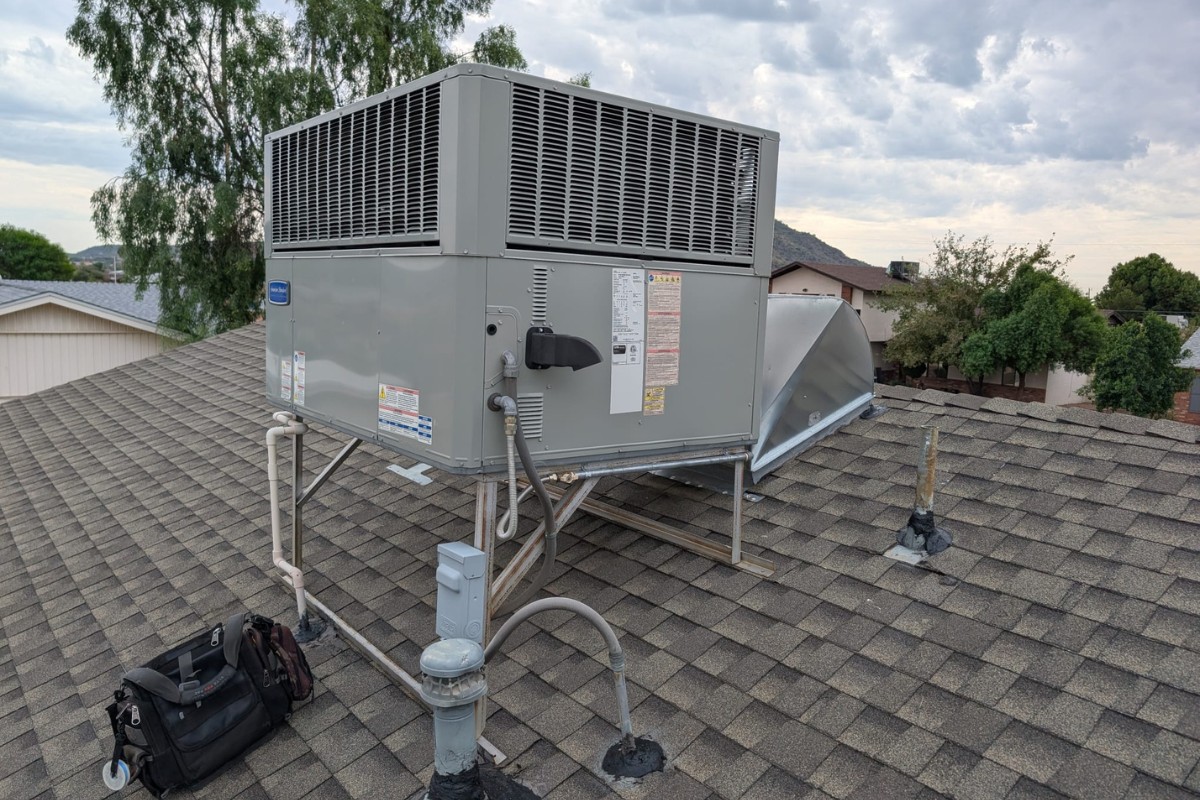
Root cause: Most bad installs in Phoenix fail for one reason: the system doesn’t match the home’s heat load and duct airflow, so head pressure climbs, Delta T drops, and parts like capacitors, contactors, and compressors take the hit. Proper sizing, airflow verification, and commissioning fix that.
Your AC didn’t pick a convenient day to quit.
It never does.
Phoenix heat turns a “small problem” into a full emergency fast. You search “AC installation near me” because you need cooling back, and you need it to last.
Phoenix runs hard all summer. Systems run long cycles.
Many installs rely on quick sizing and skip airflow checks, so the new unit struggles from day one.
Install a system that matches the load, moves the right airflow, and runs stable under peak heat.
At Discount AC & Refrigeration, we install and service Arizona equipment every day, so we focus on what fails here, not what sounds good on paper.
If you want a local starting point for Phoenix service coverage, use this page: AC repair near me in Phoenix
Do you need a new install, or do you need a real diagnosis?
Sometimes you don’t need a full replacement.
You need the right measurement.
Before we recommend replacement, we run AC repair diagnostics and check the numbers that matter in Arizona heat:
- Delta T (return vs supply)
- Static pressure and airflow stress
- Electrical startup behavior (capacitor/contactor)
- Coil condition and heat transfer
- Refrigerant circuit stability under load
If the system is older, has repeat failures, or can’t hold performance under load, installation becomes the smarter move. When the system still has life left, we tell you that too.
Phoenix heat changes how we install AC
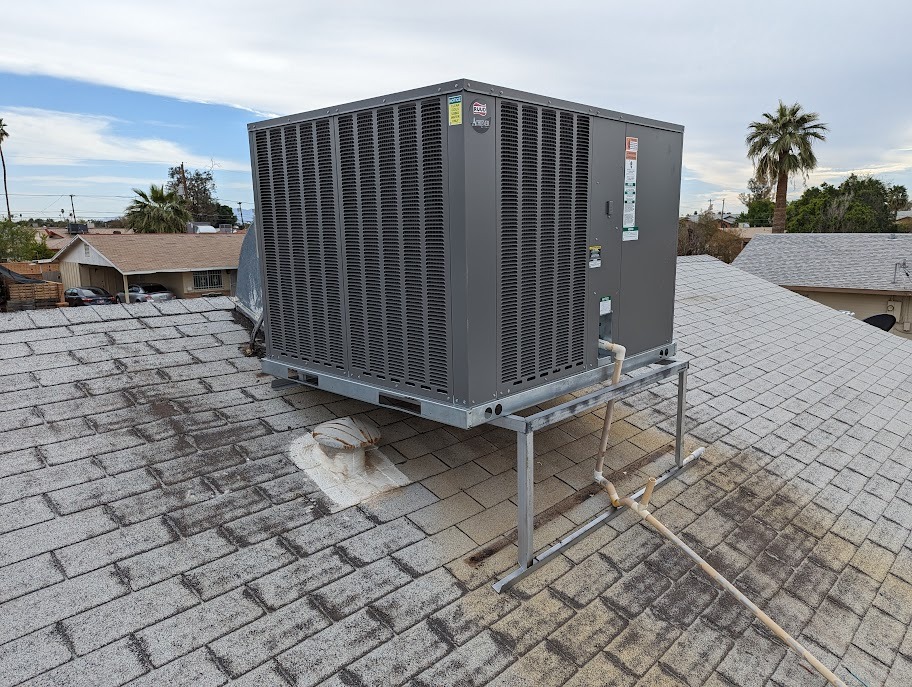
Phoenix punishes weak installs.
High outdoor temperatures raise condensing temperatures. Head pressure rises. Compressors run hotter. Fan motors work harder. Electrical components cycle more aggressively.
That’s why a “basic swap” fails here when:
- The duct system chokes airflow
- The condenser coil sits in restricted airflow
- The indoor coil can’t feed properly (TXV behavior under load)
- The electrical side starts “hard” every cycle
A good install reduces stress. That’s the goal.
Step one: sizing the system the right way
Square footage is a clue, not a calculation.
We size systems using real load logic. You’ll hear people mention “rule of thumb.” Phoenix breaks rules of thumb.
We look at:
- Sun exposure (west-facing glass matters)
- Attic insulation and heat gain
- Ceiling height and volume
- Window type and shading
- Duct location and leakage
- Occupant and appliance heat load
Then we match the equipment to that reality.
If you’re comparing install options in other cities, these local pages help you frame pricing and expectations:
Step two: airflow and ductwork decide whether the install works
Airflow is not optional.
It’s the system.
A new condenser can’t fix bad ducts.
We regularly find:
- undersized returns
- collapsed flex runs
- leaky joints dumping cooled air into the attic
- high static pressure from restrictive filters
- dirty evaporator coils starving airflow
When airflow drops, Delta T drops. The system runs longer. Head pressure rises. That’s how parts die early.
If your home has comfort issues plus dust or humidity complaints, we often pair install planning with indoor air quality solutions.
If you want alternatives for hard-to-cool rooms, additions, or zoning problems, ductless can make sense. Start here: ductless mini-split systems
Step three: picking equipment that fits Phoenix, not marketing
You’ll see a lot of promises in HVAC advertising. Ignore most of them.
Here’s what matters in Phoenix:
Single-stage vs two-stage vs variable
- Single-stage costs less upfront, but it cycles harder in heat.
- Two-stage runs steadier and controls comfort better.
- Variable systems control humidity and temperature swings best, but they cost more.
Efficiency (SEER2) and runtime
Higher efficiency can reduce runtime and help bills. But airflow still runs the show. Bad ducts and high static pressure will punish any efficiency rating.
Want neutral references while you compare?
- Installation guidance: ENERGY STAR HVAC Quality Installation
- ENERGY STAR HVAC basics: ENERGY STAR heating and cooling guidance
- AHRI ratings directory: https://www.ahridirectory.org/
Step four: electrical and controls (the hidden failure points)
Phoenix electrical stress shows up fast.
We inspect and verify:
- proper disconnect and breaker sizing
- tight connections (heat creates expansion, loose connections arc)
- contactor condition and voltage delivery
- capacitor sizing and startup behavior
- thermostat staging and cycling logic
A weak capacitor can roast a compressor.
A pitted contactor can create nuisance shutoffs.
Bad voltage behavior kills equipment slowly.
We build installs around stable electrical operation, not just “it runs.”
Step five: commissioning the system after install
This is where good installers separate themselves. Commissioning isn’t a buzzword. It’s verification.
After installation, we check:
- Delta T under realistic load
- static pressure and airflow stability
- head pressure behavior in high ambient conditions
- superheat/subcooling behavior (refrigerant circuit sanity check)
- amp draw and startup behavior
- drain operation and safety cutoffs
- thermostat control and staging behavior
If any number looks wrong, we correct it before you live with the problem all summer.
What affects AC installation cost in Phoenix
Phoenix pricing swings for real reasons. Not mystery reasons.
| Cost driver | What it changes |
|---|---|
| System size (tons) | Equipment and labor |
| Efficiency level | Equipment cost |
| Duct condition | Repair or replacement scope |
| Electrical updates | Parts and labor time |
| Access (attic/roof) | Labor complexity |
| Timing (peak season) | Labor demand |
If you want a local overview of service coverage across Arizona, use our service areas page.
Commercial installs in Phoenix and restaurant reality
Restaurants load equipment differently.
Kitchen heat load spikes during service. Rooftop units sit in full sun. Grease and dust build up on coils. Economizers stick. Fans overheat.
If you run a restaurant or manage a commercial building, start here:
Restaurants also live and die by refrigeration uptime. We coordinate HVAC installs with refrigeration reality through:
If you’re outside Phoenix, these pages cover common commercial situations:
- commercial AC repair in Mesa
- commercial AC repair in Chandler
- commercial AC repair in Scottsdale
- commercial AC repair in Surprise
- residential and commercial AC repair in Avondale
Phoenix and nearby cities we serve for installation and replacement
We work across the Valley and statewide.
Common install and replacement areas include Phoenix, Mesa, Gilbert, Chandler, Scottsdale, Surprise, Avondale, Cave Creek, and Tucson.
Local service pages:
- Phoenix: AC repair in Phoenix
- Gilbert: AC repair in Gilbert
- Cave Creek: AC repair in Cave Creek
- Tucson repair: AC repair in Tucson
- Tucson install: AC installation in Tucson
What you should do next
If you need install help now, keep it simple:
- Start with a real evaluation using AC repair diagnostics
- If replacement makes sense, move to AC installation and replacement
- Protect the new system with maintenance programs
If you want to see how we operate and what we stand for, review our standards and check our blog for more Phoenix-focused HVAC guidance.
FAQs: AC installation near me in Phoenix
How long does AC installation take?
Most standard installs take a day. Duct corrections, electrical updates, or complex attic work can extend timing.
Do I need to replace ductwork with a new system?
Not always. We inspect airflow and duct integrity. If ducts leak or choke airflow, the new system won’t perform like it should.
Can you install a bigger unit so it cools faster?
Bigger units short-cycle and control humidity poorly. Correct sizing beats brute force.
What’s the best SEER2 rating for Phoenix?
It depends on runtime and budget. Mid-range efficiency often makes the most sense. High-efficiency variable systems help comfort and humidity control.
Should I replace the thermostat during installation?
If the control logic is old or incompatible, yes. Controls affect staging, cycling, and comfort.
What’s the best way to avoid breakdowns after installation?
Enroll in a maintenance plan. Phoenix heat will find weak parts fast. Regular checks prevent surprise failures.
Wrap-Up: Choose the Right System, Not Just a Brand
Phoenix heat exposes weak installs quickly.
You need reliable cooling in extreme heat.
Poor sizing and restricted airflow drive head pressure up and Delta T down until parts fail.
Size the system properly, verify airflow, and commission the install with real measurements.
Discount AC & Refrigeration installs and services Arizona equipment daily, so we focus on what keeps systems stable in Phoenix summers.
HVAC work involves high voltage and pressurized refrigerant circuits. Leave installation to licensed pros.
Discount AC & Refrigeration is family-owned, operates 6:00 a.m. to Midnight, and holds ROC #361623.
Call (480) 478-2616
Start here: Contact Us
Learn about our team: About Us
Explore coverage: Service Areas
Ask about cash referrals: Refer & Earn
Find us on Google Maps: Google Maps