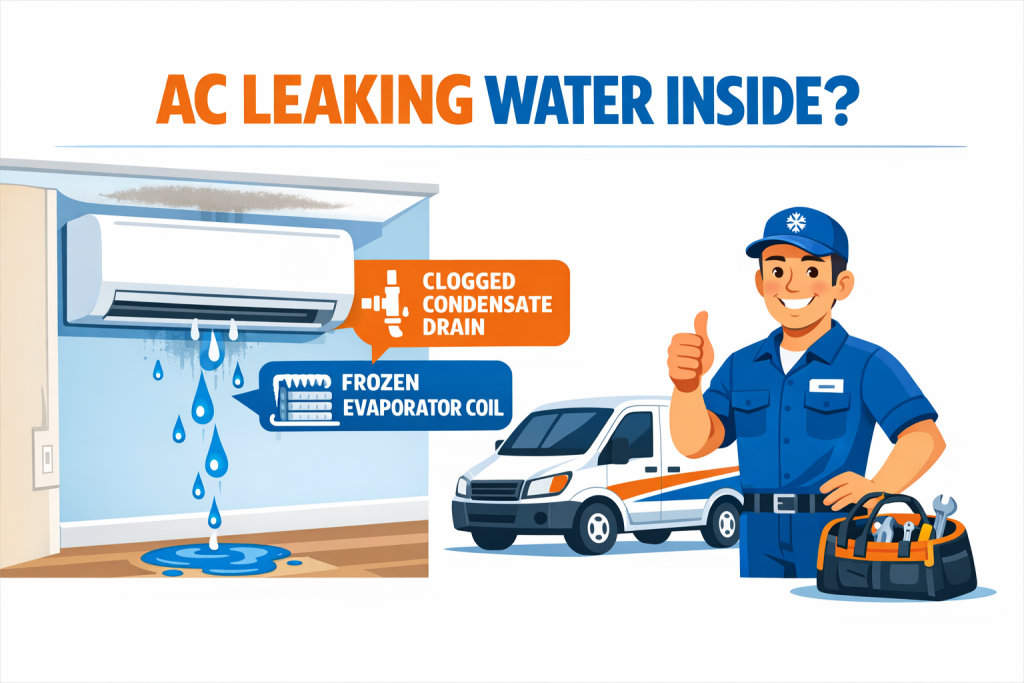
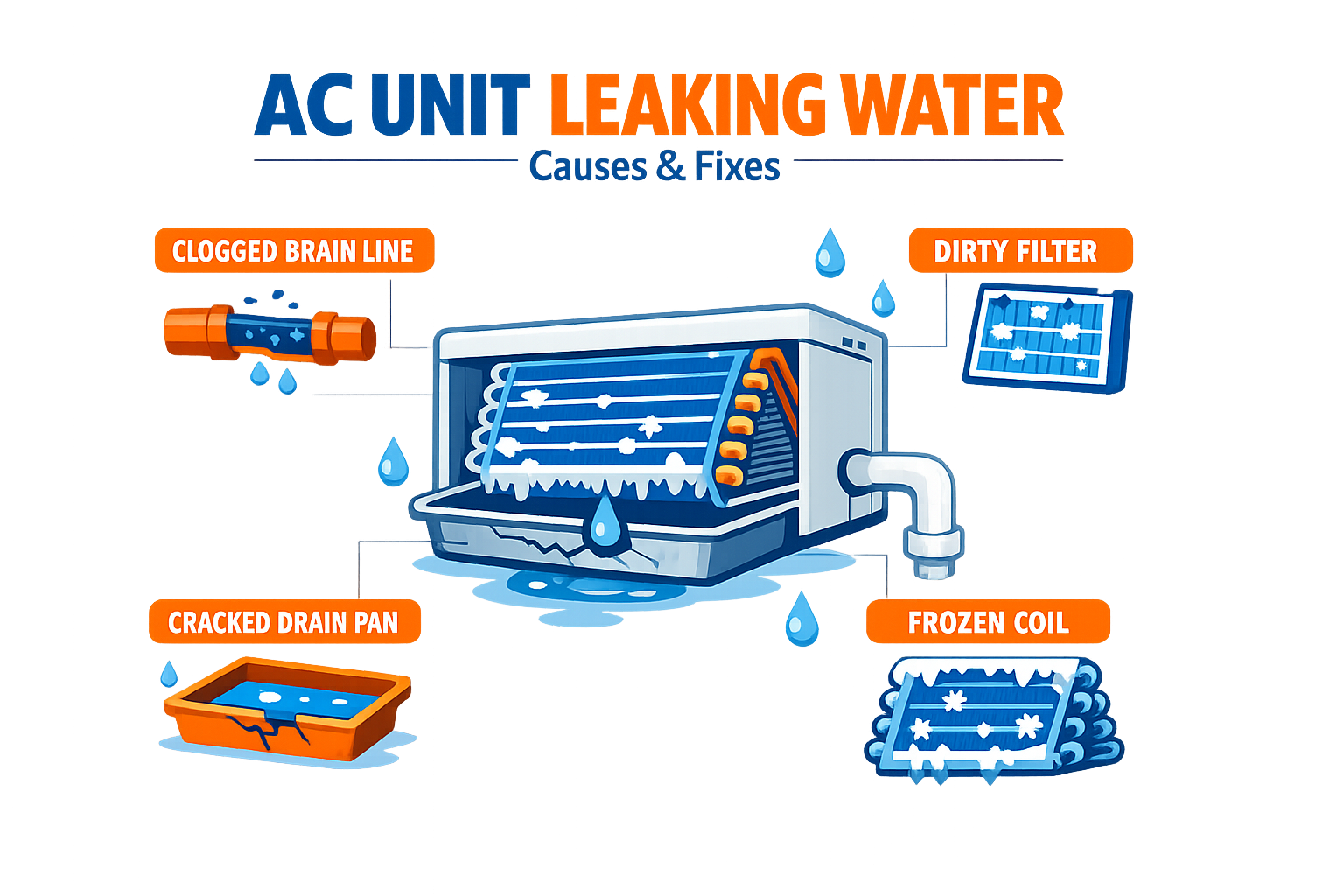
Quick answer: an AC unit leaking water is almost always a drainage problem — a clogged condensate drain line, a full or cracked drain pan, or a frozen coil that’s now melting — not a refrigerant leak. In Arizona’s heat, your system pulls gallons of moisture out of the air every day, and anything that stops that water from draining sends it onto your floor, ceiling, or closet instead.
The good news is that most water leaks are cheap and fast to fix when you catch them early. The bad news is that ignoring one lets water sit against drywall and framing, where it feeds mold and rot. Below, our licensed technicians at Discount AC & Refrigeration break down every common cause, how to tell water from a refrigerant problem, what you can safely do yourself, and how to stop it from happening again.
Causes of an AC unit leaking water
Your air conditioner doesn’t just cool air — it dehumidifies it. Warm indoor air passes over the cold evaporator coil, moisture condenses on it, drips into a pan, and flows outside through the condensate drain line. When any part of that path fails, you get an AC unit leaking water inside the home. Here are the causes we find most often in East Valley homes.
Clogged condensate drain line (the #1 cause)
This is the single most common reason an AC leaks water. The drain line carries condensate outside, but over time it fills with algae, dust, and slime. Once it clogs, water backs up in the pan and overflows. Arizona dust makes this worse, and warm, damp lines are perfect for algae growth.
- Warning sign: water pooling directly under the indoor air handler, often in a closet or garage.
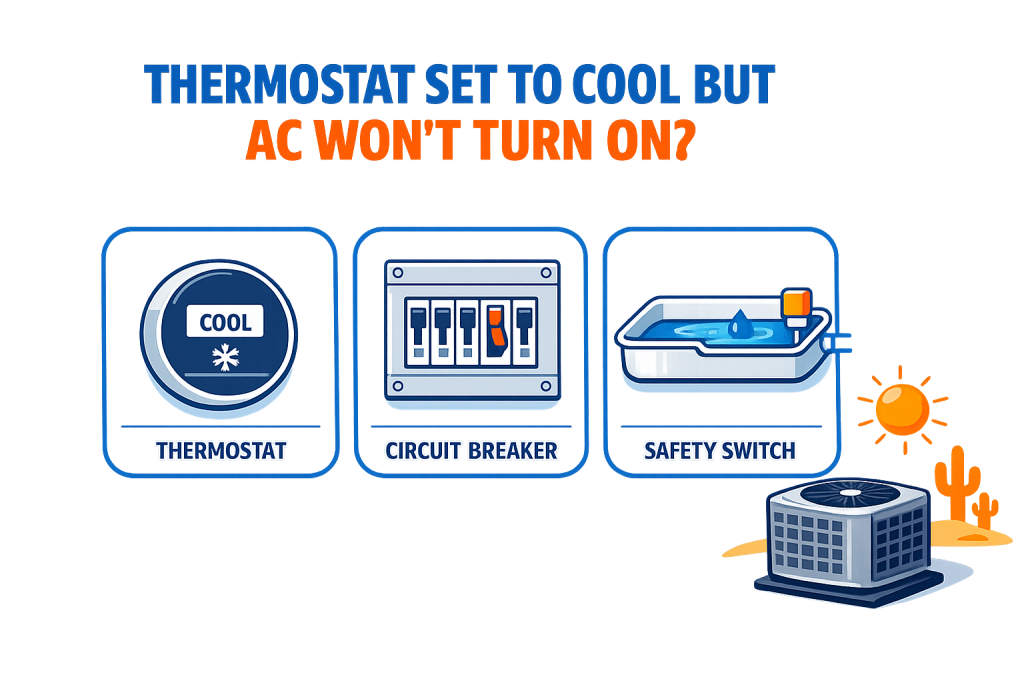
- Safety switch: many systems have a float switch that shuts the AC off when the pan fills — so a “won’t turn on” call is sometimes really a clogged drain.
Dirty filter and a frozen evaporator coil
A clogged air filter starves the coil of airflow, the coil drops below freezing, and ice builds up. When that ice melts — especially after the system cycles off — it overwhelms the drain pan and drips everywhere. If you also see frost on the copper lines, read our guide on a frozen AC and ice on the coils. In our climate, a filter can clog in just 3–4 weeks, so check it monthly.
Cracked, rusted, or misaligned drain pan
Older systems (12–15+ years) often have drain pans that have rusted through or cracked. Even a small crack lets condensate escape before it ever reaches the drain. A shifted or improperly sloped pan does the same thing. Pans can be replaced, but on aging equipment it’s worth weighing against our AC replacement cost estimates in Gilbert.
Broken condensate pump
If your air handler sits in a basement, interior closet, or attic with no gravity drain, a small condensate pump moves the water out. When that pump fails or its float sticks, water has nowhere to go and spills over. This is a common cause of a sudden, unexplained puddle.
Disconnected drain line or bad installation
Drain lines can vibrate loose at the fitting, or an improperly sloped line can trap water. Poor installation — a pan that doesn’t sit level, a line routed uphill — produces leaks that never fully go away until the setup is corrected by a pro.
High humidity during monsoon season
During Arizona’s summer monsoon, indoor humidity spikes and your system produces far more condensate than usual. A drain that was “good enough” in dry heat can suddenly overflow. It’s often the trigger that exposes a partial clog you didn’t know you had.
Water vs. refrigerant: what’s actually leaking?
Before you panic, figure out what is leaking. Homeowners often assume any leak means low refrigerant, but the two are completely different problems with different fixes and different costs.
How to tell condensate water from a refrigerant leak
Condensate (drainage) water is clear, odorless, and appears as a puddle or drip near the indoor unit. It’s normal for your AC to produce this water — the problem is only that it isn’t draining. This is the drainage side, and it’s what causes the vast majority of “leaking” complaints.
Refrigerant is not water at all. It leaves an oily residue, may hiss, and usually shows up as weak cooling and ice on the copper line set rather than a clean puddle. Refrigerant isn’t consumed, so if the charge is low, there’s a leak in the sealed circuit — and only a technician certified under EPA Section 608 may legally repair and recharge it.
| Clue | Condensate Water | Refrigerant |
|---|---|---|
| Appearance | Clear, odorless puddle or drip | Oily residue, faint hiss, rarely visible liquid |
| Where it shows up | Under the indoor air handler / drain pan | On the copper line set, often with ice |
| Cooling | Usually still cooling fine | Weak or warm air from the vents |
| Who fixes it | Often DIY-friendly (clear the drain) | EPA-certified technician only |
DIY vs. professional repair
Some causes of an AC unit leaking water are safe to tackle yourself; others need a licensed tech. Here’s where the line is.
What you can safely do yourself
- Turn the AC off at the thermostat to stop adding water and protect the equipment.
- Soak up standing water right away with towels or a wet/dry vac so it doesn’t reach drywall — standing water is a mold risk per the EPA’s guidance on mold and moisture.
- Check and change the air filter. A clean filter restores airflow and prevents the freeze-then-melt cycle.
- Clear the condensate drain. Find the drain line (usually a white PVC pipe) and use a wet/dry vac at the outdoor end to pull the clog. A cup of distilled vinegar poured into the drain access every couple of months keeps algae down.
- Confirm the pan is empty. If the water returns quickly, the clog is deeper or the pan is damaged — time to call a pro.
When to call a licensed technician
Bring in a professional if the leak returns after you clear the drain, if the drain pan is cracked or rusted, if a condensate pump has failed, if you see ice on the coils, or if cooling is weak (a sign the issue is refrigerant, not water). These repairs need proper tools and, for anything touching the sealed system, certification. Our team offers same-day AC repair in Gilbert, and in peak heat we also provide 24/7 emergency AC repair so a small leak never leaves your home without cooling.
Not sure which camp you’re in? Call us at (480) 478-2616 — we’re open 6:00 AM to midnight, 7 days a week, and we’ll give you an honest diagnosis over the phone before anyone comes out.
Preventive maintenance: stop the leak before it starts
Nearly every water leak is preventable, and in Arizona — where your AC runs more months and more hours than almost anywhere in the country — prevention pays for itself. Build these habits into your season:
- Change the filter every 4 weeks in summer; desert dust clogs filters fast and dirty filters are behind most frozen-coil leaks.
- Flush the condensate drain line every 1–2 months with vinegar, and add drain tablets to keep algae from forming.
- Keep the outdoor drain exit clear of dirt, leaves, and lizards so water can escape.
- Book an annual tune-up before summer to clean the coil, inspect the pan and pump, and confirm the drain flows freely.
Scheduled residential AC maintenance includes checking drainage and other conditions that can affect operation. Review the ENERGY STAR maintenance checklist for typical checks. If replacement is being considered, compare the exact matched-system ratings and read our Arizona SEER2 guide.
Professional evaluation and licensing
A correct diagnosis is the difference between a $150 drain clearing and thousands in water damage. Our licensed HVAC technicians at Discount AC & Refrigeration operate under license ROC 361623, meet Arizona standards, and bring over 20 years of experience in AC and refrigeration for homes and businesses across the East Valley.
Clients throughout Arizona — including restaurants, breweries, and cold-storage facilities — rely on our team for mission-critical cooling, and you can see why in our Google reviews. Beyond homes, we also handle commercial HVAC and commercial refrigeration.
Water on the floor? Contact us for a diagnosis or call directly at (480) 478-2616. And if we help you out, remember our refer & earn program.
| Symptom | Likely Cause | What to Do |
|---|---|---|
| Water pooling under the indoor unit | Clogged condensate drain line | Shut off AC, wet/dry vac the drain, flush with vinegar |
| Ice on lines, then a drip when it melts | Dirty filter / frozen evaporator coil | Change filter every 4 weeks; let the coil thaw with FAN ON |
| Leak returns even with a clean drain | Cracked or rusted drain pan | Have the pan replaced; weigh repair vs. replacement |
| Sudden puddle from an attic/closet unit | Failed condensate pump | Professional pump test and replacement; call (480) 478-2616 |
| Warm air + oily residue, little water | Refrigerant leak (not condensate) | Stop guessing — needs an EPA 608 certified technician |
Why is my AC unit leaking water inside the house?
Most often a clogged condensate drain line backing up into the pan. Other causes are a dirty filter freezing the coil, a cracked drain pan, or a failed condensate pump. Turn the system off and check the filter first, then call (480) 478-2616.
Is it safe to run my AC while it’s leaking water?
No — shut it off. Continued running lets water reach drywall and framing, feeding mold, and a float switch may lock the system out anyway. In extreme heat, ask about 24/7 emergency repair.
How do I clear a clogged AC drain line myself?
Turn off the AC, find the white PVC drain line, and use a wet/dry vac at the outdoor end to pull the clog. Then pour a cup of distilled vinegar into the drain access. If water returns fast, the clog is deeper — call a pro.
Is the leak water or refrigerant?
Clear, odorless liquid under the indoor unit is condensate (a drainage issue). Weak cooling with an oily residue or ice on the copper lines points to refrigerant, which only an EPA Section 608 certified tech can handle.
How often should I flush the condensate drain in Arizona?
Every 1–2 months during cooling season, plus drain tablets to stop algae. Pair it with a monthly filter change and an annual tune-up under a plan of preventive maintenance.
Can a leaking AC damage my home?
Yes. Standing water stains ceilings and floors and can grow mold within 24–48 hours. Soak it up immediately and address the cause. Our licensed techs provide same-day AC repair in Gilbert.
When is replacement smarter than repairing the leak?
If the unit is 12–15+ years old with a rusted pan and repeat problems, replacement often wins. Compare real numbers with our AC replacement estimates in Gilbert.
Do you serve businesses too?
Yes. With 20+ years of experience we provide commercial HVAC and refrigeration to restaurants and cold-storage facilities. We’re open 6 AM to midnight, 7 days: call (480) 478-2616.
Still finding water under your AC?
Our licensed technicians (ROC 361623) clear the drain, replace the pan or pump, and confirm it’s not refrigerant — with an honest diagnosis and availability from 6 AM to midnight, 7 days a week.