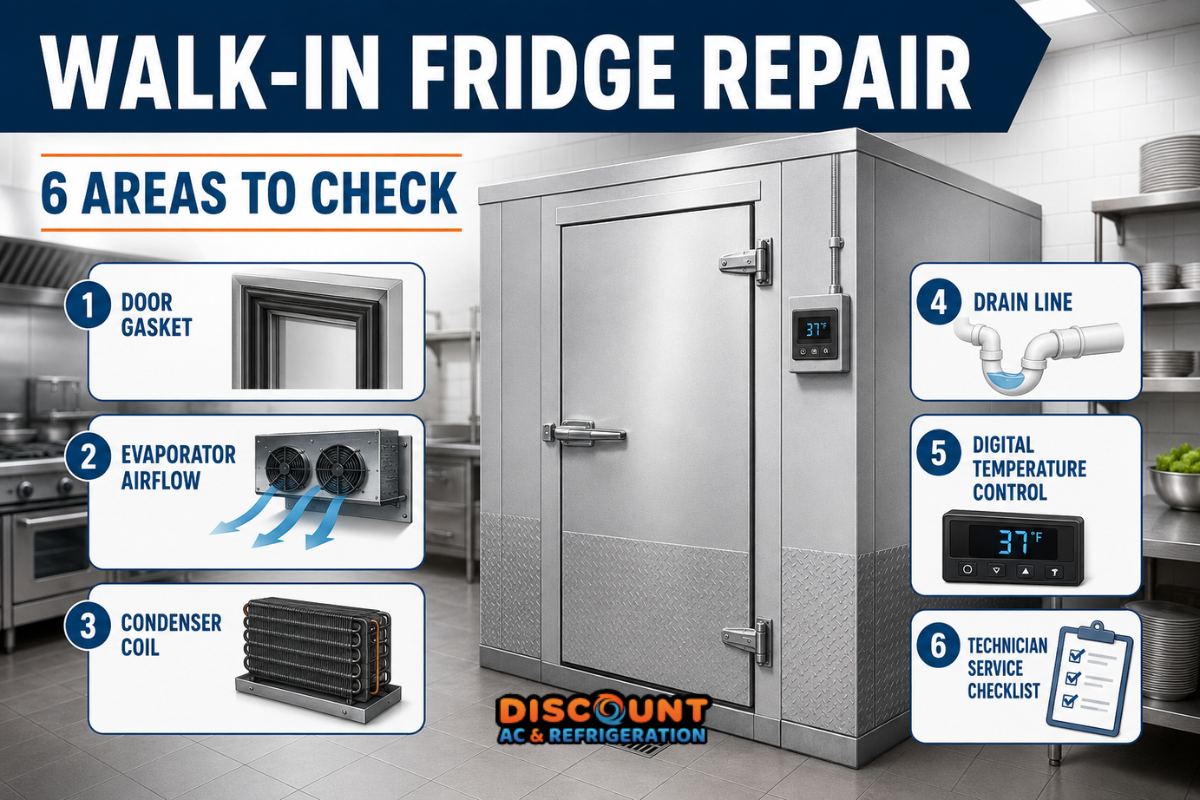
Walk in fridge repair begins with understanding what the restaurant team is actually seeing: a box that feels warmer than usual, food that is not cooling consistently, water near the doorway, ice around the evaporator, or a controller that appears to be behaving differently. These symptoms are useful, but they do not automatically identify the failed component.
A walk-in refrigerator is a complete system. The door, airflow, evaporator, condenser, drainage, temperature controls, refrigerant circuit, electrical components, product load and surrounding Arizona heat can all affect its performance. This guide explains what restaurant staff can safely observe, how to protect operations and what information helps a refrigeration technician diagnose the problem efficiently.
Important: Do not remove electrical covers, touch wiring, handle refrigerant components or repeatedly reset breakers. If you smell burning, see smoke, hear electrical arcing or notice rapidly rising food temperatures, stop using the affected equipment and request professional assistance.
Start With the Symptom, Not a Repair Assumption
Restaurant teams often describe the problem as “the fridge is not cold,” but that phrase can represent several different conditions. The controller may show a normal number while stored products are warmer. The evaporator may be cold while airflow cannot circulate through the room. The refrigeration equipment may be operating, but a damaged door gasket may continually admit warm, humid air.
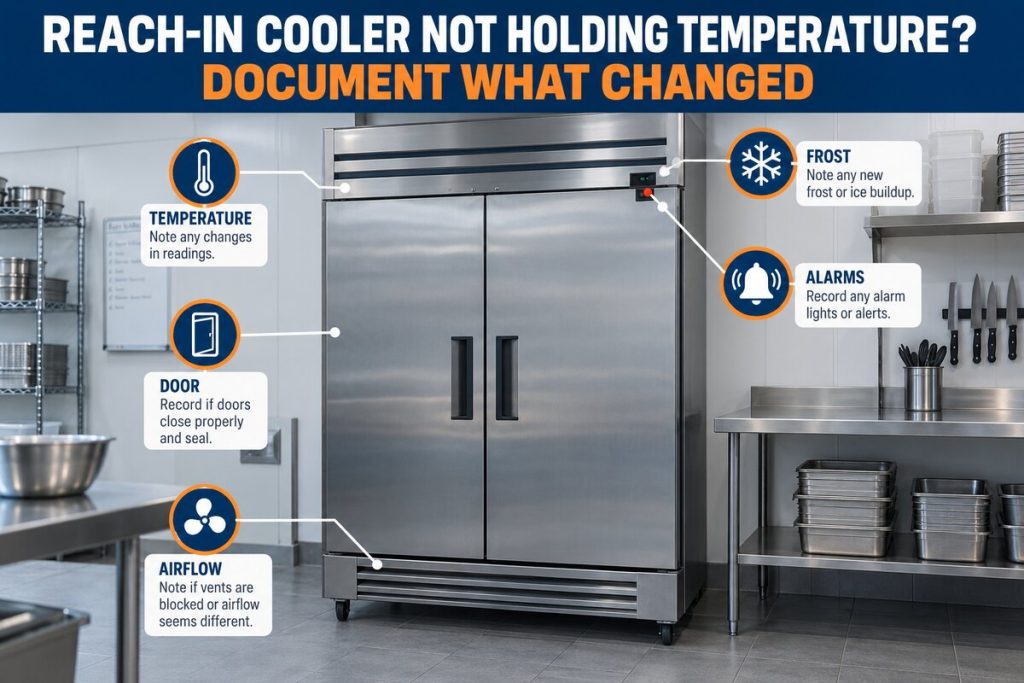
Before deciding that the compressor, thermostat or refrigerant is responsible, note exactly what has changed. A technician can use those observations along with operating measurements to separate a mechanical failure from a door, airflow, drainage or control problem. For a broader overview of temperature-loss symptoms, review the guide to a walk-in cooler that is not cooling.
| What Staff Notice | Possible Area Involved | Safe Observation | Technician May Evaluate |
|---|---|---|---|
| Temperature rises during busy periods | Door traffic, product load or airflow | Note door activity and blocked vents | System capacity, airflow and temperature recovery |
| Condensation or frost near the door | Gasket, hinge, closer or door alignment | Look for gaps, tears or a door left ajar | Seal compression, alignment and heater operation |
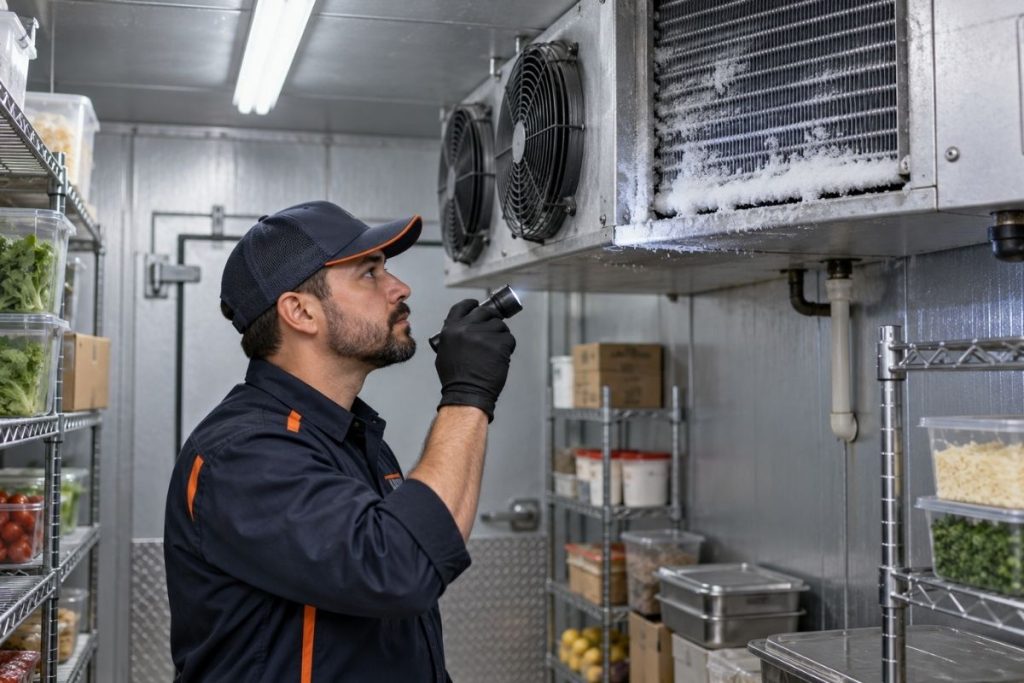
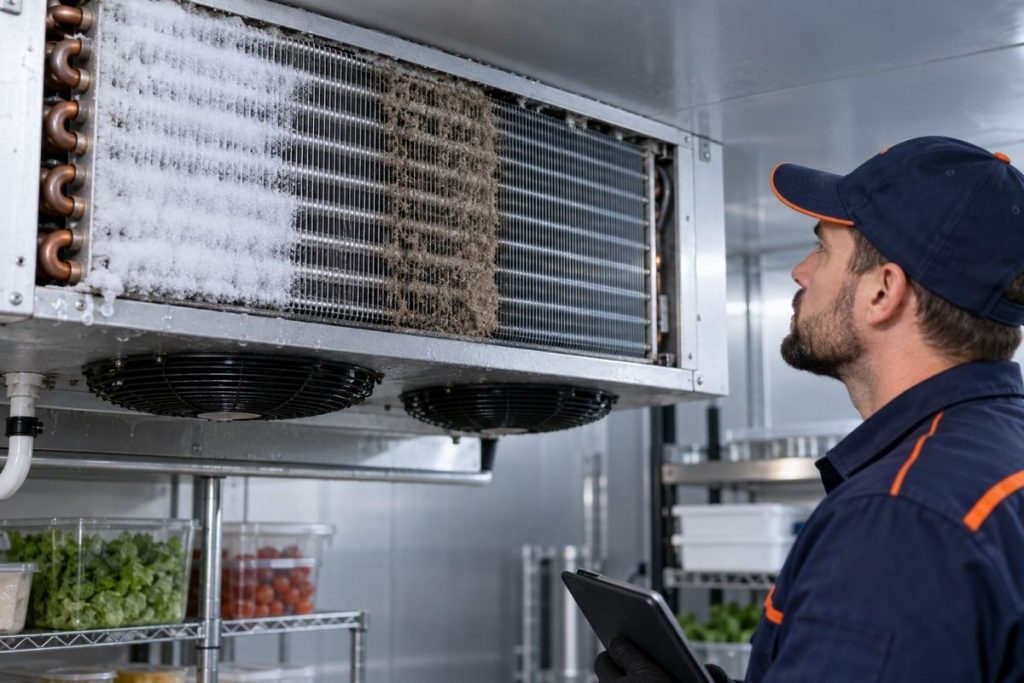
| Ice around the evaporator | Airflow, moisture entry or defrost controls | Photograph the location without removing panels | Fan operation, coil condition and control sequence |
| Water on the floor | Drainage, condensate or melting ice | Mark the source area and protect staff from slipping | Drain line, pan, slope and evaporator condition |
| Display changes or appears inaccurate | Sensor, controller or sensor placement | Record displayed and independent temperatures | Calibration, probe location and control outputs |
| Buzzing, rattling or repeated cycling | Fan, control, mounting or compressor area | Record when and where the sound occurs | Motors, controls, pressures and compressor operation |
1. Check How the Walk-In Fridge Door Is Closing
A door problem can look like a refrigeration failure. A torn gasket, loose hinge, weak closer, warped threshold or obstruction may prevent the door from sealing evenly. Warm kitchen air then enters the box, adding heat and moisture every time the equipment tries to recover.
Staff can visually inspect the gasket for tears, hardened sections, food residue or areas that do not contact the frame. Watch whether the door closes completely without being pushed. Also check for boxes, floor mats or damaged hardware interfering with its movement.
Condensation, frost or ice concentrated around one edge often points toward air infiltration, but the gasket should not be blamed automatically. Hinge position, door alignment and closer tension can change how the gasket contacts the frame. The guide to walk-in cooler door seal problems explains why replacing the gasket alone may not correct every leak.
2. Look for Restricted Airflow Inside the Fridge
Cold air must circulate through the entire walk-in. When boxes are stacked against the evaporator, vents are covered or shelving is packed too tightly, the area near the coil may remain cold while products farther away warm up.
Keep stored products away from the evaporator discharge and return-air paths. Do not place hot pans directly beneath the evaporator or stack inventory to the ceiling. During a busy shift, record whether the issue appears after a large delivery, frequent door opening or a major change in product arrangement.
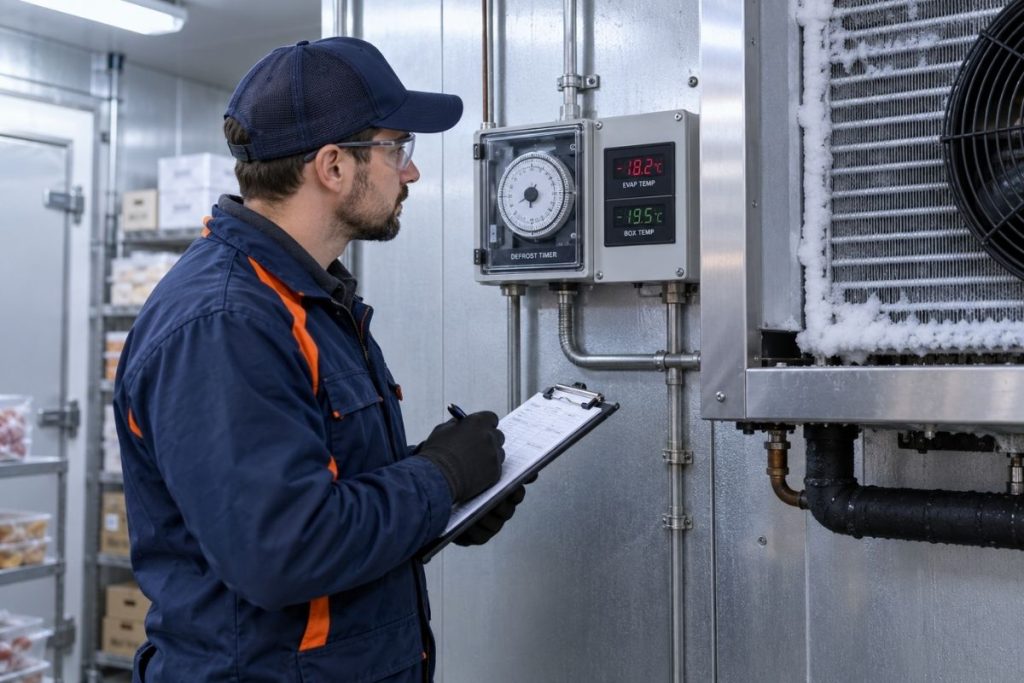
Airflow trouble can also come from an iced evaporator or a fan that is not operating correctly. Staff should not remove guards or reach near fan blades. Instead, listen for unusual changes and note whether airflow feels noticeably different from normal from a safe distance.
3. Consider Coil Condition and Arizona Heat
The evaporator coil absorbs heat inside the walk-in, while the condenser releases that heat outside the refrigerated space. Both sides must work correctly. A blocked evaporator can reduce circulation, while a dirty or poorly ventilated condenser can make it harder for the system to reject heat.
Dust, grease and airborne debris are especially relevant around Arizona restaurant kitchens and outdoor condensing equipment. These conditions can increase system stress without proving that the compressor itself has failed. Compressor-like symptoms should be evaluated as part of the entire refrigeration system, as explained in the article about walk-in cooler compressor problems.
Restaurant employees may note visible dirt, surrounding obstructions or unusual fan noise without opening equipment panels. Coil cleaning, pressure readings, refrigerant evaluation and electrical testing belong to trained service personnel. If the business needs broader equipment support, see the available commercial refrigeration services.
4. Identify Where Water or Ice Is Appearing
Water near a walk-in fridge may come from a blocked drain, an overflowing condensate pan, melting evaporator ice, a door that admits humid air or an unrelated plumbing source. Location and timing matter. Water that appears below the evaporator suggests something different from moisture concentrated around the doorway.
Protect employees and customers from the slip hazard, move vulnerable packaging away from the affected area and photograph where the water first appears. Do not use sharp tools to remove ice and do not pour chemicals into an unidentified drain.
A refrigeration technician may need to inspect the drain pan, drain-line pitch, trap, evaporator condition and control sequence. Recurring water should not be treated only as a housekeeping problem because it can signal a condition that will return until its source is corrected.
5. Compare the Controller Reading With Actual Conditions
The number on a controller is not always the same as the temperature of every product in the room. Sensor placement, calibration, door openings, defrost periods, recent deliveries and product density can create temporary differences.
Use the restaurant’s approved temperature-monitoring procedure and calibrated instruments. Record the displayed temperature, independent reading, time, location and whether the door had recently been opened. Do not repeatedly change the setpoint to force faster cooling. A lower setting does not correct a damaged sensor, airflow restriction or mechanical problem.
For a closer explanation of setpoints, probes and calibration boundaries, see walk-in cooler thermostat problems. Restaurant managers should also follow applicable food-safety procedures rather than relying only on how cold the room feels. The overview of the food temperature danger zone provides additional context for interpreting temperature risk.
6. Pay Attention to Cycling and Unusual Sounds
Restaurant staff are often the first to notice that equipment sounds different. A new rattle may come from a loose panel or fan area. Squealing can be associated with a motor or bearing. Buzzing may involve a control, motor or compressor area. Repeated starting and stopping may involve temperature controls, airflow, pressure conditions or electrical components.
A sound alone cannot confirm which component has failed. Record a short video from a safe position and note whether it happens during startup, shutdown, door opening or continuously. Do not remove a panel to get a better recording.
If the sound is accompanied by a burning odor, smoke, electrical arcing or repeated breaker trips, stop using the affected equipment and call for professional service. For persistent or unfamiliar noises, arrange walk-in cooler and freezer service so the source can be diagnosed.
When Walk-In Fridge Repair Should Not Wait
Some refrigeration symptoms require faster escalation because they may affect food safety, employee safety or continued equipment operation. Contact a commercial refrigeration professional when:
- Measured temperatures continue to rise.
- Stored food may have entered an unsafe temperature range.
- The controller is blank, erratic or showing a persistent alarm.
- The evaporator is heavily iced or airflow has stopped.
- Water continues to collect after the area is dried.
- The door cannot remain closed or sealed.
- The unit repeatedly starts and stops.
- There is a burning odor, smoke or visible electrical damage.
- A breaker trips more than once.
- The restaurant cannot safely maintain its normal cold-storage process.
When conditions are urgent, use a documented inventory protocol and contact an appropriate food-safety authority if product disposition is uncertain. Discount AC & Refrigeration offers emergency refrigeration service for commercial systems in the Phoenix area.
How to Prepare for the Refrigeration Technician
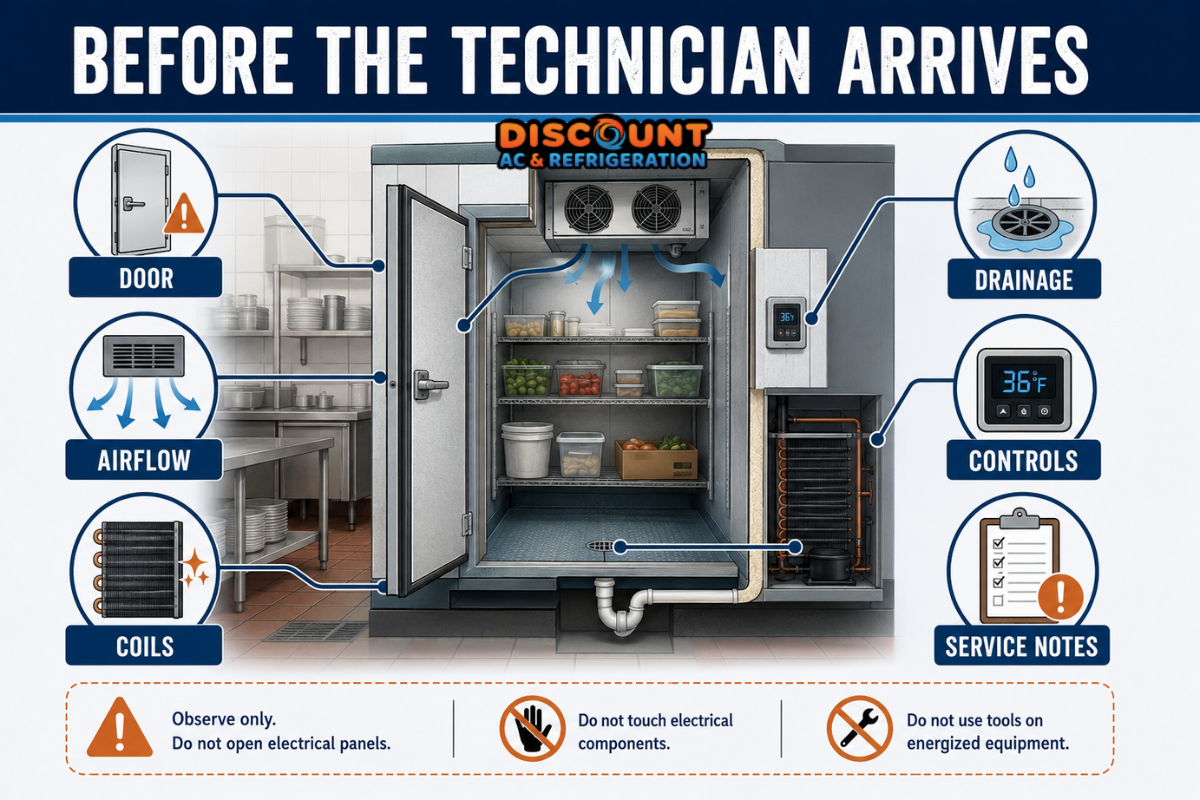
Good service preparation can make the initial diagnostic conversation more productive. It does not replace testing, but it gives the technician a clearer timeline and helps distinguish a recurring condition from a sudden failure.
- Write down the first symptom. Record when staff first noticed warmth, water, ice, noise or an alarm.
- Save temperature records. Include controller readings and independent measurements with times and locations.
- Describe recent changes. Mention deliveries, shelf rearrangement, construction, power interruptions or previous service.
- Photograph visible conditions. Capture frost, water or display codes without opening equipment.
- Identify the equipment. Make the model and serial information available if it can be read safely.
- Clear service access. Move boxes and movable obstructions away without touching electrical or refrigerant components.
- Assign a contact person. Choose someone familiar with the symptoms and restaurant operations.
- Gather previous service notes. Prior repairs can help the technician understand recurring patterns.
If rising temperatures involve frozen inventory rather than refrigerated products, follow the separate response guidance for walk-in freezer repair.
What a Professional Diagnosis May Include
A complete diagnosis should determine why the symptom is occurring instead of replacing a component based only on appearance. Depending on the system and complaint, a licensed technician may evaluate:
- Door closure, gasket contact, hinges and threshold condition
- Evaporator and condenser airflow
- Coil cleanliness and frost pattern
- Fan operation and motor condition
- Drain pan and condensate drainage
- Controller settings, sensor placement and calibration
- Operating pressures and temperatures
- Refrigerant circuit condition and signs of leakage
- Electrical controls and compressor operation
- Temperature recovery under the restaurant’s actual load
Professional testing is particularly important before recommending compressor work or refrigerant service. If the system requires more extensive assessment, Discount AC & Refrigeration also provides commercial refrigeration repair and commercial refrigeration installation guidance.
Preventing Repeat Walk-In Fridge Problems
After the immediate repair, ask what condition caused the failure and what restaurant staff should monitor. A maintenance plan may include professional coil cleaning, drain inspection, control verification, door assessment and operating-performance checks. The exact schedule depends on equipment design, usage, kitchen conditions and condenser location.
Daily temperature logs, clear airflow paths, clean door gaskets and documented service history help detect changes earlier. They do not replace professional maintenance, but they give the restaurant a useful operating baseline. The commercial refrigeration maintenance checklist can help managers organize recurring observations.
Need Walk-In Fridge Repair in the Phoenix Area?
Discount AC & Refrigeration can evaluate restaurant walk-in doors, airflow, coils, drainage, controls and refrigeration components to identify the source of the problem.
Call (480) 478-261617426 E Hunt Hwy, Queen Creek, AZ 85142
Frequently Asked Questions About Walk-In Fridge Repair
Why is our restaurant walk-in fridge running but not getting cold enough?
Possible causes include restricted airflow, a door that does not seal, dirty coils, control or sensor problems, fan issues, refrigerant-circuit problems or a compressor operating outside normal conditions. Measurements are needed to identify the actual cause.
Can restaurant staff troubleshoot a walk-in refrigerator?
Staff can safely document temperatures, door closure, blocked vents, visible water, ice, display codes and unusual sounds. Electrical, refrigerant and internal mechanical testing should be left to qualified technicians.
Why is there ice around the evaporator?
Ice may be related to moisture entering through the door, restricted airflow, a fan problem, a control issue or another refrigeration condition. Do not chip the ice with sharp tools because the coil and refrigerant tubing can be damaged.
Does water on the floor mean the drain is clogged?
A restricted drain is one possibility, but water can also come from melting evaporator ice, door condensation, the drain pan or nearby plumbing. Note where the water starts and have the source inspected.
Can a damaged door gasket make the whole walk-in warmer?
Yes. A poor seal allows warm, humid air to enter and adds to the refrigeration load. However, hinges, alignment and the door closer should also be checked before assuming the gasket is the only issue.
Should we lower the controller setting if the fridge feels warm?
Not repeatedly. Lowering the setpoint will not correct a failed sensor, poor airflow, an open door or a mechanical problem. Record the displayed and independently measured temperatures and request diagnosis if the difference persists.
What information should we give the repair technician?
Provide the symptom timeline, temperature logs, display codes, photos, unusual sounds, recent deliveries, equipment information and previous repair records. Mention any power interruption or recent change in restaurant operations.
When is walk-in fridge trouble an emergency?
Escalate promptly when temperatures continue rising, food safety may be affected, airflow stops, water creates a hazard, the door cannot close, breakers repeatedly trip or there is smoke, arcing or a burning odor.
Practical Next Step for Restaurant Operators
The most useful response to a walk-in fridge problem is to protect food according to the restaurant’s approved procedures, document what changed and avoid unsafe repair attempts. Door, airflow, coil, drainage and controller symptoms provide valuable clues, but they must be combined with professional measurements before deciding what needs repair.
For restaurant walk-in refrigerator service in Queen Creek, Phoenix and surrounding Arizona communities, call Discount AC & Refrigeration at (480) 478-2616 or use the service request form.
This article provides general operational information and does not replace equipment-specific instructions, food-safety procedures or diagnosis by a licensed refrigeration professional.