A restaurant walk-in cooler power outage demands a documented response, not a guess about how long food will remain cold. A power outage can turn a large restaurant refrigerator into a food-safety and business-continuity problem. The most useful response is not to guess how long the cooler “should” stay cold. Record the outage, keep doors closed, measure actual food temperatures, follow the restaurant’s approved safety plan, and verify that the equipment has recovered before restocking. This checklist is for managers of walk-in coolers and other large refrigerated rooms in Phoenix-area restaurants.
Before an outage: prepare the walk-in and the team
For a restaurant walk-in cooler power outage, keep an independent, calibrated thermometer available and make sure staff know how to use it for both air and food checks. Maintain a current list of the cooler’s equipment model, circuit location, service contact, manager contacts and alternate cold-storage options. A temperature logger with battery backup can preserve a time history when building power fails, but confirm how long it records and whether remote alerts still work without internet access.
Know which foods require time/temperature control for safety and where they are stored. Use your local health department’s rules and the restaurant’s HACCP or food-safety procedures; do not substitute a generic blog time limit. The FDA Food Code is a model for retail food safety, while the applicable jurisdiction decides the enforceable requirements.
Restaurant walk-in cooler power outage: protect temperature history
Note the start time and keep the door closed
During a restaurant walk-in cooler power outage, record when power was lost, the last known temperature reading and any recent delivery or heavy loading. Avoid repeatedly opening the walk-in to “see if it still feels cold.” Each opening admits warm kitchen air. Assign one person to control access and keep a written list of any necessary entries. If the restaurant has a backup generator, only trained personnel should manage transfer and electrical connections.
Use the right measurements
In a restaurant walk-in cooler power outage, a wall display or air probe alone does not establish the temperature of the food. Follow your food-safety plan for representative product measurements, using a cleaned and calibrated food thermometer. Record the item, location, reading and time. Preserve logger history if available. If the duration of unsafe exposure cannot be established, elevate the decision to the manager and health authority rather than assuming the inventory is safe.
Do not improvise with unsafe electrical work
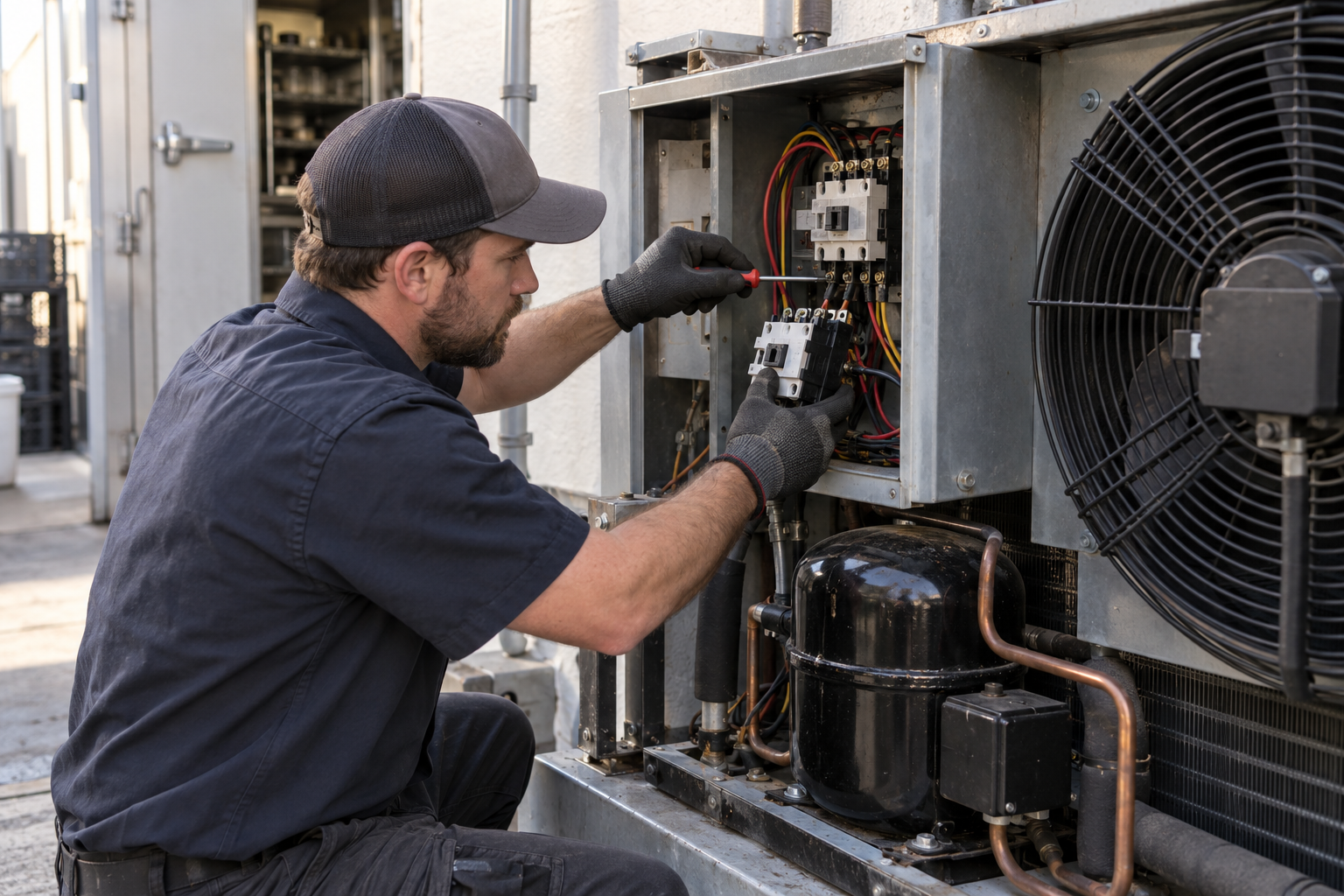
Do not open control panels, reset breakers repeatedly or connect a generator through an unapproved cord. A licensed electrician or qualified refrigeration technician should address electrical and equipment issues. If you smell burning, see damaged wiring or find water near electrical components, isolate the area under your emergency procedure and call a professional. Once power is restored, if the walk-in does not pull back down to temperature, request walk-in cooler repair in Phoenix.
When power returns: verify the refrigerator before restocking
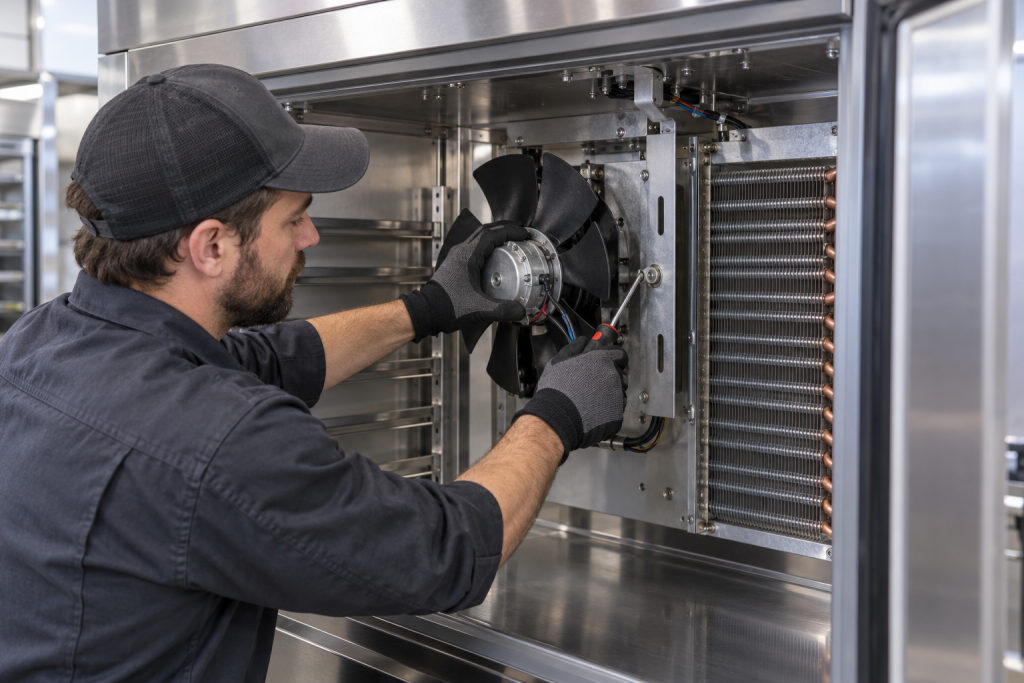
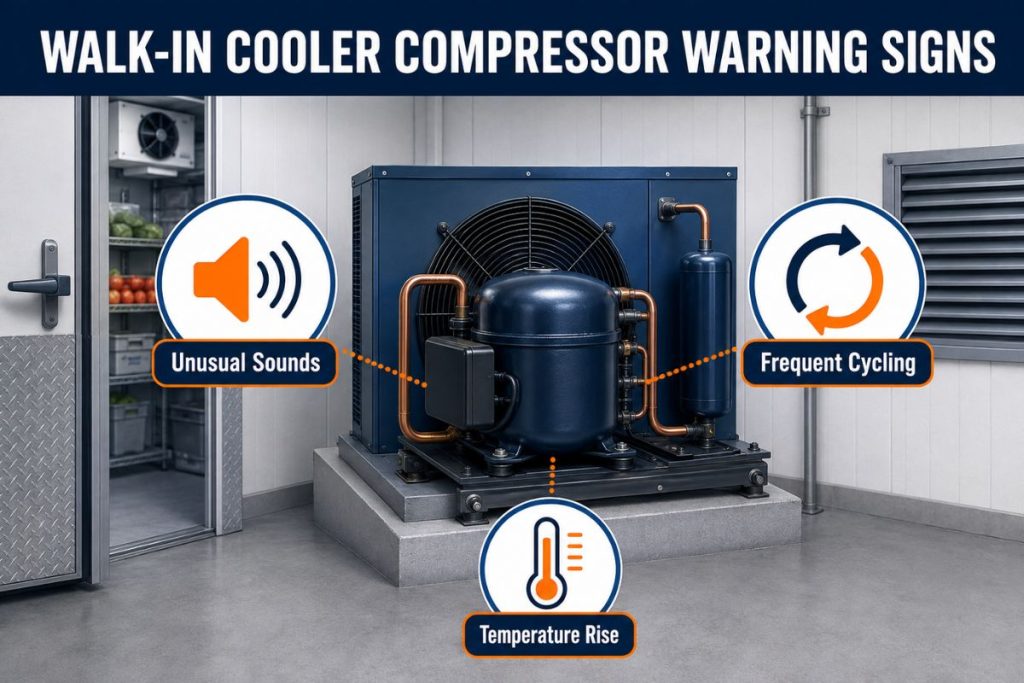
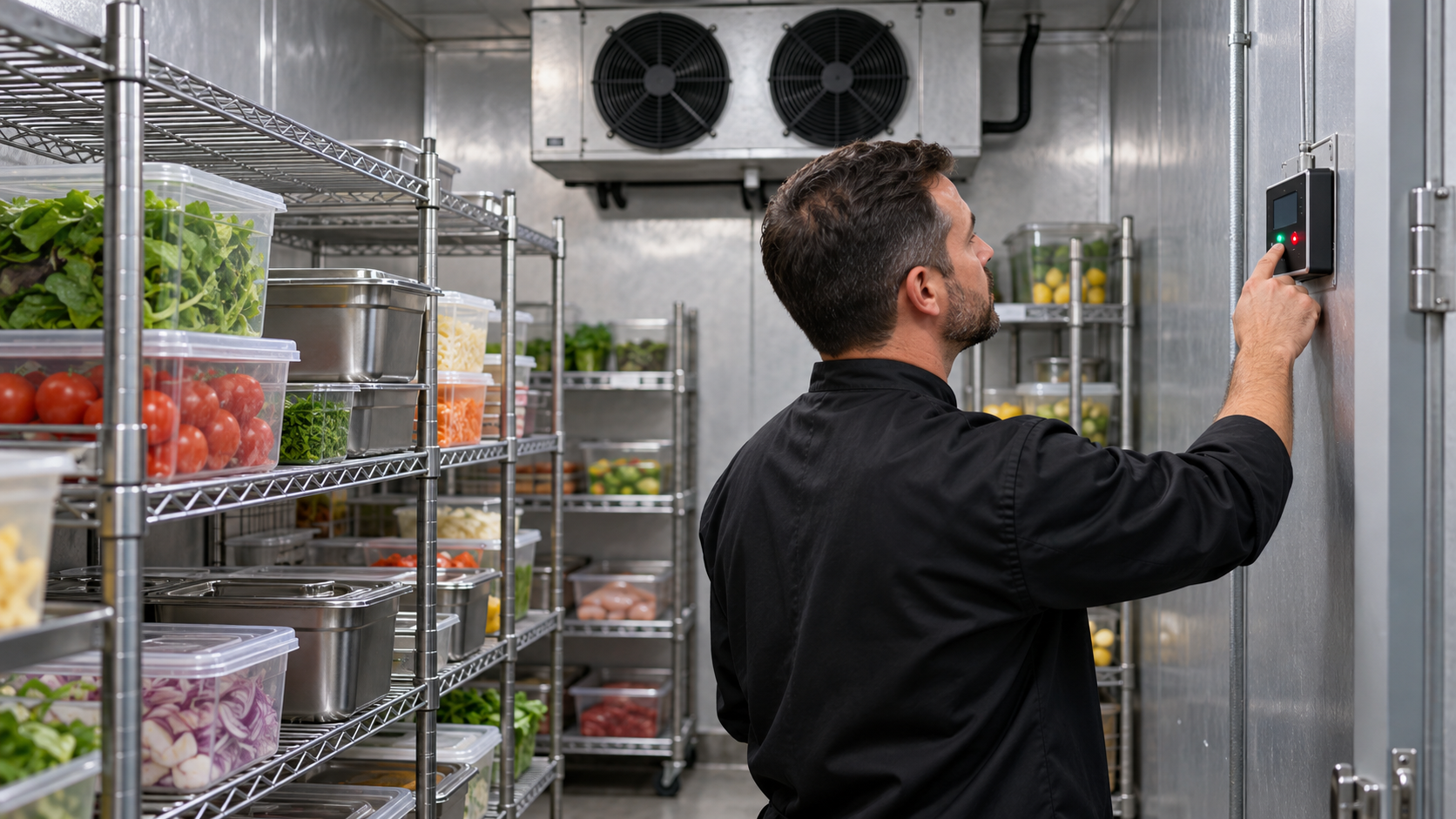
After a restaurant walk-in cooler power outage, power restoration is not the same as refrigeration recovery. Confirm that the controller, fans and compressor are operating normally and that the room can hold its intended temperature over time. Compare the control display with an independent thermometer. Watch for repeated alarms, unusual sounds, short cycling, water, ice or a door that will not seal. If the system fails to recover, contact a commercial refrigeration technician before loading more food.
Do not put warm food into an overloaded walk-in and expect it to cool rapidly. A walk-in designed to hold cold products may not be designed to cool a large mass of hot food. Follow approved cooling procedures and equipment capacity. If a delivery arrives during the outage, decide whether to accept it using verified receiving temperatures and your written policy, not the vendor’s estimate.
Deciding what to keep, move or discard
Following a restaurant walk-in cooler power outage, food disposition is a safety decision, not a refrigeration repair decision. Use the establishment’s food-safety plan, applicable local requirements and health authority guidance. Record the timeline and actual food temperatures. Segregate questionable items to prevent accidental service while the responsible manager reviews them. Never taste food to judge safety and never rely only on appearance or odor. The FDA guidance for restaurants reopening after emergencies recommends verifying that walk-in refrigerators can consistently maintain cold-holding conditions before food is placed back into them.
If the business uses off-site or alternate refrigerated storage, document the transfer time, destination and temperatures at departure and arrival. Keep labels and lot information with the products. A clear chain of custody makes later review possible and reduces confusion between shifts.
What a technician needs to know
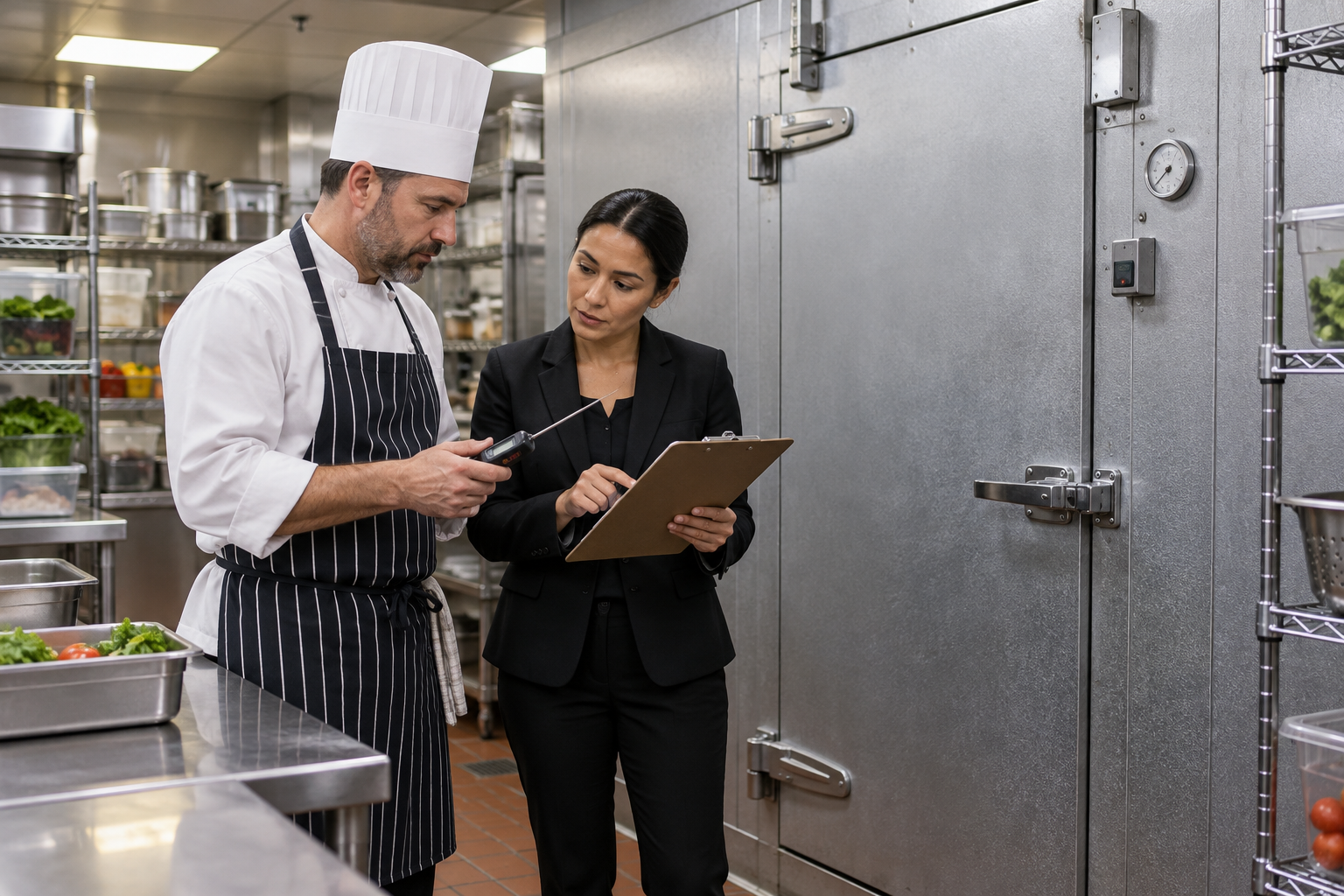
For a restaurant walk-in cooler power outage, when calling service, provide the outage start and restoration times, any generator use, controller readings, independent air readings, alarm history, whether fans run, and whether the unit was loaded or opened frequently. Mention any recent maintenance or prior intermittent failures. This information can help distinguish an electrical restart issue from a refrigeration problem, though only an inspection can determine the cause.
Discount AC & Refrigeration provides commercial refrigeration service for restaurant equipment. A technician can evaluate the walk-in’s actual recovery and identify repairs; the restaurant remains responsible for its food-safety decisions.
Write an after-action note
After a restaurant walk-in cooler power outage, write down what worked and what failed. Did the alert reach the correct person? Was an independent thermometer available? Did staff know the door policy? Was backup storage ready? Could the manager retrieve the previous hour’s temperature history? Review the note with kitchen leadership and update the response sheet. A simple process improvement may prevent a future outage from becoming a larger inventory loss.
Seven decisions that belong in an outage checklist
1. Identify the affected equipment and the exact timeline
Write down the cooler name, location and asset number. Record the last known normal reading, when the outage began, when staff discovered it and when power returned. These times may differ. If a monitoring platform stopped communicating, mark the gap as unknown rather than assuming the room stayed within range. A useful log names the person who made each observation. This is especially important in a busy restaurant with several refrigerators and changing shifts.
2. Assign one person to control the door
During a restaurant walk-in cooler power outage, repeatedly opening the door creates avoidable heat gain. Name a shift lead who approves entry for measurements or essential stock movement. Post a temporary notice at the door and keep a list of openings. Staff should not climb around stored items to inspect equipment or use a flashlight near exposed electrical parts. If another cold-storage room is available, the manager decides when a controlled transfer is safer than continued holding.
3. Distinguish room air from product temperature
A controller reading describes conditions at its sensor, not every container. A product thermometer provides a different kind of evidence. Follow the establishment’s method for sampling representative time/temperature control for safety foods. Record food type, shelf location, measured temperature and time; clean and calibrate the instrument according to the food-safety plan. Avoid treating one cold item as proof that all stock is safe. Different packages and positions can respond differently as air warms.
4. Protect questionable inventory from accidental use
When food disposition is uncertain, clearly label and segregate affected items under the manager’s control. Maintain package and lot identification so the team can identify what was present during the event. Do not blend questionable stock with a new delivery or move it without a record. The manager should consult the applicable local health authority and company plan for keep, move or discard decisions. A refrigeration technician can restore equipment performance but cannot certify that individual food items remained safe.
5. Restore power safely
Commercial refrigeration can have controls, motors and protective devices that do not simply resume normal operation the instant electricity returns. Staff should use ordinary user controls only as instructed by the equipment documentation. Do not repeatedly reset breakers, bypass alarms or improvise a generator connection. If the unit trips, smells hot or operates abnormally, stop and request qualified electrical and refrigeration help. This boundary reduces safety risk and prevents a temporary electrical problem from becoming equipment damage.
6. Verify sustained cooling before loading
When the system restarts, record the room temperature and its trend over time. Confirm that the evaporator fans operate, the door closes, alarms clear for the right reason and the independent thermometer broadly agrees with the controller. A brief cold reading is not enough if the room climbs again when the compressor cycles off. If there is unusual frost, standing water, repeated high-temperature alerts or slow recovery, arrange inspection before adding a large new product load.
7. Close the event with a review
At the end of a restaurant walk-in cooler power outage, collect the temperature log, food disposition record, maintenance notes and staff handoff. Identify whether the alarm reached the right person, whether a backup thermometer worked and whether the team knew the alternate-storage plan. Assign owners and dates for fixes. A written after-action review is more valuable than relying on memory at the next outage.
A manager’s timeline template
Before power loss: note normal room and product checks, the last logger entry and the current stock list. During the event: note the reported outage time, each necessary door opening, independent readings, product checks and any movement to backup storage. After power returns: record restart time, the first normal room reading, subsequent trend, alarms, technician findings and the final food decision. The record should indicate who took each action and who approved the disposition.
Use a separate line for each cooler. If a restaurant has a walk-in refrigerator and walk-in freezer, do not merge their observations. Air temperatures, product loads and recovery behavior differ. If the generator supports only part of the kitchen, note which circuits and units actually received power. A dashboard that displays an old value can be mistaken for a live reading during a network outage, so confirm timestamps.
Backup power, monitoring and communication
A generator plan starts with an electrician and the equipment’s actual electrical requirements. The restaurant should know whether the refrigeration system, alarm gateway, internet router and lights are on the same backup circuit. A logger may record locally while its notifications cannot leave the building. Test the complete system periodically with qualified personnel and document what happens when primary power or internet service is lost. Never assume the presence of a generator ensures cooling capacity for every walk-in.
Keep printed contact numbers for the building manager, utility, refrigeration provider, electrician, health authority and alternate cold-storage location. A phone tree should include a backup decision-maker. If an outage spans shift change, give the incoming manager the current food status, equipment status and next action in writing. This prevents a well-meaning employee from restocking a cooler before it has demonstrated sustained recovery.
Common mistakes after power returns
The first mistake is treating the return of lights as proof that food is safe. The second is turning the thermostat colder to force a reassuring display. Neither reconstructs missing temperature history. Another mistake is placing a large delivery into a warm room, which increases load at the moment the system needs to recover. A fourth is discarding the monitoring record before the manager and technician review it. Preserve the evidence and base decisions on measured conditions, not on a guessed grace period.
Also distinguish a building-wide outage from a single-unit failure. If other equipment has power but one walk-in is off, the issue may involve its circuit or controls. If the unit runs but fails to cool, the refrigeration system needs diagnosis. Staff can report observations, but should not infer the failed component from an alarm alone. Provide a professional with the timeline and symptoms so testing starts from reliable facts.
Planning for the next restaurant walk-in cooler power outage
After the event, review where temperature probes are installed, how long monitoring equipment retains data and who receives alerts after closing. Update the emergency contact list when staff roles change. Keep thermometers accessible and verify their calibration schedule. Review backup storage capacity against the restaurant’s normal peak inventory; an alternate room that is already full may not be a practical option during a busy weekend.
Managers should rehearse the first five minutes of the response with opening and closing teams. Practice documenting the time, controlling the door, checking independent readings and contacting the decision-maker. Do not rehearse by shutting off refrigeration without an approved safety plan. A tabletop exercise can expose gaps without putting food or staff at risk.
What the next shift needs to know
The incoming shift should receive a short written status report, not merely “the cooler is back on.” State whether the equipment is stable, whether food is held for review, who has authority to release it, and which readings still need to be taken. Include the technician’s expected arrival time if service has been requested. If the first manager leaves without a handoff, the next team may mistake a recovering room for one that is ready for a full delivery.
Keep the decision trail separate from the maintenance ticket. The technician’s notes describe what was tested and repaired. The restaurant’s food-safety record describes observed food temperatures, exposure timeline and disposition under applicable rules. Linking the two by event date is useful, but neither record substitutes for the other. This distinction matters if equipment appears normal when the technician arrives even though an earlier temperature excursion affected inventory.
Follow-up inspection after a restaurant walk-in cooler power outage
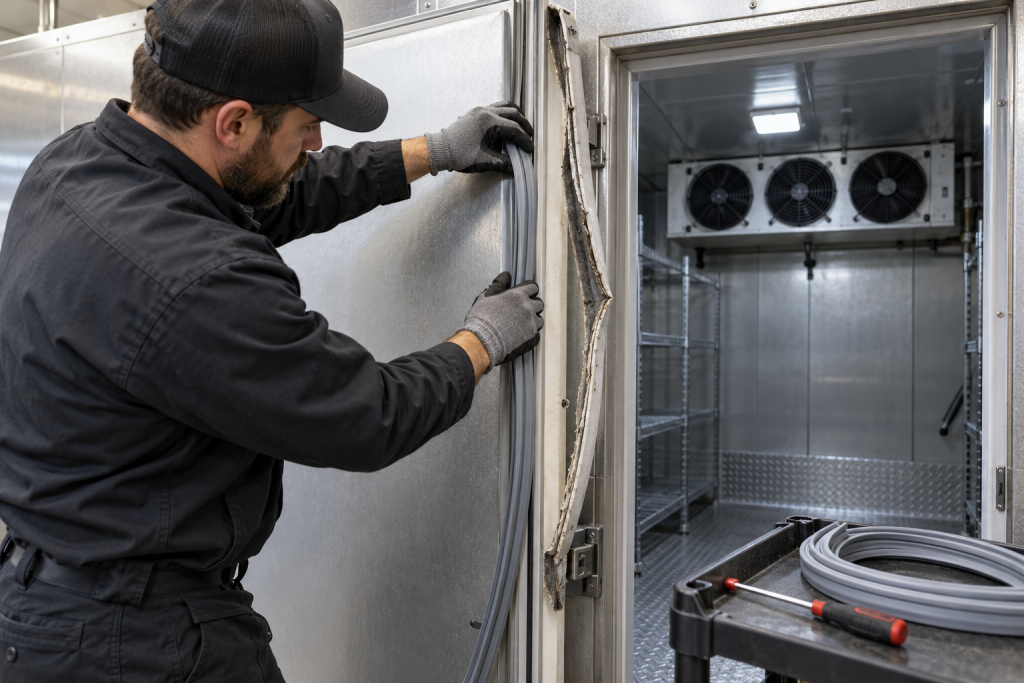
Once urgent operations are stable, review the door gasket, closure, evaporator airflow, drainage, controls and logged trend with a qualified provider. An outage can reveal a preexisting weakness because a slow-to-recover cooler faces a difficult restart. A professional inspection should focus on measured operation and the symptoms recorded during the event; this article cannot diagnose a component remotely. Schedule the follow-up while the timeline is fresh and staff can explain what they observed.
Finally, update the emergency sheet and run a tabletop drill. A clear contact list, an accessible thermometer, a tested alarm and an alternate storage plan make the next response smoother. No checklist ensures that every product remains safe through an outage; its value is helping the restaurant make timely, documented decisions grounded in actual measurements and local guidance.
Frequently Asked Questions
Can a manager rely on the “four-hour rule” for a large restaurant walk-in?
Do not apply a household-refrigerator rule automatically to a commercial walk-in. Use measured food temperatures, the documented timeline, your food-safety plan and local health authority requirements.
Does the cooler become safe as soon as power returns?
No. Verify sustained equipment operation and appropriate temperatures before restocking; evaluate exposed food separately.
Should staff open the door to check the food repeatedly?
Limit unnecessary openings. When a check is required, make it purposeful, record measurements and close the door promptly.
What if the temperature logger stopped when the power failed?
Document the missing interval, use available independent measurements and escalate uncertain food-disposition decisions. Consider backup power for monitoring in the future.
When should a technician be called?
Call when the cooler does not recover, alarms repeat, equipment behaves abnormally, or electrical/refrigeration damage is suspected.
Need walk-in cooler recovery support?
For a large restaurant refrigerator that fails to recover after an outage, call Discount AC & Refrigeration at (480) 478-2616. Have the time log and equipment details ready. For food safety, follow your manager’s plan and the applicable health authority.