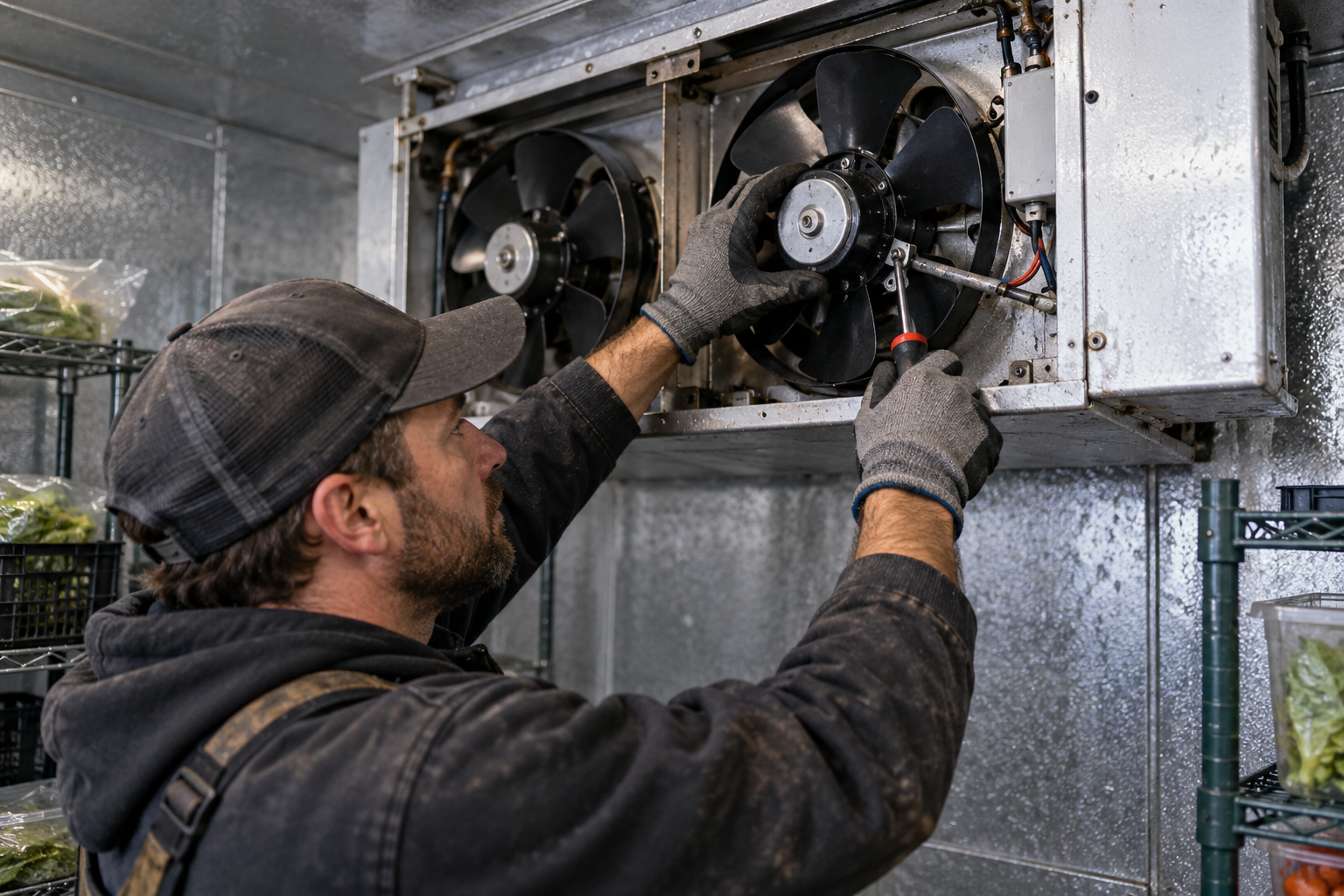
Walk-in cooler floor water is more than an inconvenience in a restaurant: it can create a slip hazard, complicate cleaning and signal a drainage or operating problem. A small wet area may follow routine washing, while a recurring puddle near the evaporator, door or floor drain calls for closer observation. The location, timing and temperature trend matter. This guide helps managers document symptoms and decide when to request commercial refrigeration service. The company diagnoses and repairs the cooler equipment; building plumbing problems require a separate plumbing professional. When the water traces back to the evaporator, drain line or door heater, schedule walk-in cooler repair in Phoenix before the problem spreads.
1. Make the area safe before diagnosing the source
When staff find walk-in cooler floor water, keep people and carts out of the slippery area until it is addressed. Mark the hazard and follow the establishment’s cleaning and spill procedure. Do not leave a puddle as a “watch item” on a busy service path. OSHA’s walking-working surfaces standard addresses clean, orderly surfaces, drainage and prompt correction or guarding of hazards. The exact response should follow the workplace safety plan and applicable requirements.
Food near the water also needs review. Identify whether packages, open containers, shelving or tools could have contacted a potentially contaminated surface. The restaurant’s manager should apply its food-safety procedure and consult the local health authority when needed. A refrigeration technician can find an equipment fault, but cannot determine whether an individual food item is safe to serve. Keep those decisions separate from the mechanical investigation.
2. Record where the water appears
The first useful observation is location. A puddle directly under a condensate drain path suggests a different investigation from moisture along the door threshold. Water around a cleaning station or an adjacent plumbing line may not originate in the refrigeration system at all. Draw a simple floor plan and mark the wet area, direction of flow, nearby equipment and whether cartons or racks obscure the view. Take a photo for the service record if permitted by company policy.
Do not assume that a drain is clogged merely because walk-in cooler floor water is near one. Water may travel along a sloped floor before collecting at its lowest point. Observe whether the puddle grows while the door is closed, appears only after cleaning, follows a delivery or coincides with a defrost cycle. The timing narrows possibilities without requiring staff to touch electrical or refrigerant components.
3. Separate cleaning water from recurring equipment moisture
Many restaurants wash floors or move wet containers through a cooler. If the wet area follows a documented cleaning event and dries under the normal procedure, record that context. A puddle that reappears on non-cleaning days, spreads, or creates a persistent odor deserves more attention. The manager should review whether cleaning methods direct water toward an approved drain and whether the floor is left safe for employees. Avoid directing water into electrical equipment or beneath stored food.
For recurring walk-in cooler floor water, ask staff to note the time of discovery, cleaning time, room temperature, door activity and any alarms. A short log across several shifts may reveal a pattern. If the floor cannot be kept safe, do not wait for a perfect data set; guard the area and arrange professional help. The purpose of the log is to support a targeted inspection, not to justify continued exposure to a known slip hazard.
4. Observe the evaporator and defrost conditions
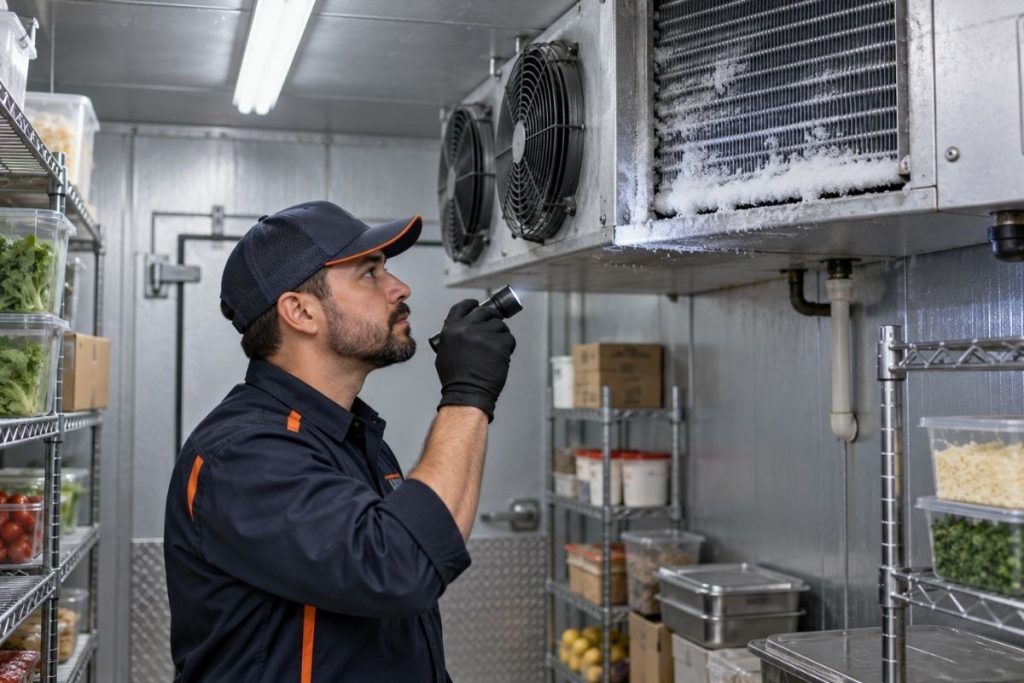
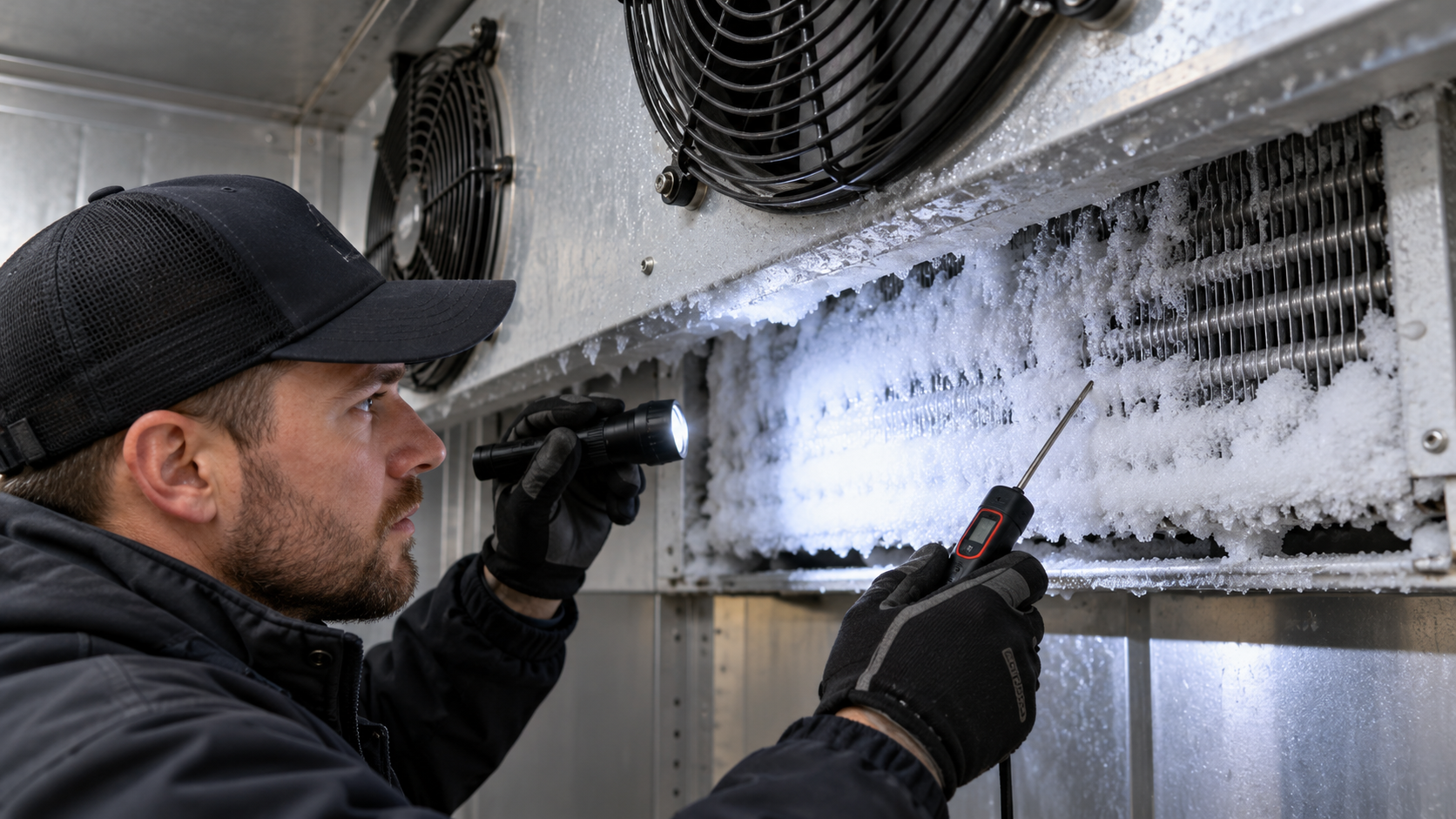
Commercial refrigeration removes moisture from air under some operating conditions. That water must be handled by the equipment’s condensate and drainage arrangement. Staff can report visible drips, standing water, unusual ice or a drain area that is obviously obstructed, but should not dismantle a line or pour chemicals into an unknown system. The drain configuration may involve plumbing and food-safety rules specific to the installation. A qualified professional should assess repeated overflow, leaks or backup.
The FDA Food Code is a model for food establishments and addresses wastewater disposal and equipment drainage; local requirements control the actual installation. A restaurant should not improvise a hose into a bucket or route condensate across a walking path as a permanent solution. A temporary containment measure under an emergency plan does not replace a compliant repair.
5. Look at the door and the room’s air exchange
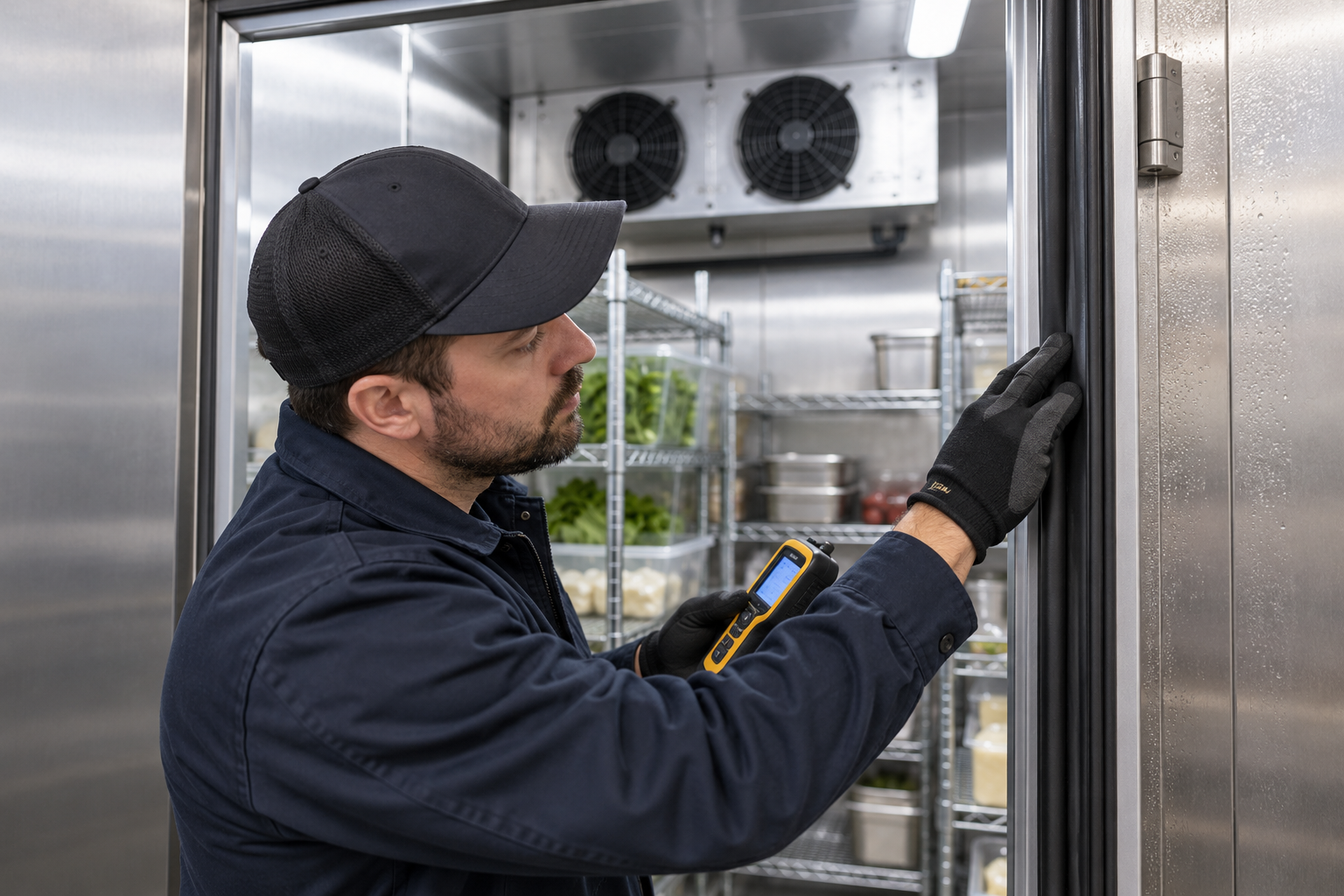
Warm, humid kitchen air entering a cold room can condense on cooler surfaces. A door that fails to latch, a damaged gasket, a cart holding the door open or frequent loading may change the moisture pattern. Staff can observe whether the door closes fully and whether water appears near the threshold after deliveries. They should not assume that a wet threshold proves the gasket is the sole cause; water can also come from cleaning, adjacent plumbing or drainage.
If walk-in cooler floor water coincides with persistent frost, dripping or longer recovery times, give the contractor those observations. The same event may affect temperature control and moisture. Do not lower the thermostat simply to “dry out” the room or chip ice from a coil. Those actions can hide the cause or damage equipment. Keep food-temperature checks and room-air readings available so service personnel can assess the system in context.
6. Distinguish cooler condensation from building leaks
A floor drain can back up, a condensate line can disconnect, a pipe can leak, or a nearby sink can overflow. The visible puddle alone does not identify which trade should respond. If water smells foul, appears contaminated or rises from a floor drain, follow the restaurant’s sanitation and emergency procedure and contact appropriate plumbing and health-authority resources. If water is clearly dripping from refrigeration equipment, involve a commercial refrigeration professional. Do not ask kitchen staff to open a sealed unit to trace the source.
For walk-in cooler floor water that appears after rain, cleaning or a building maintenance event, include that timing when calling. In Phoenix-area kitchens, moisture patterns can change with monsoon weather, door traffic and building conditions, but a specific cause requires inspection. The right service provider may be refrigeration, plumbing or building maintenance; the manager’s accurate timeline helps direct the request.
7. Verify that the fix actually lasts
After a professional repairs a drain, door or refrigeration issue, clean and dry the area under the establishment’s procedure. Record the repair and compare the next several shifts with the earlier pattern. Check that normal cooling and drainage continue during busy door use, deliveries and any expected defrost cycle. A dry floor for five minutes after wiping is not proof that recurring walk-in cooler floor water is resolved.
Keep the repair record with the room’s maintenance log. If the puddle returns, note exactly when, where and how much. Avoid assuming the previous component failed again; a second source may exist. A contractor can use the before-and-after evidence to test the system under relevant conditions rather than repeating a guess.
A manager’s observation sheet
Use one line per event. Record date and shift; cooler identification; first sighting of water; approximate location and extent; last cleaning time; door and delivery activity; room controller and independent air readings; visible ice, drips or alarms; action taken to keep staff safe; food moved or reviewed; and the person contacted. A simple form can be completed during service without turning a manager into a mechanic.
Add a sketch or photo when the source is not obvious. Mark whether the puddle was under the evaporator, at the door, at the floor drain or along a wall. If staff wipe it up, record whether it returns and how soon. That interval is often more useful than a vague report that “the cooler leaks sometimes.” Walk-in cooler floor water that follows the same cycle each day can be evaluated differently from a one-time cleaning spill.
What to tell a refrigeration contractor
Provide the equipment model if available, the room’s normal temperature range, any recent alarm history, whether the evaporator shows ice, and the water log. Explain whether the issue occurs with the door closed, after delivery, during cleaning or after a defrost event. Mention recent changes to shelving, drainage, door hardware or building plumbing. Do not assume the caller must name the failed component; accurate observations let a technician determine the appropriate tests.
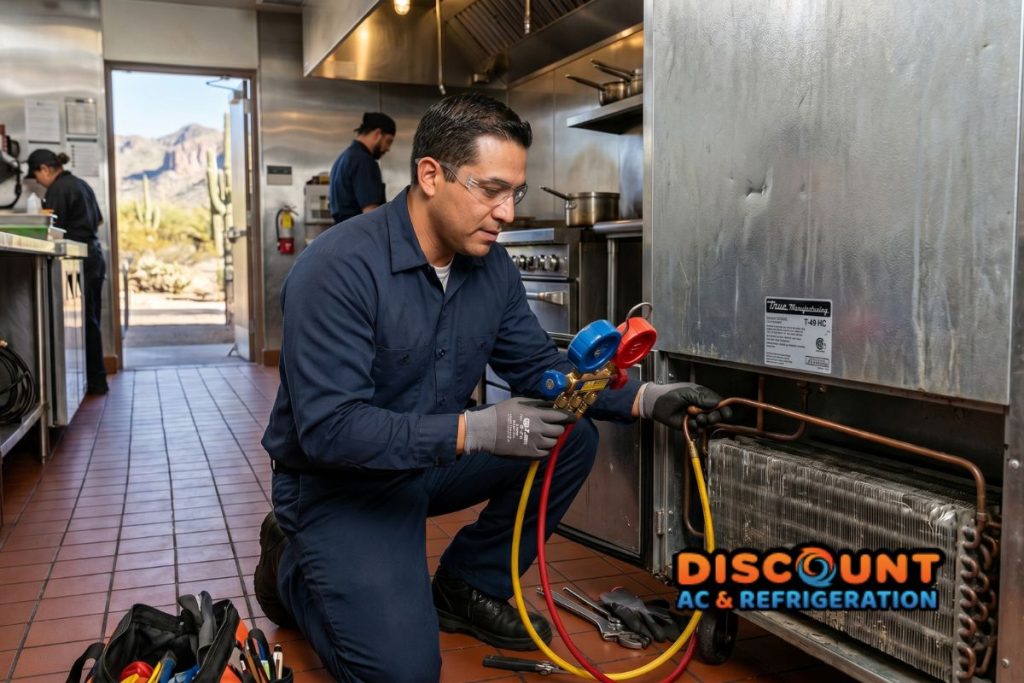
If food has been moved to another cooler, tell the contractor the room is now lightly loaded so the test conditions differ from normal. If the unit is off for safety, say so. The contractor can review condensate handling, visible leaks, drain route, door closure and refrigeration operation. Discount AC & Refrigeration provides commercial refrigeration service for Phoenix-area restaurants. A plumber or building specialist may also be needed when the water source is outside the cooling system.
Keep food handling separate from repair work
When the floor is wet, carts and workers may need a different route. Keep food off the floor and away from suspected wastewater under the establishment’s sanitation plan. If an area may be contaminated, isolate it and follow local health guidance. A repair technician’s finding that the drain is working again does not automatically resolve the question of product exposure. Record any food moved, discarded or retained and who approved that decision.
Likewise, a refrigerator can hold temperature while the floor remains unsafe. Do not treat a normal controller reading as a reason to ignore a slip hazard. OSHA’s general walking-working surface requirements address both sanitation and safe footing. In a commercial kitchen, the operational response should protect workers and food at the same time while a qualified provider traces the source.
Patterns that suggest different service paths
Water only after washing: review the cleaning procedure, floor drainage and how the area is dried. Water under the evaporator or a visible drain line: arrange refrigeration or plumbing inspection. Water at the door during heavy traffic: report closure, gasket and condensation observations. Water rising from a floor drain or carrying an odor: follow sanitation and plumbing emergency procedures. Water with repeated temperature alarms or heavy ice: contact refrigeration service promptly. These patterns are clues, not diagnoses.
Do not attempt to “test” a suspected drain by flooding it or forcing water through it while food is stored. Do not use unapproved chemicals that may damage equipment or create a food-contact concern. A professional can inspect the specific installation and follow the manufacturer, plumbing and health requirements that apply. The manager’s role is to preserve safety and record conditions accurately.
Prevention after the repair
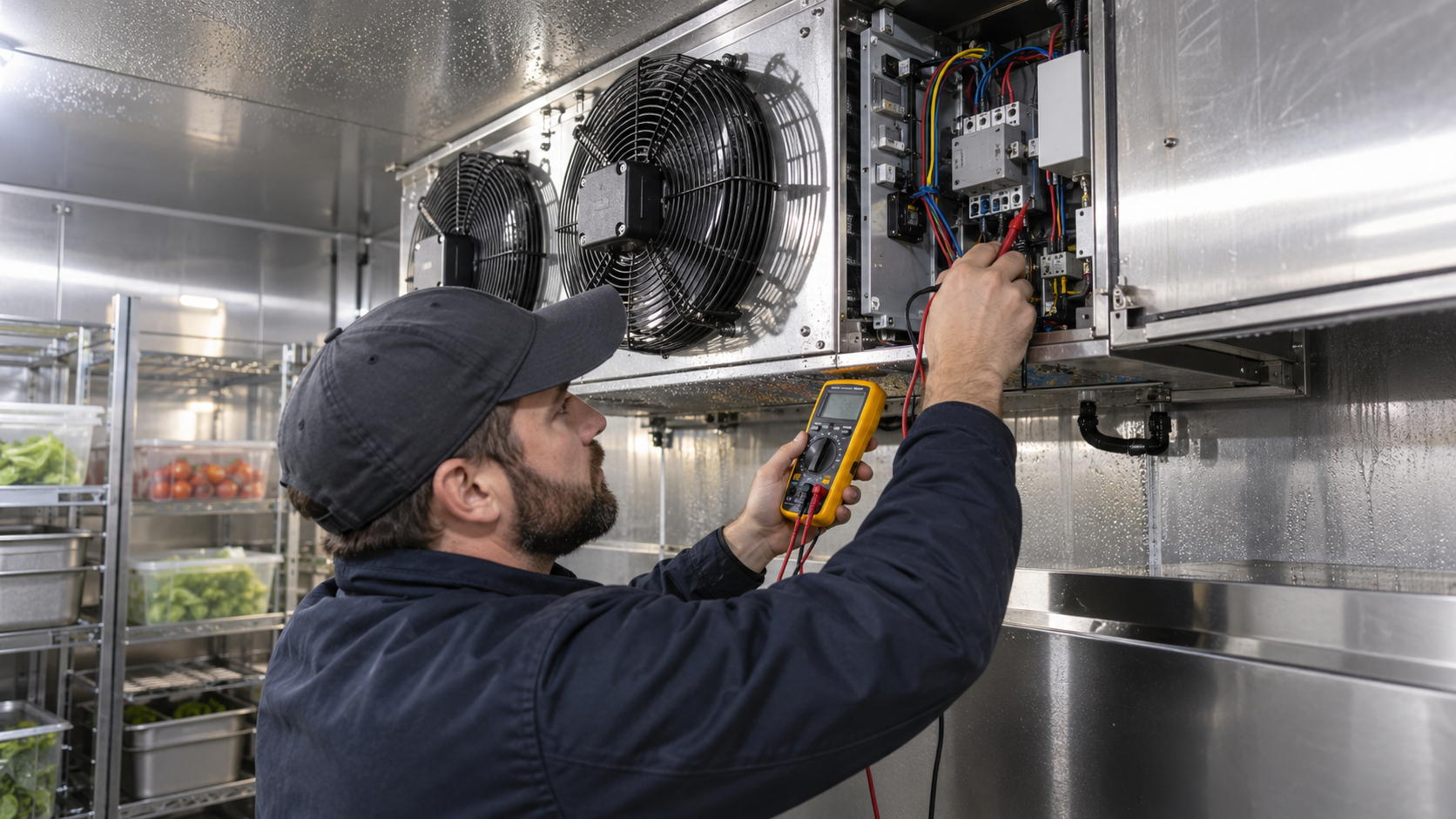
Build a short visual check into opening and closing routines: floor dry, drain area clear of obvious debris, door closes, no new frost or dripping, and normal room temperature. Staff should report a change, not undertake invasive cleaning of inaccessible equipment. Review the contractor’s recommended maintenance interval and the manufacturer’s instructions. Schedule service before the next peak season or catering period when a repeated issue has already appeared.
Watch for changes in kitchen workflow. A new delivery cart may hold the door open longer; rearranged shelving may block a drain area; a different cleaning method may send water where it did not previously go. If walk-in cooler floor water appears after a process change, document the sequence and discuss it with the appropriate professional. A preventive checklist is useful only when staff know whom to notify and what to do until the condition is corrected.
Why a dry floor and a cold display are both required
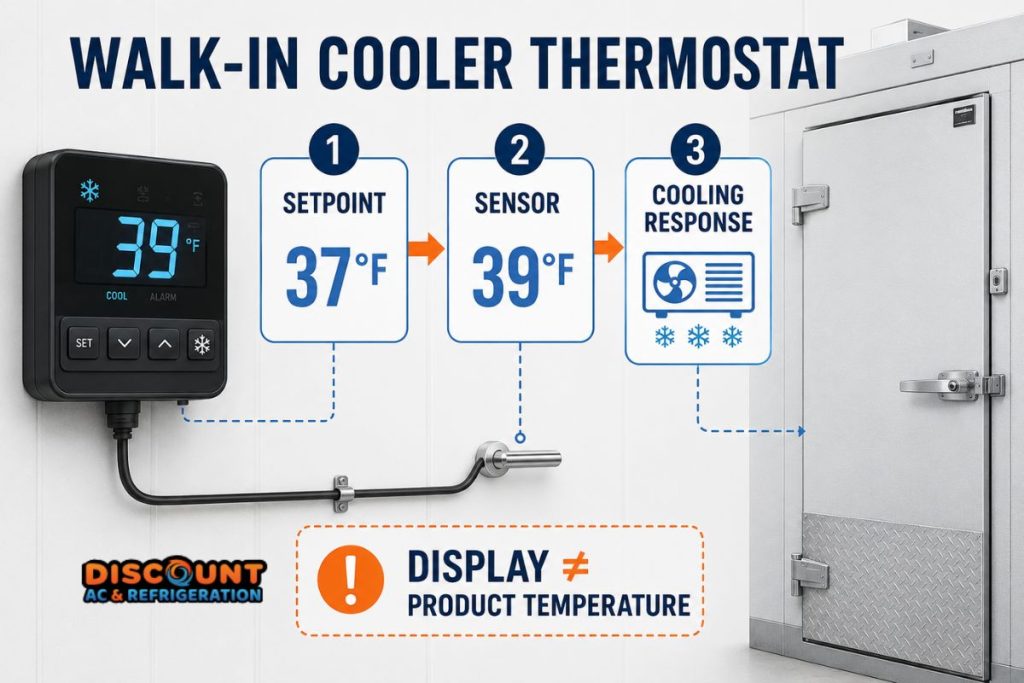
Restaurant managers sometimes focus on the refrigeration number because inventory is expensive. Yet a wet floor can injure an employee even while the room is cold, and a dry floor can coexist with a failing cooler. Track both conditions. Maintain product-temperature checks under the food-safety plan, monitor the room trend and inspect walking surfaces as part of routine operations. Neither measurement substitutes for the other.
A recurring puddle may also damage shelving, packaging or nearby building materials over time. Early investigation can reduce disruption, but the response must remain proportionate: guard an active hazard, document what is visible and call qualified help. Avoid speculative repairs by staff during a busy shift. This article does not identify a particular component from a photo or an odor; it gives a framework for the first decisions.
A simple follow-up schedule
At the next opening shift, confirm the floor is dry and the drain area is unobstructed. After the first normal cleaning, check whether the same wet patch returns. Review conditions again after a busy delivery or other event that previously triggered moisture. Document each check in the maintenance log with a time and initials. If walk-in cooler floor water reappears, give the contractor the new pattern promptly rather than waiting for a large puddle.
Staff should also confirm that the repair did not leave a new obstruction or an unsafe walking surface. Keep carts away from the repaired area until it is released for normal use under the establishment’s procedure. This short verification period can distinguish a lasting correction from a temporary dry spell. It should complement, not replace, scheduled refrigeration maintenance and the restaurant’s daily sanitation checks.
For recurring walk-in cooler floor water, log where it appears, when it returns and what changes after cleaning so a technician can compare observations with the equipment cycle.
Frequently Asked Questions
Is walk-in cooler floor water always a clogged drain?
No. Cleaning, condensation, door conditions, plumbing and refrigeration drainage can all produce water. The timing and location help a professional find the source.
Can staff keep using the room if the floor is wet?
Follow the workplace safety plan. Guard or restrict an unsafe walking area and correct it promptly; do not leave a slip hazard on a normal route.
Does a normal temperature reading mean the water is harmless?
No. Temperature control and floor safety are separate. Also assess possible food or packaging contact under the restaurant’s sanitation plan.
Should employees pour chemicals down the drain?
Do not use an unapproved chemical or dismantle an unknown line. Follow site procedures and have the installation assessed by a qualified professional.
Why does water show up after deliveries?
Door traffic can admit humid air or a cart may hold the door open, but cleaning or an unrelated leak may also coincide. Record the pattern rather than guessing.
What if water comes out of a floor drain?
Treat possible wastewater as a sanitation issue. Isolate the area and follow the establishment’s plumbing and health-authority procedures.
Can a technician determine whether food is safe?
A technician can assess and repair equipment. The restaurant manager applies the food-safety plan and local requirements to product disposition.
What information should be in a service call?
Give the puddle location, first sighting, recurrence, cleaning and door activity, temperature readings, alarms, visible ice and equipment model.
How soon should the floor be checked after repair?
Confirm it is dry after cleaning and review several normal operating periods, including deliveries or defrost when relevant. Record any recurrence.
Can a temporary bucket be the permanent fix?
No. Drainage and wastewater handling must match the installation and applicable rules. Ask a qualified professional for a lasting solution.
Get help for recurring water in a restaurant walk-in
If walk-in cooler floor water returns, spreads or appears with temperature alarms, call Discount AC & Refrigeration at (480) 478-2616. Share the location, timing and photos so the team can assess the refrigeration side. Keep the area safe and follow the restaurant’s food-safety and sanitation procedures while the source is investigated.