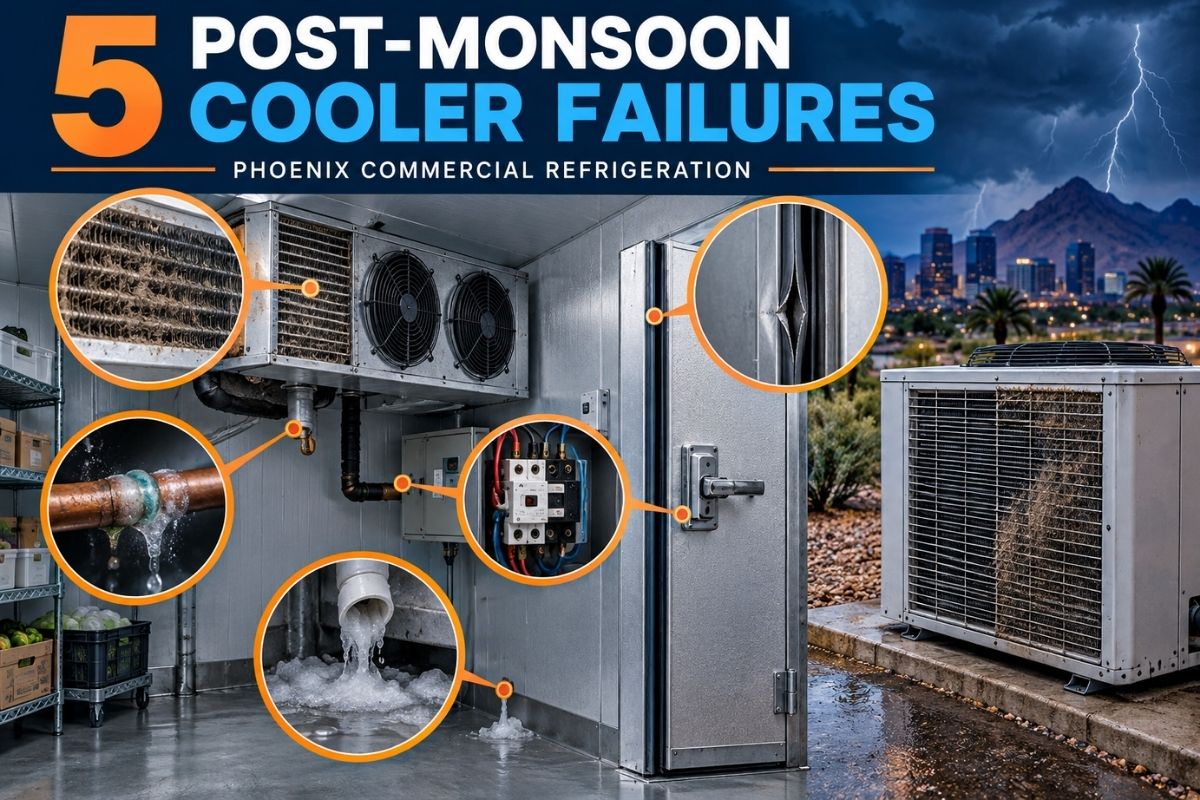
After Phoenix monsoon season, a walk-in cooler may carry four months of dust, heat and storm-related wear into the busiest part of the business day. The most common failures are rarely random: restricted coils, heat-damaged door seals, short cycling, refrigerant leaks and blocked drains often become visible together. If you are searching for walkin cooler repair near me, use the symptoms below to protect inventory while a commercial refrigeration technician is on the way.
The Temperature Target Comes First
Many food-service walk-in coolers operate near 35°F to 38°F, but the correct setpoint depends on the product, equipment design and applicable food-safety requirements. Record the controller reading and verify it with an independent thermometer placed where product is stored. Follow your food-safety plan whenever product temperature enters an unsafe range. Our guide explains what temperature a walk-in cooler should be and why display readings can differ from product temperature.
5 Walk-In Cooler Failures We See After Monsoon
| Failure | Visible clue | Cost of waiting |
|---|---|---|
| 1. Dust-loaded condenser coil | Long cycles, hot outdoor unit, rising box temperature | Higher energy use and compressor strain |
| 2. Heat-damaged door gasket | Condensation, frost or light visible at the seal | Warm-air infiltration and unstable product temperature |
| 3. Compressor short cycling | Rapid starts and stops | Accelerated wear and sudden loss of cooling |
| 4. Refrigerant leak | Icing, hissing, poor pull-down or long run time | Lost capacity, compressor damage and product exposure |
| 5. Clogged drain and ice | Water, ice near evaporator or blocked airflow | Airflow loss, slip hazard and temperature rise |
1. Condenser Coils Packed With Desert Dust
Commercial condensers reject heat outdoors, often near parking lots, roofs or service areas where monsoon winds carry fine dust. A dirty coil raises operating pressure and reduces capacity. Do not use a pressure washer; bent fins and driven-in debris can make the problem worse. Professional commercial refrigeration maintenance addresses the coil while also checking the fan, controls and system performance.
2. Door Seals Weakened by Heat and Heavy Use
High ambient heat and constant door traffic can harden, split or distort gaskets. A failed seal lets warm, humid air enter, increasing frost and run time. The gasket may not be the only problem: hinges, closers and door alignment can prevent even a new seal from contacting correctly. See walk-in cooler door seal problems.
3. Compressor Short Cycling
Repeated starts and stops can come from controls, airflow restrictions, pressure conditions, electrical components or compressor protection. Do not assume the compressor itself has failed. Record cycle duration and controller behavior, then arrange diagnosis. Our guide to walk-in cooler compressor warning signs explains how related faults can mimic compressor trouble.
4. Refrigerant Leaks
Refrigerant does not get used up. A low charge indicates a leak or prior service problem. Common clues include icing, loss of cooling capacity, longer cycles and poor temperature recovery after deliveries. A technician should locate the leak, evaluate the repair and charge the system to manufacturer specifications. Adding refrigerant without addressing the source is not a durable repair.
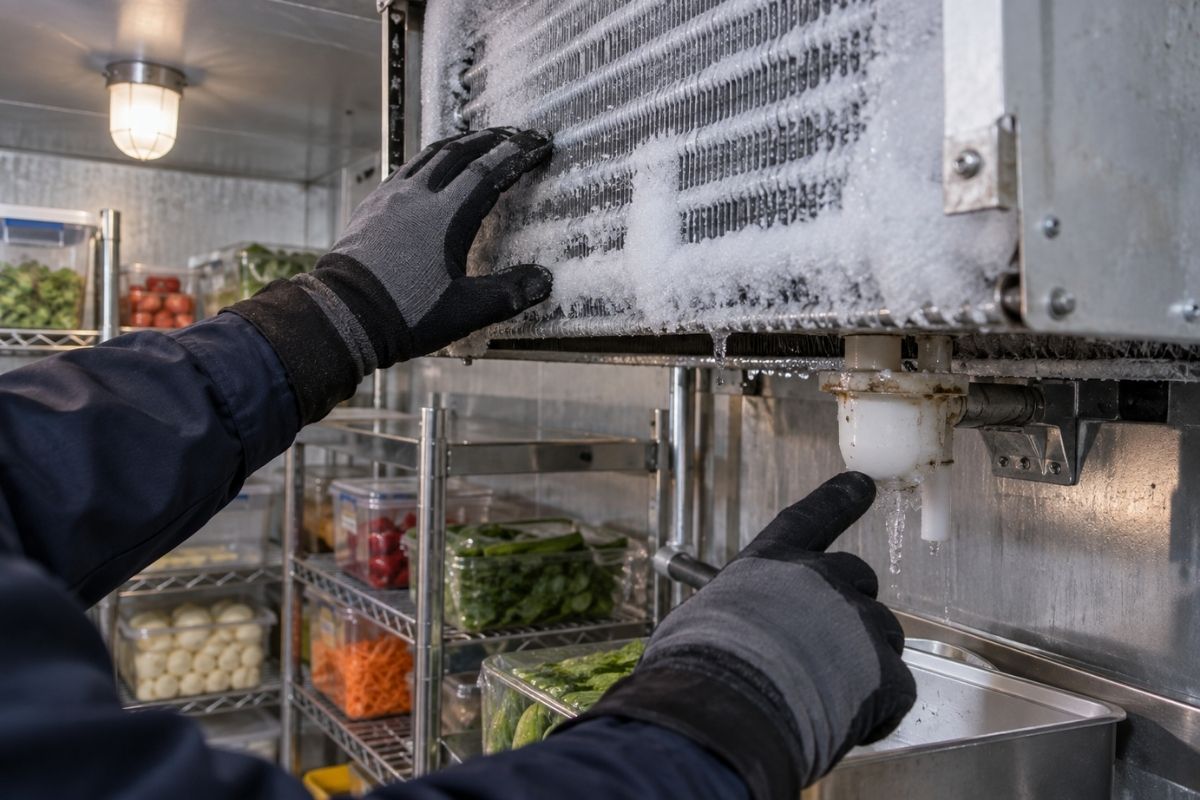
5. Clogged Drain That Turns Into Ice
Dust, biological buildup and debris can obstruct drainage. Water may back up and freeze around the evaporator, reducing airflow and causing temperature drift. Ice is a symptom, not a diagnosis. Airflow, defrost controls, drainage and refrigerant performance all need evaluation. Read why a walk-in cooler freezes up and our guide to the walk-in cooler evaporator coil.
What to Do While Waiting for Service
- Minimize door openings and stop nonessential loading.
- Log the displayed temperature and an independent product-area reading.
- Move vulnerable inventory according to your food-safety or operations plan.
- Photograph ice, water and controller messages without opening equipment panels.
- Provide the technician with the equipment model, recent service history and time the temperature began rising.
Do not chip ice from a coil, bypass door switches, adjust refrigerant controls or open electrical compartments. For broader preparation guidance, see walk-in fridge repair for restaurants and repair versus replacement.
Why Response Time Matters
The financial risk is often larger than the repair invoice. Product loss, discarded prep, interrupted service and emergency inventory transfers can compound quickly. When calling, report the current temperature, normal setpoint, type of inventory, whether the compressor is running and any ice or water you can see. That information helps prioritize the visit and prepare the right diagnostic approach. Businesses can also review our commercial refrigeration services.
Walk-In Cooler Repair FAQs
What temperature should I report when I call?
Report both the controller reading and an independent thermometer reading near stored product, plus the normal setpoint and when the rise began.
Can monsoon dust really stop a walk-in cooler?
Heavy coil restriction can reduce heat rejection enough to raise pressure, lengthen cycles and reduce cooling capacity, especially during hot weather.
Does ice mean the refrigerant is low?
Not always. Ice can result from airflow, drainage, controls, defrost or refrigerant problems. Measurements are needed.
Should I keep the door closed?
Minimize openings, but continue following your business’s food-safety and inventory procedures. Do not leave temperature-sensitive product in an unsafe range.
Can a damaged gasket cause frost?
Yes. Warm, humid air entering through a poor seal can create condensation and frost while increasing system run time.
Why is the compressor starting and stopping?
Short cycling can involve controls, airflow, electrical components, pressure conditions or compressor protection. It requires diagnosis.
When should we consider replacement?
Consider age, refrigerant, repair history, capacity, energy use, downtime risk and the cost of the confirmed repair—not one symptom alone.
Need Walk-In Cooler Repair in Phoenix?
Call Discount AC & Refrigeration at (480) 478-2616. Share the current temperature, normal setpoint and visible symptoms so the service team can prepare for the diagnosis.